Dialogue
Working with a clear commitment to create fair election atmosphere: CEC
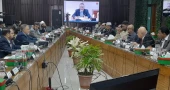
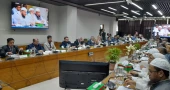
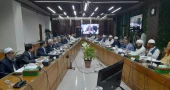
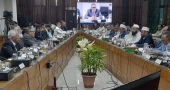
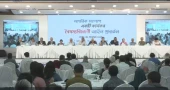
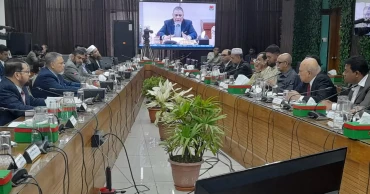
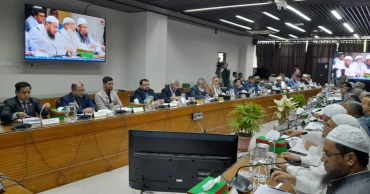
Chief Election Commissioner AMM Nasir Uddin on Monday said the Election Commission has been working with a clear conviction and commitment to create a fair and beautiful electoral environment.
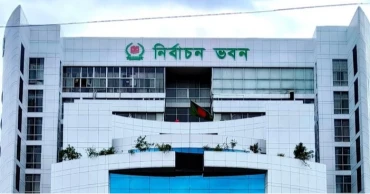
“We will take all necessary preparations from our side to create a proper and nice election environment. We will keep trying. Our intention and commitment are absolutely clear. And we are working accordingly,” he said while chairing a pre-election dialogue with five political parties at Nirbachan Bhaban in the capital this morning.
The discussion was held with five political parties as part of the EC’s ongoing dialogue with registered political parties ahead of the 13th parliamentary election to be held in early February 2026. Later in the afternoon, the Commission sat with six other political parties on Monday.
“No matter how many storms, cyclones or turmoil come, we will take every required step to ensure a fair and beautiful environment for the election,” the CEC said.
Seeking cooperation from political parties for building a peaceful and proper electoral atmosphere, he said such cooperation is “very essential.”
“Please influence your candidates and workers to follow the code of conduct. If we get your cooperation, it will make the enforcement process much easier for us,” Nasir Uddin said, pointing to political parties.
Noting that the country belongs to all, the CEC said organising a proper election is a fundamental requirement for leaving behind a nice country for future generations.
“If a beautiful election can elect representatives and the country can be entrusted to them, I think a bright future can be ensured for the nation. We seek your full cooperation and hope we will receive it,” he added.
Referring to expatriate voting rights, the CEC said although postal ballots for expatriates have always existed in the law, no Election Commission in the past worked with this complex issue.
“Postal balloting has always been in the law, but it was never practised. We have taken up this work,” he said.
He said many new but “gigantic and complex tasks” have come to the present Commission. Despite many limitations, this Commission has not given up and continues to move forward like a sailor steering a storm-tossed ship through challenges.
“InshaAllah, whatever challenges lie ahead, we are prepared to face them. We must move forward overcoming these challenges," he said.
Addressing the afternoon discussion, the CEC said his commission has no flaws or lack of sincerity in its electoral preparation.
"We’re facing all kinds of challenges with sincerity, patience and courage. We are ready to face all kinds of challenges that come in the future as well," he said.
Describing the political parties as the major players in the electoral process, he sought the cooperation from the parties to ensure a friendly atmosphere before and even after the balloting.
The five parties that participated in the morning session are Bangladesh Sangskritik Muktijote (Muktijote), Bangladesh National Awami Party, Bikalpadhara Bangladesh, Bangladesh Kalyan Party and Bangladesh Muslim League-BML.
The six parties that participated in the afternoon session are Zaker Party, Amar Bangladesh Party-AB Party, Bangladesh Development Party, Bangladesh Islami Front, Khelafat Majlish and Jatiya Ganotantrik Party-Jagpa.
The political leaders suggested the EC apply its authority strictly to ensure proper implementation of code of conduct and election-friendly atmosphere.
Bikalpadhara Bangladesh Secretary General Major (Retd) Abdul Mannan said there is no precedent of revoking the candidature of a person nominated by a major political party for poll code violation.
“So, it is important to ensure the strict application of the EC’s authority,” he said, adding that if a few candidatures are revoked for violating the code of conduct, then discipline will be created among the rest.
Bangladesh Kalyan Party Chairman Syed Muhammad Ibrahim highlighted the need for social media monitoring and immediate action against violations of poll code.
Bangladesh Muslim League (BML) President Sheikh Zulfikar Bulbul Chowdhury stressed creating a level-playing field and eliminating the influence of black money in the elections.
Zaker Party Secretary General Shamim Haider urged the EC to ensure transparency and equal access for all parties in media coverage and law enforcement.
Amar Bangladesh Party General Secretary ABM Fuad said the commission's rules, although targeting candidates and parties, do not focus enough on voters.
He stressed the need for ensuring security during election campaigns, restrictions on government establishments and religious and educational institutions, and effective control over social and online media.
Election commissioners Tahmida Ahmad, Anwarul Islam Sarker and Abul Fazal Md Sanaullah were present in the discussions.
On November 13, the EC opened its pre-election dialogue with the political parties and already held talks with a total of 34 ones out of 53 registered political parties on the first three days of the electoral dialogue.
11 months ago
Bangladesh Election: CEC urges stakeholders to help ensure voter safety
Chief Election Commissioner AMM Nasir Uddin on Sunday (November 16) sought cooperation from political parties to create a safe environment for voters during the national election to be held in early February 2026.
“We need your support in bringing voters to the polling stations and creating a safe environment,” he said while presiding over a dialogue with six registered political parties at Nirbachan Bhaban in the city.
The discussion began at 10:30 am as part of the Commission’s ongoing electoral dialogue with political parties ahead of the 13th parliamentary election. “We want your suggestions on how we can deliver a free and fair election and ensure a level playing field for all.”
The CEC said the Election Commission has already formulated a code of conduct for the upcoming election. “A fair election largely depends on the proper implementation of the code of conduct. If candidates comply with it properly, the election will be fair. In this regard, we seek your cooperation.”
Nasir Uddin said the Commission’s main objective is to hold the next election in a fair, acceptable environment. “To achieve this, we need your cooperation,” he said.
Read more: EC to sit with 12 more political parties on Sunday
The six political parties that joined the talks are Gonoforum, Gono Front, Islamic Front Bangladesh, Islami Oikyajote, Bangladesh Supreme Party (BSP) and Bangladesh Jatiya Party.
The Commission will hold another discussion with six other political parties in the afternoon (2pm to 4pm) on Sunday.
The six other parties invited for the afternoon session are Bangladesh Jatiya Samajtantrik Dal-Bangladesh Jasod, Bangladesh National Awami Party-Bangladesh NAP, Trinomul BNP, Krishak Sramik Janata League, Bangladesh Khelafat Majlis and Islami Andolan Bangladesh.
Earlier, on Thursday, the EC opened its much-talked-about pre-election dialogue with registered political parties by holding two separate discussions with 12 registered political parties – six parties in the morning and six others in the afternoon.
The 12 parties were Liberal Democratic Party-LDP, Bangladesh Congress, Bangladesh Muslim League, National People's Party, Bangladesh Khelafat Andolan, Jamiyate Ulamaye Islam Bangladesh Communist Party of Bangladesh-CPB, Jatiya Samajtantrik Dal-JSD, Bangladesher Samajtantrik Dal-Basod, Revolutionary Workers Party of Bangladesh, Bangladesh Nationalist Front-BNF and Bangladesh Nationalist Movement-BNM.
Read more: EC awaits formal govt request for its opinion on referendum: CEC
The Commission, however, has not announced yet the times for discussions with BNP and Jamaat.
Currently, there are 53 registered political parties, excluding the Awami League, whose registration remains suspended. Besides, the EC recognised three new parties, including NCP, as registered parties.
The Commission aims to complete the dialogue with all registered political parties within this month before the announcement of the national election schedule in early December.
In late September 2025, the Commission opened a series of electoral dialogues with different stakeholders amid talks with civil society representatives on September 28.
Later, the EC held separate dialogues with the representatives of teachers, senior journalists from different media outlets, election experts and election observers.
Read more: Want to act as real referee in election: CEC Nasir
11 months ago
EC to sit with 12 more political parties on Sunday
The Election Commission will sit with 12 more political parties on Sunday as part of its ongoing electoral dialogue ahead of the next general election.
The Commission will exchange views with six parties in the morning session and with another six parties in the afternoon session on November 16, said EC’s (Public Relation) Assistant Director Asadul Haque.
The six parties who are being invited for the Sunday’s morning session are Gonoforum, Gono Front, Islamic Front Bangladesh, Islami Oikyajote, Bangladesh Supreme Party (BSP) and Bangladesh Jatiya Party.
The six other parties for the afternoon session are Bangladesh Jatiya Samajtantrik Dal-Bangladesh Jasod, Bangladesh National Awami Party-Bangladesh NAP, Trinomul BNP, Krishak Sramik Janata League, Bangladesh Khelafat Majlis and Islami Andolan Bangladesh.
The Election Commission opened its much-talked-about pre-election dialogue with registered political parties on Thursday by holding discussions with six parties in the first session of the day.
EC’s pre-election dialogue starts with 6 parties in opening batch
On the opening day, the Commission held talks with a total of 12 registered political parties in two separate sessions.
The 12 parties are Liberal Democratic Party-LDP, Bangladesh Congress, Bangladesh Muslim League, National People's Party, Bangladesh Khelafat Andolan, Jamiyate Ulamaye Islam Bangladesh Communist Party of Bangladesh-CPB, Jatiya Samajtantrik Dal-JSD, Bangladesher Samajtantrik Dal-Basod, Revolutionary Workers Party of Bangladesh, Bangladesh Nationalist Front-BNF and Bangladesh Nationalist Movement-BNM.
Currently, there are 53 registered political parties, excluding the Awami League, whose registration remains suspended. Besides, the EC recognised three new parties, including NCP, as registered parties.
The Commission aims to complete the dialogue with all registered political parties within this month before the announcement of the national election schedule in early December.
In late September 2025, the Commission opened a series of electoral dialogues with different stakeholders amid talks with civil society representatives on September 28.
Later, the EC held separate dialogues with the representatives of teachers, senior journalists from different media outlets, election experts and election observers.
11 months ago
Want to act as real referee in election: CEC Nasir
Chief Election Commissioner AMM Nasir Uddin on Thursday (13th November 2025) said the Election Commission wants to act as a true referee in the upcoming national election, emphasising the need for cooperation from all political parties.
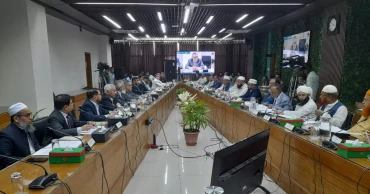
"You (political parties) will play in the elections. You are the players. We really want to be in the role of referees. Without your cooperation, it is difficult to play the role of referees and hold fair elections," he said.
The CEC made the remarks while addressing the Commission’s views-exchange with six political parties, held on Thursday morning as part of the ongoing electoral dialogue with registered parties ahead of the 13th parliamentary election, likely to be held in early February 2026.
Nasir Uddin said cooperation from political parties is essential to ensure a free, fair, and credible election. “If we do not get cooperation from the main players (political parties), the election will inevitably become questionable,” he said.
He said all 54 registered political parties are equal to the Election Commission, regardless of their size or influence. “Every registered party—big or small—is equal to us,” he said.
EC’s pre-election dialogue starts with 6 parties in opening batch
“We need thoughtful suggestions and opinions from all of you on what can be done before, during, and after the election,” said the CEC.
Referring to the recent surge of posters in Dhaka city, he said, “The city is flooded with posters, though the use of posters has already been declared illegal.
“These (posters) must be removed. Those who put them up should take them down. We will be strict. We will not spare anyone; we will blindly jump over these violations. Once the election schedule is announced, we will take immediate action,” he said.
On the issue of a possible referendum on July National Charter 2025, the CEC said the Commission has not yet received any official communication regarding it. “There has been much discussion about a referendum, but we have not been officially informed,” he said.
“Even under this special circumstance, where the election will be held under a special arrangement, many additional responsibilities are falling on our shoulders,” said Nasir Uddin.
Bangladesh Election: Electoral dialogue with political parties to begin Thursday
The Commission invited 12 registered political parties to attend two sessions on the opening day— six parties in the morning session and six others in the afternoon session.
The six invitees for the morning session are Liberal Democratic Party-LDP, Bangladesh Congress, Bangladesh Muslim League, National People's Party, Bangladesh Khelafat Andolan and Jamiyate Ulamaye Islam Bangladesh.
The six parties invited for the afternoon session are Communist Party of Bangladesh-CPB, Jatiya Samajtantrik Dal-JSD, Bangladesher Samajtantrik Dal-Basod, Revolutionary Workers Party of Bangladesh, Bangladesh Nationalist Front-BNF and Bangladesh Nationalist Movement-BNM.
The Commission aims to complete the dialogue with all registered political parties within this month before the announcement of the national election schedule in early December.
In late September 2025, the Commission opened a series of electoral dialogues with different stakeholders amid talks with civil society representatives on September 28.
Later, the EC held separate dialogues with the representatives of teachers, senior journalists from different media outlets, election experts and election observers.
Read more: CEC seeks media support for fair election environment in Bangladesh
11 months ago
EC’s pre-election dialogue starts with 6 parties in opening batch
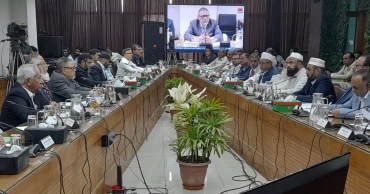
The Election Commission began its much-talked-about pre-election dialogue with political parties on Thursday morning (13th November 2025) with six registered parties in the first batch, as announced earlier.
Leaders of the six registered political parties attended the talks at Nirbachan Bhaban in the city to discuss an 11-point agenda.
The discussion started with Chief Election Commissioner AMM Nasir Uddin in the chair. Election commissioners and EC Secretary were present.
The Commission invited 12 registered political parties to attend Thursday’s opening sessions — six parties in the morning session and six others in the afternoon session.
The six parties invited for the morning session are Liberal Democratic Party-LDP, Bangladesh Congress, Bangladesh Muslim League, National People's Party, Bangladesh Khelafat Andolan and Jamiyate Ulamaye Islam Bangladesh.
Bangladesh Election: Electoral dialogue with political parties to begin Thursday
The six parties invited for the afternoon session are Communist Party of Bangladesh-CPB, Jatiya Samajtantrik Dal-JSD, Bangladesher Samajtantrik Dal-Basod, Revolutionary Workers Party of Bangladesh, Bangladesh Nationalist Front-BNF and Bangladesh Nationalist Movement-BNM.
This time the political parties are being invited in groups due to time constraints before the announcement of the election schedule.
The Election Commission traditionally holds talks with registered political parties before each national election. Each party was usually invited to join the dialogue separately.
The dialogue with political parties is considered the Commission’s last major task before the election schedule to be announced in early December.
Currently, there are 53 registered political parties, excluding the Awami League, whose registration remains suspended.
Besides, the EC recognised three new parties, including NCP, as registered parties.
In late September 2025, the Commission opened a series of electoral dialogues with different stakeholders amid talks with civil society representatives on September 28.
Election campaign: Code of conduct published in gazette, banning posters-drones, AI-social media misuse
Later, the EC held separate dialogues with the representatives of teachers, senior journalists from different media outlets, election experts and election observers.
In a bid to conduct the next election in a free, participatory and fair manner, the EC sat in a views-exchange with different law enforcement agencies and intelligences on October 20 and with top government officials, including secretaries of key ministries, directors general of important agencies on October 30 last.
11 months ago

IMF team meets BNP, discusses reforms in financial, social sectors
A delegation from the International Monetary Fund (IMF) met BNP leaders on Sunday (9th November 2025) and discussed various issues, including reforms in the financial and social sectors.
The IMF team, led by Chris Papageorgiou, its Bangladesh Mission chief, held the meeting at the BNP Chairperson’s Gulshan office, said BNP Media Cell member Sayrul Kabir Khan.
BNP Standing Committee member Amir Khosru Mahmud Chowdhury led the four-member party delegation.
The other members were BNP Chairperson’s Advisory Council members Md Ismail Zabihullah and Dr Ziauddin Hyder, and BNP Organising Secretary Shama Obaed.
Sayrul said both sides discussed the preliminary findings of the IMF’s ongoing mission review report.
Salahuddin slams govt for 7-day ultimatum on referendum consensus
“The key issues of discussions included value-added tax (VAT) harmonisation and the reduction of exemptions under a new technical assistance programme, increasing corporate tax to improve the GDP-to-tax revenue ratio, reforming the banking sector, and raising social sector spending, which the BNP delegation highlighted as one of the party’s key policy priorities,” he said.
Sayrul said the BNP delegation stressed that reforms in the financial, tax, and social sectors are essential to ensure sustainable economic stability in Bangladesh. “They said the BNP believes that long-term growth is not possible without an accountable and transparent financial management system.”
He said the IMF team appreciated the BNP’s reform-focused policy priorities and constructive approach.
The meeting ended with both sides expressing hope for continued policy dialogue and greater cooperation in the future, Sayrul added.
IMF Chief highlights importance of bold reforms in banking sector
11 months ago
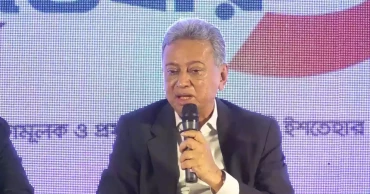
Constitution has no referendum provision, says Amir Khosru
Stating that there is no provision for a referendum in the Constitution, BNP senior leader Amir Khosru Mahmud Chowdhury on Saturday (8th November 2025) urged political parties to avoid heating up the streets over the issue in order to prevent political confrontation.
“The current interim government has been formed under the existing Constitution and has taken oath in accordance with it. There is no provision for a referendum in this Constitution,” he said.
Speaking at a dialogue titled ‘Jonotar Ishthehar (People’s Manifesto)’ at a city hotel, the BNP leader said if political parties want to introduce a referendum, they must first obtain a public mandate through the next election, place their proposals in Parliament, and only after those proposals are passed can a referendum be held.
“We may have many desires and demands, but not all of them can be met by sitting in Dhaka and trying to reach consensus through the Consensus Commission. The only real solution is to go to the people and resolve these issues through their mandate,” he said.
Khosru, a BNP Standing Committee member, said political parties should embrace the spirit of people’s mandate instead of imposing their ideas on others.
BNP candidate Ershad Ullah airlifted to Dhaka for treatment
“Everyone has the right to protest. But the people of Bangladesh no longer want confrontational politics. They want stability. Even when there is disagreement, people want to show respect for others’ views. That culture must take root among us,” he said.
The BNP leader urged parties not to rush to the streets over the referendum issue, warning that such moves could spark violence.
“You can’t keep going out into the streets over every issue. If one group stages a protest and another group then also takes to the streets in response, what will happen? There will be clashes. If the largest party mobilises on the streets and another large group protests against them, we will see violent confrontation,” he said.
Khosru said the people of Bangladesh did not remove autocratic ruler Sheikh Hasina only to drag the country back into confrontational politics. “We must be extremely careful. There are those who may try to link such actions to attempts to disrupt or delay the election.”
Fakhrul slams govt for creating situation to derail polls
Khosru said BNP initially announced a 27-point state reform proposal, which was later expanded to 31 points through consultations with 42 parties and people from all walks of life.
He said, “After publishing it, we sought public feedback nationwide and online, inviting suggestions to refine it further. People’s input is essential. Each party has its own philosophy and ideas, but no one should try to impose their views outside the agreed consensus.”
After long discussions under the Consensus Commission, political parties reached an agreement and signed a joint charter, he said, adding, “That consensus must be respected during implementation. No one can enforce their own version unilaterally.”
Khosru observed that after 15–17 years of Sheikh Hasina’s rule, an authoritarian mindset has developed, with some politicians believing only their opinions matter. “But democratic politics requires respect for differing views.”
He warned that attempts to bypass consensus or impose unilateral decisions could undermine democracy. “There is no scope to go beyond the consensus reached among political parties. If anyone wants to move beyond that, they should go to the people in the next election with their manifesto.”
Desperation to hold referendum before election raises public suspicion: Khosru
Referring to the recent killing in Chattogram, Khosru said it appeared to stem from internal feuds within a student organisation but suspected that those trying to delay or obstruct the upcoming election might be involved.
On BNP’s election preparations, he said the party’s forthcoming manifesto would focus on job creation, rural economic growth, education, healthcare, and investment reform.
“BNP has a clear plan to create 10 million jobs within 18 months. We have identified exactly where and how those jobs will be created,” he said, adding that the plan prioritises agriculture, manufacturing and services.
Khosru also pledged to invest up to 5% of GDP in education and healthcare, focusing on skills development and technology-based employment for the youth.
“We will not pursue mega projects by printing money or taking excessive loans. Our investment will focus on job creation and sustainable growth,” he said.
Read more: BNP’s Mosharraf calls on people to unite for fair Feb election
11 months ago
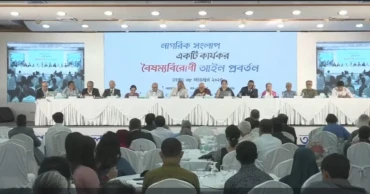
Parties must pledge in election manifestos to eliminate discrimination: Debapriya
Economist Dr Debapriya Bhattacharya on Saturday (8th November 2025) urged political parties to make a firm commitment in their election manifestos to eradicate all forms of discrimination from the country’s legal and social frameworks.
“Political parties have to pledge to eradicate discrimination from the legal context in their election manifestos,” said Dr Debapriya, Convener of the Citizen’s Platform for SDGs, Bangladesh.
He emphasised that the Citizen’s Platform is dedicated to eliminating discrimination in every form within legal and societal structures, and that the inclusion of such commitments in election manifestos would represent a strong step towards implementation in the future.
Interim govt pursuing reforms without engaging stakeholders: Debapriya
Dr Debapriya made the remarks while addressing the opening session of a dialogue titled “Elimination of Discrimination in Bangladesh: Legal Context, Current Reality, and Way Forward.”
He highlighted the gap between constitutional promises and the lived realities of marginalised and vulnerable communities across the country.
Citizen’s Platform for SDGs, Bangladesh organised the event in collaboration with the Bangladesh Legal Aid and Services Trust (BLAST), Manusher Jonno Foundation, and Nagorik Uddyog (Citizen’s Initiative), with support from Switzerland and UNDP.
Read more: Bangladesh Election: EC to begin political dialogues this week
11 months ago
Bangladesh Election: EC to begin political dialogues this week
Moving into the election mode, the Election Commission will start a series of dialogues with registered political parties this week to lay the groundwork for the upcoming national election scheduled for February.
But the political parties would be invited in groups to join the discussions due to time constraints before the election schedule to be announced in early December, according to EC officials
They said the dialogues, considered the Commission’s last major task before the election schedule, will take around two weeks to complete ahead of the 13th parliamentary election.
“The dialogues with political parties will begin next week. It will have to invite them in groups due to time constraints (before the announcement of election schedule),” said EC Senior Secretary Akhtar Ahmed on Thursday (6th November 2025).
Replying to a question, he told UNB that it will not be possible to complete the dialogues within a week rather it would take two weeks.
EC registers 66 local election observer organisations, identifies 16 more eligible
As part of preparations for the dialogues with political parties, the Commission has already made changes to the electoral code of conduct in line with an ordinance promulgated on November 3, bringing further amendment to the Representation of the People Order, 1972.
The Code of Conduct for Political Parties and Candidates in Parliamentary Elections Rules 2025 will soon be published in the official gazette, with the code expected to be one of the key discussion issues during the dialogues.
“We have sent the code of conduct (to publish it in the official gazette). So, the dialogue will be opened next week,” said the EC Secretary.
The Election Commission traditionally holds talks with registered political parties before each national election. Each party was usually invited to join the dialogue separately.
However, this time it is still uncertain whether the Jatiya Party and some other registered parties, known as the allies of Sheikh Hasina's regime toppled through the 2014 mass uprising, will be invited to the talks.
Currently, there are 53 registered political parties, excluding the Awami League, whose registration remains suspended.
Besides, the EC on Tuesday last published notifications seeking objections, if any, against the registration to three new political parties –National Citizen Party (NCP), Bangladesh Aam Janagan Party and Bangladesh Samajtantrik Dal (Marxist). The Commission will finally recognise them as the registered parties after November 12.
Jamaat now wants referendum any day before election: Azad
In late September 2025, the Commission opened a series of electoral dialogues with different stakeholders amid talks with civil society representatives on September 28.
Then the EC sat in another discussion with the representatives of teachers on the same day.
On October 06, the Commission held two separate dialogues with senior journalists from different media outlets.
Besides, the EC held dialogues with election experts and election observers in October last.
In a bid to conduct the next election in free, participatory and fair manners, the EC sat in a views-exchange with different law enforcement agencies and intelligences on October 20 and with top government officials, including secretaries of key ministries, directors general of important agencies on October 30 last.
According to the electoral roadmap unveiled in August 2025, dialogues with stakeholders, including political parties, civil society members, journalists, observers, and election experts, were scheduled to begin in late September and conclude within about one and a half months.
The Commission either completed or almost finished all important tasks, including amendment to the electoral laws,delimitation of constituencies, updating the voter lists, finalisation of polling stations, registration of new political parties and registration of election observers.
The EC has already amended different electoral laws including RPO; as well as revised the three separate guidelines for journalists, observers and installation of polling stations:
The Commission on September 04 last finalised the delimitation of 300 constituencies, redrawing the boundaries of 46 parliamentary seats in 16 different districts across the country ahead of the 2026 February election.
Over 48,000 police officers complete election training: Police HQ
The EC on October 27 released the final list of 42,761 polling stations throughout the country for the upcoming national election, raising the number by around 611 from what was in the 2024 national election.
The Commission on November 02 released the draft updated electoral rolls with more than 12.76 core voters in the country, which would be the final voter lists for the 2026 February election. The electoral rolls would be finalised on November 18.
The Commission on Thursday last registered 66 organisations as local election observers as well as identified 16 more firms as eligible for registration as local election observers. The final decision over the 16 organisations will be taken following settlement of objections if any to be received by November 27 next.
The EC will launch a mobile app for the expatriates and others to register first to vote through the postal ballot during the 2026 election.
So, the upcoming dialogues with political parties will mark the Commission’s final major engagement before announcing the election schedule next month.
Read more: No application for voter relocation to be accepted after Nov 10
11 months ago

IRI calls for sustained dialogue to build trust ahead of Bangladesh election
The US-based International Republican Institute (IRI) has said sustained dialogue, transparent election administration, and "credible participation by political parties" will be essential to mitigate polarisation and reinforce confidence in the transition.
The Election Commission has introduced reforms to enhance participation and operational preparedness, including mechanisms for out-of-country voting, said the IRI on November 5.
To strengthen election security, it plans to integrate the armed forces into the election security framework.
Despite these efforts, the IRI said the pre-election environment remains fragile, with isolated yet politically significant episodes of violence, questions about the neutrality of local officials, and lingering distrust of security forces.
The emergence of youth-led parties and the anticipated high turnout of first-time and diaspora voters signal a potential shift in political engagement and underscore the continued influence of youth activism on Bangladesh’s democratic renewal.
Canada advocates for ‘free, participatory’ elections in Bangladesh
However, challenges persist — candidate selection processes within political parties lack transparency, women remain underrepresented, and concerns are mounting that the growing appeal of extremist and hardline groups could embolden intolerant narratives and undermine Bangladesh’s secular political foundations, IRI said.
It observed that while Bangladesh’s Election Commission and the Interim Government have taken commendable steps to enhance electoral credibility and ensure transparent election administration, maintaining public trust will require consistent communication and ongoing engagement with political and civic stakeholders.
The IRI, an organisation dedicated to promoting freedom and democracy worldwide, deployed a pre-election assessment mission from October 20 to 24 to examine Bangladesh’s evolving political and electoral landscape ahead of the expected February 2026 parliamentary elections.
The polls will mark the first major test of the country’s democratic transition following the July 2024 student-led protests and the formation of the interim government.
This impartial assessment highlights the progress of the interim government’s reform agenda, including the creation of 11 reform commissions, renewed inter-party dialogue and broad consultations on the July National Charter, a comprehensive framework of 84 proposals addressing nearly every aspect of Bangladesh’s democratic architecture, the IRI said in a statement on November 5.
Ambassador Mushfiqul promotes Bangladesh-Mexico trade ties at Querétaro
It noted that disputes over the Charter’s sequencing, referendum timing, and enforcement mechanisms underscore the challenges of building a broad-based political consensus.
Political parties, the IRI observed, are actively shaping the transition by participating in reform dialogues and undertaking early electoral preparations such as candidate recruitment.
Yet, they must continue strengthening internal structures, increasing responsiveness to citizens, and rebuilding public trust to foster meaningful political competition, said the organisation.
The Institute said civil society organisations have re-emerged as key actors in promoting transparency and civic participation.
Expanding civic space and ensuring that the media, watchdog groups, and grassroots movements can operate freely will be essential to sustaining reform momentum and public confidence.
The assessment provides a non-partisan analysis of these dynamics, identifies key risks to electoral integrity, and offers actionable recommendations to support credible and peaceful elections as Bangladesh enters a new phase of democratic renewal.
Statement of Findings and Recommendations
The IRI conducted its pre-election assessment mission in Bangladesh from October 20–24, 2025, ahead of the expected February 2026 parliamentary elections.
The mission, composed of international policy and election experts, met with a broad spectrum of stakeholders, including the Election Commission, political parties, interim government officials, and civil society representatives, to evaluate the electoral environment and prospects for democratic renewal.
Dhaka eyes new horizons in partnership with Kathmandu
The interim government, led by Prof Muhammad Yunus, has launched an ambitious reform agenda through 11 commissions and the National Consensus Commission, culminating in the July National Charter, a framework of 84 proposals addressing nearly every aspect of Bangladesh’s democratic architecture.
While the Charter has been broadly endorsed, its implementation remains uncertain due to procedural ambiguities and divergent party positions on timing and enforcement.
The trajectory of the July National Charter and the extent to which political parties institutionalise democratic norms, including those advanced by the student movement, will determine the direction of Bangladesh’s democratic transition.
As Bangladesh moves toward the expected February elections, the coming months will reveal whether the promise of the post-uprising reform movement can be institutionalised through credible and peaceful polls.
The interim government’s success will depend on its ability to maintain neutrality, ensure security, and advance the National Consensus Commission’s reform agenda towards tangible implementation.
The July National Charter provides a blueprint for democratic renewal, but much of its realisation will rest on the next parliament’s political will.
Ireland offers support for police reform in Bangladesh
The IRI pre-election assessment mission held 21 meetings with 59 stakeholders, including representatives from political parties, the Interim Government, the Election Commission, the media, international organisations, and civil society, and expressed gratitude to all who shared their insights.
Throughout 2025, the National Consensus Commission struggled to reconcile competing preferences over how and when to enact reforms.
The Bangladesh Nationalist Party (BNP) insists that the Charter should be implemented after the February 2026 elections to avoid what it describes as “procedural overreach” by the unelected interim government.
In contrast, Jamaat-e-Islami and several allied Islamist parties advocate holding a referendum before the election to ensure reforms become binding on the next parliament.
Newer parties, such as the National Citizen Party (NCP), occupy an intermediate position, favoring simultaneous elections for the national parliament and the formation of a body with limited constituent authority.
The NCP has further proposed renaming the Charter the “Bangladesh Constitution 2026”, requiring all public officials to take a renewed oath under it, a symbolic gesture aimed at reinforcing the break from past authoritarianism.
French Ambassador presents credentials to President
In October, the National Consensus Commission drafted an implementation plan requiring enforcement of the Charter’s provisions within nine months of the next parliament’s seating.
The plan, however, does not yet define penalties for missed deadlines, leaving its enforceability uncertain.
These procedural ambiguities underscore how the reform process remains dependent on post-election political will.
With roughly four months remaining until the expected polls, the Election Commission has emerged as both a key institutional actor and a flashpoint for partisan criticism.
The proposed Representation of the People (Amendment) Ordinance 2025 (RPO) includes significant changes aimed at enhancing transparency and rebuilding voter confidence.
The revised RPO raises campaign spending limits, reintroduces the “No Vote” option, and empowers the Election Commission to annul constituency results in cases of irregularities.
Following months of public consultation, the Election Commission also cancelled the use of Electronic Voting Machines (EVMs) for the upcoming election, citing operational challenges and concerns over credibility.
11 months ago