global cooperation
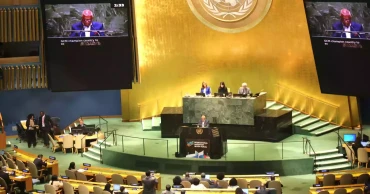
Bangladesh seeks global cooperation on safe migration at UN forum
Expatriates’ Welfare and Overseas Employment Minister Ariful Haque Choudhury has called for stronger international cooperation to curb irregular migration and ensure the protection of migrant workers’ rights, fair recruitment practices, decent working conditions and fair wages.
He made the call while speaking at the General Debate of the Second International Migration Review Forum at the United Nations Headquarters in New York on Thursday.
The minister said Bangladesh is strengthening accountability mechanisms and expanding migrants’ access to justice through a “whole-of-government” and “whole-of-society” approach, according to a statement issued by the Permanent Mission of Bangladesh to the United Nations.
He noted that the country has formed a Migration Compact Taskforce and adopted a National Action Plan for 2026-2030 to advance safe, orderly and regular migration under the United Nations Global Compact for Migration (GCM).
Ariful Haque said Bangladesh has already fulfilled seven of its 10 commitments made at the first review forum, submitted six new pledges and joined two regional initiatives.
He also said the country has presented its first Voluntary National Review on GCM implementation.
Describing climate change as an increasing driver of migration, the minister called for predictable financing and technical support for climate-affected countries.
He reaffirmed Bangladesh’s commitment to working with international partners to promote safe migration, as well as the dignified return and reintegration of migrant workers.
4 months ago
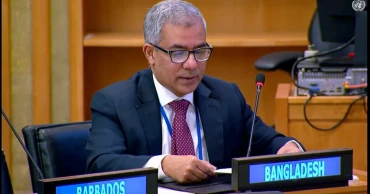
Dhaka seeks enhanced global cooperation to combat illicit financial flows
Bangladesh has said international cooperation must be enhanced to combat illicit financial flows from developing economies.
"Political will is essential to ensure the return of stolen assets to their countries of origin. This is a matter of justice, equity, and trust in the international system," said Permanent Representative of Bangladesh to the United Nations Ambassador Salahuddin Noman Chowdhury.
Speaking at the general debate of the 22nd session of the high-level committee on South-South Cooperation New York on May 27, the Ambassador said the development gains of the South are eroded by such illegal flow of assets from South to North.
CA Prof Yunus seeks quick, coordinated actions for LDC graduation
Bangladesh aligned itself with the statement delivered by G77 and China and the LDC Group.
Ambassador Chowdhury thanked UNDP Administrator Achim Steiner for his contributions to the cause of South-South and triangular cooperation.
"We reaffirm our commitment to the foundational principles: solidarity, mutual respect, equality, non-conditionality, and collective self-reliance," he said.
Ambassador Chowdhury said there is no doubt that they are in the midst of multiple challenges, many of which are beyond the control of the global South.
But it is heartening to note that the volume of trade among Southern countries is now gradually surpassing that of between the North and the South, he said.
To further enhance this potential, the envoy said, some structural support is necessary.
As an LDC in the process of graduation, Bangladesh urged the international community to continue the LDC-specific support measures for some extended period.
Ireland backs Bangladesh’s LDC graduation, eyes stronger ties
"To make graduation sustainable and irreversible, these benefits should be phased out in a staggered and predictable manner," Ambassador Chowdhury said.
The greatest asset of the South is its youth power.
"To harness this demographic dividend, we must invest in quality education and skill development particularly in frontier technologies such as artificial intelligence," said Ambassador Chowdhury.
He said youth must be placed at the heart of development strategies, not merely as recipients, but as drivers of transformation.
The envoy said social business models have great potential in developing countries and this can complement the domestic resource mobilization efforts.
"By prioritizing social objectives over profit maximization, social business can empower women and the vulnerable segments of society; andimprove service delivery in areas such as health, education, food security, and renewable energy," he said.
The envoy said they must enhance institutional support to the UN Office for South South Cooperation and ensure adequate financing, including through the UN Fundand the Pérez-Guerrero Trust Fund.
South-South cooperation offers context-specific, cost-effective, and mutually reinforcing solutions.
It is not an alternative, but rather a complement, to North-South cooperation.
"We must make the best use of this platform to build an inclusive and equitable world - a world of “three zeros”: zero poverty, zero unemployment, and net zero carbon emissions," said Ambassador Chowdhury.
He said they believe the upcoming FfD4 in Spain offers them a great opportunity to chart new guidance for the benefit of the Southern countries in overcoming their structural vulnerabilities including by enabling better debt sustainability and enhanced climate resilience.
"Bangladesh remains firmly committed to strengthening this agenda as a vital enabler to achieving the SDGs," said Ambassador Chowdhury.
1 year ago

Dhaka calls for global cooperation to fight pandemic, its economic fallout
Foreign Minister AK Abdul Momen has called for global cooperation to combat the COVID-19 pandemic for quick economic recovery.
He made the call while delivering a statement at the virtual COVID-19 Global Action Plan (GAP) Foreign Ministerial Meeting jointly convened by Japan and the US on Tuesday.
Momen said economic recovery remains at the core of fighting pandemic.
The fear of COVID induced stagflation caused an exodus of funds from the developing economies at a time when they need significant investments, he said.
Read: MoFA creating data-driven intelligent architecture for faster service across globe: FS
To support their economic recovery, Momen urged the advanced economies and global financial institutions to enhance flow of concessional loans, including in the health care sector; and increase financing in low-carbon developments and transfer green technologies to build back better.
During his intervention, Momen highlighted Bangladesh’s tremendous success in COVID management centered on saving lives, supporting livelihoods- especially of the most vulnerable ones, and posting quick economic recovery under the leadership of Prime Minister Sheikh Hasina.
Financial packages worth 23 billion dollars helped the economy recover quickly and post a growth of 6.94 per cent in 2021, he informed.
He also stated that Bangladesh achieved the WHO target of vaccinating 70 per cent of the total population ahead of the deadline.
Being ranked 5th out of 121 countries in the Nikkei Covid-19 Recovery Index of May 2022 was a reflection of Bangladesh’s outstanding success in COVID management, he added.
Mentioning that the COVAX mechanism has proved the efficacy of multilateral mechanism, Momen stressed several global actions to fight the pandemic.
He reiterated Bangladesh’s demand to declare COVID-19 vaccines as ‘global public goods’.
Read: Bangladesh, Brazil sign visa exemption agreement
He stressed enabling countries of the global south like Bangladesh with a relatively advanced pharmaceutical manufacturing base, to build their own capabilities of manufacturing vaccines, testing and therapeutics products through appropriate provisions in IPR and technology transfer.
Momen also emphasised on strengthening of the National disease control agencies, particularly in dealing with new variants, with the help of the WHO and advanced countries.
He flagged the need of forming a high level panel of global leaders with gender and geographical balance to devise a blueprint for better global health architecture.
The Ministerial meeting was aimed at bringing together partners to maintain and strengthen political will to address COVID-19 challenges.
Japanese Foreign Minister Hayashi, Secretary Blinken, and WHO Director-General Tedros set the stage at the outset of the meeting with their remarks, followed by interventions of the foreign ministers of 14 other countries, the World Bank president, the Acting Director of African CDC and senior officials of several other countries.
4 years ago
Challenges increase to global cooperation: UN rights chief
United Nations, OCT 16 (AP/UNB) — The U.N. human rights chief said Tuesday the world is witnessing increasing hate speech, rising challenges to international cooperation, and pushbacks on women's equality and the rights of minorities.
6 years ago