UGC

No exam from Sept 28-Oct 9: Education Ministry
The Ministry of Education has instructed the University Grants Commission (UGC) and the Directorate of Secondary and Higher Education (DSHE) not to schedule any examinations during the government announced holiday from September 28 to October 9.
The Ministry of Education issued the order signed by Md Rajibul Alam, senior assistant secretary to the Secondary and Higher Education Division, on Wednesday.
The government earlier announced a 12-day holiday for all educational institutions across the country from September 28 to October 9 on the occasion of Durga Puja, Bijoya Dashami, Fateha-i-Yazdaham, Prabarana Purnima and Laxmi Puja to celebrate those with festivity and due solemnity.
According to the order, holidays in schools will begin on September 28 coinciding with the day of Maha Shasthi.
Law enforcers to be deployed from Wednesday for Durga Puja: Home Adviser
Government and non-government secondary and lower secondary schools will remain closed for eight days excluding weekends and resume classes on October 8.
Colleges under the government and non-government calendar will also close on September 28.
With weekends excluded, they will have a 10-day holiday, reopening on October 12 as October 10 and 11 fall on Friday and Saturday.
This year, according to the calendar, the five-day main festivities of Durga Puja will begin with Shasthi Puja on September 28, seven days after Mahalaya.
11 months ago
Hidden struggles behind private university education in Bangladesh
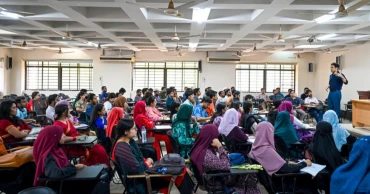
At first glance, Bangladesh’s private universities project an image of progress: sleek campuses, glossy adverts, and bold promises of ‘world-class education’. But for many middle-income families, those dreams now carry a heavy cost.
"I had to take a huge amount of loan from a bank to get my son admitted into a university in Dhaka," said Faizur Rahman, a private firm executive.
“Like me, thousands of parents are quietly bearing the burden, spending savings for a shot at higher education,” he said, adding, “Behind the air-conditioned classrooms and polished branding lies a big question -- is this model of education truly accessible?”
Completing an undergraduate degree at a private university in Bangladesh can cost a student between Tk 10 to 15 lakh, a financial burden that many middle-class families struggle to bear.
An analysis of tuition fees at several prominent private universities in Dhaka reveals that simply covering course and credit-related expenses may require a family to spend Tk 8 to 12 lakh. Depending on the subject of study, this amount may rise up to Tk 15 lakh.
For instance, a top-tier residential university located in the Bashundhara Residential Area charges between Tk 9.59 lakh and Tk 12.47 lakh for an undergraduate degree in engineering. For science-related disciplines outside engineering, the cost ranges from Tk 8.94 lakh to Tk 14.48 lakh.
Another leading private university in Merul Badda charges even more.
According to its website, students pay over Tk 8,000 per credit. When combined with admission, course, semester, and library fees, the total cost of completing a degree ranges between Tk 10 to 15 lakh.
Similar is the case with a university in Aftabnagar, where graduating in a well-regarded subject costs between Tk 7 to 9.5 lakh. For a highly demanded programme like BBA, the expense is around Tk 8.27 lakh, excluding additional miscellaneous costs.
Heavy Burden on Middle Class
In contrast, students at public universities such as Dhaka University, Jahangirnagar University, Jagannath University, Khulna University, Rajshahi University, Chittagong University and Barishal University typically spend Tk 30,000 to Tk 50,000 over the entire duration of their undergraduate studies.
This stark 16-fold difference in cost heavily impacts students and their families.
Sanwar Ahmed, an employee at a private company in Dhaka, has enrolled both his sons in private universities.
Sharing his distress, Sanwar said, “It’ll cost nearly Tk 30 lakh to complete the education of both of them. It’s impossible to afford this on a salary. That’s why I had to sell land in the village to fund their education.”
Another parent, Sabbir Hossain, who has one son and one daughter, said, “My son is still in college. I’ve admitted my daughter to an engineering programme at a private university. Each semester costs over a lakh. I’ve told my son that unless he gets into a public university, I won’t be able to fund his honours degree. I’ll find him a job instead. My monthly salary and savings are being drained for my children’s education.”
EU provides €26mn for Bangladesh education; Miller calls it key to inclusive society
Israt Jahan, a mother of two daughters, one currently studying at a leading private university, said, “My husband and I both work, yet we struggle to pay semester fees. There are also plenty of additional expenses. Even with a combined income of Tk 2 lakh per month, we often have to dip into our savings.”
Mounting Pressure on Students
To ease the financial strain on their families, many students at private universities take up part-time jobs, or work such as tutoring, freelancing, or working night shifts.
Ahmed Faisal, a pharmacy student at a private university in the capital, said, “It will cost about Tk 15 lakh to complete my degree. While my father could initially afford it, a sudden illness means he can no longer contribute as before. That’s why I’ve taken up three tutoring jobs after classes to help cover the fees. It’s not enough, but it helps a little.”
Abdullah Sadi, a BBA student at another private university, echoed the sentiment, saying, “It’s hard enough to afford the credit fees, but on top of that, the academic system in Bangladesh doesn’t allow for much flexibility to work part-time. So, many of us—including myself—work night shifts at call centres to make ends meet.”
When it comes to quality of education, several students admit that most are pursuing their degrees not for learning or skill development, but simply to obtain a certificate, essentially, paying large sums for a piece of paper.
Public Seats Limited, Private Options Costly
Each year, nearly one million students qualify for university admission after passing the Higher Secondary Certificate (HSC) exams.
According to the University Grants Commission (UGC), public universities in Bangladesh offer only around 55,000 seats. With the seats in medical and engineering institutions, the total still only reaches around 100,000.
In the 2024 HSC exams alone, 145,911 students achieved GPA-5, while over one million passed. This means more than half of the top-performing students couldn’t secure places at public universities and had no choice but to turn to expensive private ones.
The Private University Act of 2010 states that all private universities must operate as non-profit institutions. Trustees or authorities are prohibited from drawing personal financial benefits and are required to submit annual audit reports via government-approved firms.
Haileybury Bhaluka School opens a new era for British education in Bangladesh
Yet, investigations reveal that many of the 116 UGC-listed private universities fail to submit annual financial reports to the Ministry of Education.
Despite holding frequent syndicate meetings, these institutions often avoid conducting proper financial oversight. As a result, there’s little to no transparency on how students’ tuition fees are spent.
An anonymous UGC official claimed that syndicate members receive Tk 4–5 lakh for each meeting. “Trustees are living in luxury on students’ money, driving expensive cars and buying posh flats. Yet no serious investigations have been carried out. Even after repeated warnings, these universities keep getting away with it due to political and financial influence.”
When asked how such exorbitant tuition fees are determined, an administrative officer at a top-tier private university, also requesting anonymity, said, “Every decision is dictated by the Board of Trustees. Most private universities are hostage to these boards. From treasurers to department heads, all appointments are made based on trustee recommendations. These boards are more focused on business than on education.”
Rise of Corporate Education
Private universities first emerged in Bangladesh in the 1990s, following the introduction of private university policies. Many experts argue that the origin of these institutions is deeply rooted in market competition and corporate interest.
Professor Manosh Chowdhury of Jahangirnagar University’s Anthropology Department said, “At the time, neoliberalism was sweeping across the globe. Bangladesh was witnessing the rise of large corporate houses. Private universities began as part of a movement to turn education into a corporate product.”
He said, “While elite institutions like Harvard or Columbia are also private, their revenue models are very different. In Bangladesh, universities’ finances are often shrouded in secrecy—but the intent is quite evident.”
Commenting on how private universities marginalised the National University system, Professor Manosh said, “It was a business strategy. Previously, students who couldn’t secure public university seats would study at district-level colleges under the National University. Now, due to strategic marketing by private institutions, students perceive private degrees as a matter of status. This mindset is shaped by the corporate backers of these universities.”
Budgetary allocation for education and technology remains almost unchanged
Many corporate houses have used private universities to gain business advantages while presenting themselves as educational philanthropists. These institutions often serve as tools for acquiring international travel benefits, donor funding, or tax breaks—all under the guise of promoting education.
UGC Must Step Up
Education experts and rights activists insist that the UGC must take a more active role in curbing the commercialisation of education and ensuring accountability among private universities.
Rasheda K Choudhury, Executive Director of Campaign for Popular Education (CAMPE), said, “Uncontrolled commercialisation has led to the mushrooming of private universities, most of which are based in Dhaka. What passes for education in many of these institutions is little more than certificate trading.”
“These universities are becoming increasingly untouchable. There’s barely any discussion on what students are actually learning or the quality of their curriculum. It’s the UGC’s responsibility to bring them under proper regulation,” she said.
UGC member Anwar Hossain stressed the Commission’s commitment to halting the commercialisation of education and ensuring quality curricula. “Our focus is to ensure educational standards in existing institutions, while also addressing their ongoing problems,” he said.
1 year ago
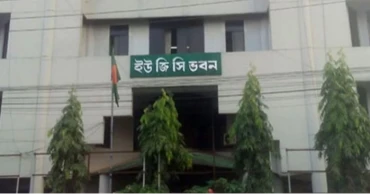
Govt action looms against 18 private universities in Bangladesh
The government is set to take legal action against 18 private universities for their failure to relocate to their permanent campuses, despite operating for over 12 years and receiving multiple deadline extensions.
The Ministry of Education has recently instructed the University Grants Commission (UGC) chairman to take action against these universities for not complying with the requirement under the Private University Act, 2010.
Rabindra University will be developed like Biswa Bharati: Planning Adviser
UGC Member Professor Dr Mohammad Anwar Hossen said, “These 18 universities have crossed the permitted time limits, some have taken 12, 15, even 20 years but still haven't shifted to their permanent campuses despite repeated reminders,” he said.
“We wrote to the Ministry of Education three months ago regarding what action can be taken. In response, the ministry has directed us to take action against 16 universities, but the number under scrutiny will ultimately be 18,” he added.
According to sources at the ministry, the Secondary and Higher Secondary Education Division wrote to the UGC chairman stating that the provisional approval period for 16 private universities has expired, yet they continue to operate without transferring academic activities to permanent campuses.
The letter cited Section 12(1) of the Private University Act, 2010, as the legal basis for action, they said.
When asked about the nature of action being considered, Dr Anwar Hossen said, “This will be decided in our upcoming monthly meeting, led by the UGC Chairman. Measures could include revoking approvals among other options.”
BU students lock admin offices demanding VC’s removal
He added that the deadline set earlier for moving to permanent campuses passed long ago, and even with fresh deadlines the universities may need another three to four years to complete the transition.
“Some universities have taken over a decade—12, 15, or 20 years—and still haven’t shifted. We will consider a range of responses in the meeting, from warnings to granting additional time based on individual circumstances,” he said.
Dr Anwar said among the 117 private universities currently operating in the country a large number still do not have permanent campuses. “Even so, many of them are still being given time,” he said.
In January 2023, the UGC had issued letters to 18 universities asking them to move to permanent campuses by December 31 of that year.
As they failed to comply with the directive student admissions were suspended at four universities, temporary campus admissions were halted at two others and the remaining 12 were given extended timeframes.
Of the 18 universities under scrutiny, nine are located in Dhaka. Those are University of Development Alternative (Satmasjid Road), Stamford University Bangladesh (Siddheshwari), Millennium University (Rajarbagh), People’s University of Bangladesh (Mohammadpur), Presidency University (Gulshan), Primeasia University (Banani), ASA University Bangladesh (Shyamoli), Sonargaon University (Panthapath) and Bangladesh University of Health Sciences (Mirpur).
The other universities are North East University Bangladesh (Sylhet), Isha Khan International University (Kishoreganj), North Western University (Khulna), Feni University (Feni), Port City International University (Chattogram), Chittagong Independent University (Chattogram) and Britannia University (Cumilla).
In a hurried move, Sonargaon University recently inaugurated an incomplete permanent campus at Khilgaon’s Ward 75 in the capital last Saturday.
KU authorities decide to expel student who attacked teacher; committee formed
According to the Private University Act, 2010, universities must shift to permanent campuses within seven years of establishment with a five-year extension allowed.
Failure to do so may result in penalties, including suspension of student enrollment.
1 year ago
Service rules in the offing to protect rights of pvt univ teachers
The University Grants Commission (UGC) is going to introduce service rules to protect the rights of teachers and staff in all private universities and prevent their arbitrary dismissal.
In an interview with UNB, UGC member Professor Dr Mohammad Anwar Hossain, who oversees private universities, said the commission is taking steps to ensure that every private university formulates and enforces a clear set of service rules.
“Teachers in private universities often raise their voices or express justified concerns. But when authorities are displeased they may terminate them without proper cause. This also happens to staff and officers,” Prof Anwar said.
To end such practices, every university must have a service rule in place, he said.
“All appointments and disciplinary actions must follow these rules. This will be a significant step toward ensuring job security for teachers and staff,” Prof Anwar added.
The UGC member said the commission is taking the matter seriously and has already issued letters to all private universities, instructing them to prepare or update their service rules within the next two weeks.
JnU students demand bigger UGC allocation for the university
From outsourced staff to professors, appointments must align with the service rule framework to protect the employees, he said.
“Even if someone is to be dismissed under the service rule, they must be given time, show-cause notices, and warnings in advance. Their rights must be protected,” Prof Anwar noted.
He further pointed out that service rules will also help bring structure to salary systems which are currently irregular and often fall short of minimum standards. “We will review the salary structure periodically,” he said.
There are currently 117 private universities in the country, and each must have its own service rule, the UGC member added.
According to UGC sources, the absence of clear and enforceable service rules has led to a range of institutional challenges in private universities including arbitrary dismissals, lack of due process in promotions and disciplinary measures and unregulated leave policies.
Teachers often face restrictions in expressing independent opinions, conducting research, or engaging in critical discussions.
Many have been dismissed without prior notice or explanation, leaving them with no scope to appeal or defend themselves.
In some cases, teachers are pressured to follow management’s directives or risk harassment and they are often burdened with excessive teaching loads or administrative responsibilities.
Many teachers and staff members do not receive minimum wages, and salary structures are often inconsistent, the UGC sources said.
Annual increments and leave entitlements are difficult to obtain and promotions frequently disregard seniority, qualifications and research contributions.
1 year ago
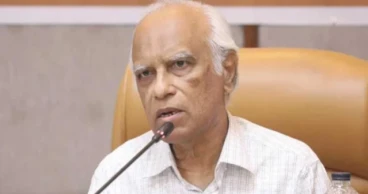
No plan to declare Titumir College a university: Adviser
Education Adviser Dr Wahiduddin Mahmud has made it clear that there is no plan to declare Titumir College an independent university.
“An expert committee is working to bring (DU-affiliated) seven colleges under a separate university…the UGC Chairman is leading that committee, Titumir College is one of those colleges,” he said on Sunday.
The adviser, who is also in charge of the Planning Ministry, said this while responding to a question after the weekly Ecnec meeting held at NEC conference room.
Fixed college-to-university timeline for Titumir unjustified: Education Ministry
He mentioned that the seven colleges do not want to be under Dhaka University while the Dhaka University also does not want these seven colleges…this is logical,” he added.
The Planning Adviser said there is no problem in demanding a university or waging a student movement. “But the students have to sit for the examination one day, if they do not concentrate on their studies and sit for examinations at this stage of age, they will not be able to do anything in the future.”
He mentioned that the general students of Titumir College told him and wrote to him saying that they wanted to sit for classes and examinations. “There should be no hindrance for their academic activities.”
The adviser asked the agitating students to throw such programmes that would not create hassles for the mass people. “It is not logical to press home their demands announcing a deadline, we will not take such a decision.”
Titumir College students block roads at Mohakhali
He also categorically expressed the government's firm stance that the interim government does not have the power to accept this type of demand. “We came here to ensure the transformation of a well governed democratic system in the country, as well as adopt some small reforms towards that,” he said.
In response to a question, the Education Adviser clarified that the statement in the press release, which mentioned that the government is giving special consideration to the matter of Titumir College, was not written by him. “The Secretary might have edited that they could do that, maybe it is for diplomacy, or do not know (regarding this matter),” he said.
He also expressed his irritation for a huge number of unnecessary public universities in the country. “There are 55 public universities right now, half of them established in the last seven years.”
Press Secretary urges Titumir College students to remain calm amid protests
Students of Government Titumir College have been agitating on the road for the last couple of days demanding that the college be turned into a university.
1 year ago

UGC asks private unis to conduct educational activities at permanent campuses
The University Grants Commission (UGC) of Bangladesh on Sunday asked the private universities to conduct all educational activities at their permanent campuses within the stipulated timeframe.
The private universities whose temporary certificate has already expired will have to shift to their permanent campuses, said UGC member Prof Mohammad Anwar Hossain.
7-member advisory committee formed to oversee DAP implementation
He made this call while visiting the permanent campus land of Ishaka International University Bangladesh in Kishoreganj district on Saturday, said a press release here on Sunday.
Prof Hossain provided necessary directions to the university authority to improve education, research, and the physical and mental development of students.
1 year ago
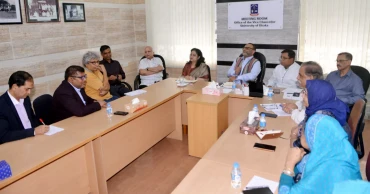
DU, UGC, World Bank meeting held
A meeting among Dhaka University (DU), University Grants Commission (UGC) of Bangladesh and World Bank was held on Sunday.
The meeting took place at the Vice-Chancellor's Lounge, where Chairman of Bangladesh University Grants Commission Prof. Dr. SMA Faiz, Vice-Chancellor of DU Prof. Dr. Niaz Ahmed Khan, Pro-Vice Chancellor (Academic) Prof. Dr. Mamun Ahmed, Pro-Vice Chancellor (Administration) Prof. Dr. Sayema Haque Bidisha, Treasurer Prof. Dr. M Jahangir Alam Chowdhury, UGC Members- Prof. Dr. Mohammad Tanzimuddin Khan and Prof. Dr. Mohammad Anwar Hossen, World Bank Senior Education Specialist TM Asaduzzaman, Senior Education Advisor Dr. Md Mahamud Ul Hoque and Project Director Prof. Dr. Asaduzzaman were present.
During the meeting they discussed various issues including implementation of different development projects at DU with the financial assistance from the World Bank.
The meeting also discussed the construction of a residential hall for DU female students, formation of a special fund for providing scholarship among financially challenged students, improving Wi-Fi network at DU, development of DU Medical Centre and undertaking joint research and training programs.
1 year ago
Education Ministry will request heads of higher education institutions to discuss with student organisations to resume academic activities
The Ministry of Education will request the heads of the higher educational institutions to discuss with the students’ organisations to resume academic activities after ensuring safe and congenial atmosphere.
Education Minister Mohibul Hasan Chowdhury Nowfel revealed the information, said MA Khayer, public relations officer of the ministry.
The University Grants Commission (UGC) on July 16 announced a closure of all public and private universities until further notice considering the issue of students' safety in the wake of widespread protests for reforming quota.
HSC exams for July 28, 29, 31 & Aug 1 postponed
A press release, signed by UGC secretary Dr Ferdous Zaman, said academic activities of all public, private universities, medical, textile, engineering colleges affiliated to the university and other colleges will remain shut until further notice.
The UGC has taken the move in line with the Education Ministry’s decision, said the release.
2 years ago

UGC forcibly imposed GST system on us: JnU Teachers Association
The Jagannath University Teachers' Association (JnUTA) has alleged that the University Grants Commission (UGC) forced the authority of Jagannath University to take the admission test through the General, Science and Technology (GST) system.
JnU to build two gates to sustain it’s tradition
Sheikh Mashrick Hasan, general secretary of the Jagannath University Teachers Association (JnUTA), made this complaint in a press conference held at Jagannath University on Saturday (January 20) noon.
He said, “While Jagannath University is trying to advance, chaos is made to suppress by keeping a system like GST. We have our own Academic Council, they are the supreme authority to decide the admission process. Yet it is being forced upon us again and again,” he alleged.
Universal College Bangladesh to hold Admission Day in Ctg offering education opportunity abroad
Mashrick Hasan also said in this regard, “All the remaining universities are being kept separate from the four universities operated by the Ordinance of 1973. It is a step towards establishing a planned elite category among the universities of the country.”
Mashrick Hasan also said that the purposes of the GST system have completely failed.
10 researchers selected for UGC post-doctoral fellowship
Therefore, the Jagannath University Teachers Association (JnUTA) demanded a single admission test for all public universities through the formation of NTA (National Testing Authority) from the academic year 2024-25 to resolve the problem.
2 years ago

10 researchers selected for UGC post-doctoral fellowship
The University Grants Commission (UGC) of Bangladesh has selected 10 researchers for the UGC post-doctoral fellowship.
The researchers were picked at a meeting chaired by UGC chairman (Additional Charge) Prof Dr Muhammad Alamgir on Tuesday, said a press release on Wednesday.
UGC forms probe committee against Islamic University VC
The 10 researchers who are getting the UGC fellowship are Dr Muhammad Nurul Amin Nuri and Dr Firoza Akter Khanom of Chattogram University, Prof Dr Sharaban Tahura and Prof Dr Gulshan Ara of Jagannath University, Dr Sheikh Mehedi Hasan of Jatiya Kabi Kazi Nazrul Islam University, Dr Md Tarikul Islam of Gopalganj Bangabandhu Sheikh Mujibur Rahman Science and Technology University, Prof Dr Farhin Hasan of American International University, Dr Shahid Md Ashif Iqbal of Premier University, Dr Sultana Razia of Barendra University and Dr Suvash Chandra Deb of Brindaban Government College.
Single entry test for public universities not from next year: UGC Chairman
A total of 30 researchers from various public, private universities located on permanent campus and government colleges of the country applied for the UGC Post-Doctoral Fellowship 2023.
According to the policy, 10 researchers from among the applicants have finally been selected for the UGC Post-Doctoral Fellowship 2023 on the basis of applicants' educational qualification, experience, publications, research title, summary, supervisor's recommendation.
UGC won’t grant exemptions for irregularities in private or public universities
2 years ago