Farmers
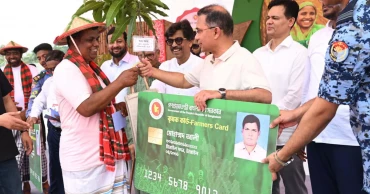
Govt aims to make farmers self-reliant, prosperous: PM
Prime Minister Tarique Rahman on Tuesday said the government has launched the Farmers’ Card scheme with the goal of making farmers self-reliant and prosperous.
“The goal of the current elected government is to make farmers self-reliant and economically secure. That is why we have given this Farmers’ Card,” he said.
The Prime Minister made the remarks after inaugurating the Farmers’ Card pre-pilot programme at the Shaheed Maruf Stadium in Tangail on Pahela Baishakh, the first day of the Bangla New Year.
He said the government has taken initiative to bring meaningful changes to farmers’ lives by ensuring direct access to essential services.
“You are aware that through this Farmers’ Card, we will try, Inshallah, to deliver 10 types of services directly to farmers. These services will help improve their overall condition in many ways,” Tarique Rahman said.
Referring to his party’s election manifesto, the BNP chairman said agriculture remains central to Bangladesh’s economy and society.
“Many of us here may not be directly involved in farming, but someone in our family is connected to agriculture. In Bangladesh, almost every family has some link to farming. Agriculture is the main occupation of this country,” he said.
The Prime Minister said the well-being of farmers is directly linked to the well-being of the nation.
“I personally believe, and the Bangladesh Nationalist Party also believes, that if farmers are well-off, if they can survive and live well, then the whole of Bangladesh will do well and the people of the country will also live better,” he added.
Tarique Rahman also announced that around 2.75 crore farmers will gradually receive the Farmers’ Cards over the next five years.
Earlier, the Prime Minister pressed a button on a laptop and launched the pre-pilot programme of the Farmers’ Card nationwide around 12:22pm, saying Bismillah (In the name of Allah, the Most Gracious, the Most Merciful.)
As soon as the programme was launched, Tk 2,500 was transferred directly to the bank accounts of 22,067 farmers each across 11 upazilas through mobile banking. In Tangail alone, 1,453 farmers received the money.
5 months ago

2 farmers killed in Jhenaidah lightning strikes
Two farmers died and four others were injured in lightning strikes at Kharibaria village of Shailkupa upazila on Saturday afternoon.
The deceased were Apu Biswas ,20, son of Prakash Biswas of Kharibaria, and Shushil Biswas 40, son of Sushil Biswas of Laxmipur village.
The four injured farmers were immediately taken to Shailkupa Upazila Health Complex for treatment.
Shailkupa police station Officer-in-Charge Humayun Kabir Molla said the victims were working in the field when lightning struck them.
Dr. Ehtesham Shahid, a physician of the hospital, said the injured suffered severe burns.
5 months ago

Bangladesh Bank’s new agro-rural credit policy fails to excite farmers
Bangladesh Bank’s latest revision of the agro-rural credit policy announced on Tuesday failed to excite farmers, who are in need of financial support more than ever before being hit by recurring disasters and inflation.
The credit policy is annually revised and the latest revision of the policy was completed with nine additions or changes, none of which, however, dealt with core concerns of the farmers.
Farmers complain about inadequate allocation for agricultural loans and its existing high interest rate, which varies between 5 and 8 per cent, a burden for all farmers for their crops not fetching legitimate prices.
For a long time Bangladesh's mostly subsistence farmers are trying to prop up their lives, particularly after disasters or crop failures or price falls, by turning to microcredit lenders or local loan sharks to access some cash. Farmers end up being caught in a debt cycle.
The central bank’s credit policy does not say anything about relieving these farmers caught in the debt cycle. The overall increase in loan allocation is insignificant while there is a high possibility of the allocated loan never reaching farmers who really needed it.
“Agricultural loan is a burden,” said Abu Bakar Siddique, an agro-entrepreneur from Mymensingh.
“Even after going through hurdles to get loans from private banks, repaying them often forces us to sell farmland. Interest rates, though initially low, keep increasing over time. Crop damage and fish farm flooding make repayment almost impossible,” he said.
BB announces Tk 39,000cr agro and rural loan target for FY2025-26
Abu Bakar represents the unfortunate lot of farmers who often fail to repay their loans. After failing to pay five installments in the last five months against Tk 12 lakh loan, Bakar was recently served a notice by a private bank, warning him of a police case unless he soon cleared his installments.
“We barely get our production cost back from selling crops, let alone making money to repay loans with high interest,” said Samsuddin, another farmer from Mymensingh.
The inevitable harsh fiscal reality often compels farmers to switch their profession by taking agricultural loans. Many farmers set up makeshift retail shops or find a better way of making money.
Farmers in Barishal’s Bakerganj upazila said that many of their colleagues took agricultural loans and invested it in non-farm ventures such as retail shops or land trading.
Farmers have long been demanding interest-free farm loans.
Currently, Bangladesh Bank instructs banks to lend at a concessional rate of 4 percent for certain import-substitute crops, while most other farm loans carry 5–8 percent interest—sometimes more.
The central bank guidelines allow banks to set their own rates, within the ceiling it prescribes.
Abdul Bayes, agricultural economist and a former vice-chancellor of Jahangirnagar University, however, warned against a blanket interest-free policy.
“If loans are interest-free, funds will end up in the wrong hands. Banks incur operating costs. While interest must remain farmer-friendly, the government should ensure proper oversight,” he said.
Bayes recommended targeted subsidies, longer grace periods, and repayment relief in disaster-hit areas, stressing that crop losses in one season should allow farmers up to 12 instalments to repay, without facing legal harassment.
Bangladesh’s banking sector pulled back from the brink: BB Governor
Private bank officials admitted they often lack the field-level capacity to screen and monitor agricultural loans, with many not having rural branches in upazilas and unions—making it harder to reach small and marginal farmers, who avoid travelling to urban centres for loans.
Under Bangladesh Bank’s crop hypothecation policy, marginal farmers owning 0.49 to 2.47 acres can secure loans using crops as collateral. But many private banks are reluctant, saying it is difficult to recover dues from crop sale proceeds from a farmer.
Private bankers' view exposes another aspect of farmers’ hardship. Crop prices fall routinely during harvest, forcing farmers to sell their crops at throwaway prices or dump them. Lack of storage capacity is the reason behind the situation.
The Bangladesh Bank credit policy has nothing to help farmers store their crops.
Ripon Kumar Mondal, professor of agricultural economics at Sher-e-Bangla Agricultural University, said: “Many farmers are also unaware of loan terms or application procedures, leading them to seek credit from NGOs or specialised banks instead.”
Anisuddin Ahmed Khan, independent director of Trust Bank, said that the lack of capacity of banks often causes them to disburse loans through “reputable NGOs rated by the Credit and Development Forum (CDF).”
He noted that private banks’ agricultural loan recovery rate is one of the highest and stands at 95 percent.
Bangladesh Bank on Tuesday set the target of disbursing Tk 39,000 crore as loan in FY2025-26, which is Tk 1000 crore higher than the year before.The loan disbursement target last year was Tk 38,000 crore. Of which Tk 37,326 crore was disbursed.
A total of six state-owned commercial banks, two specialised banks, 42 private commercial banks and eight foreign commercial banks disbursed 98.23 percent of the total target in FY2024-25.
In 2023-24, the agro loan disbursement target was Tk 35,000 crore. The actual disbursement was Tk 37,153 crore—up by Tk 4,324 crore compared to loans disbursed in FY2022-23.
Some of the key additions to the policy are inclusion of Prabashi Kallyan Bank in the farm loan programme, CIB reports mandatory for any amount of agricultural and rural loans disbursed, relaxing charge document requirements for loans up to Tk 300000 in the fisheries and livestock sectors, raising the allocation for the livestock sector from 15% to 20%, and newly setting a 2% allocation for the irrigation and agricultural machinery sector.
BB reserve heist: Court defers probe report submission to July 24
The policy also advises using information stored in crop zoning systems or farmer apps on region-based crop production or production potential, expanding the scope of contract farming, and incorporating several new crops into the loan guidelines such as cucumber, taro stolon, jackfruit, beetroot, black cumin, spice cultivation in sacks, and date molasses production.
The central bank expressed confidence in the press release that these measures will bolster macroeconomic stability, ensure a steady food supply, and contribute to sustainable rural development by increasing agricultural production.
In official estimates, Bangladesh has about 1.69 crore farming families, mostly subsistence farmers. Last year, loans were availed by more than 38.19 lakh farmers.
Agriculture accounts for 11 per cent of GDP in 2024 after decades of gradual decline. In the 1960s, the contribution to GDP of the agricultural sector was about 62 per cent.
Agriculture accounts for over 45 per cent of employment in Bangladesh.
1 year ago
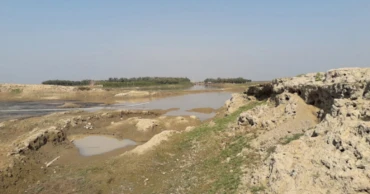
Slow progress in Sunamganj crop protection dam work worries farmers
Crop protection dam work in Dharmapasha upazila of Sunamganj is progressing at a snail’s pace, leaving farmers worried over the protection of Boro paddy.
Although one month has elapsed since the start of the work the members of the Project Implementation Committees (PICs) for 86 dams in seven haors ihave not received the first installment of funds yet.
According to Dharmapasha upazila administration, seven haors—Chandra Sonar Thal, Joydhana, Sonamorol, Kailani, Joydhana (2), Gurma, and Rui Beel—fall under the jurisdiction of the Sunamganj Water Development Board.
The authorities allocated an amount of Tk 19.15 crore for the 86 crop protection dam projects in these haors.
The members of the PICs for these 86 projects are still waiting for the first installment of funds.
According to the policy, the construction and repairs of the dams were supposed to begin on December 15 last with the work scheduled to be completed by February 28.
The work was inaugurated on December 15 but due to delayed water drainage from the haors, work began in the first week of January.
The funds for the dam work are supposed to be distributed in four installments through cheques.
As per the guidelines, 25% of the allocation is meant to be given as an advance before the work begins. Despite the passage of over a month, the PICs have not received any funds yet.
Several farmers from the haor areas expressed concern saying that due to delays in forming the PICs and other preparatory work the dam construction started late, and the work is progressing slowly, putting their Boro crops at risk.
On a field visit on Monday last, the correspondent found that work of at least ten crop protection dams in Chandra Sonar Thal and Rui Beel haors was moving at a slow pace.
Read: Ballooning number of crop protection dams in Sunamganj haor region raises concern
Soil was piled up in some areas, and only five to seven workers were present at each site.
Salah Uddin, president of the project implementation committee for the 33rd dam in Chandra Sonar Thal, said that their dam, with a length of 990 meters, has been allocated over Tk 23.33 lakh.
"We began the work on time, but we were supposed to receive 25% of the allocated amount before starting the work, however we haven't received a single taka yet. We are facing significant challenges and delays in completing the work. I've heard that the delay is due to the absence of the UNO, but we urgently need the first installment to continue the work," he added.
Jahangir Alam, an assistant engineer in charge of overseeing the dam work, said the first installment of the funds has already been deposited in the bank.
However, the delay in disbursing funds has been hampering the progress of the work, he said.
Acting UNO and Assistant Commissioner (Land) Aliduzzaman said that the previous UNO was transferred on December 31, and a new UNO has been appointed.. “We hope the issue will be resolved in a few days," he said.
Mamun Howlader, executive engineer of the Water Development Board in the district, said that he spoke to the Deputy Commissioner (DC) about the matter.
Read more: Parts of Chandpur town protection dam collapse
DC Mohammad Ilias Mia assured that the PICs would receive their first installment of funds within two to three days, he said.
Crop protection dams are built to protect crops from early floods and landslides.
Haors are wetland ecosystems found in the north-eastern part of Bangladesh. Sunamganj district is famous for its numerous haors.
1 year ago
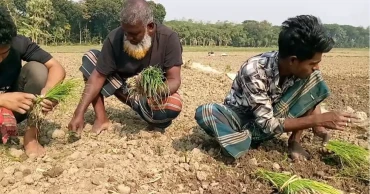
Onion farmers in Shailkupa hit by fertiliser shortage during peak season
Farmers in Shailkupa Upazila of Jhenaidah district are facing a severe shortage of chemical fertilisers during the peak onion cultivation season.
The fertiliser is not available from dealers as expected, and what is available in the open market is being sold at higher prices. This has left many farmers worried about their crops, fearing they could incur financial losses without access to the necessary fertilisers.
Farmers across the upazila are complaining that they cannot get the fertiliser they need from the local dealers.
Large influx of migratory birds enhances scenic charm of Ramrai Dighi in Thakurgaon
Shariful Islam, a farmer from Dhaora village, has planted onions on 5 bighas of land and is concerned that the shortage of fertiliser may ruin his harvest. "If I can't apply fertiliser on time, I could lose all my capital," he said.
Like many other farmers, Shariful has been forced to buy fertiliser from the open market at high price.
Farmer Rafiqul Islam said, "When we go to the dealer to get fertiliser at the government-set price, the dealer refuses, claiming they don't have any."
"But when we go to the open market, we can find fertiliser, but the price is Tk 300 to 400 higher per sack," he added.
Record Aman harvest, yet rice prices soar: Who's to blame?
Ayub Hossain, another farmer from Madandanga village, said "I have planted onions on 2 bighas of land this season, nurturing regularly in the hope of a good harvest. But I fear a crop failure if I can't apply fertiliser in time. If I lose my onions, I will lose all my investment."
Other farmers, like Abul Hossain, face similar challenges. "I need 6 bags of fertiliser, but I have to stand in line all day to get just one bag," he said.
Another farmer, Ismail, said, "If I can't give fertiliser on time, the onion yield won't be good. I'll lose my investment, and if that happens, I won't cultivate onions next year."
Farmers in the region have further alleged that the dealers appointed at the union level do not operate from their designated locations. Instead, they have set up shops in municipal areas, selling fertiliser at prices higher than the rates set by the government.
This has led to widespread frustration among farmers, especially during the peak onion planting season. They are now demanding a prompt solution to the ongoing fertiliser crisis.
Sunamganj villagers haunted by river erosion blamed on illegal soil cutting
Dealers, however, claimed that the supply is insufficient to meet the high demand.
Shailkupa Upazila Agriculture Officer Arifuzzaman said that the shortage was partly due to farmers storing fertiliser in their homes, which has further limited availability.
He assured that efforts are being made to distribute fertiliser to all farmers, and additional guidance is being given for better yields.
This season, the target area for onion cultivation in Shailkupa is 12,000 hectares, with a demand for 8,000 metric tons of fertiliser, including urea, TSP, and DOP.
However, the available supply has not been enough to meet these needs, leaving many farmers frustrated and worried about their crops.
1 year ago

Sunamganj farmers struggling to cultivate Boro due to badly-planned road
Farmers in Jagannathpur upazila of Sunamganj district are struggling to cultivate Boro paddy due to waterlogging caused by a newly built road.
More than a hundred farming families in Rouyail and Alampur villages are now worried about their crops.
A complaint was filed with the Jagannathpur Upazila Nirbahi Officer on Thursday, highlighting the issue.
According to the complaint, the water in Parua Haor, located in Rouyail village of Raniganj union, has not drained properly. This problem arose after the construction of the Balisree-Panachatal road by the Rouyail Hilalpur Water Management Cooperative Society Limited, a local cooperative society under the LGED, last year.
During construction, no drainage provisions were made, leaving the haor waterlogged.
Read: Bumper Boro paddy yield in Khulna’s saline land brings joy to farmers
Zakir Hossain Jamal, a farmer from Rouyail village, said, "This is the ideal time for Boro cultivation, but the water in the haor is still knee-deep, making it impossible to plant paddy sapling. Farmers in both Rouyail and Alampur villages are extremely concerned about the Boro crop."
Another farmer, Samuj Mia, explained, "The road was built without a drainage path, so the water is stuck. We have contacted the Water Management Cooperative Society many times but received no solution, which led us to file this complaint."
Motaher Ali Nunu, General Manager of Rouyail Hilalpur Water Management Cooperative Society, said that the area where a culvert was planned to drain the water has now dried up.
However, he assured farmers that the company is committed to supporting them in any efforts to resolve the issue.
Read more: Govt to procure 17 lakh tonnes Boro paddy, rice
Md. Barkat Ullah, Jagannathpur Upazila Nirbahi Officer, said that the Upazila LGED has been instructed to take immediate action.
Local LGED official Sohbar Hossain added, "We are seriously looking into the matter."
1 year ago

Onion seed cultivation: Faridpur couple become role models, farmers aim Tk 300 crore worth of production
In the Gobindapur area of Ambikapur union, Sadar upazila, Faridpur district, Lovely Akter and Imtiaz Mollah have transformed their fortunes and become a beacon of success in onion seed farming, locally referred to as “black gold”.
Starting with just two bighas of land, the couple has expanded their cultivation to 40 bighas, witnessing substantial economic growth that allowed them to construct a multi-storey building and continually invest in new land.
The duo, parents to a tenth grader and a fourth grader, embarked on this venture after observing the lucrative outcome of onion seed cultivation within their family post-marriage. After her marriage, she found that some family members among her in-laws were involved in onion seed cultivation and decided to join along with her husband in this endeavor. They earned good money in the first year and haven't looked back since, Lovely shared.
Onion prices fall by Tk30 per kg as seasonal supply rises in market
2 years ago

Off year for mangoes in Chapainawabganj? Farmers fear potential loss
Mango farmers in Chapainawabganj district are bracing for potential losses this season, with significantly fewer buds observed on trees, particularly affecting larger trees amid challenging weather conditions.
This year's reduced bud bloom could mark the season as a mango-off year, a phenomenon where production alternates annually between high and low yields due to natural growth cycles and external factors.
Department of Agriculture Extension (DAE) sources indicate that cold weather is to blame for the decreased number of mango buds in the district. However, there is optimism that warmer temperatures could encourage more buds to bloom.
Off-season Gourmoti mangoes could be profitable for Thakurgaon
The region, known for its extensive mango orchards spanning 37,604 hectares, produced 443,625 metric tonnes of mangoes last year. Mango bud formation typically occurs from early Magh to mid-Falgun, but this year's expected bloom has been hampered by the prevailing cold.
Mango farmer Abdur Rakib from Chapainawabganj municipality notes that diligent tree care can yield better bud production, even in an off year. Yet, the cost of cultivation might outweigh profits due to the reduced number of buds. Rakib also highlights the risk of natural calamities, which could further impact growers already facing low bud counts.
2 years ago

Chapainawabganj farmers set to surpass Boro rice production targets
Farmers in the Chapainawabganj district are poised to surpass their production targets for boro rice this year, aiming to harvest 253,780 metric tonnes, thanks to a surge in interest spurred by last season's bumper yield.
The Department of Agriculture Extension (DAE) has outlined an ambitious plan to cultivate boro rice across 52,200 hectares of land. The cultivation efforts are distributed across various upazilas, with 13,220 hectares in Sadar, 15,720 in Gomastapur, 6,250 in Bholahat, 9,680 in Nachole, and 7,330 hectares in Shibganj.
Farmers like Kawsar Ali from Sadar upazila are busy preparing their fields and sowing boro seeds. Ali, who has dedicated eight bighas of land to boro cultivation, noted the rising costs of production, attributing them to increased labor and irrigation expenses. Similarly, Mayez Uddin pointed out the hike in land plowing costs from Tk 300 to Tk 350, alongside rising labor charges.
Govt to provide Tk 108 crore as incentive to boost Boro production: Ministry
Paddy workers, enduring the winter chill to plant boro, like Madan, highlighted that the current rate of Tk 500 for planting helps cover their household expenses despite the hard work.
Dr. Palash Sarkar, Deputy Director of DAE, remains optimistic about this year's prospects. He mentioned the widespread adoption of the Ufsi boro variety, ensuring there's no shortage of seeds or fertilizers. Furthermore, irrigation has been smooth due to reliable power supply, and farmers have received all necessary guidance from agricultural officials.
With these favorable conditions, Dr. Sarkar anticipates that the boro rice production target will not only be met but exceeded, signaling a successful and productive season ahead for the farmers of Chapainawabganj.
Half of Boro paddy procurement target not achieved yet, Food Minister tells JS
2 years ago

Faridpur farmers anticipate impressive mustard yield worth Tk 151.38 crore
In Faridpur, a significant increase in mustard cultivation has been reported, with the area under mustard crops expanding by over 2,000 hectares from the previous season. This expansion anticipates a high-yield output valued at an impressive Tk 151.38 crore.
The Department of Agricultural Extension (DAE) in Faridpur has noted that mustard now spans 14,842 hectares, targeting a yield of 1,360 kg per hectare. Given the current market rate, which surpasses Tk 3,000 per maund, the district's projected earnings are substantial.
Govt initiative to reduce edible oil imports: Jashore’s mustard farmers anticipate exceptional harvest
Anwar Hossain, the Agriculture Officer of Faridpur Sadar upazila, attributes this growth to the rising prices of edible oils. He observed that mustard cultivation has become a preferred choice in nearly all fields across the district’s nine upazilas. “Farmers are increasingly turning to mustard due to its lower maintenance, availability of resources like fertilizers and medicines, and encouraging government policies,” said Hossain.
The district has seen the cultivation of various mustard varieties, including BARI-14, 15, 16, 17, Bina-4, 8, 9, and Tori-7. This diversification, coupled with the growing demand for pure mustard oil, has led farmers to focus on high-yielding strains.
Local farmers, Ibrahim Mollah and Rahim Matabbar from Ambikapur, highlighted the advice from the Department of Agriculture to plant an additional crop before the boro paddy season. This strategy maximizes the use of fields and aligns with the mustard’s shorter growth period of just 80-90 days.
Farmers expect bumper mustard yield in Khulna
The cost of cultivating mustard ranges from Tk 7,000 to Tk 8,000 per bigha, with the potential to yield 5-6 maunds of seeds per bigha, especially under favorable weather conditions. This efficient production cycle and promising market rates are driving Faridpur’s agricultural sector towards a robust mustard season.
2 years ago