Ministry of Agriculture
PM for reducing import dependence by boosting farm production
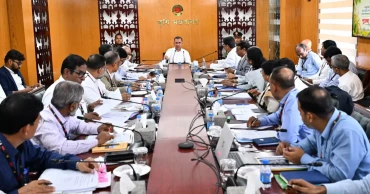
Prime Minister Tarique Rahman on Sunday stressed the need for reducing Bangladesh’s dependence on imports of agricultural and food products by increasing domestic production of crops that can be grown in the country.
He also asked officials of the Ministry of Agriculture to take effective measures to boost the production of locally viable agricultural commodities, while ensuring food security and making farming more productive and profitable, said a release issued by the PM’s Press Wing.
The Prime Minister gave the directives at a meeting with officials of the ministry at its conference room in the Bangladesh Secretariat in the afternoon.
He directed officials to focus not only on increasing agricultural productivity but also on reducing farmers’ production costs and ensuring fair prices for their produce.
“We must gradually reduce our dependence on imports of agricultural and food products that can be produced domestically. To this end, we need to put greater emphasis on increasing domestic production by quickly taking research findings, improved varieties, modern technologies, irrigation facilities and mechanisation to farmers,” Tarique Rahman said.
Earlier, the Prime Minister walked from his office to the agriculture ministry and took the stairs instead of using the lift to reach the ministry’s conference room.
At the meeting, officials presented the overall situation of the agriculture sector, ongoing activities of the ministry and its future plans.
The ministry informed the meeting that mustard production has increased significantly as part of efforts to reduce dependence on imported edible oil.
Mustard production rose from 8.24 lakh tonnes in 2021-22 to 15.34 lakh tonnes in 2024-25 and 15.41 lakh tonnes in 2025-26.
The meeting was also informed of initiatives to increase onion production and storage capacity. “Measures include introducing air-flow technology for onion storage at farmers’ level and expanding summer onion varieties.”
The ministry is also working to expand climate-resilient crop varieties tolerant to salinity, drought and waterlogging at the field level.
Highlighting progress in agricultural research, officials said a total of 1,090 crop varieties have so far been developed, including 155 rice varieties.
More than 1,000 agricultural technologies have also been developed, according to the presentation.
The meeting stressed greater emphasis on agricultural mechanisation to reduce labour and production costs while increasing productivity.
The government is working to increase domestic production of agricultural machinery and make equipment such as combine harvesters, reapers and rice transplanters available to farmers at affordable prices.
The expansion of solar-powered irrigation was also discussed. There are currently 2,617 solar irrigation systems in the country, and expanding renewable energy-based irrigation could help reduce farmers’ irrigation costs and dependence on conventional fuels, officials said.
The meeting also reviewed the Farmers’ Card programme aimed at ensuring direct delivery of government support to farmers.
The agriculture ministry has set a target of bringing 43 lakh farmers under the card programme in the 2026-27 fiscal year. Preparations are underway to distribute cards to around 1.10 lakh farmers in the first phase, the meeting was informed.
The meeting also discussed canal excavation, tree plantation, and storage and marketing of farm produce.
5 days ago
Project launched to boost climate resilience, food security in Cox’s Bazar
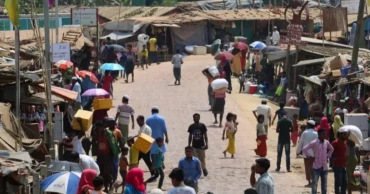
The government of Bangladesh has taken a project aimed at strengthening the resilience and livelihoods of poor and marginal communities in Cox’s Bazar, one of Bangladesh’s most disaster-prone districts, through sustainable, nature-based solutions.
The project, titled “PRO-ACT Bangladesh – Resilience Strengthening through Agri-Food Systems Transformation in Cox’s Bazar,” will be implemented by the Department of Agricultural Extension (DAE) under the Ministry of Agriculture and is set to run until June, 2028.
With an estimated cost of Tk 53.01 crore, fully funded by foreign grants, the project seeks to improve food and income security, promote sustainable agriculture, and reduce disaster risks in four upazilas — Cox’s Bazar Sadar, Ramu, Ukhiya, and Teknaf.
Under the initiative, 10,000 farmers will receive training and input support to cultivate nutrient-rich crops, while 600 families involved in aquaculture will be trained in modern fish-farming techniques.
Besides, 1,050 farmers will be supported in toxin-free dry fish processing including branding and market access development.
Read more: Access to credit for agri sector can enhance food security: Bangladesh Bank Governor
The project also envisions creating five agricultural aggregation centres to boost market connectivity and promote ICT-based agricultural extension services.
Local service providers and farmers’ groups will be trained on financial literacy, digital tools, and business planning to improve access to agricultural credit and strengthen value chains.
To enhance disaster preparedness, communities will receive training on the Landslide Early Warning System (LEWS) and crop-based land use maps will be developed to integrate disaster risk reduction into agricultural planning.
According to the Planning Commission, the project will play a pivotal role in mitigating the adverse effects of climate change and addressing the environmental degradation worsened by the Rohingya refugee influx — including deforestation, land erosion, and waterlogging.
Funded by the European Union and implemented in collaboration with the Food and Agriculture Organization (FAO), Forest Department, and Department of Fisheries, PRO-ACT Bangladesh focuses on restoring ecosystems and strengthening the adaptive capacities of vulnerable populations.
With a target to reach more than 54,000 beneficiaries, including smallholder farmers, women, and marginalised groups, the initiative aims to transform Cox’s Bazar’s agri-food systems through climate-smart agriculture, sustainable resource management, and inclusive economic opportunities.
Officials said the project aligns with Bangladesh’s long-term climate adaptation goals and underscores the government’s commitment to building a resilient future in the face of worsening climate challenges.
Read more: Bangladesh's food security at risk as farmland shrinks by 3.75 percent in 8 Years: BBS Survey
Cox’s Bazar is facing frequent exposure to a wide range of natural hazards and extreme weather conditions such as cyclones, heavy rainfall, landslides, flash floods and storm surges.
In recent years, the district has been particularly vulnerable to recurring landslides and cyclones.
The severity of these disasters is worsened by widespread poverty and the limited coping capacity of local communities — with about 33 percent of the district’s population living below the poverty line, according to UNDP.
Since 2017, Cox’s Bazar has also hosted around one million Rohingya refugees, which has significantly increased the population at risk.
The influx has contributed to new environmental and safety challenges, including deforestation, hill-cutting, and mounting pressure on infrastructure. Because of overcrowded settlements, hilly terrain, and temporary housing conditions, Rohingya families are particularly susceptible to severe weather events.
Read more: Dream project derails; Khulna-Mongla railway struggles without freight flow
10 months ago

93 tonnes of green chilli imported amid soaring price
Ninety three tonnes of green chilli have arrived in the country from India through different land ports after Eid holidays, said the Ministry of Agriculture.
In the wake of surging price, the Ministry of Agriculture has so far permitted import a total of 36,830 metric tonnes of green chilli, said a press release of the ministry on Sunday.
UNB Satkhira correspondent reports after Eid holidays the trade activities between India and Bangladesh resumed through Bhomra land port on Sunday with the arrival of 60 tonnes of green chilli.
Green chilli still selling at Tk600 per kgSix trucks loaded with 10 tonnes of green chilli each entered the land port, said general secretary of Bhomra C&F Agent Association ASK Maksud Khan.The price of green chilli may decrease in the local market with the import, he hoped.However, a number of trucks carrying green chilli from India are on the way to Bangladesh and these will reach the land port by this (Sunday) evening, he said.Abdur Rahim, general secretary of Satkhira Kitchen Market Traders Association, said green chilli is being sold at Tk 400-450 per kg at wholesale market while it is being sold at Tk 600 at retail market.
60 tonnes of green chilli imported through Bhomra port“Already the price of green chilli has started to come down and it will be sold at Tk 50-60 per kg within two days,” he said.The price of green chilli has significantly risen in the local market recently.
UNB Benapole correspondent reports: Green chilli import from India through Benapole began on Sunday evening.
Chilli price hike heats up Barishal markets
Five trucks carrying 34 mts green chilli entered the land port at 5 pm today.
3 years ago

Indian onions start arriving through land ports as import resumes
Onions from India have started arriving in Bangladesh through land ports on the border as the government announced resumption of onion import after over two months of restriction.
The agriculture ministry took the decision to allow importing onions on Sunday (June 4, 2023) considering the unusual price hike.
Two trucks loaded with 40 metric tonnes of Indian onions entered through Hili land port in Dinajpur at 5:45 pm today (June 6, 2023).
Read more: Govt to allow onion import from Monday: Agriculture Ministry
Shahidul Islam, an importer, said, “There has been a shortage of imported onions in the country since mid-March. As a result, the price of local onions skyrocketed in both retail and wholesale markets after Eid-ul-Fitr.”
“In this situation, importers have been demanding that the government allow them to import onions from India, to keep the price stable. Keeping the traders and consumers in mind, the Ministry of Agriculture has given permission to import onions from India on Sunday,” he said.
Although the imported onions are yet to reach the market, prices have already started to go down as the news broke.
Read more: Proper preservation of onions to end instability, crisis: Agriculture Minister
Moinul Haque, a retail trader at Hili Bazar, said onions were being sold at Tk 80 per kg this evening – Tk 5 less compared to this morning.
“We may see a fall in onion prices in the coming days,” he said.
Meanwhile, 57 onion-carrying trucks from India have entered the country through Sonamasjid land port in Chapainawabganj.
Prabhat Kumar Singh, assistant commissioner of customs at Sonamasjid land port, said the trucks carrying 1,097 metric tonnes of onions have entered Bangladesh.
Read more: Govt aiming to become self-sufficient in onions: Agriculture Minister
“Trucks are allowed to enter the port only after receiving IP approved documents,” he said.
The government stopped importing onions from India from March 16 this year to ensure fair prices for onions produced by local farmers.
3 years ago

Dutch-Bangladeshi agri-business conference held at The Hague
The Bangladesh-Netherlands Agri-Business conference was held at the Hague to enhance the agro-food processing system and technological cooperation with both countries.
The conference was jointly organized by the Ministry of Agriculture (BD), Bangladesh Embassy in the Netherlands, the Ministry of Agriculture, Nature and Food Quality of the Netherlands, and Wageningen University and Research.
Also read: Agri-Business Conclave to bridge Dutch innovation, tech for dev of Bangladesh agro, food industry
The conference discussed innovation and cooperation in the fields of agricultural food processing, horticulture, dairy, fisheries, and poultry. Emphasis is being placed on how Dutch knowledge, experience, technology, and innovation can be utilized in these sectors in Bangladesh.
Agriculture Secretary Md. Saidul Islam, Ambassador of Bangladesh to The Hague M Riaz Hamidullah, Deputy Director-General of the Ministry of Agriculture of Nature and Food Quality of the Netherlands Guido Landhir, Executive Director of the Netherlands Food Partnership Myrtle Dance, Dutch Top-sector Agro-Foods Director Willen, Digital Innovation Partner Jan Carroll Mac, among others, spoke in the conference.
Also read: Agriculture sector may follow Spain's Almeria model: Tipu Munshi
4 years ago

Will achieve self-sufficiency in jute seeds: Agriculture Minister
The agriculture and jute ministries are working with stakeholders to help Bangladesh achieve self-reliance in jute seeds and end dependence on India, Agriculture Minister Abdur Razzak said Thursday.
5 years ago
.jpg)
IFAD supports smallholder farmers with nutritious homestead vegetable gardening kits
The International Fund for Agricultural Development (IFAD) and the Ministry of Agriculture (MoA) have started distributing homestead vegetable gardening (HVG) kits among 26,000 smallholder farmers in coastal Bangladesh to combat the effects of the COVID-19 pandemic.
5 years ago
.jpg)
DAP fertiliser factory exceeds production target
DAP Fertiliser Company Limited, operating under the Ministry of Industries, has exceeded its production targets for the fiscal 2019-20 (FY20).
The factory, situated at Rangadia in Chattogram, had set a production target of 60,000 metric tonnes in the current fiscal.
The factory has produced 64,000 MT DAP fertiliser as of May 4, said a press release of Industries Ministry on Tuesday.
6 years ago