Facebook Post
Youth held in Sylhet over “derogatory Facebook posts” about PM Tarique
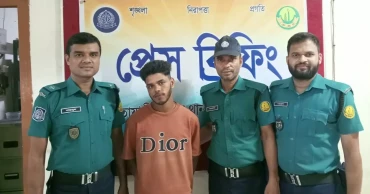
Police have detained a youth Sylhet city over allegations of posting abusive and derogatory remarks about Prime Minister Tarique Rahman on Facebook.
The detainee was identified as Mehedi Ahmed, 21, a resident of Noagaon Sadipur area under Kotwali Police Station in Sylhet city.
According to police sources, a team led by Sub-Inspector Shimul Chowdhury of Kotwali Police Station conducted a raid at Mehedi’s residence on Friday night and detained him.
Police said Mehedi had been using obscene and offensive language against Tarique Rahman in Facebook posts for a long time.
Following a complaint filed with the police station, he was identified with the help of information technology and subsequently detained, police said.
Kotwali Police Station Officer-in-Charge Mainul Zakir Chowdhury said a person has been detained over allegations of making derogatory remarks on Facebook about the Prime Minister.
“He is being questioned. Legal proceedings are underway,” he said.
1 hour ago

From posters to punchlines: How Bangladesh’s politics got 'Meme-ified'
Bangladesh now stands at a threshold where the familiar theatre of politics is being rewritten before our very eyes. Once, the story was told through posters plastered on cracked walls, festoons strung across narrow lanes, and the blare of megaphones cutting through the night.
Now, the script has changed. The new battlefield is the screen; the new weapons are memes. Laughter slices deeper than slogans. Irony pierces harder than pamphlets.
Once, citizens gathered in town squares, markets, or outside city halls to speak up, protest, and debate. They held signs, chanted slogans, and faced one another. Today, that stage has mostly shifted - into our phones. Social media is now the battlefield, the meeting place, the soapbox all in one.
In this new “public square,” comment threads, TikTok videos, meme pages, and viral posts have replaced physical rallies. Political stories, grievances, and loyalties are born, spread, and challenged in real time - often by ordinary people, not just by the powerful.
This change brings both hope and danger. On the bright side, a single meme or clever post can circle the country overnight. Voices once ignored - students, artists, the quiet observers - can now speak and be heard.
It is now obvious that the great battle for power is no longer fought only in the streets — it is being waged in the feeds of the masses.
The ‘Youthquake’ that lit the fire: July 2024
The turning point came with the student uprisings of July 2024. Streets thundered with chants, but the internet raged with a parallel storm. Memes seared authority with biting wit, hashtags outpaced the speed of slogans, and protest art became the new graffiti—spray-painted not only on the walls, but also across screens.
What once was dismissed as jest turned into a clarion call, it was not just mere annotation anymore. It was mobilization. And in that moment, the internet was not just a witness to history, it became history’s weapon.
Our soil is especially ripe for this transformation because Bangladesh is a young country. Youth make up about one-third of our population. Among registered voters, more than 30 percent are under 35.
But until recently, many of those young people stayed away from elections. A survey found that 54 percent of youths had never voted in a general election. Another study reported 75 percent of youth said they had never participated in a national election.
Then came July 2024. The student uprisings shook things, and young people poured into streets and into screens. Hashtags, meme pages, comment threads - politics became a conversation again, not just a grand show by old parties. Some who had never voted before began reading debates in comments, watching candidate profiles, sharing sarcastic memes about corruption, inequality, demand for change.
The mix of memes and youth has created new fault lines. The young are less patient with old speeches, more drawn to sharp humor, more likely to share than just listen. In a filtered feed, one clever meme can travel faster and wider than a campaign leaflet ever could.
Satire sharpens its edge: DUCSU 2025
The tide swelled in 2025 through the Dhaka University Central Students Union (DUCSU) and hall union elections. Campaigns abandoned hollow chants and embraced parody. Posters mocked currency. Slogans dripped with sarcasm, and memes that were once laughed off as simple jokes began to carry real weight, almost like political manifestos.
But every sword casts a dreadful shadow as well. With satire came smear. Falsehoods spread like wildfire, targeting candidates, especially women, with venomous precision. The Election Commission intervened with warnings. It felt as if online missteps could carry the same weight as tampering with ballots.
A sobering truth emerged - satire was no longer just harmless fun. It had become a fatal double-edged weapon, capable of ending someone’s career as easily as saving it.
Faceless army: The bot Invasion
Yet hidden behind the scene, a silent power directs the show. Bot armies, silent and relentless, amplify narratives, drown dissent and create illusions of consensus. A candidate’s popularity, or its perception at least, can be inflated in minutes. Critics can be buried beneath waves of coordinated noise.
For the common voter scrolling through their feed, the line between genuine support and engineered approval has all but disappeared. Humor may lighten the meme wars, but distortion fuels them. And in this strange new arena, the opponent may not be another citizen; but an ‘Army of Shadows’.
Election 2026: Rules of war rewritten
As the nation steels itself for the 13th general election in 2026, the Election Commission has laid down a new code of combat. The old order is gone.
Posters, festoons, and PVC banners - all summarily banished. Billboard ads, once towering symbols of influence, cut down to just twenty per constituency. Every social media handle must now be declared, every message subject to scrutiny. A single misleading post could summon not applause but imprisonment and a fine sharp enough to cripple a campaign.
Clearly, the age of poster wars has ended. The age of meme wars has begun.
No longer will victory belong to those who command the walls of a city. It will belong to those who command its feeds. Candidates who wield satire with skill and algorithms with precision will surge forward. Those clinging to the relics of the old world will fade into irrelevance.
But the danger is stark as one careless meme can undo a career. One viral punchline can crown a leader. The margin between triumph and ruin has never been so thin.
Warnings from Abroad
Look abroad for signs of what may come. In Germany’s 2021 federal election, researchers documented how campaigns and disinformation used social media to sway voters. Platforms struggled to stem the tide of fake news flooding timelines. One study found that extra ad impressions on social media could shift vote shares by a few percentage points. (OUP Academic)
Meanwhile, in Tanzania, ahead of its 2025 election, the government blocked access to X (formerly Twitter) after alleged “cyberattacks” — raising questions about whether this new “public square” can be shut down at will.
These examples reveal both the promise and peril of digital politics: memes and algorithms can spark change, but they can also be captured, censored, or twisted by those in control.
Perils of the ‘new age’
Yet the odyssey ahead is artful. The imposed regulations on ‘harmful content’ may become a stern shackle for dissent. Legions of bots could shake the very foundations of democracy, turning honest debate into a battlefield of deception. It is certain that the eco-friendly reforms will save the environment, but there lies risks of sidelining candidates who lack digital muscle to compete.
Thus, the stage of Bangladeshi politics has been transformed. The festoon and the poster, once the lifeblood of campaigns, now surrender to social media, memes and hashtags. What once simply entertained has become a calculated strategy. What once adorned walls now shapes destinies.
As the countdown to the 2026 election continues, one thing is clear - the real fight won’t be in crowded squares or noisy rallies, but in the digital feeds where stories are crafted, sharpened, and spread. And make no mistake, that battle is already underway.
The streets may still reverberate with echoes, but the screens will be the dominant medium, for sure. And, in this kingdom of pixels and punchlines, the victor will not be the one who shouts the loudest, but the one who makes the world laugh, click and believe.
11 months ago

Clashes at Hathazari over FB post; Section 144 imposed
Local administration in Hathazari upazila of Chattogram district has slapped Section 144 after tensions escalated between two groups over a Facebook post related to Eid-e-Miladunnabi.
At least 20 people were injured and several vehicles vandalised in the upazila on Saturday after the post triggered clashes.
Police said a youth named Arian Ibrahim sparked outrage after posting on Facebook a photo showing him making obscene gestures during a religious procession held to mark Eid-e-Miladunnabi.
The procession had passed in front of Al-Jamiatul Islamia Darul Uloom Muinul Islam Madrasa, one of the country’s largest Qawmi madrasas.
Local sources said the photo quickly went viral, angering madrasa students and followers in Hathazari and nearby Fatikchhari.
Although Arian later posted a video message apologising for his actions, the situation escalated at night when agitated madrasa students blocked the Chattogram–Khagrachhari highway and vandalised several vehicles, leaving at least 20 people injured.
Section 144 imposed in Godagari after factional clash within BNP
Meanwhile, police detained Arian for questioning.
Madrasa authorities, through loudspeaker announcements, urged students to maintain calm and return to the campus.
However, groups of students continued their demonstrations for hours before finally dispersing following intervention by the madrasa authorities.
To prevent further escalation, additional police forces have been deployed in the upazila.
Hathazari Upazila Nirbahi Officer (UNO) Abdullah Al Mumin told UNB that Section 144 was enforced from Mirerhat to Egaromile Substation area starting at 11:30 pm Saturday.
The restrictions will remain in effect until 3 pm Sunday.
“Considering the prevailing tension, any kind of gathering, procession or demonstration has been completely banned in the designated areas until Sunday afternoon,” the UNO said.
1 year ago
Cop suspended in Kushtia over Facebook post ‘defaming’ July Movement
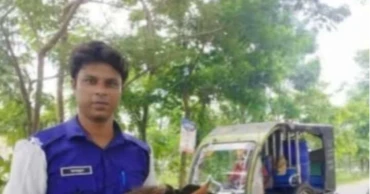
A traffic police constable in Kushtia has been suspended over a Facebook post allegedly defaming the July Movement.
Police Farjul Islam Rony was suspended on Saturday due to a controversial Facebook post, said Kushtia Model Police Station Officer-in-Charge (OC) Mosharraf Hossain.
Earlier on Tuesday afternoon, Farjul, who was posted in Kushtia Traffic Division, made a derogatory post from his personal Facebook account regarding the July Revolution, triggering anger among students and locals.
They also brought out processions and staged demonstrations by blocking Kushtia-Meherpur road in front of the district Superintendent of Police's office, demanding his immediate arrest and exemplary punishment.
.Farjul was attached to the police lines at the same night, and an inquiry committee was formed to investigate the matter.
2 arrested over Kamrangirchar murder
His leave was also canceled.
Police said said he went into hiding after making the post while on leave and has not reported back to duty since.
“A three-member probe committee has been formed. Further action will be taken based on the investigation,” said the OC.
Kushtia Traffic Police Inspector Sheikh Shahadat Ali said Farjul hails from Dahkula village of Shailkupa upazila in Jhenaidah district.
He has been serving in Kushtia’s traffic division since July 13, 2023.
1 year ago

Imagine if electricity generation capacity were still 3000 MW like in BNP-Jamaat govt period: Nasrul Hamid
State Minister for Power, Energy and Mineral Resources Nasrul Hamid has shared an explanation on why load shedding has become more acute and frequent in Bangladesh as people struggle with the ongoing sweltering heat.
“People of Bangladesh are suffering during this scorching heat. Use of air conditioners and fans is increasing, and people are using these devices for comfort,” the state minister wrote in a post on his verified Facebook profile.
Read more: BTMA seeks smooth gas-electricity supply and loan moratorium to survive
On June 3, Bangladesh generated 13,635 MW of electricity, yet there was load shedding, he noted.
Imagine what would have happened in the country today if 3000 MW of electricity were being produced as was the case during the last BNP-Jamaat government, he wrote.
“The Awami League government has provided electricity to all the villages and cities in the country. This is a people's government, so the government wants to deal with this crisis with the cooperation of everyone,” Nasrul Hamid wrote in the post.
Read more: 1500 MW of electricity from solar systems can be generated in next 1 year: Speakers
He urged everyone to save electricity from their individual position.
3 years ago

‘Became a big victim of medical crime,’ Taslima Nasrin says
Bangladeshi writer in exile, Taslima Nasrin, has once again made news – saying she “became a big victim of medical crime” in India.
The internationally renowned writer, who is often embroiled in controversies, tweeted on her verified account on January 19, 2023: “I fell on the floor at my home and went to a private hospital for the internal fixation of my simple femoral neck fracture. Doctors did not want to do fixation, they have done my total hip replacement without any indication. Handicapped forever.”
Taslima then tweeted, “I have seen my Xray report today (January 21, 2023). My Xray shows no fracture on my femur or anywhere. I came to a city private hospital to treat my knee pain after I fell on my knee. I never had any joint pain or any joint disease. But my total hip replacement was done.”
Read more: Charges pressed against author Taslima Nasrin, 2 others in ICT case
She tweeted by saying, “I became a big victim of medical crime. I was a healthy and fit person. In the name of treating my knee strain, they cut the parts of my healthy body off; my healthy hip joint, my femur were thrown away and a metal was put inside me. They have made me permanently handicapped”.
She followed that with another tweet: “I became a big victim of medical crime. I was a healthy and fit person. In the name of treating my knee strain, they cut the parts of my healthy body off; my healthy hip joint, my femur were thrown away and a metal was put inside me. They have made me permanently handicapped.”
Earlier in a Facebook post from her verified profile, Taslima said that the doctor imposed several restrictions, which included avoiding sitting in a normal chair, carrying heavy things, and sitting cross-legged.
Read More: Freedom fighters receiving free medical treatment: Liberation War Minister
On Friday (January 20, 2023), in another Facebook post she wrote, “Returned home from the hospital after being made paralyzed in exchange of lakhs of taka”.
3 years ago

Zia killed many freedom fighters to prolong “illegal rule”, says Sajeeb Wazed Joy in FB post
Prime Minister Sheikh Hasina's ICT Advisor Sajeeb Wazed Joy has said Bangladesh’s first military ruler Gen Ziaur Rahman had executed thousands of members of Bangladesh's armed forces through so called 'military tribunals.'
In a Facebook post shared from his verified account, Joy said Zia had done this in order to prolong his unconstitutional and illegal hold on power.
“It should be noted that a majority of those killed were freedom fighters,” Joy said posing a question, “How many members of the armed forces were killed during Zia's illegal rule?
Read: August 21 grenade attack planned in Hawa Bhaban: Joy
He shared a report run by private television channel – Somoy TV and advising people to watch the report.
General Zia, founder of the BNP, became the army chief after the assassination of Father of the Nation Bangabandhu Sheikh Mujibur Rahman on August 15 in 1975, and eventually the first military ruler of Bangladesh.
3 years ago

Narail vandalism: College student put on 3-day remand
Narail court has placed college student Akash Saha on a three-day remand in a case over a Facebook post that allegedly hurt religious sentiment in Lohagara upazila of the district.
Senior Judicial Magistrate Morshedul Alam passed order on Sunday after investigating officer of the case Makfur Rahman, also sub-inspector (SI) of Lohagara police station, sought a seven-day remand to interrogate him.
Police arrested Akash Saha from Khulna Saturday night.
Besides, another case was filed against 200 to 250 people at Lohagara police station on Sunday night in connection with the vandalism of houses and shops and attacks on two temples in Sahapara, said Sheikh Abu Hena Milon, officer-in-charge of the police station.
Read: Narail vandalism: Youth held over Facebook post ‘hurting religious sentiment’
On Friday, an angry mob went on a rampage in Lohagara upazila of Narail district damaging at least two houses of the Hindu community and several shops at Digholia Bazar following the Facebook post by the youth.
Haran Chandra Pal, officer-in-charge of Lohagara police station, said the college student belonging to the Hindu community posted a remark on Facebook hurting religious sentiments on Friday.
As the news spread like wildfire, a group of local people thronged Digholia Bazar and vandalised two houses and six shops that night. They also set one of these houses on fire over the issue, the OC said.
They also vandalised chairs and sound boxes of Shahapara temple and tin roof of Akhrabari temple during the mayhem.
On information, police rushed to the spot and fired in the air to bring the situation under control. Additional police forces were deployed in the area to avert further trouble.
4 years ago

Narail vandalism: Youth held over Facebook post ‘hurting religious sentiment’
Police in a drive arrested Narail college student Akash Saha from Khulna Saturday night over a Facebook post that allegedly hurt religious sentiment, police said on Sunday.
An angry mob on Friday went on a rampage in Lohagara upazila of Narail district damaging at least two houses of the Hindu community and several shops at Digholia Bazar following the Facebook post by the youth.
Haran Chandra Pal, officer-in-charge of Lohagarha Police Station, said the college student belonging to the Hindu community posted a remark on Facebook hurting religious sentiments on Friday.
As the news spread like wildfire, a group of local people thronged Digholia Bazar and vandalised two houses and six shops that night. They also set one of these houses on fire over the issue, the OC said.
Also read: Hindu houses, shops vandalised in Narail
They also vandalised chairs and sound boxes of Shahapara temple and tin roof of Akhrabari temple during the mayhem.
On information, police rushed to the spot and fired in the air to bring the situation under control.Additional police force were deployed in the area to avert further trouble.
Read:Narail teacher's humiliation: Sadar thana OC stand-released
The protesters also staged demonstrations in front of the house of Akash demanding his arrest.
Prabir Kumar Roy, superintendent of Narail Police on Sunday said “Legal steps will be taken against the offenders after investigation.
4 years ago

Narail teacher's humiliation: 4 put on 3-day remand
A Narail court on Sunday placed four accused in a case over the humiliation of a college teacher in the district on a three-day remand.
The accused are mobile phone mechanic Shaon, auto-rickshaw driver Rimon, madrasa teachers Monirul Islam and Rahmat Ullah Rony.
Read:Narail teacher's humiliation: Sadar thana OC stand-released
Narail Judicial Magistrate Court-2 Judge Amatul Morsheda passed the order after the investigating officer of the case sought a five-day remand to interrogate them.
On June 18, a Hindu student of Mirzapur United Degree College made a post on Facebook supporting suspended BJP spokesperson Nupur Sharma.
There was day-long unrest in the college over the post and rumours that acting principal Swapan Kumar Biswas had sided with the student, following which police escorted him out of the campus. At one stage, a group of people forced him to wear a garland of shoes.
A video of the incident also went viral on social media that sparked huge criticism.
Later, the accused, who made the Facebook post, was arrested and a case was filed against him under the Digital Security Act.
On June 26, two probe committees were formed led by Additional District Magistrate Jubayer Hossain Chowdhury and by Additional Superintendent of Police Md Riazul Islam.
Read: Directive issued to stop using mobile phones in Narail schools, colleges and madrashas
On June 27, three more were arrested in another case filed at the Sadar Police Station police for setting teachers’ vehicles on fire and obstructing police duty.
Police also arrested Rahmat Ullah Roni, the prime accused in this case, from Khulna on June 29.
4 years ago