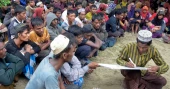
Rohingya refugees
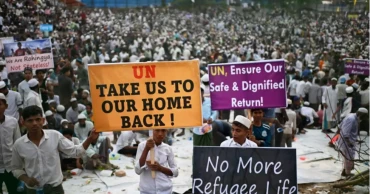
Myanmar to take back over 3 lakh Rohingya if security improves
Myanmar’s military-backed government said Saturday that more than 300,000 Rohingya refugees living in camps in Bangladesh are former residents of western Rakhine state and that it will accept their return once security conditions improve.
The Ministry of Foreign Affairs statement comes as the Rohingya refugee crisis enters its ninth year, with hundreds of thousands of refugees still living in camps in Bangladesh after fleeing Myanmar in August 2017 when the military launched a crackdown following attacks by a Rohingya insurgent group on guard posts in Rakhine.
The operation drove more than 700,000 Rohingya across the border into Bangladesh, joining hundreds of thousands of others already living there for decades in the wake of waves of previous violence perpetrated by Myanmar’s military.
The scale, organization and ferocity of the operation led to accusations of ethnic cleansing and genocide from the international community, including the U.N.
Myanmar, formerly known as Burma, does not recognize the Rohingya as one of the country’s 135 lawful ethnic minorities, instead referring to them as Bengalis to imply they are natives from Bangladesh and are illegally settled in Myanmar.
Myanmar said it had verified 426,545 of the 828,824 refugees on a list provided by Bangladesh as of the end of July, and determined that 308,797 of those verified were former residents of Rakhine.
The Ministry of Foreign Affairs said 113,507 people could not be verified and that 4,241 people were found to have been involved in what it called terrorist activities.
The statement said it will continue working with Bangladesh to receive verified former residents when the security situation in Rakhine becomes more stable.
The ministry also rejected claims that more than 1 million people were displaced from Rakhine, saying that more than 540,000 people crossed into Bangladesh after the violence in 2017 while more than 200,000 remained in northern Rakhine.
Myanmar and Bangladesh agreed to a two-year repatriation process in 2018. However, security in Myanmar worsened following an army takeover in 2021 that ousted the elected government of Aung San Suu Kyi, triggering widespread armed resistance. Plans to repatriate the refugees have not succeeded.
The renewed chaos brought about by fighting between the Rakhine-based ethnic Arakan Army group and the military over control of the region in 2023 forced more refugees to flee toward Bangladesh and elsewhere in a desperate move to save their lives. The Arakan Army controls much of Rakhine after capturing territory from the military in recent years.
In recent years, poor conditions in refugee camps, steep cuts to foreign aid and the lack of safe prospects for returning to Myanmar have led to an increasing number of Rohingya refugees attempting to make the dangerous ocean crossing to Malaysia and Indonesia on rickety boats.
Malaysian Prime Minister Anwar Ibrahim said in late July that Myanmar had agreed to take back 5,000 Rohingya refugees currently living in Malaysia as part of a repatriation program.
However, an official from Myanmar's foreign ministry, Han Win Aung, told The Associated Press at the time that the repatriation program was focused solely on verified Myanmar nationals currently held in detention centers in Malaysia and rejected reports that the government would accept Rohingya.
1 month ago

More than 500 feared dead after boats carrying Rohingyas capsize off Myanmar
More than 500 people are feared dead after two boats carrying mostly Rohingya refugees capsized off the coast of Myanmar, the International Organization for Migration (IOM) and the UN refugee agency (UNHCR) said on Thursday.
According to preliminary information, the two vessels departed Myanmar’s Rakhine State in late June with mostly Rohingya passengers on board.
One boat, carrying an estimated 250 people, lost contact shortly after leaving, while another, believed to have been carrying around 280 people, reportedly sank off Myanmar’s Ayeyarwady coast on July 8.
“While the incidents and casualty figures have yet to be officially confirmed, UNHCR and IOM are gravely concerned by the potentially devastating loss of life,” the agencies said.
Before these latest incidents, more than 300 people, including Rohingya refugees and Bangladeshi nationals, had already been killed or reported missing this year while attempting dangerous crossings in the Andaman Sea and the Bay of Bengal.
The UN agencies noted that Rohingya refugees, who have fled both Myanmar and camps in Bangladesh in recent years, usually avoid sea journeys during the monsoon season because of rough weather and hazardous condition.
They said recent heavy rainfall and flooding across the region would have made the crossings even more dangerous.
Around 1.2 million stateless Rohingya continue to live in refugee camps in Bangladesh after fleeing waves of violence by Myanmar’s security forces. Humanitarian conditions in the camps have worsened following significant cuts in foreign aid from the United States and other donors, leading to reduced food assistance.
Unable to return safely to Myanmar, where the military remains in power and Rohingya continue to face severe restrictions, many have attempted dangerous sea voyages to countries such as Malaysia.
Thousands have died on the route over the years, including children and pregnant women, while reports have accused some maritime authorities of leaving boats in distress without assistance.
The IOM and UNHCR said the latest suspected tragedy underscores the absence of durable solutions for the Rohingya crisis and called for greater international support for refugees living in Bangladesh.
“Stronger regional and international efforts are needed to prevent further loss of life along one of the world’s deadliest maritime routes, including through enhanced search and rescue efforts, access to asylum and protection, and actions against smuggling and trafficking networks,” the agencies said.
According to the UNHCR, more than 6,500 Rohingya have fled by sea in 2025, with nearly 900 reported dead or missing, making it the deadliest year on record for Rohingya attempting such journeys and the world's highest mortality rate for a major refugee and migrant sea route.
Source Al Jazeera
2 months ago
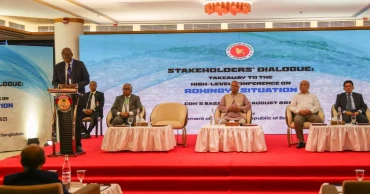
Rohingya Repatriation: ‘Dialogue key, rights must be respected’
United Nations Assistant Secretary-General and UNHCR Assistant High Commissioner for Operations Raouf Mazou on Monday said a political solution to the Rohingya crisis in Myanmar must be found and the United Nations (UN), led by the Secretary-General and his Special Envoy, continues to work in support of these efforts.
"In order to start recreating conditions for the return of refugees, dialogue with all parties is a critical first step. Rights must be respected and, as the Secretary-General said, civilians must be protected," he said, while speaking at the ‘Stakeholders’ Dialogue’ on the Rohingya situation.
Mazou, however, said much more needs to be done by a multiplicity of actors, including regional bodies and neighboring states, for peace to return to Myanmar and more specifically the Rakhine State.
"The consultations we are having today, facilitated by the High Representative, are therefore essential to chart a way forward - in which the wellbeing of Rohingya refugees, particularly women, children and youths, should remain central," he said.
Country stable enough; ready for elections: Prof Yunus
It prepares for the high-level conference on the situation of Rohingya and other Muslim minorities planned for September 30, 2025 during the United Nations General Assembly high-level segment.
"The voluntary return in conditions of safety and dignity remains the most desirable solution and the responsibility to create the conditions for it to happen lies squarely on Myanmar," Mazou said.
Eight long years have passed since 700,000 Rohingya were compelled to flee Myanmar to Bangladesh, pushed by unspeakable violence and human rights violations in Myanmar's Rakhine state. They are presently over 1.3 million in Bangladesh.
In a world where the right of asylum is sometimes questioned, Mazou said Bangladesh's response has been remarkable, with local populations welcoming those in desperate need despite the difficult circumstances in which they sometimes find themselves.
The international community has played its role, providing hundreds of millions of dollars to respond to the humanitarian needs of refugees in Cox's Bazar and in Bhasan Char.
Prof Yunus places 7-point roadmap for Rohingya repatriation
"However, as the situation has prolonged, and the number of forcibly displaced has continued to increase around the world, reaching 120 million by the end of 2024, it has become increasingly difficult to mobilise the resources required," said Mazou.
As of today, the funding of the Joint Response Plan stands at approximately 60%.
"While the continued provision of food assistance could be secured until December the availability of LPG beyond September is uncertain. Services such as education and health have already been reduced," Mazou said.
He said it is essential that, as Bangladesh continues to provide a global public good, the required funding is made available in the spirit of burden-sharing, reaffirmed by the Global Compact on Refugees. “Merely providing humanitarian assistance neither constitutes a solution nor ensures protection," Mazou said.
There are an estimated 3.5 million internally displaced persons in Myanmar, and in the past 18 months alone, 150,000 more Rohingya have fled targeted violence to Bangladesh.
"A comprehensive response continues to be required to meet individual needs in a manner that helps prepare for the eventual return because long-term dependency on humanitarian assistance does not prepare Rohingya refugees for the part they ought to play in the reconstruction of their country once they return," Mazou said.
"We need more innovative approaches that accommodate the need for refugees to retain their ability to play an active role in the reconstruction of their country while not creating conditions that would make the eventual return elusive," he said.
Eight years on, Rohingyas’ presence leaves locals feeling exiled at home
Mazou said their presence in Cox's Bazar today is a clear indication of our determination to be by the side of the refugees, represented in this meeting - as well as the government and people of Bangladesh and be part of the solution.
A situation involving over one million displaced persons cannot be left to morph into a regional crisis affecting all countries in the region, he said.
Chief Adviser Prof Muhammad Yunus spoke at the event as the chief guest.
High Representative for the Rohingya Issue and National Security Adviser Dr Khalilur Rahman, Disaster Management and Relief Adviser Faruk E Azam, Bir Protik, Foreign Secretary Asad Alam Siam, among others, also spoke.
1 year ago
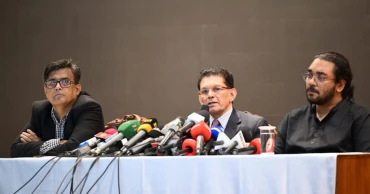
No talks on ‘corridor’: Dr Khalilur Rahman
High Representative to Chief Adviser Dr Khalilur Rahman on Wednesday categorically said the government did not discuss anything on giving ‘corridor’ to Myanmar through Bangladesh with anyone and stressed that they will not even discuss it.
He said what they were talking to the United Nations is channelling aid -- food and medicine -- to Rakhine due to the humanitarian crisis there.
Any decision or consideration will be taken in consultation with all the stakeholders, said the National Security Adviser at a media briefing at the Foreign Service Academy.
Chief Adviser's Press Secretary Shafiqul Alam and Deputy Press Secretary Apurba Jahangir were present at the media briefing.
Responding to a question, Dr Khalilur Rahman said they are not under pressure from any country, not even from the United States.
"We can't give anyone any free pass," he said, stressing the importance of Bangladesh's own interest.
Dr Khalilur Rahman said Bangladesh is taking a burden of over 1.2 million Rohingyas and the country cannot accept any additional Rohingya.
He said Bangladesh’s focus remains on the repatriation of the Rohingyas to Myanmar.
"It has to be sustainable repatriation. They have to go back. They have to stay there (in Myanmar)," Dr Khalilur Rahman said.
He said there is no lack of coordination or understanding and he works very closely with the Ministry of Foreign Affairs and Bangladesh Army.
Dr Khalilur Rahman said the ‘corridor’ issue and debate first emerged from a news portal of a neighbouring county.
He said there were no serious efforts in the last seven years and the interim government brought it to global focus again.
World Is Watching
The government said Bangladesh is coordinating with the relevant actors to prevent another wave of refugees into the country.
UN, Rohingya refugees accuse India of casting dozens into sea near Myanmar
In particular, the government has signaled the Arakan Army (AA) that they must ensure that there is no further violence, discrimination and displacement of Rohingyas inside Rakhine, according to the Chief Adviser's press wing.
They (AA) have the responsibility to observe international law, including international humanitarian law, said the interim government.
"And the world is watching. Bangladesh's continued contacts with them will depend on their action in this area, as well as on Rohingya representation," said the press wing sharing a set of questions and answers.
Dhaka backs Arakan Army talks for national interest, Rohingya rights
The question of humanitarian support to the Rakhine state arose when Bangladesh authorities learned about the acute humanitarian crisis it was facing.
UNDP predicted impending famine-like conditions. Bangladesh was concerned that this situation would drive more people from Rakhine into Bangladesh.
The government said already, Bangladesh is shouldering the burden of sheltering over 1.2 million forcibly displaced Rohingyas from Myanmar and cannot simply afford another wave of refugees and it is already a big burden on Bangladesh.
Given the deteriorating humanitarian conditions in Rakhine state, the UN and Bangladesh began consideration of the provision of humanitarian support.
Since all other aid delivery avenues are unviable due to conflict, Bangladesh turned out to be the only feasible option, said the interim government.
It was thought that the UN would organize distribution of aid through its channels within Rakhine and Bangladesh would provide logistical support to transfer aid across the Bangladesh-Myanmar border, it said.
Besides, Bangladesh considered that aid to Rakhine would help stabilize the state and pave the way for creating enabling conditions for the return of the Rohingyas to Myanmar.
No Agreement Yet
The interim government said there has been no agreement on the provision of aid to Rakhine yet as it would require consent of all relevant parties and satisfaction of a number of prerequisites for aid provision which are common in other cases of humanitarian support around the world.
These include, among others, unimpeded access of aid providers and recipients, non-discrimination in the provision of aid, non-weaponisation of assistance and suspension of armed activities.
Discussions with Arakan Army
The Bangladesh government realized the need for keeping contact with the Arakan Army when they took control over the Myanmar side of our border.
The interim government said it is Bangladesh's duty to protect its border and keep it peaceful. “For this reason, Bangladesh decided to make informal contacts with the Arakan Army.”
Bangladesh government has continued to engage them in the context of consideration of provision of humanitarian support, repatriation of the Rohingyas and the inclusion of the Rohingyas at all levels of the emerging governance and security structure in Rakhine.
The government said Bangladesh's contact with the Arakan Army is due to practical necessity.
“At the same time, Bangladesh is maintaining contacts with the Myanmar government. It is necessary to keep in touch with all relevant actors with a view to sustainably resolving the Rohingya issue.”
Make Sure Aid Isn’t Weaponised
Bangladeshi officials have recently said that certain conditions will need to be met for Bangladesh’s agreement to the UN's proposal for humanitarian assistance.
To begin with, the interim government said, all the relevant parties need to agree on the provision of aid.
Besides, it said, the Arakan Army needs to ensure that access of aid providers and recipients is not impeded, aid is not weaponized and there are no armed activities.
Also, Bangladesh said, the Arakan Army needs to sincerely demonstrate its commitment to an inclusive society in Rakhine by including Rohingyas at all levels of Rakhine’s governance and security structure.
Otherwise, the government thinks, it will appear to the world as a picture of ethnic cleansing, which Bangladesh will not accept. Dhaka is awaiting the Arakan Army's response.
Security Risks
The government said giving aid in a conflict situation poses safety and security risks to the aid providers and recipients. “Prevalence of landmines and IEDs is another threat to safety and security. These issues need to be addressed ahead of the provision of aid.”
Position of Regional Countries
Bangladesh said saving lives from an impending humanitarian disaster is a collective responsibility of the global community.
“All of parties need to join efforts to tackle this problem. Stability in Rakhine is Bangladesh’s priority. Hardly any progress can be made towards repatriation without achieving it,” said the interim government.
More Rohingya Coming into Bangladesh
The government said Bangladesh does not want another influx of refugees. “It simply can’t afford this.”
There has been a sizable influx of Rohingyas from Rakhine during intensified conflict between the Arakan Army and Myanmar forces from 2023 until autumn of 2024.
The government said Rohingyas have continued to enter Bangladesh thereafter, albeit in smaller numbers.
1 year ago
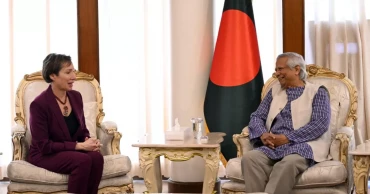
There should be no place for retribution in Bangladesh: Dr Yunus tells US envoy
Chief Adviser Prof Muhammad Yunus on Tuesday conveyed to the US envoy in Dhaka that he has called for “reconciliation” in Bangladeshi society, urging people to “break the cycle of retribution” and to create the grounds for peace and harmony in the country.
"We are all children of this country. There should be no place for retribution," he said, adding that he has instructed law enforcement agencies to uphold human rights at any cost during their operations.
US Chargé d'affaires to Bangladesh Tracey Ann Jacobson called on the chief adviser at the State Guest House Jamuna and discussed issues of mutual interest and the fallout of the US decision to freeze the work of USAID across the globe.
Book Fair: Dr Yunus strongly condemns attack on book stall
Prof Yunus and Jacobson also discussed the reform agenda of the interim government, the Rohingya crisis, migration, and the country's law and order situation.
He highlighted his recent moves to form a consensus commission and, under its auspices, to inaugurate dialogue with the political parties of the country.
"Once we have reached consensus over the reforms, the political parties will sign a July Charter to implement them," Dr Yunus said.
Irish Ambassador meets Dr Yunus, Foreign, Info Advisers
Envoy Jacobson stressed that elections for a new government should be free, fair, and inclusive. She also enquired about “Operation Devil Hunt”, recently launched by the country's security forces, according to chief adviser’s press wing.
Yunus thanked the US administration for continuing humanitarian aid to over one million Rohingya refugees now living in Bangladesh. "The US assistance is the most crucial aid to the Rohingya refugees," he said.
He also raised concerns over the US decision to freeze aid to other key projects in Bangladesh, including the life-saving efforts of the ICDDR'B, one of the world's renowned health research institutes.
He highlighted the role the ICDDR'B played in reducing deaths from diarrhoea and cholera to almost zero in Bangladesh and in countries like Haiti in the Caribbean.
Prof Yunus said that whatever happens with USAID, Bangladesh needs US support during this crucial period of rebuilding, reforms, and reconstruction. "This isn't the time to stop it," he said.
1 year ago
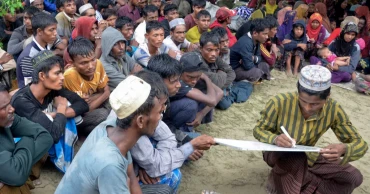
260 Rohingya refugees arrive in Indonesia's coast
Two boats carrying over 260 Rohingya refugees, primarily women and children, have arrived on Indonesia's coast, officials confirmed on Monday, reports AP.
Police and military personnel, alongside the U.N. refugee agency and the local government in West Pereulak, East Aceh, are gathering details about the refugees, who arrived Sunday evening, while ensuring their safety, according to East Aceh police chief Nova Suryandaru. “We will follow up their presence by coordinating with the UNHCR for further action,” Suryandaru stated.
Dhaka discusses with UN modalities for int'l conference on Rohingya crisis
Since last February, East Aceh has received more than 300 Rohingya refugees, it said.
Approximately 1 million Rohingya, predominantly Muslims, reside in camps in Bangladesh after fleeing Myanmar, including around 740,000 who escaped a violent “clearance campaign” in 2017 by Myanmar’s security forces, accused of mass rapes and killings. The Rohingya minority faces extensive discrimination in Myanmar and is largely denied citizenship.
In response to a significant increase in Rohingya departures from overcrowded Bangladeshi refugee camps since last year, Indonesia has sought international assistance, the report said.
Although Indonesia, like Thailand and Malaysia, is not a signatory to the 1951 United Nations Refugee Convention and is not legally required to accept refugees, it typically offers temporary shelter to those in distress.
CSCSS Int’l Conference: Impacts of Rohingya crisis, security challenges discussed
On Saturday, Malaysian authorities reported turning away two boats carrying nearly 300 Rohingya attempting to enter the country unlawfully. The Maritime Enforcement Agency also noted two additional boats attempting entry after 196 Rohingya landed on Friday on Langkawi, a northeastern resort island, where they were detained.
1 year ago

US looks forward to continued engagement with Bangladesh to advance progress on all fronts: Matthew Miller
The United States has said it looks forward to continued engagement with Bangladesh to advance progress on economic stability, democracy, security, and Rohingya refugees.
"The Secretary (Antony Blinken) did have a productive meeting with the advisor to the interim government (Prof Muhammad Yunus) and looks forward to continued engagement to advance progress on all of these issues," US Department of State Spokesperson Matthew Miller said on October 8.
He made the remark when a journalist wanted to know how the Biden administration is navigating its relationship with Bangladesh considering the country’s challenges with economic stability, democracy, security, and Rohingya refugees.
"So we continue to work with the Government of Bangladesh on all those questions," Miller said in a regular media briefing in Washington.
Chief Adviser Prof Muhammad Yunus had separate meetings with US President Joe Biden and US Secretary of State Antony J Blinken in New York on the sidelines of the United Nations General Assembly recently in New York.
Read: Those responsible for recent rights violations in Bangladesh need to be held accountable: US
Both President Biden and Chief Adviser Prof Yunus affirmed the close partnership between the United States and Bangladesh, which is rooted in shared democratic values and strong people-to-people ties.
During the meeting, Biden welcomed further engagement between the two governments and offered continued US support as Bangladesh implements its new reform agenda.
Asked whether the US discussed anything about Bangladesh with India, Miller said, "I can tell you that regional issues, including Bangladesh, often come up in our meetings with the Government of India, but I don’t have any specific readout to offer."
Read more: Nahid promises justice, compensation for victims of minority abuse
1 year ago

JRP 2023 launched: IOM in $125m appeal for Rohingyas, hosts
The International Organization for Migration (IOM) is asking for $125 million to support 1.4 million Rohingya refugees, host communities in need in Cox's Bazar as the response to the Rohingya refugee crisis drags on for a sixth year in 2023.Over 900,000 Rohingya refugees have temporarily sought shelter in Cox's Bazar since the 2017 influx, and the Bangladeshi government and the wider international community have supported them throughout.The Rohingyas must continue to receive ongoing help until they may freely return to Myanmar in a secure and dignified manner, IOM said on its website today.
Along with other humanitarian organisations, it has been providing lifesaving, protection and assistance services to the refugee community for the last six years.“The ongoing crises and disasters around the world should not make us forget the needs of Rohingya refugees and the response in Bangladesh,” said António Vitorino, IOM director general. “We earnestly urge the international community to step up their efforts to ensure the Rohingya refugees continue to receive the support they need.”The Joint Response Plan (JRP) for the Rohingya Humanitarian Crisis, which includes over 100 response players made up of UN agencies and NGOs, includes the IOM's appeal.
Under the JRP for 2023, which was launched today with the Government of Bangladesh, these humanitarian players are attempting to raise a total of more than $876 million.
In order to put that in context, we should note that the JRP for 2022 amounted to $881 million, and less than half that amount was disbursed. The expectation is that the 2023 response will be even worse.
The World Food Programme (WFP), another UN agency, has already been forced to cut food rations for camp residents by 17% from March 1, from $12 per head to $10 per person.Refugee protection is a top priority for IOM. It works with vulnerable people and at the community level to reduce the risks of gender-based violence and the physical, psychosocial, and social vulnerabilities of child and human trafficking in order to protect the most vulnerable, especially women and children who make up over 75% of the population.“Our priorities for 2023 include the continuation of providing life-saving assistance and protection of the Rohingya refugees and support for vulnerable host community members,” said Abdusattor Esoev, IOM Bangladesh chief of mission.“We call on the international community to contribute generously to our efforts to help these refugees and not forget the plight of the Rohingya in Bangladesh,” he added.
US, UK respond to JRP
Both the United States and the United Kingdom, both vital to the response, have in the last few hours released statements in response to the launch of the 2023 JRP.
While London kept its wallet closed, Washington announced a new, small amount it would be disbursing on top of earlier commitments. Both power centres however, seem to be converging on an interesting alternative course to deal with the issue.
That would seem to involve persuading the Bangladeshi hosts to be more accommodating of the Rohingyas, even outside the camps - for job opportunities, or to even support themselves.
The UK’s response was delivered in Geneva by Simon Manley, the country’s ambassador to the UN missions in that city.
He said the UK sees an urgent need to work pragmatically with the Government of Bangladesh, to find a sustainable way forward that “offers the Rohingya more self-reliance, and less dependence on humanitarian aid.”
The statement also sought to “achieve maximum effect with every pound, euro or dollar we spend.”
The US statement was delivered virtually by Assistant Secretary Julieta Valls Noyes. In it, she said the United States will contribute “nearly $26 million dollars in new humanitarian assistance for Rohingya refugees”.
This would be on top of an earlier commitment of $75 million towards JRP 2023, announced in January.
Noyes then called on Bangladesh “to reexamine its restrictions on allowing refugees to earn a living.”
“Restrictions on livelihoods deny Rohingya the ability to provide for themselves and the sense of purpose many of us get from our vocations,” the statement continued, falling in with the UK’s theme. “These restrictions prevent Rohingya from contributing to the communities that generously welcomed them and limit the chances of a sustainable, voluntary repatriation.”
Noyes ended by saying the United States would be “among the countries now welcoming Rohingya from Bangladesh.”
3 years ago

UNHCR, partners seek $876m for Rohingyas facing uncertainty, Bangladeshi hosts
UNHCR, the UN Refugee Agency, and partners are calling on the international community to redouble efforts for sustained financial support and solutions for Rohingya refugees and the Bangladeshi host communities them as the dire situation enters its sixth year.
Under the leadership of the Bangladeshi authorities, the 2023 Joint Response Plan for the Rohingya Humanitarian Crisis calls for $876 million to reach 1.47 million people.
The Joint Response Plan brings together 116 partners, nearly half of them national organizations from Bangladesh.
The Plan, which was launched today, aims to help some 978,000 Rohingya refugees in Cox’s Bazar and on the island of Bhasan Char, and 495,000 Bangladeshis in neighbouring communities, with food, shelter, health care, access to drinkable water, protection services, education, as well as livelihood opportunities and skills development.
Every day, the nearly one million Rohingya women, children and men that fled from violence and persecution in Myanmar for Bangladesh wake up in a chilling fog of uncertainty about their futures, said Johannes van der Klaauw, UNHCR Representative in Dhaka, Bangladesh at a press briefing at the Palais des Nations in Geneva on Tuesday.
They are desperate to return to their homes in Myanmar, which are currently out of reach, and instead live in extremely overcrowded, and sometimes dangerous conditions in refugee camps, relying almost entirely on humanitarian assistance for their survival, the UNHCR envoy said.
"While the situation has become protracted, the needs of refugees remain urgent. Women and children, who make up more than 75 per cent of the targeted refugee population, face higher risks of abuse, exploitation, and gender-based violence," said Johannes van der Klaauw.
More than half of the refugees in the camps are under 18, their futures on hold.
Since the onset of this humanitarian crisis in 2017, the Government of Bangladesh and local communities, with aid agencies, have been quick to respond to arriving refugees in what remains the world’s largest refugee camp.
However, as global displacement continues to rise, so does the risk that the needs of Rohingya refugees and surrounding host communities will be forgotten, Johannes added
With decreased funding, refugees stand to face even more challenges in their daily lives in terms of proper nutrition, shelter materials, sanitation facilities and livelihood opportunities.
The lack of funds has already forced the World Food Programme to cut its lifesaving food assistance to all Rohingya living in the camps; despite concerted humanitarian efforts, 45 per cent of Rohingya families are not eating a sufficiently healthy diet and malnutrition is widespread. These ration cuts are likely to result in higher malnutrition rates, deteriorating health, school dropouts, increased incidents of child marriage, child labour and gender-based violence.
"It is therefore vital to ensure continued funding and support to be able to deliver life-saving and life-sustaining assistance to the camp population while also investing in education, skills training and livelihood opportunities, allowing refugees to partially fulfil their basic needs with their own means," he said.
The relocation of some 30,000 Rohingya to the island of Bhasan Char needs to be complemented by significant investment in communal livelihood initiatives as a prerequisite for the viability and sustainability of the project.
The combination of prolonged displacement and deteriorating camp conditions has prompted an increasing number of refugees to resort to dangerous boat journeys to seek a better future. Last year alone, more than 3,500 Rohingya attempted high-risk boat journeys across the Andaman Sea and Bay of Bengal. Sadly, 10 per cent lost their lives or went missing.
The solutions to the Rohingya crisis ultimately lie within Myanmar. Many Rohingya refugees continue to express their desire to return home when conditions allow, yet currently there is no prospect for a safe, dignified and sustainable return in the immediate future.
"Hence, steadfast support from the international community remains crucial to support efforts by Myanmar to develop conditions conducive for return and to uphold the Rohingya right to return, while also supporting delivery of life-saving assistance and effective protection to refugees in the camps until they can return, with their rights ensured."
Given its geography, annual cycles of heavy monsoon rains and cyclones pose substantial risks to refugees in camps and host communities. Among the objectives of the Joint Response Plan, in coordination with the Government of Bangladesh, will be to strengthen disaster risk management and combat the effects of climate change through reforestation and promoting the use of renewable and cleaner energy sources.
The provision of cooking gas, which has significantly eased pressure on the environment, requires significant funding.
3 years ago

Bangladeshi Migrant Workers: Destination countries “must act against perpetrators” of HR violations
The UN Special Rapporteur on the rights of migrants, Felipe González Morales, on Tuesday said destination countries – most of them in the Middle East – must take an active role in “investigating and sanctioning perpetrators of human rights violations” against Bangladeshi migrant workers.
At the same time, Bangladesh should continue reinforcing its consular services, he added.
"Bangladesh must step up efforts to strengthen regulation of the migrant recruitment system to protect migrant workers against exploitation and abuses," the UN Rapporteur told reporters at a press conference in Dhaka at the end of a 10-day official visit to Bangladesh.
In his preliminary observations, the UN expert said despite the positive economic contributions migrant workers bring to the local economy and the existence of necessary legislation and policy, many flaws still exist in the recruitment system which adversely impact the rights of migrant workers. “These challenges exist at all stages of migration.”
He will present a full report on his visit, including findings and recommendations, to the UN Human Rights Council in June 2023.
Read more: ‘Over 51,000 migrants die, thousands go missing in 8 years’
Morales stressed on strengthening monitoring and coordination to promote regular migration and help stop human trafficking.
“Recruitment currently imposes exorbitant high costs on many migrants, creating debt bondage, much of which is imposed by “middlemen” who are used to recruit workers,” he said.
He urged authorities to protect the rights of migrant workers at all stages of migration, including pre-departure, during employment abroad and upon their return.
The Special Rapporteur commended the government for actions taken to curb these challenges, but said there was still a need to regulate, closely monitor and enhance the recruitment system to ensure effective protection for migrants, including better access to justice.
The expert noted the stark difference in skilled migration schemes channeled through government-to-government initiatives, which yield more beneficial results for migrants due to more robust regulation and oversight.
“It is the lower-skilled migrants who are often subject to vulnerable situations, including exploitation, as they are often poor, lack education and without access to information that can help inform their decisions and enhance their migration experiences,” Morales said.
Read more: Swift return of irregular migrants to help promote legal migration: European Commissioner
The Special Rapporteur encouraged ongoing training initiatives for aspiring migrant workers but stressed the need to better equip them with adequate information prior to departure, including recourse when they suffer abuse.
He welcomed the establishment of a database of aspiring migrant workers as well as better regulation of middlemen, including requirements for registration.
Morales emphasised that responsibility for migrant workers equally falls on countries of destination.
“These countries must do their part in ensuring strong protection for migrant workers, particularly women who are disproportionately at risk of human rights violations when they are hired as domestic workers,” he said.
Durable Solution for All Rohingyas Critical
During his visit, the Special Rapporteur travelled to Cox’s Bazar to meet with Rohingya refugees.
Morales praised Bangladesh for receiving nearly one million Rohingyas escaping from Myanmar and said he was impressed by the resilience of the Rohingya refugees – some of whom have been living in camps for over five years, and others 30 years since first arrivals in the early 1990s.
“A durable solution for all Rohingya refugees is critical,” the UN expert said. He expressed concern about the lack of legal status for Rohingyas, and noted that children who are born in the camps he visited are not issued an official birth certificate.
The expert also called on the authorities to facilitate permits to improve access to education through learning centers and life skills training which many Rohingyas have praised and welcomed as a means to a more hopeful and dignified life.
The UN rapporteur said it is important to enhance coordination among the agencies engaged to address the challenges. "It's a tremendous challenge."
He also noted the need to upgrade the quality of housing in the camps particularly in light of the impact of climate change that have resulted in fire and flooding incidents.
3 years ago