Farming

No approval yet for indoor, artificial hilsa farming: Ministry
The Ministry of Fisheries and Livestock has said that the government has not approved indoor or artificial hilsa farming, clarifying that no such initiative has received official clearance so far.
In a press release issued on Monday, the ministry said it has seriously reviewed the issue amid recent discussions and reports published in newspapers, online media and social media regarding indoor or artificial cultivation of hilsa.
The ministry said a meeting on indoor, fully controlled and intensive cultivation of hilsa and other marine fish using the Recirculating Aquaculture System (RAS) technology was held at the Ministry of Fisheries and Livestock on Sunday (February 1).
The meeting was chaired by Fisheries and Livestock Adviser Farida Akhtar, and attended by senior officials of the ministry, the Department of Fisheries and the Bangladesh Fisheries Research Institute.
Home Ministry forms law and order coordination cell ahead of polls
The review found that hilsa is an important Geographical Indication (GI) product of Bangladesh and is closely linked to the country’s riverine and coastal ecosystems, food security, heritage and the livelihoods of a large number of fishermen.
As hilsa production and management largely depend on the natural reproductive cycle and riverine environment, any initiative related to its cultivation is highly sensitive and policy-driven, the ministry said.
It added that there is currently no government policy decision or approval regarding RAS or any other indoor, fully controlled or intensive method of hilsa farming. As such, no individual or institution has been granted permission to cultivate hilsa using these methods.
The ministry said any research, experimental initiative or technical activity related to hilsa must be conducted in line with existing laws, policies and national interests, and subject to prior approval from the relevant government authorities. Any unauthorised activity will be considered unacceptable.
The ministry also urged all concerned, including the public, to rely on government-approved and credible information and not to be misled by misinformation or rumours.
7 months ago
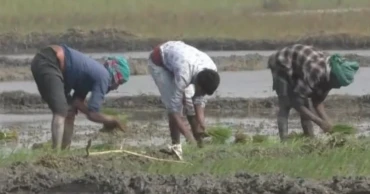
Boro cultivation in Narail gains full momentum under sunny skies
After weeks of cold and fog, bright sunshine has returned to Narail, breathing new energy into the district’s Boro paddy fields.
Farmers are now working from dawn to dusk, transplanting seedlings across the region in what has become a season of full swing for Boro cultivation.
Favourable weather conditions over the past two weeks have created an ideal environment for farming.
According to local growers, there is currently no shortage of seedlings, fertiliser, or irrigation facilities, making this the smoothest peak Boro season in recent years.
The Department of Agricultural Extension (DAE) reports that Boro paddy is being cultivated on a record-breaking area this season, surpassing the past three years.
Farmers recalled early-season challenges when persistent cold and dense fog had delayed transplantation. However, the recent sunny spell has rejuvenated fields and spirits alike, encouraging farmers to accelerate planting.
Ibrahim Sheikh of Chougachha village in Sadar upazila said he is transplanting Boro seedlings on 180 decimals of land, noting that there is no shortage of seedlings.
Another local farmer, Ataur Rahman, has cultivated three acres of Boro paddy and described the current weather as ‘very favourable’.
Tk 1,300cr GK irrigation rehabilitation project aims to revive southwest agriculture
Seventy-five-year-old Badsha Sheikh is preparing his land by ploughing and leveling before transplantation, while Mohammad Murad noted that power tillers have largely replaced cattle for land preparation, reducing both time and costs.
Sagar Sheikh, cultivating the high-yielding Rod Miniket variety on 135 decimals of land, highlighted its good yield, market price, and quality straw as reasons for his choice.
Farmers across Narail confirmed that fertilizers, pesticides, and electricity-powered irrigation facilities are available in sufficient quantities, and that hardly any cultivable land is being left fallow this season.
“If the weather remains favourable and input supplies continue until the end of the season, we are hopeful for a good harvest,” said a local grower.
Deputy Director of DAE, Narail, Muhammad Arifur Rahman, said that a target has been set to cultivate Boro paddy on 50,297 hectares in the 2025–26 season. In comparison, cultivation covered 50,280 hectares in 2024–25 and 50,230 hectares in 2023–24. Over the last three years, Boro cultivation has increased by 67 hectares.
Illegal topsoil extraction threatens ‘Gaillar Haor’, croplands in Sunamganj
This year, seedbeds have been prepared on 2,635 hectares, of which about 60 percent are standard seedbeds, further indicating there is no shortage of seedlings, Arif added.
With favourable weather and adequate resources, Narail’s farmers are poised for a productive Boro season, continuing the district’s steady rise in paddy cultivation, he said.
7 months ago

Sirajganj’s mustard fields bloom into golden seas, promise bumper harvest
Vast stretches of mustard fields across Sirajganj have burst into radiant shades of yellow, turning the district into a rolling sea of gold and offering a visual feast that is delighting visitors and farmers alike.
From late afternoon until dusk, the flowering fields have become a magnet for people of all ages. Youths, women and men are seen wandering through the blossoms, pausing to admire the view, capturing selfies against the glowing backdrop of nature’s seasonal spectacle.
The golden transformation is most striking in Tarash, Raiganj, Ullapara and the char areas—long known as the district’s ‘granary’—where mustard flowers sway gently in the winter breeze, painting the countryside with warmth and colour.
Read more: Golden Harvest: Sirajganj farmers reap bumper mustard crop
According to the Department of Agricultural Extension (DAE), a cultivation target of 87,125 hectares was set for mustard farming across Sirajganj’s nine upazilas this season.
Farmers, however, have gone beyond expectations, bringing even more land under cultivation and raising hopes of a bumper harvest.
Mustard farming has expanded notably in the Chalan Beel areas, particularly in Tarash, Raiganj, Ullapara and Shahjadpur upazilas. Significant cultivation has also been recorded in Kamarkhanda, Kazipur, Belkuchi and Sirajganj Sadar upazilas, reflecting a district-wide surge in production.
Among the commonly cultivated varieties are Tori-7, BARI-14, Beena-9 and Beena-14. In the char areas, farmers have opted for the uric acid-free Kalania variety, well-suited to the region’s soil and conditions.
Read more: Chapainawabganj farmer sparks local excitement with amazing Chinese orange harvest
Local farmers said government incentives have played a crucial role in encouraging cultivation. Seeds and fertilisers were distributed at fixed rates, while agricultural officers provided regular guidance and technical advice to ensure better yields.
With favourable weather prevailing, farmers remain optimistic about achieving a bumper output this season.
Adding to the vibrancy of the fields, honey collectors from different areas have already installed bee boxes among the mustard crops. Harvesting of mustard flower honey has begun, and collectors expect production to surpass last year’s levels due to the increased acreage under cultivation.
Deputy Director of the DAE, AKM Manjur-e-Maula, said farmers had brought more land under mustard cultivation this year compared to the previous season.
“We distributed free seeds and fertilisers among small and marginal farmers and provided necessary advice. If the weather remains favourable, there is a strong possibility of a bumper mustard harvest this season,” he said.
As Sirajganj’s fields glow under winter skies, the mustard bloom stands not only as a scenic delight but also as a symbol of agricultural promise and rural resilience.
Read more: Khulna farmers reap rewards from mustard cultivation, honey production
8 months ago
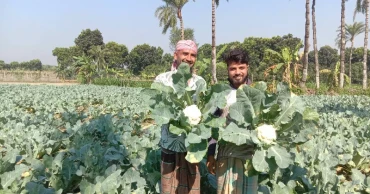
Chuadanga farmers thrive as cauliflower yields hit new high
As winter settles over Chuadanga, vast stretches of farmland have turned white — not with frost, but with the blooming heads of cauliflower that mark one of the district’s most profitable vegetable seasons in recent years.
The bumper yield, coupled with favourable market prices, has brought long-awaited smiles to the faces of farmers who suffered losses just a year ago.
Farmers said that they are spending Tk 30,000–35,000 per bigha and selling produce worth Tk 80,000 to Tk 1.3 lakh, earning profits of Tk 50,000–70,000 from each bigha of land.
Read more: Coloured cauliflower cultivation gains round in Naogaon
According to the Department of Agricultural Extension (DAE), the target for cauliflower cultivation in Chuadanga this year was set at 2,975 hectares.
Early Harvest, Early profit
Traders said that the price of cauliflower is higher this time compared to last time. Because it reached the market earlier, farmers are getting a good price.
Mohammad Tarikul Islam, a farmer from Gaidghat village in Sadar upazila of Chuadanga district, said he spent Tk 40,000 to cultivate cauliflower on two bighas of land.
“I sold it for 1.20 lakh. Last year I had a loss, but this time it has been fully recovered. If the prices stay this good, I will expand cultivation next year,” he said.
Read more: Jhenaidah farmers making good profit by cultivating off-season cauliflower, cabbage
Mohammad Hasanur Rahman, a farmer from Garabaria Baganpara, said he brought seven bighas of land under cauliflower cultivation. “I sold each bigha for 1.10 lakh. After expenses, there has been a profit of 60–70 thousand taka per bigha. Last year I sold it for 60–70 thousand, but this year the price has jumped by Tk 50,000.”
New Hope for Young Farmers
Among the new generation of growers is Mohammad Arafat, a student who manages his father’s farm. “I cultivated three bighas. One and half bighas of early cauliflower sold for Tk 1.25 lakh per bigha,” he said with pride.
“Regular cauliflower is now selling for Tk 80,000–90,000. Even after expenses, I will earn Tk 50,000–60,000 per bigha.”
Arafat’s story reflects a trend seen across the district—young people actively participating in vegetable cultivation, motivated by rising profits and growing demand.
Favourable Weather Fuels Success
Another local farmer, Mohammad Shahjan Ali, said favourable weather conditions helped ensure an excellent harvest.
Read more: Jashore emerges as Bangladesh’s winter vegetable seedling hub
“I sold cauliflower for Tk 1.2 lakh per bigha in advance. With production costs around Tk 30,000–35,000, I made Tk 60,000–70,000 in profit. Last year’s losses have been fully recovered this season,” he added.
Vibrant Market
The enthusiasm is not limited to farmers. Wholesalers are also finding strong business opportunities.
Moniruzzaman, a trader from Belghachi village in Sadar upazila of the district said demand for cauliflower is stronger than last year.
9 months ago
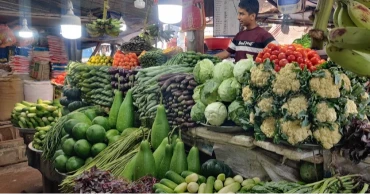
Chandpur’s winter harvest eases the burden on plates
As winter sets in, consumers in Chandpur are finding a welcome relief in kitchen markets, as the prices of winter vegetables see a modest decline, particularly benefiting low-income groups.
Vendors in the coastal district say this year’s price correction is a departure from previous trends, attributing the stability to the absence of syndicates that traditionally caused sudden spikes.
“If this situation continues, it could provide lasting relief for consumers,” a local vendor told UNB.
Agriculturists echoed this observation, noting that last year, potato prices had surged to Tk 80 per kilogram, while high-quality potatoes are now available at Tk 22–25 per kilogram.
Read more: Dry fish trade keeps Narail economy moving in winter
Other vegetables have also become more affordable: papaya is selling at Tk 25–30 per kilogram, and lower-quality potatoes are offered at six to seven kilograms for Tk 100 in van markets across neighbourhoods.
Similar pricing patterns are evident in the district town’s roadside markets, including Wireless, Baburhat, Bohoria, Mahamaya, Bakila, and Munshirhat in Matlab.
Over the past fortnight, fresh winter vegetables such as bottle gourd, ridge gourd, black eggplant, pointed gourd, chichinga, okra, and cucumber have seen price reductions of Tk 10–15 per kilogram, now retailing at Tk 45–50 per kilogram.
Other staples include radish at Tk 40 per kilogram, fresh cauliflower at Tk 35–40 per piece, and smaller cabbages at Tk 40 each. Bitter gourd remains relatively expensive at Tk 80–90 per kilogram, green chilli is Tk 80, coriander leaves Tk 30–40, medium-sized bottle gourd Tk 40, and carrots Tk 120 per kilogram.
Local tomatoes sell for Tk 100–120 per kilogram, taro at Tk 40–50, and leafy vegetables such as red amaranth, pumpkin, kolmi, pointed gourd, and radish are priced between Tk 20–30 per kilogram. Onion prices have fallen to Tk 50 per kilogram.
Read more: Polyshade tomato farming reviving Narail’s rural economy
Traders in the city’s busiest market, Biponibag, including Juel Mia, Jahangir Khan, Iqbal Bepari, and Abul Kalam Bepari, expect prices to fall further in the coming days.
Observations across other prominent district markets, such as Palbazar, New Market, Puranbazar, Wireless Market, and Biponibag, confirm this trend.
Vegetable vendors selling directly from vans are offering produce at Tk 5–10 lower per kilogram than retail shops, attracting crowds of low-income buyers, especially in the evenings.
Each morning, large quantities of fresh vegetables arrive via trawlers from remote char areas in Matlab Uttar, Chandpur Sadar, and Haimchar, including Raj Rajeshwar, Char Ibrahim, Harina, Char Kashim, Kanudi and Bishnupur.
Despite the ample supply, the lack of government regulation in retail markets keeps prices higher than production costs. Mohammad Mobarak Hossain, an agricultural officer at the Department of Agricultural Extension in Chandpur, told UNB that authorities have no power to control market prices.
He said winter vegetable cultivation targets cover 6,100 hectares, aiming for a total production of 134,200 metric tons. Vegetables are grown across nearly 12,000 hectares along riverbanks and chars, with additional supply coming from neighbouring districts.
“There is no shortage of winter vegetables,” he emphasised.
The current price trend provides a glimmer of hope for consumers, signalling a more stable market for winter staples this season.
Read more: Naogaon farmers face uncertainty as unseasonal rain hits early crops
9 months ago
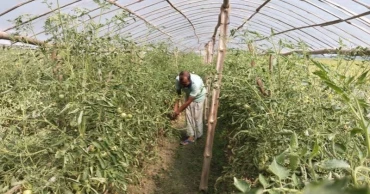
Polyshade tomato farming reviving Narail’s rural economy
A quiet agricultural revolution is taking place in Narail, where farmers are turning to year-round polyshade tomato cultivation for higher yields and better profits. Things look to be very encouraging.
With support from the Department of Agricultural Extension (DAE) under the Climate Smart Agriculture and Water Management Project, farmers in Tularampur of Sadar upazila have planted the summer variety Bari-8 with remarkable success. Thanks to modern techniques and proper care, the yields have been impressive and profits are encouraging.
Kamalpur farmer Kamrul Islam shared his story proudly.
“I cultivated tomatoes on 20 decimals of land after receiving training from the agriculture office. I spent about Tk 60,000, and I expect to make a profit of Tk 100,000 to Tk 150,000," he said.
Another farmer, Baharul Molya, said, “I usually grow other crops, but when tomato prices went up, I decided to try summer tomatoes this year. I got good yields and expect solid profits after expenses.”
Tomato farmers in Chandpur struggle as prices plummet
Farmer Rana Molya credited training from the agriculture office for helping him control diseases and boost production.
“There’s high demand in the local market. I sold tomatoes at Tk 80–90 per kilogram wholesale. With expenses around Tk 60,000, I expect to earn Tk 100,000 to Tk 160,000 in profit," he said.
Encouraged by these results, many other farmers are preparing to switch to tomato farming.
According to Rajib Biswas, a sub-assistant agriculture officer at Tularampur Union, summer tomatoes were grown on about 1.5 acres of land this year.
“As market prices stay high, farmers’ interest in tomato farming is growing. We provide them with training, technical advice, and necessary inputs. Cultivating tomatoes on one acre costs roughly Tk 300,000, but farmers can earn Tk 250,000 to Tk 300,000 in net profit," Rajib said.
With growing demand and impressive returns, more farmers are expected to take up tomato cultivation in Narail next year.
The success of this venture is not only boosting incomes but also reshaping the rural economy—offering new hope and opportunity in the heart of Bangladesh’s farmland.
Bumper tomato yields bring no joy to Sunamganj farmers
10 months ago

Onion seed cultivation: Faridpur couple become role models, farmers aim Tk 300 crore worth of production
In the Gobindapur area of Ambikapur union, Sadar upazila, Faridpur district, Lovely Akter and Imtiaz Mollah have transformed their fortunes and become a beacon of success in onion seed farming, locally referred to as “black gold”.
Starting with just two bighas of land, the couple has expanded their cultivation to 40 bighas, witnessing substantial economic growth that allowed them to construct a multi-storey building and continually invest in new land.
The duo, parents to a tenth grader and a fourth grader, embarked on this venture after observing the lucrative outcome of onion seed cultivation within their family post-marriage. After her marriage, she found that some family members among her in-laws were involved in onion seed cultivation and decided to join along with her husband in this endeavor. They earned good money in the first year and haven't looked back since, Lovely shared.
Onion prices fall by Tk30 per kg as seasonal supply rises in market
2 years ago

Microgreens: Nutrition, Health Benefits, and How to Grow
In a world where healthy eating and sustainable farming practices are gaining prominence, microgreens emerge as a nutritional powerhouse and an excellent addition to any diet. These tiny greens not only pack a punch in terms of health benefits but also offer a cost-effective solution for farming enthusiasts. This article will delve into the world of microgreens, their origins, health advantages, nutritional components, and how one can cultivate them in our country.
What are Microgreens?
Microgreens are the young, edible seedlings of various vegetables and herbs, tracing their roots back to California in the 1980s. Far from accidental, their invention resulted from meticulous research aimed at maximising the nutritional value of plants in their early growth stages.
Harvested at around 1-3 inches tall, one week aged, these tiny greens offer an incredible concentration of flavour and nutrients. They often contain 40 times more nutrients than their mature counterparts, making them a popular choice for those seeking both taste and health benefits. Easy to cultivate at home, microgreens have become a trendy and versatile culinary delight.
Read more: 10 Types of Natural Honey: A Guide to Varieties, Benefits, and Uses
Nutritional Components of Microgreens: Superfood of the Future
These seedlings are rich in a bunch of vitamins including Vitamin C, Vitamin K, Protein, Carbohydrates, Fibre, Sodium, Iron, Selenium, Magnesium, Manganese, etc.
Due to the high nutritional value, microgreens are also referred to as "superfood".
2 years ago

Chapainawabganj farmers set to surpass Boro rice production targets
Farmers in the Chapainawabganj district are poised to surpass their production targets for boro rice this year, aiming to harvest 253,780 metric tonnes, thanks to a surge in interest spurred by last season's bumper yield.
The Department of Agriculture Extension (DAE) has outlined an ambitious plan to cultivate boro rice across 52,200 hectares of land. The cultivation efforts are distributed across various upazilas, with 13,220 hectares in Sadar, 15,720 in Gomastapur, 6,250 in Bholahat, 9,680 in Nachole, and 7,330 hectares in Shibganj.
Farmers like Kawsar Ali from Sadar upazila are busy preparing their fields and sowing boro seeds. Ali, who has dedicated eight bighas of land to boro cultivation, noted the rising costs of production, attributing them to increased labor and irrigation expenses. Similarly, Mayez Uddin pointed out the hike in land plowing costs from Tk 300 to Tk 350, alongside rising labor charges.
Govt to provide Tk 108 crore as incentive to boost Boro production: Ministry
Paddy workers, enduring the winter chill to plant boro, like Madan, highlighted that the current rate of Tk 500 for planting helps cover their household expenses despite the hard work.
Dr. Palash Sarkar, Deputy Director of DAE, remains optimistic about this year's prospects. He mentioned the widespread adoption of the Ufsi boro variety, ensuring there's no shortage of seeds or fertilizers. Furthermore, irrigation has been smooth due to reliable power supply, and farmers have received all necessary guidance from agricultural officials.
With these favorable conditions, Dr. Sarkar anticipates that the boro rice production target will not only be met but exceeded, signaling a successful and productive season ahead for the farmers of Chapainawabganj.
Half of Boro paddy procurement target not achieved yet, Food Minister tells JS
2 years ago

Bean produced in Chattogram’s Sitakunda exported to Italy for the first time
For the first time, a consignment of bean produced in Chattogram’s Sitakunda upazila has been exported to Italy, raising hope among farmers of the upazila which is already famous for vegetable production.
Farmers and agriculture officials said Sitakunda upazila is known for production of variety of vegetables including beans.
Beans are seen on vast lands on both sides of the Dhaka-Chittagong highway, on cropland, land alley, on both sides of the railway tracks, fallow land, embankments and even in hill slopes, they said.
Read more: Prospects of Safe Broiler Chicken Farming
The beans produced here are usually supplied to different parts of the country and this is the first time that this bean has been exported to Italy.
Farmers said that although raw beans are sold in winter, dry bean seeds are sold throughout the year.
Upazila Agriculture Officer said Md Habibullah said the soil of Sitakunda is suitable for bean cultivation and bean cultivation is more profitable than Boro paddy. “As a result, bean has been cultivated on 2,650 hectares of land in this upazila. This year, 47,000 metric tons of beans worth over Tk 100 crore will be produced.”
Read more: Youth's success in orange farming sparks an agricultural trend in Kurigram
2 years ago