GED
Energy crisis, inflation strain economy despite reserve gains: GED
The General Economics Division (GED) of the Planning Ministry has released its March 2026 economic update, highlighting mounting challenges from the energy crisis and persistent inflation, despite some improvement in foreign exchange reserves.
The report warns that the ongoing energy crisis is affecting fiscal balances, external accounts, and investment activities.
Although strong remittance inflows and recent reserve gains have provided temporary relief, elevated global energy prices are likely to increase import bills and widen the trade deficit, it said.
The GED noted that policymakers face difficult trade-offs. Maintaining exchange rate stability could strain reserves, while further depreciation of the taka may intensify inflationary pressures.
Similarly, energy subsidies continue to shield consumers but are adding to fiscal burdens, the report noted.
It recommends prioritising energy efficiency, rationalising pricing with targeted subsidies, and tightening external sector management to contain balance of payments risks.
Headline inflation climbed to 9.13% in February 2026, up from 8.58% in January, driven mainly by food prices. Food inflation rose to 9.30%, surpassing non-food inflation for the first time in recent months.
Rice prices, a major concern earlier, eased to 2.39%. However, rising prices of perishables – particularly vegetables and fish – offset this relief. Vegetables alone accounted for 29.13% of total food inflation.
The GED highlighted a widening gap between inflation and wage growth. While inflation reached 9.13%, wage growth remained subdued at 8.06$, intensifying real income pressures, especially for lower-income households.
Banking indicators showed slight moderation. Total deposits stood at Tk 1,967,907 crore in January, marginally lower than December levels.
Public sector credit remained elevated at Tk 611,258.6 crore, indicating continued reliance on domestic borrowing, while private sector credit growth was modest at 6.03%.
Revenue collection by the National Board of Revenue (NBR) fell significantly short of its February target.
Against a revised target of Tk 42,051 crore, collections reached Tk 30,559 crore – over 27% below the target. Although this marked an 8.15% increase year-on-year, revenue declined by 17.48% compared to January.
Implementation of the Annual Development Programme (ADP) weakened during the July-February period compared to the previous fiscal year, according to the report.
The GED attributed the slowdown to land acquisition delays, procurement inefficiencies, and rising project costs linked to the energy crisis.
A sharp increase in spending in February suggests “back-loaded implementation”, raising concerns about oversight and quality of expenditure.
Foreign exchange reserves rose to USD 35.11 billion in February (USD 30.36 billion under BPM6 standards), supported by strong remittance inflows exceeding USD 3 billion.
However, the GED cautioned that this stability remains fragile amid rising energy import costs.
Export performance weakened, with ready-made garment (RMG) exports falling to USD 2.81 billion in February from USD 3.61 billion in January, reflecting softer global demand and higher domestic production costs.
The exchange rate remained relatively stable at around Tk 122.3 per US dollar due to central bank interventions.
However, the Real Effective Exchange Rate (REER) declined slightly to 124.05, indicating a gradual depreciation in real terms.
While this may improve export competitiveness, the benefits are currently being offset by elevated energy-related production costs, the report noted.
6 months ago

Rice prices keep food inflation high despite slight easing in Nov: GED
Bangladesh’s overall inflation rose slightly in November and rice remained the single largest contributor to food inflation, accounting for 40.28 per cent, according to the Monthly Economic Update and Outlook released by the General Economics Division (GED) of the Planning Ministry.
The government report said general inflation increased to 8.29 per cent in November from 8.17 per cent in October.
Food inflation rose to 7.36 per cent from 7.08 per cent, while non-food inflation remained broadly stable at around 9 per cent.
Overall rice inflation fell to 12.26 per cent in November from 13.77 per cent in October, with medium rice declining to 10.96 per cent, fine rice to 15.43 per cent and coarse rice to 11.04 per cent.
Read more: Rice procurement faces disruption due to 0.5% source tax
Despite the downward trend, rice prices remained elevated and continued to exert significant pressure on food inflation.
Fish and dry fish contributed 40.77 percent to food inflation, slightly higher than the previous month.
Contributions from meat, edible oil and fat declined, while milk, cheese and eggs recorded a modest increase and vegetables continued to have a strong disinflationary impact, though the negative contribution eased in November.
At a detailed level, inflationary contributions from all major rice varieties declined. Among protein items, beef, hilsa and pangash fish showed higher inflationary pressure, while soybean oil and liquid milk eased. Potato and onion continued to post negative contributions, with potato remaining strongly disinflationary.
The report noted that the gap between price inflation and wage inflation narrowed in October but widened slightly in November.
Govt approves import of 1 lakh mt rice from India, Pakistan
In November, price inflation stood at 8.29 per cent compared to wage inflation of 8.04 per cent, indicating continued pressure on real incomes despite partial adjustment through wage growth.
On the monetary front, bank deposits reached Tk 19.24 crore in October, registering a year-on-year growth of 9.62 per cent, reflecting sustained depositor confidence.
Credit growth moderated, with public sector credit growth slowing to 21.43 per cent and private sector credit growth easing slightly to 6.23 per cent.
Total domestic credit growth decelerated to 9.62 per cent in October.
Weighted average interest rate (WAIR) spreads varied across banking groups.
Foreign commercial banks recorded the highest spread at 8.88 per cent while specialised and development banks posted the lowest at 3.37 per cent.
State-owned and private commercial banks showed similar spreads of around 5.6 per cent, a level the GED said is desirable for improving banking sector efficiency.
Revenue collection by the National Board of Revenue (NBR) fell short of the monthly target in November 2025 although it posted double-digit year-on-year growth.
Govt to procure 50,000 mt of non-basmati parboiled rice, 80,000 mt fertiliser
Against a monthly target of Tk 36,326 crore, collections stood at Tk 29,658 crore, achieving 83.95 per cent of the target.
However, revenue increased by Tk 3,688 crore or 14.2 per cent compared to November 2024.
The report said Annual Development Programme (ADP) utilisation improved year-on-year during July–November of FY2025-26, but overall implementation remained sluggish.
Despite higher spending, utilisation continued to lag behind targets due to administrative bottlenecks, slow approvals and procurement delays.
Bangladesh’s external sector showed strong performance in November.
Remittance inflows reached a record USD 2.89 billion while export earnings stood at about USD 3.89 billion, driven largely by the ready-made garments (RMG) sector.
Foreign exchange reserves peaked for the year, with gross reserves at approximately USD 32.34 billion and BPM6 reserves at USD 27.58 billion, strengthening external stability.
RMG exports accounted for over 80 per cent of total export earnings underscoring continued dependence on the sector and the need for diversification.
Read more: Rice biggest driver of October’s food inflation in Bangladesh: GED
The GED also highlighted a growing divergence between the real effective exchange rate and the bilateral taka–US dollar rate, indicating potential real appreciation pressures and risks to external competitiveness.
9 months ago
Rice biggest driver of October’s food inflation in Bangladesh: GED
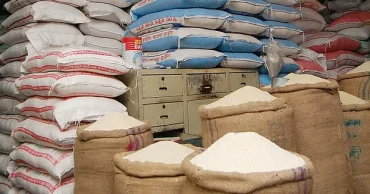
Rice alone contributed about 47 percent of total food inflation in October while vegetables posted a strong negative impact because of seasonal abundance, according to the latest Economic Update and Outlook for November 2025 prepared by the General Economics Division (GED).
Protein items including beef, chicken and fish saw steady inflation during the month, driven by feed prices and transport costs, the report said.
Overall inflation dropped to 8.17 percent in October 2025, from 10.87 percent a year earlier, driven almost entirely by a sharp fall in food inflation.
Food inflation plunged from 12.66 percent in October 2024 to 7.08 percent in October 2025 as rice supply improved due to the Aman harvest, imports and public procurement.
Read more: High price of rice in Bangladesh bucks the trend of easing inflation
However, non-food inflation inched up to 9.13 percent, reflecting persistent pressure in housing, transport and healthcare—an indication that inflation remains far from under control.
Election-related spending and possible disruptions during the transition are expected to add further pressure on inflation and the foreign exchange market, complicating stabilisation efforts, said the report.
The report warns that large-scale dollar purchases by the central bank unless sterilized could fuel inflation and distort market-based exchange rate mechanisms.
Bangladesh’s economic recovery depend heavily on political stability following the February national election and the next government’s willingness to carry out meaningful reforms, said the GED reprot.
The report offers a cautiously optimistic view but warns that deep structural weaknesses along with the political transition period could constrain economic momentum.
According to the analysis, the economy could regain pace if the election produces a clear political direction and the next government decisively undertakes long-delayed reforms, particularly in improving the business climate, stabilising the banking system, and ensuring fiscal and energy security.
Without such reforms, the recovery may be short-lived, it said.
Read more: Bangladesh economy in ‘waiting vortex’; experts urge credible elections
The Asian Development Bank (ADB) has forecast around 5 percent GDP growth for FY26 following a sluggish period.
Remittances and garment exports continue to provide much-needed resilience but the GED notes that the broader economic environment remains fragile as both investors and entrepreneurs appear to be “waiting” for political stability before committing to new ventures.=
While bank deposits grew at nearly double-digit rates through August and September, private-sector credit growth fell to just 6.29 percent—the lowest in at least four years and well below the Bangladesh Bank’s FY26 target of 7.2 percent.
High lending rates, cautious bank behaviour and political uncertainty have depressed investment appetite. Meanwhile, government borrowing from commercial banks surged 24.45 percent in September, raising concerns about crowding out private borrowers.
Interest rate spreads also exposed deep structural distortions. Foreign commercial banks maintained spreads close to 9 percent—far higher than state-owned and private banks—highlighting issues such as high operational costs, non-performing loans and market concentration.
Rising rice prices push food inflation higher in Bangladesh: Report
Revenue collection in October 2025 fell short of the target by Tk 8,324 crore, achieving only 77.37 percent of the month’s goal.
All major revenue streams—import duties, domestic VAT, and income tax—underperformed.
Although collection was slightly higher than in October 2024, the growth of just 2.2 percent was described as “pessimistic” given inflationary pressures and increased public spending needs.
ADP utilisation continues to lag despite marginal improvements. Up to October, utilisation stood at 8.33 percent, only a slight increase from 7.90 percent last year. Lower overall allocations and reduced spending under own-financing components indicate financial strain and weak project execution.
The report notes that while utilisation rates improved marginally in some categories, the decline in total expenditure—from Tk 8,762 crore last year to Tk 7,720 crore this year—reflects ongoing bottlenecks in planning, fund release and implementation.
Foreign exchange reserves improved significantly, rising from USD 24.35 billion in November 2024 to USD 32.34 billion in October 2025.
BPM6 reserves also rose sharply, supported by stronger remittances and prudent reserve management.
Bangladesh’s June inflation remains high with food inflation at 10.42%
Remittances surged in the first four months of FY26, with each month outperforming the previous year and September recording the highest inflows.
However, export earnings remained volatile. Exports peaked in July at USD 4.77 billion but suffered sharp declines in April and June.
RMG exports mirrored these fluctuations, while non-RMG exports also experienced mid-year downturns.
Imports especially capital machinery saw steep contractions year-on-year, signalling depressed investment demand.
A slight month-on-month recovery in August and September suggests only tentative stabilisation.
The real effective exchange rate (REER) appreciated notably, indicating eroding external competitiveness.
Read more: Inflation in Bangladesh edges up to 8.36% in September
10 months ago
Bangladesh economy shows external stability despite internal challenges: Report
Bangladesh’s economic outlook for August 2025 shows signs of stabilisation on the external front but troubling weaknesses in domestic investment, revenue collection and development spending, according to a government report.
The latest monthly economic update by the General Economics Division (GED) under the Planning Ministry said inflation declined to 8.29 percent in August, the lowest since July 2022, after months of volatility that saw double-digit inflation from July to December 2024.
Non-food inflation dropped below 9 percent for the first time in 20 months, helping offset a marginal rise in food prices.
Food inflation stabilised at 7.6 percent for three consecutive months, a sharp improvement from the 14 percent peak in July 2024.
Rice remains the single largest driver of food inflation, contributing 48.37 percent in August. Government procurement of 1.7 million tons of Boro rice, imports of half a million tons duty-free and higher distribution under public food schemes are expected to ease prices in the coming months.
Still, GED noted that delays in real-time monitoring and policy response prevented earlier stabilisation.
The report highlighted a robust performance in the external sector. Export earnings consistently crossed the $4 billion mark, hitting $4.77 billion in July 2025.
The exchange rate remained stable at Tk 121–122 per USD, while foreign exchange reserves climbed from $24.86 billion in September 2024 to $31.17 billion in August 2025. This, according to GED, provided a solid cushion against trade shocks and debt obligations.
Despite positive external indicators, the domestic financial sector showed deep stress. Private sector credit growth plunged to 6.49 percent in June 2025 — the lowest on record and far short of Bangladesh Bank’s target.
Businesses remain reluctant to borrow amid high interest rates, political and economic uncertainty, and cautious bank lending.
Commerce Adviser stresses surplus economy for sustainable growth
By contrast, public sector credit rose sharply by 13.09 percent, driven by the government’s heavy reliance on bank borrowing to finance its fiscal deficit.
This trend, GED warned, is effectively “crowding out” the private sector and undermining future investment and job creation.
Revenue collection in August stood at Tk 27,162 crore, falling Tk 3,727 crore short of the target. While collections grew 17.6 percent year-on-year, the shortfall was mainly due to weaker import and income tax receipts.
Only VAT at the local level showed improvement. The report flagged persistent revenue gaps as a key challenge in meeting the ambitious annual target of Tk 4,99,000 crore.
Development spending remains another weak spot. ADP utilization dropped to 2.39 percent of allocation in the July–August period of FY26, down from 2.57 percent in the same period last year.
Although August utilisation improved slightly year-on-year (1.71 percent vs 1.52 percent), GED noted that such low early-year implementation reflects structural bottlenecks, bureaucratic delays, and poor fund release capacity, raising the risk of back-loaded spending and inefficiency.
While the decline in inflation and strengthening of reserves signal macroeconomic stability, GED cautioned that the domestic economy faces significant headwinds. Weak private investment, revenue shortfalls, and under-utilisation of development funds threaten to slow growth momentum.
“The economy is showing resilience externally but risks remain high domestically. Without urgent measures to stimulate private credit, enhance revenue collection, and accelerate ADP implementation, medium-term growth prospects may weaken,” the report said.
1 year ago

GED sees cautious recovery ahead, urges prudent budget
The General Economics Division (GED) of the Planning Commission has forecast a cautiously optimistic economic outlook for May and June 2025 supported by reform measures and a gradually stabilising macroeconomic environment.
In its latest Economic Update and Outlook released this month, the GED said the country’s economic recovery is expected to gain pace, backed by improvements in exports, remittance inflows, a stable exchange rate, and easing inflationary pressures.
Bank deposits and private sector credit growth have also shown steady progress, it added.
However, the report cautioned that domestic factors, particularly persistent inflation and political uncertainty, could dampen short-term prospects.
Bangladesh Bank simplifies overseas money transfer for language courses
It stressed the need for prudent fiscal measures in the upcoming budget to ease inflationary pressures and strengthen investor confidence for a sustained recovery in the new fiscal year.
Although revenue collection remains below target, the GED expressed optimism that structural reforms would help improve the situation. It noted the recent dissolution of the National Board of Revenue (NBR) and the formation of two new bodies—the Revenue Policy Division and the Revenue Management Division—under the Ministry of Finance.
This restructuring, enacted through an Ordinance on May 12, followed recommendations by task forces from the Planning and Finance Ministries. It aims to resolve longstanding inefficiencies and promote evidence-based policymaking.
The GED also highlighted the introduction of a Medium- and Long-Term Revenue Strategy (MLTRS) for FY2025-26 to FY2034-35, which targets a tax-to-GDP ratio of 10.5% by FY2034-35.
The report recommends a critical review of past reform failures to ensure the success of the new strategy, noting that Bangladesh’s revenue-to-GDP ratio remains lower than that of many peer economies.
Bangladesh Stock Market: Early gains fade as indices dip in second hour
The Outlook reports a steady increase in foreign exchange reserves, reflecting a strengthened external position. Gross reserves rose from $25.8 billion in July 2024 to $27.4 billion in April 2025, while BPM6 reserves climbed from $20.4 billion to $22.0 billion.
The government has cleared substantial payments for LNG, electricity, and oil imports, further reinforcing reserve health.
Although fluctuations occurred—such as a dip in November 2024 followed by recovery in December—these were attributed to temporary external inflow changes and valuation adjustments. The difference between gross and BPM6 reserves, typically $5–6 billion, represents non-reserve assets excluded under BPM6 accounting.
March 2025 saw an 8.51% year-on-year growth in aggregate bank deposits—the highest in nine months—driven by increased customer confidence and record remittance inflows. Private sector credit growth also rebounded to 7.57% in March from 6.82% in February, following a prolonged slowdown.
Public sector borrowing from commercial banks surged to BDT 985.79 billion by mid-April 2025—a 60% year-on-year increase—due to weak revenue collection and a suspension of central bank financing. The GED warns that this could crowd out credit access for the private sector.
Bangladesh’s external sector in April 2025 presented a mixed picture. Remittance inflows rose sharply—up 35% year-on-year—contributing to a projected narrowing of the current account deficit from 1.4% of GDP in FY2024 to 0.9% in FY2025. This was attributed to rising remittances and a shrinking trade deficit.
However, exports declined, with April recording the lowest monthly figures of the fiscal year at $3.01 billion—a modest 0.86% growth. This drop was largely due to a slowdown in apparel shipments, the Eid al-Fitr holidays, and uncertainty over the U.S. administration’s reciprocal tariff policy.
Inflation showed a slight decline in April compared to March, mainly due to a decrease in food prices—especially rice and fish. The Outlook recommends maintaining strategic food reserves and strengthening targeted safety net programs such as school feeding initiatives, food-for-work schemes, open market sales, and employment guarantee programs. These measures are deemed essential, given fiscal constraints and the rising cost of food.
The GED underscores that while Bangladesh’s economy shows signs of recovery, sustained efforts in revenue generation, prudent fiscal management, and targeted social protection will be vital to ensure macroeconomic stability and inclusive growth in the months ahead.
1 year ago
.jpg)
46% people don’t get social safety allowance: Dr Shamsul Alam
Mentioning that around 46 percent people are deprived of social safety allowance, senior secretary and member of the General Economics Division (GED) of the Bangladesh Planning Commission Dr Shamsul Alam on Sunday hoped that all the poor people would come under social safety programmes soon.
5 years ago
GED seeks experts’ opinion in rethinking priorities outlined in 8FYP
As the country is grappling with worsening coronavirus situation, General Economics Division (GED) of the Ministry of Planning on Tuesday has sought experts opinion in rethinking priorities and resource allocation currently outlined in the Eighth Five Year Plan (8FYP), consequent sectoral reallocation, and adjustments to the Plan’s macroeconomic framework.
6 years ago