Music
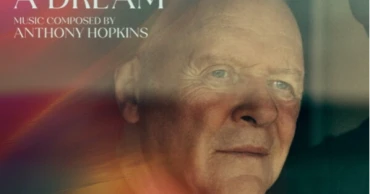
Sir Anthony Hopkins releases debut album after six decades of composing
Oscar-winning actor Sir Anthony Hopkins is stepping into a new role as a recording artist with his debut album, “Life Is a Dream,” featuring 12 compositions he has written over six decades.
The album, conducted by Gustavo Dudamel and performed by the Philharmonia Orchestra, was recorded at London's Alexandra Palace in April. Decca Records will release it on Aug 21.
For Hopkins, 88, music has always been more than a hobby.
“My first love, or vocation really, is music,” he said, recalling how music influenced him while growing up in postwar Wales. He began playing the piano at age 4 and wrote his first composition, a waltz, in 1960 when he was 22.
Hopkins said composing gives him greater freedom than acting.
“Acting is a discipline, you have to know your stuff,” he said. “But music for me is a freewheeling kind of art form.”
He has already composed music for several films, including “Shadowlands,” in which he played author C.S. Lewis. He later worked on the music for “August,” “Slipstream” and “Elyse,” films in which he also acted and, in some cases, directed.
Album draws on childhood memoriesHopkins said “Life Is a Dream,” named after a play by Spanish playwright Pedro Calderón de la Barca, reflects his childhood, teenage years and life growing up in Wales.
The album also carries a sense of sadness and nostalgia, he said, reflecting on the passing of time and the realities of life.
“From the moment we're born, we begin to die,” Hopkins said, joking about the rather gloomy thought.
The album's first single, “1947: Suite for Solo Piano and Orchestra: II. Bracken Road,” is part of a three-part suite inspired by a summer in South Wales. Hopkins said the piece carries a feeling of melancholy and nostalgia, particularly through its cello sounds.
He described the song as reflecting “the strange, whimsical pain of life” and the human sense of longing.
Another composition, “Stella Aria,” is named after his wife, actor and director Stella Hopkins. The piece explores loneliness but ultimately leads toward happiness, he said.
Hopkins has also been looking back on his life in his memoir, “We Did OK, Kid,” released last year.
Reflecting on his career, he said he never expected to achieve the success that came after choosing acting about 70 years ago.
“I couldn't have planned any of this,” he said, adding that he initially became an actor partly because he did not know what else to do.
Hopkins said he is grateful for his long life and has no fear of death.
“I'm just so grateful I've lived this long,” he said.
Bradley Cooper helped connect Hopkins with DudamelActor Bradley Cooper played an important role in bringing Hopkins and Dudamel together.
Cooper had seen Hopkins' music performed by the Birmingham Symphony Orchestra under conductor Michael Seal several years ago and introduced him to Dudamel.
When Hopkins later attended the recording session at Alexandra Palace, he admitted he was surprised by the complexity of his own compositions.
“I'm sitting there thinking, ‘How the hell did I write this?’ I have no idea,” he said.
Dudamel, however, praised the music and described Hopkins as a composer with a strong sense of storytelling and emotion.
“The same depth of imagination, humanity and emotional truth that has defined his extraordinary work on stage and screen is present in his music,” Dudamel said.
Hopkins hopes to perform liveWith the album set for release, Hopkins is already considering live performances, with Carnegie Hall at the top of his wish list.
The venue has special meaning for him because of the 1947 film “Carnegie Hall,” which he remembers from his childhood. He also recalls his mother telling him that one day he would perform there.
Now, decades later, Hopkins says playing at Carnegie Hall is a dream he still hopes to fulfil.
END/UNB/SB
1 month ago
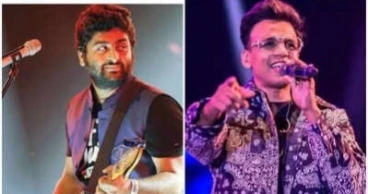
Abhijeet Sawant raises exploitation concerns after Arijit quits playback
Popular singer Arijit Singh recently announced that he will no longer work as a playback singer. His decision has once again brought attention to how singers are paid in the film industry. Many wonder why top singers leave and what happens to lesser-known artists who have less influence.
The discussion grew after singer Abhijeet Sawant spoke about the issue. He shared his thoughts on whether playback singers are paid fairly and recognized for their work.
During an interview on Pentarise Studios' YouTube channel, Abhijeet said, “People don’t want singers to become bigger than the film. That is why they are paid a fixed amount. Singers don’t get royalties for film songs. For example, Biddu worked on ‘Lafzon Mein’ and also made a few songs in the West. He earns enough royalties from those songs to live comfortably. We don’t even get enough to live on.”
“Bhool Bhulaiyaa 3” team wanted Arijit not Sonu Nigam": Mallik
He added, “The system is made this way. Singers want opportunities and hope a hit song with a big star will help their career. We accept the money we get, because if we don’t, someone else will. Singers are often exploited.”
On January 27, Arijit shared on social media that he will stop taking new playback songs. He wrote, “Hello, Happy New Year to all. Thank you for your love over the years. I will not take any new playback assignments. It was a wonderful journey.”
His announcement came days after he released ‘Maatrubhumi’, a song recorded with Shreya Ghoshal for Salman Khan’s upcoming film ‘Battle of Galwan’.
#With inputs from NDTV
7 months ago
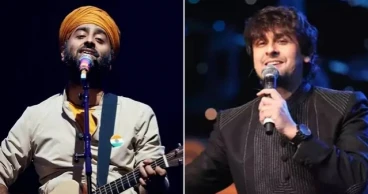
“Bhool Bhulaiyaa 3” team wanted Arijit not Sonu Nigam": Mallik
Composer Amaal Mallik opened up about the hurdles he faced to bring Sonu Nigam on board for the reprised song “Mere Dholna 3.0” from Bhool Bhulaiyaa 3, citing restrictive practices in the Hindi music industry.
In a conversation with Pinkvilla, Amaal said composers often lack freedom to choose singers and may be replaced if their choices conflict with production or label decisions. He recalled how Sonu Nigam, despite being a legendary singer, had to “prove” himself before being confirmed for the track.
“They weren’t sure about someone like Sonu Nigam. Yet he finished the toughest song I’ve recomposed in just 45 minutes,” Amaal said, adding that the final sargam at the song’s end is extremely challenging.
Grammys fuel celebrity pushback against Trump’s immigration drive
Amaal also highlighted the industry’s arbitrary decisions, noting that teams frequently suggest popular singers like Arijit Singh or Vishal Mishra over classical talents. He said Sonu Nigam was the only singer capable of delivering the classical depth he wanted.
The composer further revealed the financial imbalance in the industry, citing his party hit “Sooraj Dooba Hain,” which earned Rs 60–70 crore for the label, while he only received minimal publishing rights.
#With inputs from NDTV
7 months ago
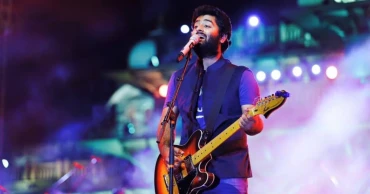
Arijit Singh announces retirement from playback singing
Popular singer Arijit Singh has announced that he is stepping away from playback singing, a move that has surprised music lovers.
In an emotional post shared on Instagram, the acclaimed vocalist thanked his listeners for their support over the years and said he would not take on any new assignments as a playback singer. He described his career as a “wonderful journey” and said he had decided to call it off.
American climber Alex Honnold scales Taipei 101 without ropes
The announcement triggered an outpouring of reactions from fans on social media, with many expressing disbelief and sadness. Some users hoped the account had been hacked, while others said Bollywood music would feel incomplete without his voice.
Arijit Singh is known for lending his voice to several of Hindi cinema’s most popular songs. His breakthrough came with Tum Hi Ho from Aashiqui 2. Other widely loved tracks include Channa Mereya from Ae Dil Hai Mushkil, Phir Bhi Tumko Chaahunga from Half Girlfriend and Hawayein from Jab Harry Met Sejal.
Over his career, Singh has won two National Film Awards and was awarded the Padma Shri in 2025.
He did not, however, explain the reasons behind his decision or share any details about his future plans.
#With inputs from NDTV
7 months ago
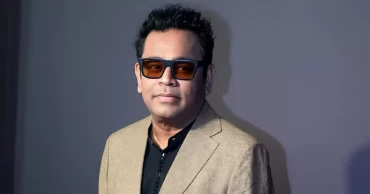
AR Rahman says new generation “made him doubt” his music
Music composer AR Rahman said he felt “gaslit” by younger generations who made him doubt the quality of his work.
Rahman told The Hollywood Reporter that fans often compared his current music with his 1990s hits, making him question his creativity. He said this affected his confidence, prompting him to compose music for 20–30 films between 2019 and 2025 to prove himself.
He added that he collaborated with Oscar winner Hans Zimmer for Ramayan and wants to push his limits without relying on past awards, including his 33 Filmfare wins and two Oscars.
Rahman also clarified a recent controversial comment, saying he never intended to hurt anyone’s feelings. He emphasized that his goal is to celebrate culture and connect with people through music.
In recent years, Rahman composed for films in Hindi, Tamil, and Malayalam, including Ponniyin Selvan, Atrangi Re, and Malayankunju.
With inputs from NDTV
8 months ago
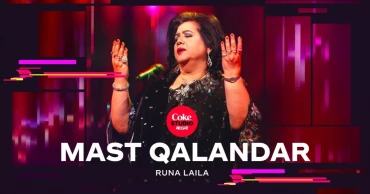
Coke Studio Bangla concludes Season 3 with Runa Laila’s iconic ‘Mast Qalandar’
Coke Studio Bangla unveils the Season 3 finale with a stirring, contemporary evocation of the revered Sufi classic ‘Mast Qalandar’, rendered by Bangladesh's cherished luminary Runa Laila. Arriving on 16 November – on the threshold of her birthday – this release is an intimate homage to a voice that has shaped the subcontinent’s musical imagination and holds enduring reverence in Bangladesh’s cultural heart.
Re-envisioned and produced by Shayan Chowdhury Arnob and Adit Rahman, this version blends the contemplative spirit of timeless Qawwali with the distinct contours of Bangladesh’s musical heritage. The track begins with a poignant Bangla verse by Hason Raja, rendered with aching tenderness by Makhon Mia, before unfurling into a luminous fusion of Sufi gravitas, folk earthiness, and contemporary craft. The piece assembles a cross-generational ensemble featuring stalwarts like Foad Nasser Babu alongside Coke Studio Bangla’s new-wave voices, crafting a sonic tapestry that feels both nostalgic and fresh.
‘‘Mast Qalandar’’ occupies a cherished place in Runa Laila’s storied legacy. With a career spanning more than six decades and performances in over 18 languages, she has served as a cultural conduit, linking Bangladesh, India, Pakistan, and the wider South Asian diaspora. This rendition bows to the version made indelible by her voice, now tenderly reintroduced for a new generation through Coke Studio Bangla.
Read more: Top 10 Netflix Originals Releasing in December 2025
Reflecting on the piece, Runa Laila shared that, “Mast Qalandar has always been close to my heart. To perform it again in a new style alongside younger musicians has been a rewarding experience, and I am happy that this song finds life across generations.”
As curator, singer, and composer, Shayan Chowdhury Arnob has led Coke Studio Bangla’s artistic compass since its inception, cultivating a space where inheritance and innovation converse. His collaboration with producer and composer Adit Rahman, celebrated for modern arrangements in Shondhatara, Nasek Nasek and Bhober Pagol, delivers a contemporary yet deeply soulful coda to Season 3.
Speaking about the song, Arnob said, “This song carries the weight of memories, devotion, and cultural selfhood. Bringing Runa Laila apu’s voice back into this enduring anthem stands as a moment of collective pride for all of us. ‘Mast Qalandar’ is more than music, it is a living bridge between those who have loved, learned and lived with it.”
A tribute to heritage, voice, and culture, ‘Mast Qalandar’ emerges as a resonant finale to Season 3 of Coke Studio Bangla.
Read more: Café: Coke Studio Bangla Presents A Timeless Fusion of Heartbeats and Nostalgia
10 months ago
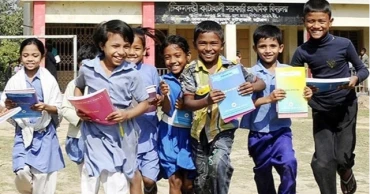
While the world embraces music education, Bangladesh seen stepping backwards
Police blocked a musical procession by Udichi Shilpigoshthi, the cultural collective, on Sunday, organized to demand reconsideration of the government’s decision to cancel recruitment of music and physical education teachers in public primary schools.
The march, which began in front of the National Press Club, was stopped by police near the Shilpakala Academy in Segunbagicha.
Udichi artists said they intended to proceed to the Chief Adviser’s residence at Jamuna Gate to present their songs. After some discussion, police initially allowed the march to continue, but stopped it again two minutes later after it crossed the Dhaka Range DIG office, preventing further progress. During this time, the artists performed songs while sitting on the road.
DU teachers, students protest abolition of music, physical-training teachers’ posts
The amended rules, published on November 2, removed the opportunity for recruitment of music and physical education teachers.
According to the Secretary-level Committee, the Ministry of Primary and Mass Education has stepped back from the plan. The committee noted that recruiting such a small number of teachers would be ineffective at the primary level and could create inequality, given that there are 65,569 primary schools nationwide. Cluster-based deployment would require a single teacher to serve 20 or more schools, making workload management impossible.
Earlier, in late August, the government issued the Government Primary School Teacher Recruitment Rules, which included positions for music and physical education teachers. Just two months later, the rules were amended.
Udichi hosts nationwide event against 'conspiracy centring national anthem'
The revised rules sparked widespread criticism. The Human Rights Forum Bangladesh (HRFB) stated that the decision is not only unreasonable but reflects succumbing to pressure from a small group, removing two important subjects from primary education. The National Rabindra Sangeet Sammilon Parishad also protested.
In a statement Parishad said, "When a small section of society opposes this using a narrow-minded, distorted interpretation of religion, the government abolished assistant teacher posts for music and physical education through a new notification.”
On Saturday afternoon, the cultural organization Chhayanaut also requested reconsideration of the cancellation by performing songs collectively.
Teachers and students of Dhaka University’s Music Department held a protest on campus on Wednesday demanding reinstatement of the posts. The rally took place in front of Aparajeyo Bangla, with participants singing the national anthem and raising placards. Dr. Priyanka Gope, Chairperson of the Music Department, read out a memorandum. Teachers from various departments—including Dance Department’s Laboni Banya and Clinical Psychology Department’s Kamal Uddin Ahmed Chowdhury—along with students, spoke at the event.
Leaders from Dhaka University Central Students’ Union (DUCSU), including the Literary and Cultural Affairs Secretary and cultural secretaries from different halls, expressed solidarity.
Students from Chittagong University protested the decision, stating that it poses a major threat to future artistic practice and cultural development in Bangladesh. Students from Jagannath University protested through music.
Two steps backwards
Globally, music education is emphasized even in countries with large Muslim populations. Saudi Arabia, the spiritual center of Islam, recently hired over 9,000 teachers to introduce music education in public schools as part of Vision 2030 reforms, led by Crown Prince Mohammed bin Salman, promoting arts, entertainment, and education. The kingdom is now qualifying thousands of kindergarten teachers in music skills. In late 2022, over 12,000 female teachers in government and private kindergartens were trained, and the new phase will train about 17,000 female teachers.
Other Muslim-majority countries, including Malaysia, Indonesia, Turkey, and Egypt, also retain music in their national curriculum.
In Malaysia, formal music education became compulsory in all elementary schools in 1983, with primary-level music as an intra-curricular subject since 1982.
In Indonesia, home to over 240 million Muslims, music has been compulsory in primary schools since the 1970s and remains under the 2022 curriculum.
In Turkey, primary school students receive one hour of music lessons from 1st to 8th grade, with additional two-hour elective lessons from 5th to 8th grade.
In Egypt, music has been part of government school curricula, including Arab and Western music, since 1931.
In the United Kingdom, comprising England, Northern Ireland, Scotland, and Wales, music is compulsory with variations in age and enforcement.
In Europe, a meNet study covering 20 countries showed music is compulsory at the primary level; secondary education often offers it optionally. Germany, Japan, Australia, and South Africa also mandate music and dance in primary schools.
In the United States, according to the NCES (January 2025), 73% of public schools require students to take at least one arts course, most commonly music (84%) and visual arts (82%).
In China, music is a compulsory subject during the nine years of mandatory education and part of the quality-oriented education push, with increased curriculum emphasis in recent standards.
But In Bangladesh, despite global trends highlighting the importance of music education, several religious organizations and political parties, including Bangladesh Jamaat-e-Islami and Islami Andolon Bangladesh, oppose music teacher recruitment. They demand religious instructors instead and have threatened street protests if the decision is not reversed, in a seminar held in September at the auditorium of the Institution of Diploma Engineers.
MIT study suggests music education
A new wave of research from the world-renowned Massachusetts Institute of Technology (MIT) scientists suggest that music lessons may do far more to boost brain development and overall intelligence.
The study reveals that learning music-whether through playing an instrument, singing, or reading musical notes, activates and strengthens areas of the brain responsible for memory, attention, problem-solving, and language skills. These neural networks overlap with those used in math and reasoning, giving children a deep cognitive workout that coding lessons can't yet match. Music education engages both hemispheres of the brain simultaneously, forging connections that sharpen focus and enhance long-term learning abilities.
Music combines creativity, pattern recognition, and emotional expression, creating a richer and more versatile mental environment. Children who play instruments or participate in music programs often show stronger academic performance, improved verbal abilities, and better emotional regulation.
Researchers also emphasize the social and emotional benefits of music. Playing in an ensemble or practicing with others fosters teamwork, patience, and communication-skills critical for success in any field, including technology. By developing these qualities early, children gain confidence and adaptability that can help them thrive in a rapidly changing world.
10 months ago

Café: Coke Studio Bangla Presents A Timeless Fusion of Heartbeats and Nostalgia
There are songs that hit your playlist, and then there are songs that feel like an invitation to a destination. Shayan Chowdhury Arnob’s latest curated piece, "Café," is definitely the latter. This track isn’t just a performance; it’s a perfectly captured moment where the fiery rhythm of Latin Jazz walks right into the quiet, soulful introspection of Bengali music. It’s a warm, dimly lit room captured in sound, and a beautiful reminder that life’s "Real Magic" often lives in the gentle silence between two heartbeats.
What makes it truly special is how it balances respect with innovation. This composition is built on a stunning dual inheritance: drawing deeply from the beloved nostalgia of Gautam Chattopadhyay’s “Amar Priya Caffe” (Moheener Ghoraguli) and the foundational, iconic rhythm of Eddie Palmieri’s original “Café.” Producer Shuvendu Das Shuvo manages to weave these two profound, separate traditions into a singular, rich tapestry that somehow feels both instantly familiar and excitingly new.
Read more: Classic Ibsen heroine reimagined in new film adaptation
Tanzir Tuhin's vocals are the undisputed heart of the piece. His voice carries the Bengali "nostalgia" beautifully, delivering the lyrical sentiment of the idea of a café as a living book of small, private stories with a stirring, authentic warmth. This is instantly grounded by the masterful performance of the ensemble. Gaboo’s percussion carries the legacy of rhythm, providing a complex yet effortless groove, while Lívia Mattos’s accordion adds a magical, almost unexpected layer of European folk-jazz charm. When the brass section (Francis on trombone, Apurba on trumpet) kicks in, the song takes flight, transforming the quiet reflection into a vibrant, swirling dance.
"Café" is an emotion first and a fusion second. It captures the quiet energy described in the notes: the last goodbye, the first hello, the "gentle pause between two hearts." It’s a flawless piece of music that proves that some feelings like a perfectly brewed coffee or a shared moment of silence transcend language.
This single piece of music is a spectacular achievement from everyone involved from the artists like Mithun Chakraborty and Pradyut Chatterjea to the immense creative and sound squads led by Faizan R Ahmad (Buno) and Syed Gousul Alam Shaon. They haven't just produced a song; they have bottled the timeless hush of a place where everyone leaves a piece of their story behind.
Read more: Thamma box office Day 5: Ayushmann, Rashmika's film nears Rs 100 crore mark
10 months ago

Joy Bangla Concert 2024 promises special arrangement for women
In a move towards inclusivity, the Joy Bangla Concert 2024 has announced special arrangements to accommodate female attendees. Young Bangla, through its verified Facebook page, revealed that dedicated entrances and spaces will be reserved exclusively for women. “Join us for an unforgettable evening of music and camaraderie,” beckons the announcement, highlighting the concert’s commitment to a welcoming and inclusive atmosphere.
Scheduled to take place at the MA Aziz Stadium in Chattogram, this year’s event marks a significant departure from tradition, being the first time the concert is held outside the capital city, Dhaka. This strategic shift not only broadens the geographical appeal of the event but also pays homage to the historical essence of Bangladesh’s struggle for independence, invoking the spirit of Bangabandhu’s iconic March 7 speech.
Art Therapy through Printmaking’: Gallery Cosmos’s unique offering at Dhaka Flow’s wellness festival
Since its inception in 2015 by the Centre for Research and Information (CRI), the Joy Bangla Concert has evolved into a cornerstone of cultural celebrations, particularly among the youth. After pausing due to the global pandemic, the concert made a roaring comeback in 2023, continuing to honour the legacy of the 1971 Liberation War. The event stands out for its unique blend of musical entertainment and historical reflection, creating a deeply resonant experience for attendees.
The 2024 edition promises to be a grand musical fiesta, featuring performances from a mix of popular and emerging rock bands. The line-up, as announced by Young Bangla, includes fan favourites such as Artcell, Cryptic Fate, Avoid Rafa, Nemesis, Chirkutt, Meghdol, Lalon, the local sensation Tirondaz from Chattogram, and Carnival. These acts are set to electrify the stage, celebrating the rich musical heritage of Bangladesh and inspiring a new generation with the indomitable spirit of its people.
Read more: Most-hyped Bollywood Movies Releasing on March 2024
2 years ago

2023: A jam-packed year in arts, music and culture as normalcy returns after Covid
The departing 2023 has been a significant year with different cultural festivities across the nation, many of them returning after being ghosted by the COVID-19 pandemic that allowed only web-based events for the past three years. Some major events took place in Bangladesh, making it one of the prominent cultural years in recent history.
Several local-international exhibitions and festivals were organized at different venues throughout 2023, be it Bangladesh Shilpakala Academy (BSA), Liberation War Museum (LWM), Dhaka University Faculty of Fine Art (DU FFA), Alliance Française de Dhaka (AFD), Gallery Cosmos, Bangladesh National Museum, Gallery Chitrak, EMK Centre, Gallery Kaya, Drik, Safiuddin Shilpalay, Goethe-Institut Bangladesh, Brihatta Art Foundation, EDGE, Abinta Gallery or bother venues in the capital.
Right off the bat we had the 10th edition of the Dhaka Lit Fest that ran from January 5-8, returning after a three-year hiatus due to the global pandemic. Following this auspicious start, the year continued with a string of remarkable artistic and cultural festivities.
The 21st edition of the Dhaka International Film Festival (DIFF), one of the oldest and most regular cultural festivals in the country, officially began shortly after the Lit Fest in the capital, showcasing 252 films from 71 countries.
The long-awaited 6th edition of the Dhaka Art Summit (DAS) also made its return after three years in the following month at the National Art Gallery of Bangladesh Shilpakala Academy (BSA), continued till February 11 under the theme 'Bonna' (Flood).
The month-long Amar Ekushey Book Fair began on February 1st and concluded on February 28 at the premises of Bangla Academy and the Suhrawardy Udyan in the capital, marking the first successful edition of the fair after the COVID-19 pandemic since 2020.
In celebration of World Music Day 2023, a multidisciplinary musical and theatrical performance titled "Made in Bangladesh" by Max Vandervorst of Belgium and 'Joler Gaan' band frontman Rahul Ananda of Bangladesh was staged in June at the Alliance Francaise de Dhaka, Dhanmondi - which eventually led the French President Emmanuel Macron to visit at his home in September.
Several urban events captivated netizens this year at the Aloki Convention Centre in the capital's Tejgaon including the Fashion Design Council of Bangladesh (FDCB)'s flagship venture Bangladesh Fashion Week 2023 in March, the convivial urban rendezvous at the Dhaka Makers 2023's inaugural edition in June, and the tantalizing first-ever Arka Fashion Week in October. The venue was also the home of several high-profile concerts, including the musical night of popular Indian singer Lucky Ali.
Gallery Cosmos, the philanthropic and artistic wing of Bangladeshi conglomerate Cosmos Group (full disclosure: UNB's parent company), organised several exhibitions and art events throughout the year.
The list of events includes an exclusive Intaglio process-Softground and Stencil Workshop by internationally acclaimed art maestro Professor Rokeya Sultana titled 'Impression of Rokeyas', an exclusive watercolor art camp titled 'Splendours of Bangladesh' on August as an ode to the Father of the Nation, a joint exhibition with the Turkish Embassy in Dhaka tiled 'Smiles Around the World: An Artistic Celebration', Singapore-based Bangladeshi artist Jamil Khan's solo exhibition titled 'Inspiration' and an exclusive ceremony in honor of a seasoned group of rickshaw painters in Dhaka whose works have made rickshaw and rickshaw paintings recognized as the UNESCO Intangible Cultural Heritage of Humanity in Botswana, titled 'Gallery on Wheels' at the Private Museum, Baridhara in the capital. Additionally, several major solo exhibitions also took place throughout the year, including Gallery Cosmos Artistic Director Sourav Chowdhury's 5th solo exhibition 'Eternal Existence' at AFD.
Several local and international festivals were also held across the country in 2023, including (but not limited to) the 9th Dhaka International Mobile Film Festival, the 16th International Children's Film Festival Bangladesh, Chhayanaut's traditional Bengali New Year celebration at the Ramna Batamul and its annual folk fest, Shuddha Sangeet Utsab, dance festival and seasonal odes; the Ganga Jamuna Cultural Festival 2023; Korean Film Festival 2023; Goethe-Institut Bangladesh's Science Film Festival 2023 and the traditional 'Zainul Utshab' by Dhaka University's Faculty of Fine Art in commemoration to the Shilpacharya's 109th birth anniversary.
Throughout the year, several musical events also enthralled the audiences and music lovers at different venues including the International Convention Center Bashundhara (ICCB), Bangladesh Army Stadium, Hatirjheel Amphitheatre and Aloki Convention Center.
These venues hosted several high-profile musical events, including To Gaza from Dhaka, Joy Bangla Concert, Coke Studio Bangla Live, Cholo Bangladesh Concert, Rock N Rhythm 3.0: Tribute Fiesta, The Night of Pritom Hasan, Dhaka Summer Con 2023, The School of Rock, Dhaka City Sound Project, and many more.
Prominent bands and performers including Nagar Baul, Warfaze, Artcell, Meghdol, Shironamhin, Maqsood O' DHAKA, Chirkutt, Nemesis and others continued enthralling the fans in these concerts. The most talked-about musical programme was the second edition of Coke Studio Bangla, which enthralled the listeners with songs such as 'Deora', 'Kotha Koiyo Na', 'Dilaram', 'Murir Tin', 'Bonobibi', 'Darale Duaarey' and more.
Besides, the Dhaka concert scene thrived throughout the entirety of 2023 with several big banner concerts and major artists and bands from India and West Bengal, including Lucky Ali, Anupam Roy, Chandrabindoo, Fossils, Taalpatar Shepai, Anuv Jain, Darshan Raval, and others.
Overall, it was a tremendous year for the art-culture enthusiasts and admirers in the country, and netizens are looking forward to the forthcoming year with another great bunch of cultural festivities.
2 years ago