hypertension

Hypertension now Bangladesh’s biggest health burden; experts call for strong campaign
Public health experts have called for an urgent nationwide push to tackle the alarming rise in hypertension, which has emerged as the leading disease burden in Bangladesh, according to the newly released Health and Morbidity Status Survey (HMSS) 2025.
The survey reveals that hypertension tops the list of the country’s 10 most common diseases, followed by peptic ulcer, diabetes, arthritis, skin diseases, heart disease, asthma, osteoporosis, hepatitis and diarrhoea.
Researchers say the findings underscore how silently, yet steadily, high blood pressure has turned into a major public health threat — one that demands stronger public awareness and early detection campaigns.
The HMSS 2025 compiled data from 1,89,986 individuals across 47,040 households during November–December last year.
The Bangladesh Bureau of Statistics (BBS) shared the findings at a dissemination event on Sunday.
Experts warn that unless hypertension is addressed through mass screening, lifestyle awareness and affordable treatment, the nation could face a surge in heart attacks, strokes and kidney diseases in the coming years.
Hypertension control key to reducing premature cardiovascular deaths: Speakers
The report revealed that 332 out of every 1,000 people—33%—experienced some form of illness in the 90 days preceding the survey.
The average per-person medical expenditure during that period stood at Tk 2,487, with women spending slightly more (Tk 2,576) compared to men (Tk 2,387). Women were found to rely more on government health facilities.
According to the survey, 26.7% of people aged 15 and above use tobacco products. Usage remains higher in rural areas (27.7%) than in urban settings (24.1%).
Dietary Habits Driving Hypertension
Unhealthy dietary patterns continue to fuel the rise of non-communicable diseases (NCDs), including hypertension.
The World Health Organization (WHO) identifies high salt and trans-fat consumption as major modifiable risk factors.
WHO estimates that 3.9 million deaths worldwide in 2017 were linked to inadequate fruit and vegetable intake. Evidence suggests that diets rich in fruits and vegetables—and low in fat, sugar and salt—can help prevent NCD risk factors.
Professor Dr. Mohammad Shoeb, Member (Food Industry and Production) of the Bangladesh Food Safety Authority (BFSA), said the agency is not only enforcing trans-fat regulations but also working to introduce front-of-pack labeling to promote healthier food choices.
Professor Dr Sohel Reza Choudhury, Head of Epidemiology and Research at the National Heart Foundation, stressed the need for a system that informs consumers about salt and ingredient levels in processed foods before purchasing.
Despite ongoing efforts, one in four Bangladeshis still suffers from hypertension, and experts warn that current initiatives are not enough. Ensuring an uninterrupted supply of anti-hypertensive medicine at Community Clinics and Upazila Health Complexes is critical, they said.
Bangladesh has been recognised as a positive example in the WHO’s second Global Report on Hypertension, which found that hypertension control rates rose from 15% in 2019 to 56% in 2025 in several regions.
The WHO report highlights the importance of ensuring free medicines at grassroots level and calls for sustained long-term investment.
Globally, heart diseases account for one in every five premature deaths, with hypertension being a leading cause.
In Bangladesh, 34% of all deaths are attributed to heart diseases.
According to the WHO Global Report on Hypertension 2025, 283,000 people die of cardiovascular diseases annually in Bangladesh, and 52% of these deaths are linked to hypertension.
WHO states that over 1,000 lives are lost every hour worldwide due to strokes and heart attacks caused by uncontrolled hypertension—most of them preventable.
Professor Dr Abdullah Al Shafi Majumder, former Director of the National Institute of Cardiovascular Diseases (NICVD), stressed the importance of early diagnosis and medical control of hypertension to curb cardiovascular deaths.
Dr. Geeta Rani Devi, Programme Manager of Community Based Health Care (CBHC), emphasized starting health promotion initiatives at the community level, supported by strong policy advocacy for healthy eating habits.
Dr. Muhammad Habibur Rahman, Deputy Director at the Directorate General of Health Services (DGHS), acknowledged budgetary and management constraints in providing medicines for hypertension and other NCDs.
Progress in controlling hypertension encouraging, not sufficient: Speakers
“However, we are hopeful these issues will be resolved soon,” he said.
Md. Riad Arafin, Deputy General Manager (Sales & Marketing) of the Essential Drugs Company Limited (EDCL), told UNB that the organization remains committed to timely supply of anti-hypertensive medicines.
“We ensure these medicines reach NCD corners and Community Clinics for people at the grassroots, and we remain committed to its continuation,” he said.
10 months ago
Healthy dietary habits can reduce hypertension-related health risks: Experts
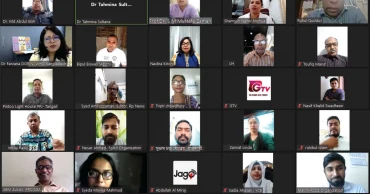
Public health experts at a webinar on Sunday said the risks of various non-communicable diseases, including hypertension-related heart ailments and deaths, are increasing among the population of Bangladesh due to lack of healthy eating habits.
They also said unhealthy diets and lack of adequate physical activity are responsible for 30 percent of the world's non-communicable and preventable diseases and deaths, including the morbidity and mortality caused by hypertension.
Public health experts and heart specialists made the remarks at the webinar titled “Eating Habits, Hypertension and Heart Disease Risk and the Needful”, organised by research and advocacy organisation PROGGA with support from Global Health Advocacy Incubator (GHAI), marking the World Food Day 2022.
World Food Day is observed in Bangladesh as elsewhere across the globe on Sunday to highlight the millions of people worldwide who cannot afford a healthy diet and the need for regular access to nutritious food. The theme for 2022 is ‘Leave no one behind.’
Speaking at the webinar, Professor Dr Md Abdul Alim, a member (Food Industry & Production), of the Bangladesh Food Safety Authority, said foods containing an excessive amount of trans fats increase the risk of hypertension. “The trans fat regulation passed by the government will be implemented within the stipulated time.”
Dr Tahmina Sultana, Director of Primary Health Care (PHC) and Integrated Thana Health Complex (ITHC) at the Director General of Health Services (DGHS), said that hypertension treatment is being provided in some community clinics, which will be gradually spread across the country.
Shamsun Naher Nahid Mohua, Head of Nutrition at the Department of Diet and Nutrition of BIRDEM General Hospital, said that the risks of hypertension and heart diseases can be reduced by avoiding foods containing excessive saturated fat, trans fat and salt.
Dr SM Mustafa Zaman, Professor at the Department of Cardiology at the Bangabandhu Sheikh Mujib Medical University (BSMMU), said the promotion of the DASH diet or Dietary Approaches to Stop Hypertension and healthy dietary guidelines formulated by the government should be increased to control hypertension.
Muhammad Ruhul Quddus, Bangladesh Country Lead of Global Health Advocacy Incubator, said that GHAI along with its partners is doing advocacy with the government to spread hypertension treatment facilities at community clinics across the country.
The speakers also said one in every five adults in Bangladesh suffers from hypertension, which is very alarming. “There’s no alternative to ensuring the availability of medicines at the community clinic level to combat the prevalence of hypertension across the country and the necessary budget allocation also must be ensured in this regard.”
4 years ago

23% of urbanites have hypertension; 14% at higher risk: Study
Nearly 23 percent of the urbanites in four city corporations of Bangladesh have hypertension, a common risk among city dwellers that leads to several life-threatening complications, according to a study.
Also, 14 percent of the people are at higher risk of being hypertensive.
The findings of the study "Hypertension and Obesity Load in Bangladesh: How Large is the Iceberg?" were unveiled in Dhaka Thursday.
A total of 48,644 participants were screened in Narayanganj, Cumilla, Mymensingh and Rangpur to measure their blood pressure, height and weight to calculate hypertension status and the body mass index.
The study was conducted under the Strengthening Urban Public Health System Project co-implemented by Save the Children Bangladesh and South Asia Field Epidemiology and Technology Network Bangladesh.
Read: Experts for strengthening primary care services to control hypertension, save lives
According to the study, the prevalence of hypertension is higher among men (24 percent) than women (22 percent).
Among the participants, the prevalence of obesity is 8 percent, while almost 28 percent of participants are overweight.
The prevalence of obesity was higher for female participants (10 percent) compared to male ones (7 percent).
4 years ago

Experts for strengthening primary care services to control hypertension, save lives
Stating that hypertension has become the third most common cause of premature deaths in Bangladesh, local and international health experts on Wednesday suggested strengthening primary care services to deal with the non-communicable disease and save many lives.
Speaking at a meet the press event at a city hotel, they also warned that the burden of hypertension in Bangladesh is expected to grow in the coming years due to an ageing population, rapid urbanization, increases in sedentary lifestyle, processed food consumption, and other socioeconomic and lifestyle factors.
The event titled "Bangladesh Hypertension Control Initiatives" was jointly organised by the NCDC Program of the Directorate General of Health Services (DGHS), PROGGA (Knowledge for Progress), the National Heart Foundation of Bangladesh (NHFB), Global Health Advocacy Incubator (GHAI), and Resolve to Save Lives.
“In Bangladesh, one out of every five adults has hypertension,” said Dr Tom Frieden, President and CEO of Resolve to Save Lives and former Director of the US Centers for Disease Control and Prevention.
He said many lives can be saved and heart attacks and strokes can be prevented through investment in strengthening primary care services to provide treatment to Bangladeshi adults suffering from hypertension.
Frieden said non-communicable diseases, including hypertension, are silent killers that are accounting for more premature deaths every year than all infectious diseases combined, mostly in low and middle-income countries.
Stating that Bangladesh has made real progress in tackling hypertension as it banned artificial transfat, he said, “That's a wonderful policy. It means you don't have to worry that some company has put something into your food that could give you a heart attack and kill you. So that is very commendable. We look forward to its full and effective enforcement.”
The ex-US CDC director also praised that doctors and nurses, and community health providers treating more than 100,000 patients suffering from hypertension.
He, however, said many people are dying prematurely from a preventable cause only for lack of awareness and early diagnosis.
Frieden appreciated the government for setting up community clinics across the country. The community clinics could be the key to transforming Bangladesh to become even healthier. But now you have a real challenge with non-communicable diseases, especially hypertension. And scaling up this program in addressing excess sodium intake can make a huge difference in reducing that.”
Read:Ensure safe food to reduce Hypertension risk: Speakers
National Professor Brig (Rtd.) Abdul Malik, Founder and President of the National Heart Foundation of Bangladesh said there is an urgent need to improve control of high blood pressure. “Thirty percent of deaths in Bangladesh are from heart disease, but less than 5% of Bangladesh’s health sector budget is allocated to addressing the non-communicable disease.”
He said hypertension is a serious health concern and the government alone cannot solve this problem. “We need to prevent the disease with united efforts…for the first, we need to create awareness among people about the disease and media can play an effective role in this regard.”
“The hypertension control program piloted by NCDC DGHS, and the National Heart Foundation, in collaboration with Resolve to Save Lives, is succeeding by incorporating the principles of task-sharing and team-based care,” said Professor Md Robed Amin, Line Director, Non-Communicable Disease Control Program, Directorate General of Health Services.
“In the span of two years, the program has registered more than 100,000 patients—averaging more than 4,000 new patients a month—with a 58% blood pressure control rate, almost fourfold the national average.”
“You’ll be surprised to know that hypertension became the third commonest cause of morbidity in our country and diabetes become the sixth commonest cause within the sphere of the 10 years,” Robed said.
Referring to a survey report, he said some 67 percent of all deaths in the country are due to non-communicable diseases and 30% of mortality happens due to cardiovascular disease. “It means many people are dying from the stroke or heart attack or this kind of complication. So, it is a huge burden.”
Besides, he said there are around 20 million adult hypertension patients in Bangladesh. "The bad news is that hypertension is usually a symptomless disease. So whenever a disease becomes symptomless, it needs to be identified through a process of screening…We must put in extensive efforts to control hypertension.”
Citing a study report, the organiser said life-saving care for high blood pressure, also known as hypertension—the leading preventable risk factor for heart disease, heart attacks, and strokes—could be expanded nationwide in Bangladesh for about US$9 per patient per year.
Since 2018, they said the non-communicable Disease Control Program (NCDC), Directorate General of Health Services (NCDC DGHS) of the Ministry of Health & Family Welfare and the National Heart Foundation of Bangladesh (NHFB) have collaborated with Resolve to Save Lives, a global health non-profit organization, to implement a program strengthening the detection, treatment and follow-up of high blood pressure in primary care.
They also said the expansion of the highly successful initial project would save lives in Bangladesh by preventing heart attacks, strokes, kidney failure and expensive hospitalizations for these conditions, and at an affordable cost.
4 years ago

Ensure safe food to reduce Hypertension risk: Speakers
Speakers at a webinar have emphasized ensuring safe food in the county to reduce the risk of Hypertension risk among people.
They expressed the importance of safe food for tackling NCDs like Hypertension and Cardiovascular diseases at the webinar marking World Food Safety Day organised by research and advocacy organisation PROGGA (Knowledge for Progress) with support from the Global Health Advocacy Incubator (GHAI), said a media release.
The World Food Safety Day -2022 was observed in the country on Tuesday as elsewhere in the globe with the theme ‘Safer food, better health’.
The day was of great importance for Bangladesh as the consumption of unsafe food is leading to an exponential rise in the prevalence of non-communicable diseases (NCDs) and related mortality in the country.
The speakers said at present one in every five (21 percent) adults in Bangladesh is suffering from hypertension, and the intake of unsafe food is greatly responsible for it.
Hypertension causes increased risks of cardiovascular diseases while 277,000 people die of cardiovascular diseases each year in the country. Half of the women (51 percent) and two-thirds of men (67 percent) are not even aware of their hypertension conditions in Bangladesh, they said.
READ: More awareness needed to ensure safe food: Minister
Speakers shared at the webinar that, Bangladesh has pledged to achieve the target for NCD prevention by 2025 and the targets for Sustainable Development Goals (SDG) of 2030. The hypertension burden is a major hindrance in achieving these goals and targets.
According to the data of the Global Burden of Disease Study (GBD) 2019, hypertension is one of the three major risk factors for death and disability in Bangladesh.
Although the Bangladesh Food Safety Authority (BFSA) has already promulgated the ‘Controlling Trans Fatty Acids in Foodstuffs Regulation, 2021’, people are yet to pick the fruit of this great initiative as the regulation is yet to be implemented, they said.
BFSA member (Food Industry and Production) Dr. Md Abdul Alim, GHAI Bangladesh Country Lead Muhammad Ruhul Quddus, associate professor at the Department of Public Health and Informatics of the Bangabandhu Sheikh Mujib Medical University (BSMMU) Dr. Romen Raihan, director of the Center for Non-Communicable Disease and Nutrition at the BRAC James P Grant School of Public Health Professor Dr. Malay Kanti Mridha, upazila health & family planning officer at the Beanibazar Upazila Health Complex Dr. Md Delowar Hossain Shumon, hypertension control programme manager at the National Heart Foundation of Bangladesh Dr. Mahfuzur Rahman Bhuiyan, professor at the Department of Food Technology and Rural Industries of the Bangladesh Agricultural University Dr. Abdullah Iqbal, among others, were present at the webinar as discussants.
PROGGA’s coordinator Shihab Mahmud conducted the webinar.
Representatives of the Institute of Nutrition and Food Sciences (INFS) of the University of Dhaka, Consumers Association of Bangladesh (CAB), Bangladesh Agro Processors Association (BAPA), BFSF, and Bangladesh Food and Nutrition Association (BAFNA), along with doctors, nutritionists, journalists and other people of various professions attended the programme.
4 years ago
.jpg)
Tired of snoring? Here’s how to silence it
We all have that one friend or acquaintance who sleeps peacefully at night but keeps others awake the whole night with the sound of snoring.
6 years ago