ERF

ERF proposes tax reforms to ease inflation burden
The Economic Reporters’ Forum (ERF) on Sunday recommended increasing the tax exemption limit for individual taxpayers from Tk 3.5 lakh to Tk 4 lakh to alleviate the financial strain caused by rising inflation.
ERF President Doulot Akter Mala presented the proposal to National Board of Revenue (NBR) Chairman Md Abdur Rahman Khan during a pre-budget meeting at the Revenue Building.
As part of its budget recommendations, the ERF called for reducing the tax burden on middle-class and low-income groups through a refund system via mobile financial services (MFS) for excess taxes paid.
Cigarette tax overhaul can boost revenue by Tk 20 billion : Speakers
It also proposed that banks refund deducted interest to individuals without taxable income.
The forum suggested capping the tax rate on essential commodities, education materials, and medical equipment at 5 percent.
Besides, it advocated for a separate revenue policy to support small and medium enterprises (SMEs) and facilitate their access to bond facilities.
Other key recommendations included keeping private provident funds tax-free and increasing investment in the healthcare sector by raising taxes on tobacco products.
The ERF also proposed setting the highest individual tax rate between 30 and 35 percent, reducing the VAT rate to 7 percent, and collecting wealth tax based on market valuation.
It stressed the need to shift focus towards direct taxation and implement integrated digitization initiatives.
Highlighting the growth of large businesses in district and city corporations, the ERF recommended establishing Medium Taxpayer Units (MTUs) similar to the existing Large Taxpayer Units (LTUs).
The forum underscored the importance of transparency in tax exemptions, urging the NBR to provide clear explanations and estimates of revenue losses for each exemption.
Regarding Bangladesh’s transition from the Least Developed Country (LDC) category, the ERF called for a structural overhaul of the country’s import tariff system, noting that tariffs remain higher than the LDC average and that little progress has been made on tariff reductions despite years of discussions.
The ERF also emphasized the need for impact analyses of all NBR policy decisions to determine the beneficiaries of tax, VAT, and duty exemptions. It urged increased investment in NBR’s research and statistics division, including hiring skilled personnel to modernize and enhance efficiency.
Addressing banking taxation, the ERF pointed out that a 10-15 percent tax is deducted from interest earned on tax-paid deposits, along with excise duty on bank balances. Given the declining savings capacity of individuals, it proposed withdrawing excise duty on deposits up to Tk 5-10 lakh and reducing the tax on interest income.
To curb fraudulent business loans, the ERF suggested that banks verify business information from the NBR’s database before approving large loans. It noted that many individuals take out significant loans under false pretenses using the names of drivers, janitors, and office assistants, making recovery difficult. Enforcing such verification, the ERF argued, would help prevent loan fraud and enhance revenue collection.
On money laundering, the ERF urged visible progress in enforcing the 2013 Transfer Pricing Law, which was introduced to curb tax evasion and illicit fund transfers.
For export diversification, the forum proposed extending bonded warehouse facilities to other potential industries, similar to those available for the ready-made garment sector.
To promote green industrialization, the ERF suggested maintaining at least a 5 percent corporate tax gap between conventional and eco-friendly factories, arguing that the existing 2 percent tax benefit is insufficient given the additional investment required for environmentally friendly industries.
The meeting was attended by other executive and general members of the ERF.
1 year ago
Govt to facilitate business, won’t engage in it: BIDA Executive Chairman
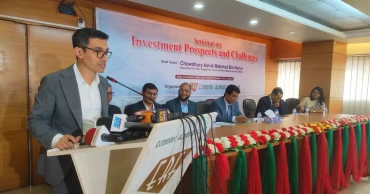
The government will phase out its involvement in business operations and focus on creating a conducive environment for business and employment, said Chowdhury Ashiq Mahmud Bin Harun, Executive Chairman of the Bangladesh Investment Development Authority (BIDA).
He said this while speaking as the chief guest at a seminar titled “Investment Prospects and Challenges” organised by the Economic Reporters’ Forum (ERF) in the capital on Wednesday.
“Within the next six months to a year, we will gradually withdraw state entities from many businesses. The government does not need to engage in business, businesspeople will do that. Our role is creating the ground,” he said.
Chowdhury Harun said as 100 economic zones are unnecessary the government will select few to make them effective and attractive for investment.
“Instead of creating new economic zones, we can utilise existing locations equipped with utilities like gas connections, handing them over to key players for business,” he added.
Ha-Meem Group Managing Director and former FBCCI President AK Azad highlighted the need for transformation and policy implementation to enhance the country’s image.
“Change takes time, but the youth have proven it is possible. Policymakers should conduct product cost analyses before decisions are made. As it stands, businesses face challenges, with no substantial new investments taking place,” he said.
Criticizing roadshows, LafargeHolcim Bangladesh Limited CEO Iqbal Chowdhury said, “Roadshows abroad have not yielded significant results.”
Govt prioritises gas exploration, extraction amid growing crisis
Former DCCI President Abul Kasem Khan pointed out weaknesses in the supply chain mechanism and the lack of global recognition for Bangladeshi brands.
“Countries like Japan are known through brands like Sony, Toyota, and Mitsubishi. What does the world know us for? We need a brand that represents Bangladesh globally,” he said.
He said policymakers assume all businesspeople will take money out of the country. “Those who wanted to leave have already done so. We stayed, and we’re not going anywhere.”
Md. Hafizur Rahman, a member of the Bangladesh Competition Commission and administrator of FBCCI, highlighted uncertainties faced by new entrepreneurs.
“We must provide an environment that encourages investment. New entrepreneurs often face challenges due to the lack of safeguards. If they fail once, they have little chance to recover under current rules,” he said.
He called for measures to support entrepreneurs allowing them to learn from failure without fear of being permanently sidelined.
1 year ago

Govt urged to raise prices of low-tier cigarettes to reduce health risk
Speakers at a seminar have proposed for raising the price of low-tier cigarettes to discourage smoking as well as minimize health risks.
If the prices of cigarettes are raised, it will boost revenue generation of the government as well, they said.
They came up with the suggestions at the seminar organized jointly by Dhaka Ahsania Mission and the Economic Reporters’ Forum (ERF) titled “Tobacco Price and Tax” held at the ERF auditorium in the city on Saturday.
Presided over by ERF President Sharmeen Rinvy, its general secretary SM Rashidul Islam, Dhaka Ahsania Mission deputy director Mokhlesur Rahman, CTFK Grants manager Abdus Salam Mia spoke, among others, on the occasion.
The speakers said although the low-tier cigarettes occupy almost 75 percent of the whole industry, but its price remained unchanged over the last two years. As a result, the number of smokers at this level is not declining.
Also read: E-cigarettes turn many young people into smokers: expert
Director (research) of Unnayan Shamannay Abdullah Nadvy made the key-note presentation.
The speakers said that the price of cigarettes at the low-tier has remained unchanged over the last two years.
They suggested that the price of cigarettes should be increased considering the rise in per capita income and inflation.
They said there is no alternative to raising the price of tobacco products to turn Bangladesh as a tobacco-free country by 2041.
Nadvi in his key-note presentation said that the current duty structure of cigarettes is complex and it should be more simplified.
He proposed for raising the price of every cigarette packet of 10 sticks at the low-tier to Taka 50 from the existing Tk 39 while in the mid-tier, the price of cigarette packets should be raised Taka 75 from Taka 63. Side by side, Nadvy suggested for raising the price of cigarettes at the high-tier specifically.
“If this proposal is implemented, the revenue of the government will be boosted while the number of smokers will be reduced by 13 lakh. Besides, some 9 lakh youths will be discouraged to continue smoking.” he added.
Also read: Hike in tobacco prices demanded to curtail harm
In his welcome address, deputy director of Dhaka Ahsania Mission Mokhlesur Rahman said that the government has already announced to turn Bangladesh as a smoking- free country by 2041 and to materialize this, there is no alternative to raising the duty on cigarettes and tobacco products.
CTFK Grants manager Abdus Salama Mia said that it is very much necessary to control the use of tobacco in turning Bangladesh as a developed country. “This will not only help alleviating poverty, but also reduce the cost of the government in addressing the tobacco related diseases.”
ERF general secretary SM Rashidul Islam said that the government is in dilemma over tobacco as it wants to control tobacco at one hand, and the government also depends on tobacco products for boosting revenue on the other hand.
“But, in order to reduce the number of smokers, the price of cigarettes at the low-tier should be increased as around 75% smokers consume cigarettes at the low-tier.” he added.
4 years ago

ERF selected for WCO Certificate of Merit-2022
The Economic Reporters’ Forum (ERF), an association of Bangladeshi reporters focusing on the economy, has been conferred with the World Customs Organization's Certificate of Merit for 2022.
The National Board of Revenue (NBR) proposed ERF in recognition of its unique contribution to aware stakeholders of the steps taken by Bangladesh Customs and VAT for ensuring sustainable development, secure trade and uninterrupted supply chain.
ERF president Sharmeen Rinvy and Secretary SM Rashidul Islam have thanked its members for their efforts in developing the business environment and awareness of business among common people regarding supply and demand of different product and goods.
Read: FBCCI calls for extension of loan moratorium till June
They also thank the NBR for nominating such an honor at the national level.
The NBR will award the WCO Certificate of Merit on January 26 at a ceremony scheduled to be held in Dhaka on the occasion of celebrating ‘International Customs Day’.
4 years ago

You can submit tax online; app launched
Taxpayers now can pay income tax returns as well as assess their assets through an online web application -- digiTax.
Desh Universal launched the web application to simplify the submission of income tax returns.
Md Alamgir Hossain, member (tax policy) of the National Board of Revenue (NBR), inaugurated digiTax at a ceremony held at the auditorium of Economic Reporters’ Forum (ERF) on Saturday.
Alamgir Hossain said a huge interest has developed now among people to pay income tax as the number of taxpayers is now growing day by day.
Read: NBR moves to speed up revenue collection
Alamgir said digiTax would help simplify further the stride towards digitizing tax-related services.
Apart from allowing the submission of returns online, he said, the NBR would observe Income Tax Month from November 1 for which an 'environment of fair’ is being created at tax zones so that the taxpayers can submit their returns with ease and comfort.
President of Institute of Chartered Accountants of Bangladesh (ICAB) Mahmudul Hasan Khusru, Dhaka Taxes Bar Association President AKM Azizur Rahman, Bangladesh Cricket Board (BCB) Director Khaled Mahmud Sujon, digiTax director Golam Shahriyer Ronju and ERF general secretary SM Rashidul Islam were, among others, present on the occasion.
Read: NBR faces uphill task in achieving VAT collection target
Highlighting the main features of digiTax, its team member Syeda Nusrat Haider said there are many taxpayers of different levels in the country who do not know how to calculate income tax properly.
“In order to resolve this problem, we’ve come up with a new system through which the users can prepare their returns with ease and comfort through giving inputs as per their requirements,” she said.
4 years ago
.jpg)
Poultry Industry places 11-point demand
Poultry growers have placed 11 demands including access to easy and soft loans for the grassroot level poultry farmers through stimulus package, and checking the illogical price hike of poultry feeds and chicks.
Bangladesh Poultry Industry Forum (BPIF) placed the demands at a discussion meeting, organised by Bangladesh SME Forum, at Economic Reporters Forum (ERF) Auditorium in the city on Saturday.
With President of both Bangladesh SME Form and Bangladesh Poultry Industry Forum M Mamun in the chair, the event was addressed by former additional secretary Dr Sheikh Rezaul Islam, Dhaka University teacher Dr Latiful Bari, ERF general secretary MM Rashidul Islam, Borhanuddin, Abdur Rahim, Lotus Parvez, Manik Sheikh, Sujan Sarker, Tahmid Hasan and Masuma Khatun.
The BPIF leaders said the poultry industry has been experiencing a severe crisis due to recent increase in the price of its raw materials including feeds and chicks.
Read: Govt forming policy to safeguard poultry, dairy industries
“A strong syndicate of unscrupulous business has been responsible for the recent crisis and the government should find them out to punish them,” said M Mamun.
The BPIF leaders alleged that although the poultry products are selling at higher prices in the local market, the actual farmers at the grass root levels are not getting the benefit of it.
Rather, a middle group is being benefited from the increased price of the products, they observed.
They also said that the industry owners are not receiving due financial support from the government although a stimulus package was announced for the industrial sector.
Read: Thakurgaon poultry farmers brace for huge loss
Many poultry owners had to shut down their industries facing a huge loss in the business during the Covid-19 pandemic situation.
The farmers are now switching to other businesses from this losing concern, they observed.
They also demanded formulating a pro-industrial policy to support the poultry industry.
4 years ago
.jpg)
Destiny, Jubok clients can be compensated by 50 to 60 per cent by selling assets: Tipu Munshi
Commerce Minister Tipu Munshi on Sunday said that it’s possible to give 50 to 60 per cent money back to the cheated clients of the Destiny Group and Jubok by selling the assets of the two companies which collapsed amid widespread fraud.
“To my consideration, the cheated clients can get up to 50 to 60 per cent of the money back…. But the issue remains pending with the court for settlement”, he said while addressing a workshop organized by the Bangladesh Competition Commission (BCC) for the members of Economic Reporters Forum (ERF) at the BCC office in the city.
The BCC organized the event to discuss the issues for creating a fair competition environment in the market through implementation of the Competition Law.
Tipu said that he discussed the issue with the law minister who informed him that the law ministry has been working on how to compensate the Destiny and Jubok clients.
As per the estimation by different government bodies, Destiny and Jubok have about Tk 7,000 crore assets.
4 years ago
.jpg)
Journalist Faruque's family hands over budget documents of 52 years' to ERF
The family of late Zahiduzzaman Faruque Sunday handed over budget documents and other economy-related books – collected by the economic journalist in the last 52 years – to the Economic Reporters Forum (ERF) Library.
Faruque's son Mohiuzzaman Faruque and daughter-in-law Farhana Khan handed over the documents and books to ERF President Sharmeen Rinvy and General Secretary SM Rashidul Islam at a ceremony at the ERF Library in the capital.
Economic journalist Faruque, who passed away on August 19, had worked for over four decades and would love to collect budget documents, other economy-related books and various data and information. He started keeping budget documents in 1968.
Mohiuzzaman said: "The passion and profession of my father was journalism. He also loved to do research and write on the various aspects of the economy. The purpose of handing over these books and documents is to ensure proper use of these resources."
ERF President Sharmeen Rinvy said Zahiduzzaman Faruque had worked throughout his life to spread economic journalism in Bangladesh. "So, he collected various documents on the economy which will contribute to economic journalism in future."
ERF General Secretary SM Rashidul Islam said a separate corner would be set up at the ERF Library after the name of Zahiduzzaman Faruque where all the documents and books will be showcased.
4 years ago
.jpg)
Govt to provide financial support to ensure compliance in industries: Salman F Rahman
Prime Minister's Private Industry and Investment Affairs Adviser Salman F Rahman on Tuesday said like Accord and Alliance in the RMG sector, a body would be formed for the domestic industries to ensure that they strictly follow compliance standards while the government would extend long-term financing and loans for becoming compliant.
He also said that the factories of those industries which fail to be complaint would not be able to sell their products in the domestic market in future.
Salman said these at a webinar tilted ‘Reviving the Leather Sector in the Aftermath of COVID-19’ as the chief guest jointly organized by the Economic Reporters’ Forum (ERF), Research Policy Integration for Development (RAPID) and The Asia Foundation (TAF) held through Zoom platform.
Speakers at the webinar stressed the need for ensuring compliance in the local industries, especially in the leather sector, to become more competitive.
They also stressed the need for forming a task force to look at the recommendations from different stakeholders and work on the betterment of the leather sector as well as improving rawhide management in an integrated way.
They also advocated for modernizing and making more functional the Central Effluent Treatment Plant (CETP) in the Savar Leather Village through addressing its loopholes, improving solid waste management, addressing the environmental and labour rights issues in this sector and thus manufacturing quality products and providing the same facilities to all other sectors that the RMG sector is now enjoying.
Former Advisor to the Caretaker Government Syed Manzur Elahi joined the session as the guest of honor.
Commerce Secretary Tapan Kanti Ghosh, Chairman, BFLLFEA Mohiuddin Ahmed Mahin and Chairman, BTA Md Shaheen Ahamed joined it as the special guests.
Professor & Director, ILET, DU Dr. M Mizanur Rahman, Managing Director, DTIEWTPCL (TIED) Brig. Gen. M Zahid Hasan and The President, Tannery Workers’ Union Abul Kalam Azad attended the webinar as panel discussants.
Managing Director of Apex Footwear LtdSyed Nasim Manzur, Chairman of RAPID Dr. Mohammad Abdur Razzaque and its Executive Director Dr. Abu Eusuf jointly presented the keynote paper.
Country Representative, The Asia Foundation Kazi Faisal Bin Seraj delivered the welcome remarks.
ERF President Sharmeen Rinvy chaired the event while ERF General Secretary S M Rashidul Islam moderated the event.
5 years ago

Speakers for pandemic-focused budget in FY22
Speakers at a webinar Tuesday stressed the need for framing a COVID-19 pandemic focused budget for the next fiscal year giving the highest priority to the health sector to mitigate the health-related risks alongside focusing on sound macroeconomic management, widening social safety nets, raising the tax-GDP ratio and generating more employments.
They also emphasised strengthening the ongoing vaccination programme, carrying on necessary tax reforms as well as reducing the corporate tax rates, ensuring proper budget implementation and quality spending of development projects, addressing the livelihood issues in the context of pandemic, prioritising the CMSMEs and bringing the education sector under the purview of the stimulus packages.
The recommendations came up with at a webinar on ‘Macroeconomy: Expectations from National Budget 2021-22’ jointly organised by the Institute of Chartered Accountants of Bangladesh (ICAB) and the Economic Reporters' Forum (ERF).
The Economic Affairs Adviser to Prime Minister Dr Mashiur Rahman agreed with the suggestions to enhance budgetary allocation on the health sector and thus strengthen the ongoing vaccination campaign.
Stressing the need for carrying out necessary reforms in the financial sector and in the revenue sector, he said reforms in the capital market and bond market is also necessary to attract the large scale investors.
Mashiur noted that if the lion’s share of the deficit financing could be made available from the foreign sources then its impact on the domestic sector would not be that much.
He also stressed the need for boosting confidence among the businesses and investors, attracting more FDI, ensuring skills development and sound basic education up to the secondary level.
Distinguished Fellow of CPD Prof Dr Mustafizur Rahman emphasised on generating more employments, giving relief to the import substitute industries through taxation, revisiting the import regulations, enhancing quality expenditure, and ensuring necessary reforms.
He was also critical about the scope for whitening black money in the budget saying it is an injustice to the honest taxpayers.
Executive Director of PRI Dr Ahsan H Mansur proposed allocating Tk 15,000 crore for vaccination in the next budget and that fund should be made available from day one.
For the new poor being created from the impacts of the pandemic, he said only cash support is not enough for them, rather some permanent measures should be awarded.
The renowned economist also suggested addressing the livelihood issues due to the pandemic, prioritising the SMEs in the stimulus packages, focusing more on expenditure and said the budget deficit could be stretched from 7 to 8 percent.
Executive Director of SANEM Dr Selim Raihan called for expanding economic operations and not having an obsessed mindset on growth, rolling out social safety net schemes for the urban poor, boosting business confidence through necessary measures, increasing budget implementation and ensuring some visible reforms.
Former adviser to the caretaker government Rasheda K Chowdhury said that the next budget should be a pandemic-focused one while the education sector should be brought under the stimulus package as the losses to this sector is huge and it is invisible. "Education sector must not be less prioritised," she said.
Chairman of PEB Dr M Masrur Reaz suggested for bringing around 50 percent of the country's population under the vaccination programme in the next one year, otherwise, the revival initiatives and recovery would be much tougher.
He also proposed allocating one percent of GDP as social safety net for the poor as well as awarding another stimulus for the SMEs, especially for the small and micro-entrepreneurs.
Senior research fellow of BIDS Dr Nazneen Ahmed strongly advocated for reducing the corporate tax rate, prioritising those development projects which are nearing completion, keeping budgetary allocation on creating health awareness as well as on health disaster management, making cheaper the internet facilities and also making available the gadgets for the poor students.
BGMEA President Faruque Hassan urged the government to provide policy support to the affected industries till the crisis ends so that those could make a turnaround.
He also demanded the government to keep the tax rates stable for 10 years or at least for five years for turnaround of the Industries.
Chairman of Trustee Board of BUILD Abul Kasem Khan suggested for the continuation of the stimulus packages in the next budget as well as rationalizing taxation measures and improving the investment climate.
MCCI President Barrister Nihad Kabir put utmost priority on ensuring qualitative spending of development projects through real-time basis monitoring and evaluation by the IMED, raising the tax-GDP ratio, giving policy support to CMSMEs, and also to check the trend of dodging tax and laundering of money abroad.
DCCI President Rizwan Rahman suggested reducing the corporate tax rate progressively by 2.5 percent in the next three years and thus brings it at 25 percent to facilitate the businesses.
Coming down heavily on the scope for whitening undisclosed money, he said that the business community would not accept such provision for whitening the money coming from 'burglary'. "Otherwise, the honest businesses will not feel encouraged to pay tax from the next year," he added.
BASIS President Syed Almas Kabir suggested keeping the digital transaction out of the purview of VAT for the next 3 to 5 years to facilitate online transaction and wider materialisation of the 'Digital Bangladesh' initiative.
ICAB President Mahmudul Hasan Khusru said the tax net is not widening that is why honest and existing taxpayers are overburdened with incremental tax recovery target.
“While we would be graduating as developing country, our preferential benefits would be eroded, we’ve to compete with other developing countries. Hence, human resource development is paramount important, capacity building of our institutions and adoption of advanced technologies and professional education are also important to emphasise in the budgetary allocation,” he added.
FICCI President Rupali Haque Chowdhury, former President of AmCham AKM Aftabul Islam, chief news editor of the Daily Prothom Alo Shawkat Hossain Masum, ICAB vice presidents Sidhartha Barua, Md Abdul Kader Joaddar and council member of ICAB Mohammad Forkan Uddin spoke at the webinar.
Former ICAB president Md Humayun Kabir moderated the function while its CEO Shubhashish Bose spoke. ERF President Sharmin Rinvy made the opening remarks while its general secretary SM Rashidul Islam gave the vote of thanks and ICAB Vice President Maria Howlader gave the closing remarks.
5 years ago