Middle East conflict
Israeli Minister calls for killing 30-40 Gazans nightly
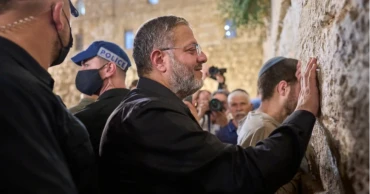
Israeli National Security Minister Itamar Ben-Gvir has publicly advocated for killing “30 to 40” people in Gaza every night through targeted assassinations, claiming they are “not even people” and “not worthy of life”.
Speaking on a podcast with former hostage Rom Braslavski, Ben-Gvir criticized Prime Minister Benjamin Netanyahu’s recent drawdown of strikes, which reportedly served as a concession to U.S. President Donald Trump. Ben-Gvir, who oversees police and prisons but lacks military authority, also proposed mass Palestinian expulsion and Israeli resettlement of the enclave -actions international lawyers warned could constitute ethnic cleansing.
Israeli minister calls for hanging Palestinian prisoners 'one by one'
The remarks follow a 2025 court ruling that Ben-Gvir’s prison service deprived detainees of subsistence diets. These extremist views are surging ahead of the Oct. 27 elections, even as Netanyahu insists forces will not retreat until Hamas is disarmed, leaving reconstruction on hold. While such statements have been submitted to the U.N. court as evidence of genocidal intent, Israel denies committing genocide.
1 month ago
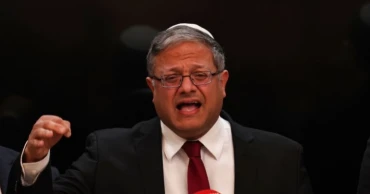
Israeli minister calls for hanging Palestinian prisoners 'one by one'
Israeli National Security Minister Itamar Ben-Gvir has called for the execution of Palestinian prisoners by hanging, pledging to do everything within his authority to ensure they are executed "one by one".
Speaking with former Israeli captive Rom Braslavski, Ben-Gvir said that hanging would be the primary method of execution under the death penalty legislation he has been actively promoting.
Israel claims to have killed senior Hezbollah commander in Lebanon
"I will do the impossible when the time comes," the minister remarked during the conversation. "I promise you that I will do everything in my power and turn the world upside down to make this happen".
In addition to his comments on the death penalty, Ben-Gvir expressed satisfaction regarding the harsher conditions Palestinian prisoners are currently facing within the Israeli penal system.
The statement follows legislative action taken by Israel’s parliament on March 30, 2026, which imposed the death penalty by hanging for Palestinians convicted of killing Israelis. The law applies in cases where a military court determines the act was "terrorism" or was driven by a "denial of the existence of the State of Israel".
With inputs from Al Jazeera
1 month ago
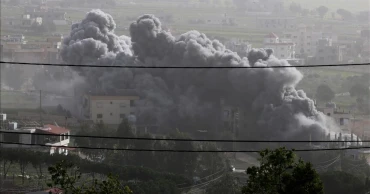
Israel claims to have killed senior Hezbollah commander in Lebanon
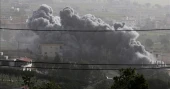
The Israeli military on Sunday claimed it has killed Abu Hassan Alaa, a senior commander of Hezbollah’s “Badder Unit,” during an operation in southern Lebanon.
In a statement posted on X, the military accused Alaa of coordinating attacks against Israeli troops, specifically citing his involvement in the launch of explosive drones targeting soldiers in southern Lebanon. The strike was carried out in response to Hezbollah’s recent actions against Israeli personnel within the designated “Security Zone”, Israeli military said.
Iran says Qatar holding 3 missing pilots; Israeli strikes kill 11 in Lebanon
This claim follows reports from just hours earlier in which Israel said it had killed another Hezbollah commander, Ali Samir al-Haj Hassan, in a strike on the southern village of Ansar.
Local reports indicated that at least seven people, including two women and three children, were killed during that specific strike in Ansar.
With inputs from Al Jazeera
1 month ago
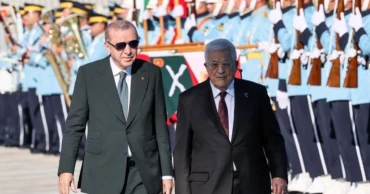
Israel wants to ‘remove Palestine from world’s agenda’: Erdogan
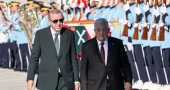
Turkish President Recep Tayyip Erdogan on Thursday accused the Israeli government of attempting to push the Palestinian cause off the international agenda by exploiting regional conflicts and chaos.
Speaking at a joint press conference with Palestinian President Mahmoud Abbas, Erdogan asserted that the administration of Benjamin Netanyahu aims to remove Palestine from the "common agenda of humanity" through regional instability. He maintained that these efforts would fail, promising that Turkiye will continue to fight for the establishment of an independent Palestinian state.
Pentagon review: 153 civilians killed in US strikes on Houthis last year
"No matter what they do, they will not succeed. The Palestinian cause will continue to grow in people’s hearts," Erdogan said.
President Abbas, who arrived in Ankara on Wednesday, described the discussions as "important and fruitful." He was accompanied by a high-level delegation, including intelligence chief Majed Faraj, diplomatic adviser Majdi Khalidi, and senior official Ziad Abu Amr.
The leaders' meeting focused on recent regional developments and the ongoing struggle for Palestinian statehood.
With inputs from Al Jazeera
1 month ago

Pentagon review: 153 civilians killed in US strikes on Houthis last year
A Pentagon review has confirmed that U.S. airstrikes targeting Houthi rebels in Yemen killed 153 civilians and injured 243 others last year.
The unclassified assessment, submitted to Congress, focused on three strikes in April 2025 during a campaign to secure Red Sea trade routes. The deadliest strike occurred at the Ras Isa port, killing 80 people and injuring 171. Attacks also targeted sites near the rebel-held capital, Sanaa.
Drone strikes hit key oil facilities in western Libya as car bomb kills officer in east
While U.S. Central Command maintained the operations were intended to eliminate Houthi revenue and fuel sources rather than harm the Yemeni people, the review concluded the strikes "more likely than not" resulted in civilian harm.
The report follows mounting scrutiny of civilian casualties under the Trump administration, including an earlier strike on an Iranian primary school that killed 168 people. Reports indicate Defense Secretary Pete Hegseth has reduced the department's office for mitigating civilian harm.
The findings come as intensified Houthi attacks on Saudi oil facilities and Yemeni forces threaten to collapse the 2022 truce and reignite the civil war.
1 month ago
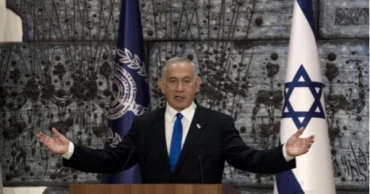
Netanyahu rejects US-backed 15-point Gaza peace plan
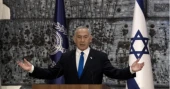
Israeli Prime Minister Benjamin Netanyahu on Sunday officially rejected a 15-point Gaza peace roadmap presented by the U.S.-led "Board of Peace," insisting that Israeli forces will not withdraw until Hamas is completely disarmed.
Marking Israel’s first straightforward rejection of the plan, Netanyahu told a cabinet meeting that forces- estimated to control 70 percent of Gaza —will continue operations to "thwart threats". He defined disarmament as the removal of all weapons, both heavy and light.
While noting ongoing talks with the U.S., Netanyahu stated that while some ideas are acceptable, Israel will "stand our ground" on disputed matters. The plan, drafted by Nickolay Mladenov in May and announced by U.S. President Donald Trump in July, claimed agreement on the "complete disarmament" of armed groups.
Hamas previously agreed to the roadmap’s second phase but demanded a complete halt to "aggression," full Israeli withdrawal, and reconstruction progress. Since an October 2025 ceasefire, Israeli attacks have reportedly killed over 1,250 people and injured 4,100 in Gaza, according to local health authorities.
1 month ago

Trump administration faces ammunition strain, weak public support for Iran war
US President Donald Trump said Thursday that while overall US ammunition stockpiles remain sufficient, supplies of some types are under increasing strain.
Speaking at the White House Oval Office, Trump said the United States has a “virtually unlimited supply” of some munitions, while others are “a little bit tighter,” without providing details.
His remarks came two days after reports said the US military had used nearly 80 percent of interceptors for a key missile defense system during the war with Iran, with commanders warning that ammunition stocks were “dangerously low.”
The Atlantic, citing current and former defense officials, reported that supplies of long-range weapons and advanced interceptors, including Patriot and THAAD missiles, had fallen to as low as 20 percent of desired levels.
Five months into the war, US public support for the prolonged conflict has weakened. A media poll found Americans who expect greater instability in the Middle East outnumber those expecting more stability by three to one.
A Marquette University Law School poll found inflation and cost of living were the top public concerns, followed by the economy and then the Iran conflict. Since January, 56 percent have cited inflation and living costs as a primary or secondary concern.
Labor Department data showed inflation rose to 3.3 percent in March, 4.2 percent in May and 3.5 percent in June, above the Federal Reserve’s 2 percent target.
Meanwhile, uncertainty over the Strait of Hormuz continues to threaten energy security. US crude imports from Saudi Arabia fell to zero in July, the first full month without such imports since 1985.
Trump said Thursday that no deal had been finalized to reopen the waterway, but negotiations with Iran were continuing and an agreement could be reached soon.
Saudi-based media, citing senior sources, reported that Iran and Oman had reached an understanding on reopening the Strait for 60 days, pending approval by Iran’s Supreme National Security Council.
1 month ago
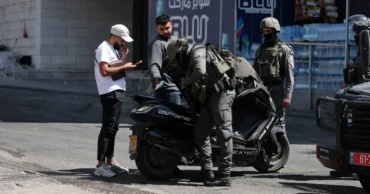
Israeli forces arrest 60 Palestinians during second day of Qalandiya refugee camp raid
Israeli forces arrested 60 Palestinians, including women and children, during the second day of an ongoing military operation in the Qalandiya refugee camp in the occupied West Bank, according to the Palestinian Prisoner's Society.
In a statement, the organisation said those detained were subjected to interrogation as Israeli troops continued raids across the camp.
Hamas agrees to disarm under Gaza ceasefire roadmap
The group alleged that the operation involved severe beatings, intimidation and the use of restraints as a form of torture. It also claimed that Israeli forces forced residents from their homes and damaged property and personal belongings during the raids.
Meanwhile, the Palestine Red Crescent Society said at least 16 Palestinians were injured after being assaulted by Israeli forces during the operation over the past two days.
With inputs from Al Jazeera
1 month ago
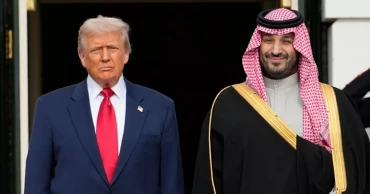
Saudi crown prince urges Trump to avoid escalating Iran conflict
Saudi Crown Prince Mohammed bin Salman urged US President Donald Trump not to escalate the conflict with Iran during a phone conversation on Saturday, as Trump considers launching new military strikes against Tehran, according to a person familiar with the discussion.
The call, first reported by media, came amid growing concerns in Riyadh that US attacks on Iran’s energy facilities or other critical infrastructure could trigger retaliatory strikes against Saudi Arabia and other Gulf states’ energy assets. The source, who was not authorized to speak publicly, said the crown prince sought clarification from Trump about the military options under consideration.
Trump warns of continued military action against Iran
A White House official confirmed the leaders spoke but declined to disclose details of the conversation.
Earlier this week, Saudi Arabia joined the United States in strikes targeting logistics and weapons facilities used by Iranian-backed militias in Iraq, while continuing to advocate renewed US-Iran negotiations to end the five-month conflict. The crown prince also sent Saudi Defense Minister Khalid bin Salman to Washington for separate meetings with Trump and Vice President JD Vance on Iran strategy.
Trump has vowed retaliation after Iran’s failed attack on a US base in Jordan. The State Department on Saturday issued security alerts for Americans in 10 Middle Eastern countries, warning of possible flight disruptions and heightened regional risks as tensions continue to rise.
1 month ago

Israeli forces kill 4 Palestinians after settler dies in West Bank
Israeli forces shot dead four Palestinians in the village of Tell in the northern occupied West Bank on Friday, the Palestinian Health Ministry said, after an Israeli settler was killed during a confrontation with local residents.
The incident also left two Israelis and four Palestinians injured, according to health officials. The Israeli military said it was preparing an “extensive” counterterrorism operation in the West Bank and had surrounded the city of Nablus.
Israeli Prime Minister Benjamin Netanyahu and Defence Minister Israel Katz called for deploying more troops, demolishing the homes of the suspects in Tell, confiscating weapons and revoking work permits for villagers. Finance Minister Bezalel Smotrich urged tougher military action and said the villages of Tell, Iraq Burin and Beit Furik should face measures similar to those imposed on refugee camps in Nablus and Tulkarm, including evacuating residents and dismantling what he described as terrorist infrastructure.
The Palestinian news agency WAFA reported that Israeli settlers attacked five Palestinian villages around Nablus on Friday. The area has witnessed frequent settler attacks, army raids and violent confrontations in recent years.
According to the Israeli military, a Palestinian resident seized a settler's weapon and fatally shot 32-year-old settlement security guard Benayahu Mellet. Videos verified by the military showed armed civilians and soldiers confronting Palestinians before gunfire erupted. Another verified video showed Israeli troops firing repeatedly at Palestinians already lying on the ground. The military said the suspected gunman was among those killed but did not explain why the other three, all relatives, were also shot. Army chief Eyal Zamir later announced additional troop deployments to the West Bank.
1 month ago