International Crisis Group
Bangladesh should avoid aligning 'too closely' with any single country or bloc: Int'l Crisis Group
The International Crisis Group has said diversifying ties would give Bangladesh more 'strategic autonomy' and allow it to navigate changing regional politics more effectively, stressing that Dhaka should avoid aligning too closely with any single country or bloc.
"Given intensifying major-power competition in the Indo-Pacific, it should avoid aligning too closely with any single country or bloc," said the Brussels-based organisation that sounds the alarm to prevent deadly conflict globally.
It will also help mitigate the domestic backlash that is linked to perceptions of overdependence on specific external partners, as seen in the anti-India sentiment that eroded support for the Hasina government, ICG said, noting that the most important task for the new government will be rebuilding ties with India.
Bangladesh's dependence on India, China could increase if western pressure continues: Int'l Crisis Group
Bangladesh is getting back to the foreign policy of martyred President Ziaur Rahman and wants to maintain a good relationship with each country while at the same time protecting the country’s interests, a senior official told UNB.
Following the “Bangladesh First” policy, he said Dhaka will continue to seek respectful, mutually beneficial relations with all nations, particularly its neighbors, grounded in sovereign equality and shared interests.
The Crisis Group said former Prime Minister Hasina forged close relations with New Delhi, addressing its security concerns and bolstering economic integration and after she fell, bilateral relations plummeted to 'historic lows.'
India’s outreach to the BNP has continued since the election, with Indian Prime Minister Narendra Modi inviting Tarique Rahman to visit India, according to the Crisis Group Asia Briefing titled "Bangladesh’s New Government Gets Down to Business".
"Dhaka and New Delhi should seek to build on this long overdue reset. But domestic politics in both countries will constrain efforts to restore ties," said the ICG.
The BNP government has assumed office amid profound regional and global shifts, creating both risks and opportunities.
Under former Prime Minister Sheikh Hasina, Bangladesh’s foreign policy was closely aligned with that of India, ICG observed.
The organisation in its latest report released on Thursday said Hasina's ouster prompted a diplomatic rebalancing, and with bilateral relationships undergoing a period of adjustment, India, China and the U.S. are all seeking to deepen ties with the new administration.
Under US President Trump, Washington has placed greater emphasis on trade and strategic competition with China, including through the Reciprocal Trade Agreement signed in early February.
China, meanwhile, has continued to cultivate ties across the political spectrum, positioning itself as a key partner for infrastructure financing while emphasising its policy of non-interference in Bangladeshi politics, ICG said.
In this global environment, the BNP government will 'need to be careful' in how it balances relations with its major partners, which also include the European Union, Japan, Pakistan, Türkiye, Gulf Arab countries and Russia.
Foreign governments were quick to recognise the BNP’s victory.
Most importantly, India, which has a long history of supporting the AL and whose relations with Yunus’s interim government were frosty, signalled that it was open to working with the BNP, said the ICG.
The US and China also moved quickly to strengthen ties with the new government.
After the swearing-in ceremony, U.S. President Donald Trump sent a message of congratulations in which he urged the new prime minister to stick to a bilateral trade deal Washington had signed with the interim government and complete “routine defence agreements” that would enable the purchase of U.S. military equipment.
On 17 February, Chinese Prime Minister Li Qiang said China looked forward to working with the BNP government in boosting “high-quality Belt and Road cooperation” and “elevating the China-Bangladesh Comprehensive Strategic Cooperative Partnership to a new level”.
The message also noted the two countries “have always respected and treated each other as equals, pursued mutually beneficial cooperation and win-win results” – an oblique criticism of India, which is perceived to have often interfered in Bangladeshi politics.
Rohingya Crisis
The Rohingya refugee crisis will remain one of Bangladesh’s most difficult foreign policy challenges, ICG said.
Continued conflict in Myanmar, particularly in Rakhine State, means the 1.2 million Rohingya refugees now living in camps in Cox’s Bazaar are unlikely to return home soon - something Tarique Rahman has all but acknowledged, it said.
With very limited options for third-country resettlement, most will have no choice but to remain in Bangladesh for the foreseeable future.
"But the current policy – which prohibits employment – leaves refugees heavily dependent on international aid, which has fallen sharply following the demise of USAID," it said. Declining funding has already forced the World Food Programme to reduce food assistance to many families.
As Crisis Group has argued, Dhaka should allow the Rohingya greater opportunities to earn income, while mitigating the impact such a change in policy would have on Bangladeshis.
"This reform would be in line with the BNP 2023’s policy paper on the refugee crisis, which promised to explore the possibility of Rohingya working in sectors with labour shortages," it said.
The government will also need to curb the influence of Rohingya armed groups, which pose security risks both in the camps and along the border.
As the Arakan Army now controls most of Rakhine State, where the refugees came from, Dhaka will also need to resume dialogue with the group; the interim government’s efforts made little headway, said the Crisis Group.
4 months ago
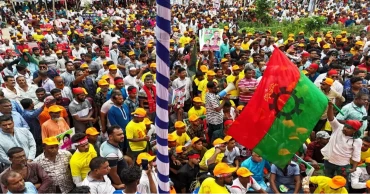
BNP needs strong cabinet to deliver: International Crisis Group
After a landslide victory with over a two-thirds of parliamentary seats, the International Crisis Group on Friday said BNP will need to announce a strong cabinet and hit the ground running if it is to deliver on its ambitious election promises and meet the aspirations of the people of Bangladesh.
"The BNP administration that is expected to take office in the coming days faces a number of daunting challenges, including boosting the economy, ensuring security and continuing the reform process," said Thomas Kean, Crisis Group’s Senior Consultant on Myanmar and Bangladesh.
Given the importance of this election in restoring faith in the democratic process among Bangladeshis, he said, it is also vital that any allegations of irregularities are taken seriously and the Election Commission handles them in a transparent manner in line with the law.
The International Crisis Group is an independent organisation working to prevent wars and shape policies that will build a more peaceful world.
Kean said Bangladesh’s first 'credible election' in 17 years has been completed smoothly, with only isolated reports of violence or irregularities.
The vote marks an important step towards the restoration of genuine democracy in Bangladesh, he said.
The participating political parties, the interim government, the Election Commission and security agencies, not to mention the people of Bangladesh, deserve credit for their contributions to ensuring a safe and credible vote, Kean said.
The atmosphere was largely 'festive, with voters appearing optimistic' that the election would lead to lasting change in Bangladesh.
"The turnout and strong support for a yes vote in the concurrent referendum on the July Charter – a series of reforms negotiated by all participating parties over the last year – reflect the credibility of both the election and reform process in the eyes of most Bangladeshis," Kean said.
The country’s largest islamist party, Jamaat-e-Islami, has recorded its best ever performance, he said.
Together with some leaders of the student-led National Citizen Party who have also secured parliamentary seats, it now has the numbers to form a strong opposition capable of holding the government accountable, Kean said.
7 months ago
Next Bangladesh govt will need to navigate tricky foreign policy issues: Crisis Group
The International Crisis Group has said the incoming administration in Bangladesh will need to address a raft of challenges, from weak institutions to a sluggish economy heavily dependent on garment exports and remittances to the growing effects of climate change in one of the world’s most densely populated countries.
It will also need to 'navigate tricky foreign policy issues, particularly relations with India, the implications of the intensifying U.S.-China rivalry' and the lack of progress toward resolving the status of more than one million Rohingya refugees languishing in camps near the Myanmar border, said Thomas Kean, Crisis Group’s Senior Consultant on Myanmar and Bangladesh.
He said an elected government with a five-year term will be better positioned to manage the country’s political rancour and social and economic challenges than an interim administration, but the tasks at hand are many and complex.
"If the result is contested, it could spiral into a political crisis, testing the fragile consensus that has underpinned the transition," said Kean.
He made the remarks while commenting further on the latest Q&A, 'Curtain Falls on Bangladesh’s Interim Government as Critical Elections Approach', which examines what is at stake in Bangladesh’s 12 February election.
Even if the vote passes peacefully, Kean said the next government will face mounting pressure to meet the aspirations of a youthful and frustrated population and to deliver reforms, starting with the July Charter, or risk reinforcing perceptions that the promised political change has been largely cosmetic.
“Predicting the outcome of the 12 February poll is challenging because Bangladesh’s electoral landscape has shifted so much," he said.
The biggest risks revolve around security: political violence is already on the rise - at least sixteen politicians have been killed since the election schedule was announced, Kean said.
He said there is a real danger of further attacks on candidates, as well as reprisals against Awami League supporters or Bangladesh’s Hindu minority.
The International Crisis Group is an independent organisation working to prevent wars and shape policies that will build a more peaceful world.
Crisis Group has offices in Bogotá, Brussels, Dakar, Istanbul, London, Nairobi, New York and Washington, DC and has a presence in more than 25 different locations in Africa, Asia, Europe, the Middle East and the Americas.
Highlighting the main challenges facing the next government, Kean said the 12 February elections are crucial for several reasons.
There are also concerns over the growing influence of radical Islamist groups, such as Hizb ut-Tahrir, which have become more prominent since former Prime Minister Sheikh Hasina’s ouster, and the capacity of state forces to watch out for violent extremist activity, he observed.
Perhaps, Kean said, the most important threat to stability in the years ahead would stem from a failure to meet the aspirations of Bangladesh’s youthful population.
Roughly half are under 30, and many struggle to find work that matches their education level, leaving a deep sense of frustration.
Any stumble in seeing through reforms, starting with the July Charter, would risk reinforcing a perception that the political change they were promised has been cosmetic, he said.
The incoming government will also have to grapple with the 'thorny issue of political reconciliation.'
Given its prominence in the country’s history and its strong electoral base, the Awami League cannot remain on the sidelines forever, Kean said.
But the party’s actions under Hasina, particularly in July-August 2024, mean that allowing it to come back to the electoral arena, even under new leadership, will be politically fraught, he said.
India and other foreign governments with influence could help broker dialogue between the party and the future government to come to an agreement, Kean said.
Foreign governments, he said, many of which have cheered on Prof Muhammad Yunus and his colleagues, should extend support to the incoming government as it seeks to turn the page on Bangladesh’s recent turbulence.
7 months ago
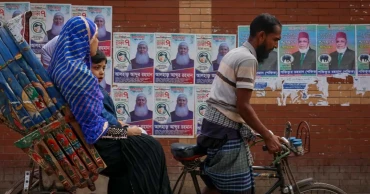
Feb 12 election to mark 'final step in delicate political transition': International Crisis Group
Bangladesh’s interim government, led by Nobel laureate Muhammad Yunus, which assumed office amid high public expectations, is approaching the end of its tenure as the country moves closer to elections, that mark "the final step in the delicate political transition that has been under way for a year and a half," according to the International Crisis Group, the Brussels-based think tank.
“Bangladeshis had high expectations of the interim government, which remained popular for some time, though it has lost some of its lustre of late,” said Crisis Group's expert on Bangladesh, Senior Consultant Thomas Kean, in a Q&A published Monday on the ICG's website.
Chief of interim government Prof Muhammad Yunus and his cohort have chalked up major achievements, including stabilising an economy that had been teetering under Hasina and maintaining a fragile consensus on the course of the transition with the army and political parties, Kean said.
Six international organisations to deploy 63 observers for Bangladesh elections
Their signature achievement as regards reform has been to oversee drafting the July Charter. All the political parties agreed on the need for change, but not necessarily on which measures to take or in what order.
It was nonetheless important for the interim government to seek buy-in from all the parties contesting the vote, since making these reforms will be the responsibility of the incoming government. Yunus and his cabinet succeeded, but with caveats.
"After assuming office on August 8, 2024, Prof Yunus quickly outlined his agenda: initiate major political, economic and institutional change; prosecute those responsible for violence during the protests; and organise free and fair elections," said Kean.
He said the government re-established the International Crimes Tribunal (ICT) – a domestic judicial body first formed in 2009 to investigate crimes committed during the 1971 war – to try those allegedly responsible for serious abuses under Hasina’s regime. It also formed six reform commissions focused on areas considered critical, such as the constitution, election system and judiciary. These steps culminated in a ceremony in October 2025, when most of the country’s political parties signed the July Charter (so named after the month when the uprising against Hasina began), an agreement on a set of reforms the next government is expected to make.
The interim government has not been without its critics, who argue that it has waged a vendetta against the Awami League, failed to restore security and been too accommodating toward far-right Islamist groups, among other things. But it has managed to shore up a cross-party political consensus (excluding the Awami League), helping it reach agreement on the July Charter. Its final task will be to make a smooth exit from Bangladesh’s political scene by ensuring credible, peaceful polls, then transferring power to a democratically elected administration.
Up to 127 million Bangladeshis will go to the polls on 12 February, in the first national elections since Prime Minister Sheikh Hasina’s government fell in August 2024. For tens of millions of them, it will be the first chance in their lives to participate in a credible vote.
The elections mark the final step in the delicate political transition that has been under way for a year and a half.
In the February election, the contest is expected to be closely fought between two blocs led by the Bangladesh Nationalist Party (BNP) and Jamaat-e-Islami.
The BNP retains a strong organisational base but has been weakened by allegations of extortion, internal disputes over candidate selection, and a perception among many voters that it differs little from the Awami League. Party leaders have attempted to counter this image through disciplinary expulsions.
The BNP may benefit from recent events, including the December 2025 return of acting leader Tarique Rahman from long exile and the death of former prime minister Khaleda Zia, which drew huge public crowds. However, Tarique Rahman lacks his mother’s broad appeal and faces lingering corruption allegations, leaving the party’s electoral prospects uncertain.
He also mentioned that Jamaat-e-Islami, Bangladesh’s largest Islamist party, has gained momentum since the 2024 protest movement and appeals to voters as a disciplined alternative to elite-dominated politics, particularly among younger people.
It has also made significant gains in student politics. Jamaat has further strengthened its position through an electoral alliance with the National Citizen Party, though the deal has triggered internal dissent within the NCP.
With the political landscape transformed and the Awami League sidelined, predicting the outcome of the 12 February election is difficult. Polling suggests the BNP holds a narrow lead, while Jamaat appears set to surpass its best-ever electoral performance, Thomas Kean said.
Bangladeshi expats cast 458,000 postal votes ahead of Feb-12 polls
Kean said the biggest risks revolve around security in the run-up to and during the polls. "Historically, political violence in Bangladesh has tended to increase around competitive elections. Bangladeshi human rights groups have already documented an uptick since August 2024. Recent months have witnessed clashes between BNP and Jamaat partisans, and more could flare up in hotly contested districts," according to Kean.
Given the stakes, managing a dispute over the outcome of the vote would be Yunus's biggest challenge yet, he added.
7 months ago
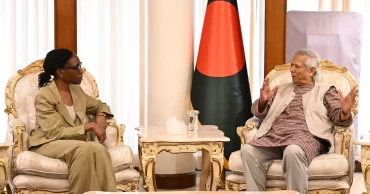
Govt to hold elections on schedule, no way to delay the vote: CA Yunus
Chief Adviser Professor Muhammad Yunus on Thursday said Bangladesh’s interim government is committed to holding elections on schedule, refusing to delay the vote for any demands.
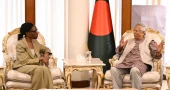
Speaking with a delegation from the International Crisis Group led by Dr. Comfort Ero, Professor Yunus confirmed that the government has set two possible timelines for the elections. He assured the group the dates would not change.
Yunus explained that if political parties seek a limited number of reforms prior to elections, then the elections will be held in December. If a larger reform package is desired, then elections will take place by June next year.
“We have no reason to change the election dates,” he added, emphasising that the upcoming elections will be free and fair.
Regarding the Awami League, Yunus stated that the interim Government has no plan to ban the party, but individuals within its leadership accused of crimes, including murder and crimes against humanity, will be tried in Bangladesh's courts.
1 year ago
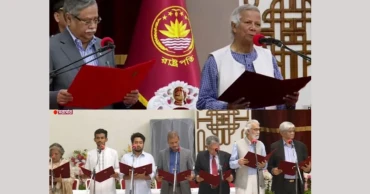
100 Days: Interim govt needs to score some "quick wins" to keep public on side
With international support, Prof Muhammad Yunus-led interim government should look to score some "quick wins" to keep the public on side, said the International Crisis Group in its report released on Friday.
Holding elections without reforms to put checks and balances on a future government could let another autocratic regime emerge, while a military takeover would be an even bigger setback, it said.
An early election would likely bring the BNP to office with few restraints on its power; given its record, many suspect it would prove little better than the AL, the Crisis Group observed.
If political and economic conditions were to deteriorate significantly, the army might intervene, beginning a period of military rule, the report claimed.
"Quick wins" could include steps to address petty corruption in public services, improve electricity supply and reduce high prices.
International actors should work with the interim government to support its ambitious goals and help move Bangladeshi politics into a new era, said the report titled "A New Era in Bangladesh? The First Hundred Days of Reform."
Crisis Group's Senior Consultant on Myanmar and Bangladesh Thomas Kean said to maintain the widespread public support it enjoys, the interim government also needs to improve its handling of day-to-day governance.
"If Yunus and his team falter, the country could revert back to having elected governments with few checks on power, or even enter a period of military rule," he said, commenting on the report.
But if they can succeed in steering reforms, Bangladeshis could stand to benefit for decades to come, Kean said.
He mentioned that one hundred days after Prof Yunus was sworn in to lead Bangladesh’s new interim government, the country stands at a crucial juncture.
The interim government has a once-in-a-generation opportunity to improve governance and put checks in place that would prevent another autocratic regime from emerging, Kean said.
"But the scale of the task is monumental," he said, adding that in particular, the interim government will need to maintain a degree of political consensus with key political players, including student leaders, the Bangladesh Nationalist Party, Islamist forces, the military, and civil society.
The interim government has a strong public backing for reform and the support of key players, including student leaders and the army, the International Crisis Group observed.
The interim government has identified its priorities, outlined a process and laid out an initial timeline.
Read: Finance Adviser prioritises short-term reforms over long-term ones
Sheikh Hasina’s flight from Bangladesh on 5 August has created a once-in-a generation opportunity for political renewal that can move the country beyond the bitter divisions and violence that has characterised much of the past five decades, according to the report.
The interim government will need to build political consensus while maintaining economic stability and delivering steady results to ensure that the Bangladeshi public remains firmly behind it, said the Crisis Group.
The alternatives would be unappealing for both Bangladesh and its partners, it observed.
What’s new?
Three months after an uprising toppled former Prime Minister Sheikh Hasina, the reform agenda of Bangladesh’s interim government is becoming clearer – along with the pitfalls that lie in its path.
Led by Nobel laureate Muhammad Yunus, the administration is expected to remain in office for another year and maybe longer.
Why does it matter?
After fifteen years of Hasina’s rule, Bangladesh has a once-in-a-generation opportunity to improve governance and put checks in place that would stop another autocratic regime from emerging.
"If the interim government falters, however, the country could revert to the status quo ante or even enter a period of military rule."
What should be done?
The interim government should aim to produce quick results to maintain public support for more ambitious reforms.
It should avoid staying in power too long and build consensus on new measures among political parties, said the report.
External actors should offer aid; India should work to repair its image with the Bangladeshi people, it mentioned.
Read more: Major reforms underway to improve train ticketing system, combat scalping: Adviser Fouzul
After fifteen years in office, Sheikh Hasina’s administration had grown "deeply unpopular."
To hold on to power, the report said, her government "systematically undermined" the independence of Bangladesh’s institutions, particularly the police, judiciary and bureaucracy.
Even if it is unclear how successful the Yunus team can be in reaching the goal, the alternatives look unappealing, said the report .
Foreign governments and multilateral institutions should provide the interim government with technical and financial assistance, including on security, judicial, electoral and economic reform.
Foreign governments should also help recover the proceeds of corruption and state-sanctioned theft that are sitting in banks and property markets outside Bangladesh.
India, which "staunchly supported" Hasina throughout her rule, should take steps to repair the resulting damage to its image, said the report.
Support at home and abroad will be crucial to ensure that Bangladesh does not lose this chance at the political and economic change that many of its people long for, said the report .
1 year ago

Bangladesh's dependence on India, China could increase if western pressure continues: Int'l Crisis Group
Bangladesh's dependence on India and China will increase if the United States and potentially other Western countries go for further pressure and sanctions, such as visa bans on top officials, the International Crisis Group has said.
"It could also cause the government to increase its dependence on India and China, as the US (and potentially other Western countries) will probably respond with sanctions, such as visa bans on top officials," according to the October 2023-March 2024 edition of "On the Horizon" report of the Crisis Group.
The International Crisis Group is an independent organisation working to prevent wars and shape policies aiming for a more peaceful world.
BNP has declared October 28 for a movement to topple the government and the ruling party Awami League says BNP's downfall will start on that day.
Read: Free, fair, peaceful elections incredibly important: Afreen Akhter
So far, a peaceful atmosphere prevails in the country.
A disputed election could trigger fierce anti-government protests, according to the International Crisis Group.
Election-related activities, such as campaigning and voting, could become flashpoints for violent attacks; spillover could also increase from restive states in India’s northeast, it said.
Read: Bangladeshis will decide how election will be held in the country: India
What to watch for in the coming weeks and months as mentioned by the Crisis Group
1. A high-stakes and potentially violent election in January 2024.
2. The ruling Awami League is expected to ignore calls for it to step down and hand power to a caretaker government that would oversee the election.
3. Rival supporters could clash in street battles or attack party offices or candidates.
4. Islamist groups could become more active in opposing the government.
5. Facing the prospect of a disputed poll, the opposition will probably boycott the election and could become radicalised, adopting more violent tactics.
6. Lack of hope, insecurity and poverty threaten to create a vicious cycle in which desperate Rohingyas – particularly young men – could join criminal gangs and armed groups, further fuelling the violence.
Read more: Masud-Afreen Meeting: Bangladesh, US want "free, fair, peaceful" elections
2 years ago
.jpg)
US demand for Iran sanctions could trigger UN crisis
The United States is poised to call for the United Nations to reimpose sanctions on Iran under a rarely used diplomatic maneuver after a resounding defeat in the Security Council.
6 years ago