PKSF
PKSF, BARC join hands to boost agricultural research and growth
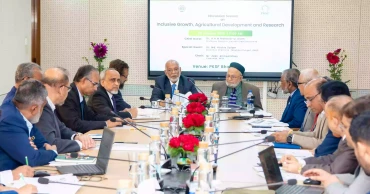
Palli Karma-Sahayak Foundation (PKSF) and the Bangladesh Agricultural Research Council (BARC) on Thursday agreed to work together to strengthen the linkage between agricultural research and extension to ensure inclusive growth.
The commitment was made at a discussion meeting held at PKSF Bhaban-1 in the capital.
The meeting was chaired by PKSF Chairman Zakir Ahmed Khan. Emeritus Professor at Kansas State University, USA, Dr ANM Mahbub-ul Alam, attended the event as the chief guest, while BARC Executive Chairman Md Abdus Salam was present as the special guest. PKSF Managing Director Md Fazlul Kader delivered the welcome address.
PKSF signs deal 5 commercial banks to fund partner organizations
Although agriculture remains a key pillar of the country’s food security and employment, its contribution to GDP is limited to around 12 percent, while nearly 47 percent of the total labour force is engaged in the sector.
Sluggish agricultural growth of 3.21 percent, shrinking arable land, declining soil fertility and rising production costs have emerged as major challenges.
Dr Alam said institutions often hesitate to engage others who possess greater expertise in specific areas, even when such collaboration is necessary.
“As a result, the country is deprived of the effective use of promising talent. We must break free from this mindset,” he said.
PKSF leading calls for transition to agroecological farming
Emphasising the need for balanced coordination between public and private initiatives for sustainable agricultural development, he added that ensuring food and nutrition security remains a shared national goal.
Md Abdus Salam said the objectives of advanced agricultural practices are fourfold — better production, better nutrition, a better environment and, ultimately, a better life.
He noted that BARC is continuously conducting research to achieve these goals and expressed hope that collaboration with PKSF would help expand research-based initiatives at the field level.
He also said PKSF could play a complementary role to the government in implementing the ‘Transforming Bangladesh Agriculture: Outlook 2050’ strategy.
PKSF Chairman Zakir Ahmed Khan said that while Bangladesh holds a strong position in the global agricultural landscape, sustainable and inclusive growth cannot be achieved without addressing structural challenges.
12,000 youth to receive skills training under PKSF program
“The main objective of today’s meeting is to enhance mutual cooperation between PKSF and BARC for the overall development of the agricultural sector,” he said, adding that coordinated efforts would also lead to innovative initiatives beyond conventional activities to benefit farmers and the sector.
He expressed optimism that a memorandum of understanding (MoU) between the two institutions would be signed soon.
Highlighting that nearly 50 percent of the total agricultural credit disbursed in the country is provided by PKSF and its partner organisations, PKSF Managing Director Md Fazlul Kader said the organisation is working to expand markets and promote agricultural micro-entrepreneurship as a dignified and attractive profession through diversification and value addition.
He added that PKSF is placing special emphasis on expanding ecological farming practices to reduce production costs, increase farmers’ income and restore soil fertility.
Former BARC Executive Chairman Dr Wais Kabir and WAVE Foundation Executive Director Mohsin Ali also spoke at the discussion.
A presentation on PKSF’s agricultural development interventions was delivered, and a special documentary was screened.
Senior officials of PKSF and BARC, along with chief executives of PKSF partner organisations, were present at the event.
7 months ago
PKSF signs deal 5 commercial banks to fund partner organizations
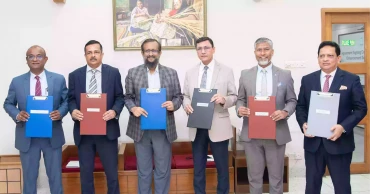
Palli Karma-Sahayak Foundation (PKSF) on Monday signed five separate Credit Guarantee Agreements with Jamuna Bank PLC, Commercial Bank of Ceylon PLC, Trust Bank PLC, Mercantile Bank PLC, and NCC Bank PLC under its ongoing Credit Enhancement Scheme (CES).
Under these agreements, the banks will be able to provide a total of Tk 1,000 crore in guaranteed loans to PKSF’s Partner Organizations.
The signing ceremony was held at PKSF Bhaban-1 in Agargaon, Dhaka, according to a press release.
PKSF to launch nationwide Thalassemia awareness campaign
On behalf of PKSF, the agreements were signed by Md. Fazlul Kader, Managing Director, PKSF. On behalf of the respective banks, the agreements were signed by Ahsan Zaman Chowdhury, Managing Director & CEO, Trust Bank PLC; Haily Algewatte, Deputy CEO & Chief Operating Officer, Commercial Bank of Ceylon PLC; Mohammad Jahangir Alam, Deputy Managing Director, Jamuna Bank PLC; Md Habibur Rahman, Deputy Managing Director, NCC Bank PLC; and Md Zakir Hossain, Deputy Managing Director, Mercantile Bank PLC. PKSF Deputy Managing Directors Md Mashiar Rahman, Dr Fazle Rabbi Sadeque Ahmed and Md Hasan Khaled were also present there.
Md Fazlul Kader said that the PKSF is working to transform low-income people into entrepreneurs.
“To successfully implement this initiative, the Credit Enhancement Scheme has been introduced to formally engage commercial banks. Under this scheme, PKSF’s Partner Organizations will receive loans from banks and disburse them to eligible clients at the field level, while PKSF will provide guarantees against the credit risk at the bank level.”
PKSF leading calls for transition to agroecological farming
To promote inclusive economic growth through expansion and productivity enhancement of the microenterprise sector, PKSF is implementing the Credit Enhancement Scheme (CES) with financial and technical support from the Asian Development Bank (ADB).
Through this scheme, PKSF will share the lending risk by providing guarantees to banks and financial institutions extending loans to PKSF’s Partner Organizations.
Earlier, on 24 May 2025, PKSF launched the country’s first Credit Enhancement Scheme. On the same day, PKSF signed Credit Guarantee Agreements amounting to BDT 3,150 crore with BRAC Bank, City Bank, Prime Bank, Mutual Trust Bank, Southeast Bank, and The UAE-Bangladesh Investment Company Limited (UBICO).
7 months ago

Prof Yunus asks PKSF to expand programmes with tech-driven youth entrepreneurship
Chief Adviser Prof Muhammad Yunus on Sunday encouraged the Palli Karma-Sahayak Foundation (PKSF) to expand its programmes on a large scale and give the young people an opportunity to become entrepreneurs taking advantage of the technology that connected them with the world.
“Technology has connected us with the world in a big way in all works. By taking advantage of this technology, time has come to create an opportunity for every person allowing them to go where he or she wants to go, centering their creativity,” he said, hoping that the PKSF will start a new journey towards that goal with the formal opening of the new building.
Highlighting the importance of making things time-befitting for further expansion of PKSF programmes, the Chief Adviser said this approach can do a miracle if they can proceed accordingly. “People are born to be entrepreneurs.”
Prof Yunus made the remarks while speaking as the chief guest at a ceremony marking the formal opening of the PKSF Building-2 where he shared the stories of PKSF’s formation stage, his role and its long journey.
He fondly recalled the old memories and the persons involved in its initial stage, noting that he felt like a reunion with the old friends through this opening ceremony.
The Chief Adviser unveiled the plaque of the newly constructed PKSF Bhaban-2 at Khiljee Road (Bir Uttom A N M Nuruzzaman Road), Shyamoli, Mohammadpur.
Prof Yunus inaugurates newly built PKSF Bhaban-2 in Dhaka
Finance Adviser Dr Salehuddin Ahmed spoke as a special guest at the ceremony chaired by PKSF Chairman Zakir Ahmed Khan.
Managing Director (MD) of Palli Karma-Sahayak Foundation (PKSF) Md Fazlul Kader delivered welcome remarks.
Appreciating the role played by all in alleviating poverty in the country, Prof Yunus said they have a long way to go but stressed that Bangladesh’s preparation phase has been very strong which is rarely seen in other countries.
“The stage we are at now can be done on a very large scale. There is no need to worry about money because all have confidence in us,” he said, suggesting investment in creating entrepreneurs.
1 year ago

More support needed to protect biodiversity, people of Barind region: PKSF Chairman
PKSF Chairman Zakir Ahmed Khan has sought increased international support to complement the government activities for sustainable and long-term interventions to protect the environment, biodiversity, and people of Barind tract in Bangladesh.
“The Barind tract in Bangladesh is facing severe drought caused by climate change. It requires implementation of sustainable and long-term interventions to protect the environment, biodiversity, and people of this region,” he said at the closing ceremony of a training program at the PKSF Bhaban in Agargaon on Thursday.
The training was held under the Extended Community Climate Change Project-Drought (ECCCP-Drought) project.
Zakir Ahmed Khan emphasized on the importance of building local capacity to mitigate the impacts of climate change.
PKSF Day 2024 to be observed Wednesday
He said PKSF’s ECCCP-Drought project, funded by the Green Climate Fund (GCF) and supported by the Government of Bangladesh, is being implemented in 14 upazilas of Naogaon, Chapainawabganj, and Rajshahi districts.
He expressed his hope that such training programs would contribute to developing the capacity of local communities to deal with climate change fallout more effectively.
PKSF arranged this training on climate change, adaptation and mitigation in two batches from 5-16 January and 19–23 January 2025. A total of 66 officers from the project-implementing Partner Organisations received this training.
The training programme focused on climate finance, project proposal development, and field-level project implementation strategies.
Zakir Ahmed Khan distributed certificates among the participants and urged them to implement the project with efficiency, transparency, and accountability.
The USD 30 million ECCCP-Drought project, being implemented from 2023 to 2027, aims increase resilience of poor and vulnerable people in drought-prone areas.
1 year ago

Tulips of Tetulia: Prospects as bright as the blooms
Tulips — the brightly coloured flowers usually associated with the Netherlands — are now growing in Tetulia upazila of Panchagarh district, boosting tourism prospects and local economy.
Seeing the success of a pilot scheme, this year, tulips are being grown on a large tract of land in Darjipara of Tetulia.
Tulips grown in the Panchagarh district are now being sold in Dhaka due to high demands.
Last year, eight women earned Tk 65,000 each by growing tulips on their land — on a pilot basis — and this year, 20 women are growing the beautiful flowers on two acres of land considering the prospects.
Also read: Danish ambassador, IFAD country director visit tulip gardens in Panchagarh
This year, they are expecting to sell tulips worth Tk one crore.
Financed by International Fund for Agricultural Development (IFAD) and Palli Karma-Sahayak Foundation (PKSF), Echo Social Development Organisation (ESDO) and Rural Microenterprise Transformation Project (MRTP) undertook the pilot project with the help of rural women.
They have created a new prospect for livelihood.
3 years ago

EU to provide €23 million to PKSF for extreme poverty reduction
The European Union (EU) and Palli Karma-Sahayak Foundation (PKSF) Thursday signed a grant agreement to implement a new project for extreme poverty reduction.
PKSF Managing Director Nomita Halder and Maurizio Cian, head of cooperation of the EU Delegation to Bangladesh, inked the agreement worth €22.81 million for the "Pathways to Prosperity for Extremely Poor People (PPEPP)-European Union" Project.
The PPEPP-EU Project will support 215,000 most vulnerable, extremely poor households (about 0.86 million people) in 145 unions of 12 districts where poverty rates are higher than the national average.
The specific objective of the project is to help the target people to rise out of extreme poverty and make significant progress along a pathway towards prosperity.
The project will work in the flood-prone river basin area of the northwestern region (Rangpur, Kurigram, Dinajpur, Thakurgaon, Nilphamari and Gaibandha), cyclone and saline-prone southwestern region (Khulna, Satkhira, Bagerhat, Patuakhali and Bhola), and northeast haor region (Kishoreganj) and some ethnic minority clusters in the north.
PPEPP-EU will work around livelihoods and enterprise development, nutrition and primary healthcare, access to services through community mobilisation, disability inclusion, climate resilience building and women empowerment.
Target groups will include women-headed households, single mothers, elderlies, households with child labour, persons with disabilities, people of the third gender and intersectional groups such as ethnic minorities.
Read more: PKSF launches $200mn project to transform rural microenterprise
3 years ago
.jpg)
Bangladesh emerged from language movement- Qazi Kholiquzzaman
Eminent economist, chairman of Palli Karma-Sahayak Foundation (PKSF) Dr. Qazi Kholiquzzaman Ahmad emphasized speaking Bengali correctly as the language has a long history and heritage.
He called for preserving the elements of heritage at local and regional level for the future generation.
The Bengali language should be practiced all the year, not in a specific month of the year as it is a constitutional right of the people, Kholiquzzaman said.
READ: Sajeeb Wazed highlights Bangabandhu's heroic role in language movement
He came up with remarks while addressing as the chief guest at a webinar titled ‘70 Years of Language Movement & International mother language day-2022’ organized by Dhaka School of Economics on Monday.
He discussed the significance of the language movement in 1952 to the emergence of Bangladesh in 1971.
He argued for the use of Bengali language in judicial proceedings and medical sector of the country and international negotiation.
The seminar was presided over by Entrepreneurial expert and Macroeconomic specialist Professor Dr.Muhammad Mahboob Ali.
He praised the role of the father of the nation Bangabandhu in the language movement and creation of Bangladesh.
Among others assistant professors of Dhaka School of Economics Rehana Parvin,Sara Tasneem, Afia Akter and Mohammad Aman Ullah Aman, spoke at the webinar.
4 years ago
.jpg)
Dr Nomita Halder appointed PKSF MD
Dr Nomita Halder, a former Secretary, has been appointed as the 11th Managing Director of Palli Karma-Sahayak Foundation (PKSF).
Currently, she is holding the position of a Professorial Fellow at North South University, said PKSF on Thursday.
Born in the coastal area of Bagerhat, Dr Halder served as a public servant for long 30 years.
She has the experience of working in the local administration right up to a top position in the central government both at policy and implementation levels.
In 2014, she was appointed as the Private Secretary to the Prime Minister.
Dr Nomita Halder graduated in Agriculture from Bangladesh Agricultural University, Mymensingh.
She did an MA in Development Administration from Australian National University.
And later, she did her PhD from the University of Canterbury, Christchurch, New Zealand.
As the Secretary of the Ministry of Expatriates’ Welfare and Overseas Employment, she initiated some stern measures regarding migration and human trafficking.
In 2018, she retired from public service. She is a result-driven and career-oriented professional with a target for excellence.
She is keen to work with vulnerable, disadvantaged and marginalized poor communities.
At present, she holds the position of an Honorary Member of National Human Rights Commission, Bangladesh.
5 years ago

ADB gives another $50m for COVID-affected Bangladeshi microenterprises
The Asian Development Bank (ADB) and the government on Monday signed agreements for $50 million in additional loan to help restore the economic activities of microenterprises in Bangladesh, which have been severely affected by the COVID-19 pandemic.
5 years ago

ADB approves $50 mln loan for Bangladesh
The Asian Development Bank (ADB) has approved a $50 million loan to help restore the economic activities of microenterprises in Bangladesh, which have been severely affected by the COVID-19 pandemic.
The loan will scale up the ongoing Microenterprise Development Project, approved by ADB in 2018 to provide a $50 million credit line to Palli Karma Sahayak Foundation (PKSF), a government development finance and capacity building organisation.
Under the ongoing project, the PKSF, through its 77 partner organisations, has so far provided loans to 39,580 microenterprises, generating 91,430 jobs in rural areas.
The new credit line to the PKSF will provide loans to at least an additional 30,000 microenterprises affected by COVID-19, 70 percent of which are women-led. The project will strengthen the capacity of 120 partner microfinance institutions in microenterprise lending, such as credit appraisal, pricing, and financial and portfolio management and monitoring.
It will expand the application of the pilot mobile-based microenterprise financing application to an additional 10,000 borrowers, which facilitates loan applications, disbursement, and collection. The project will identify three additional microenterprise products for expansion and support microenterprise cluster development.
ADB Principal Country Specialist for Bangladesh Jyotsana Varma said the additional financing will supplement the ongoing project by injecting liquidity in the rural economy by providing cheaper financing to microenterprises, helping them continue their business and retain their employees, especially women entrepreneurs who have been heavily hit by the pandemic.
He said that the project will increase access to financing from microfinance institutions and further contribute to the growth of microenterprises in the country.
5 years ago