chemical fertilisers
Toxic harvest: Food safety slipping away in Bangladesh
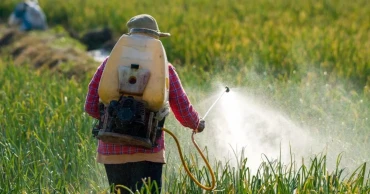
With toxic pesticides and chemical fertilisers saturating its farmlands, Bangladesh faces a growing public health crisis as food safety slips further out of reach.
Although these agrochemicals have played a critical role in boosting crop yields their unregulated and excessive use has raised serious concerns about safety.
Farmers across the country spray over 40,000 tonnes of pesticides annually, often without adequate training or awareness of safe application methods and dosages.
This widespread misuse not only contaminates food but also degrades soil, pollutes water sources, and endangers non-target organisms.
Professor Abu Noman Faruq Ahmmed of Sher-e-Bangla Agricultural University said that although the Pesticide Act was enacted in 2018, Bangladesh still lacks a comprehensive pesticide policy to regulate usage and ensure safe agricultural practices.
FAO organises a poster competition in Dhaka to mark ‘World Food Day’
"Bangladesh currently has over 7,500 pesticide products in the market, but misuse and overapplication are alarmingly common," he said at a recent event in Dhaka.
Environment Adviser Syeda Rizwana Hasan has said the import of pesticides rose sharply from 12,000 tonnes in 2005 to 27,000 tonnes in 2020 — more than double in 15 years.
She shared the information at a roundtable titled “Impact of climate change in the agriculture sector and way forward” organised by the Bangladesh Agricultural Reporters Forum at the Jatiya Press Club in December last year.
She said while the recommended pesticide use per hectare was valued at Tk 98 the current figure has soared to Tk882.
Similarly, fertiliser application has risen dramatically from 8.5 kg per unit of land to about 700 kg.
Organic farming advocate Delowar Jahan, founder of Pran Boichoitor Khamar, said, If I farm naturally, I get 10 maunds of crops; with chemicals, I harvest 25. But the cost to health and nature is not worth the gain."
While vegetable production in Bangladesh grew by 37.6% over the past decade, pesticide use rose even faster.
Environment adviser emphasizes valuing food producers, culinary heritage
A comprehensive study conducted by researchers at Bangladesh Agricultural University has identified 25 highly hazardous pesticides currently registered and used in the country, raising serious concerns over public health and environmental safety.
The study, led by Prof Dr Gopal Das of the Department of Entomology, analysed 343 active pesticide ingredients following eight international benchmarks set by the Food and Agriculture Organization (FAO) and the World Health Organization (WHO).
The findings were presented at a workshop held on July 30 in Dhaka, titled “Enhancing Capacity for Management of Highly Hazardous Pesticides and Chemicals in Bangladesh.”
Out of the 25 pesticides identified, 11 were insecticides, seven fungicides, five herbicides, and two rodenticides.
These are used in nearly 8,000 commercial formulations across the country. Among the most widely used toxic chemicals are abamectin, chlorpyrifos, paraquat, glyphosate, glufosinate ammonium, carbendazim, propiconazole, zinc phosphide and bromadiolone.
Health experts have raised alarms over the acute and chronic health risks posed by these particularly in commonly consumed vegetables like tomatoes, beans, and eggplants. Children and adolescents are especially vulnerable.
Adding to concerns, out-of-season produce such as year-round tomatoes, beans, and cauliflower often grown using heavy chemical input has flooded local markets.
Study: 87% dried fish deemed safe, 13% contains pesticides
Land ownership also compounds the problem.
Nearly 85% of Bangladeshi farmers are landless, working on leased or sharecropped plots, which discourages sustainable land stewardship.
Meanwhile, government fertiliser subsidies have ballooned to Tk 28,000 crore this year—four times more than last year—yet most farmers still struggle to earn a viable income.
“The agriculture system has turned into a gamble,” said Zahidul Islam, an agro-community organizer, adding, “If it were truly profitable, farmers would encourage their children to take it up. Instead, large companies and absentee landlords are buying up land, while small farmers fall deeper into poverty.”
Experts are calling for urgent reforms, including avoiding cultivation near industrial sites, regular soil and crop testing, greater consumer awareness and stronger regulatory enforcement by BFSA.
To address fertiliser demand, the government on October 7 approved the procurement of 2.30 lakh metric tonnes of fertiliser. This includes 30,000 tonnes of bulk granular urea from SABIC Agri-nutrients Company, Saudi Arabia, at a cost of Tk 159.99 crore.
Public health advocates urge a shift toward Integrated Pest Management (IPM), strict enforcement of withdrawal periods before harvest, support for organic farming, and consumer education on how to wash and prepare produce safely.
Mohammad Shoeb, Member of the Bangladesh Food Safety Authority, acknowledged the widespread misuse of pesticides.
“This is an open secret. We’re working to coordinate with relevant authorities to reduce usage and monitor market samples regularly. It’s not just food, but the soil and even cattle fodder have become toxic. Even the grass our livestock feed on has lost its nutritional value,” he added.
10 months ago

Onion farmers in Shailkupa hit by fertiliser shortage during peak season
Farmers in Shailkupa Upazila of Jhenaidah district are facing a severe shortage of chemical fertilisers during the peak onion cultivation season.
The fertiliser is not available from dealers as expected, and what is available in the open market is being sold at higher prices. This has left many farmers worried about their crops, fearing they could incur financial losses without access to the necessary fertilisers.
Farmers across the upazila are complaining that they cannot get the fertiliser they need from the local dealers.
Large influx of migratory birds enhances scenic charm of Ramrai Dighi in Thakurgaon
Shariful Islam, a farmer from Dhaora village, has planted onions on 5 bighas of land and is concerned that the shortage of fertiliser may ruin his harvest. "If I can't apply fertiliser on time, I could lose all my capital," he said.
Like many other farmers, Shariful has been forced to buy fertiliser from the open market at high price.
Farmer Rafiqul Islam said, "When we go to the dealer to get fertiliser at the government-set price, the dealer refuses, claiming they don't have any."
"But when we go to the open market, we can find fertiliser, but the price is Tk 300 to 400 higher per sack," he added.
Record Aman harvest, yet rice prices soar: Who's to blame?
Ayub Hossain, another farmer from Madandanga village, said "I have planted onions on 2 bighas of land this season, nurturing regularly in the hope of a good harvest. But I fear a crop failure if I can't apply fertiliser in time. If I lose my onions, I will lose all my investment."
Other farmers, like Abul Hossain, face similar challenges. "I need 6 bags of fertiliser, but I have to stand in line all day to get just one bag," he said.
Another farmer, Ismail, said, "If I can't give fertiliser on time, the onion yield won't be good. I'll lose my investment, and if that happens, I won't cultivate onions next year."
Farmers in the region have further alleged that the dealers appointed at the union level do not operate from their designated locations. Instead, they have set up shops in municipal areas, selling fertiliser at prices higher than the rates set by the government.
This has led to widespread frustration among farmers, especially during the peak onion planting season. They are now demanding a prompt solution to the ongoing fertiliser crisis.
Sunamganj villagers haunted by river erosion blamed on illegal soil cutting
Dealers, however, claimed that the supply is insufficient to meet the high demand.
Shailkupa Upazila Agriculture Officer Arifuzzaman said that the shortage was partly due to farmers storing fertiliser in their homes, which has further limited availability.
He assured that efforts are being made to distribute fertiliser to all farmers, and additional guidance is being given for better yields.
This season, the target area for onion cultivation in Shailkupa is 12,000 hectares, with a demand for 8,000 metric tons of fertiliser, including urea, TSP, and DOP.
However, the available supply has not been enough to meet these needs, leaving many farmers frustrated and worried about their crops.
1 year ago

Fertiliser demand rescheduled for fiscal year 2020-21
The Agriculture Ministry has rescheduled the demand for chemical fertiliser for the 2020-21 fiscal year for more intensive and expanded cultivation.
6 years ago