Tsunami
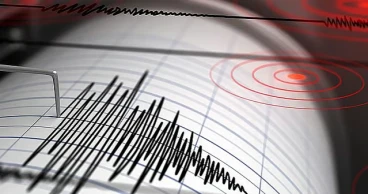
Powerful 7.4-magnitude quake hits off Japan coast, tsunami alert issued
A strong earthquake measuring a preliminary magnitude of 7.4 struck off northern Japan on Monday, prompting authorities to issue a tsunami alert for the region.
According to the Japan Meteorological Agency, the quake hit off the Sanriku coast at around 4:53 pm (0753 GMT), at a depth of about 10 kilometers beneath the seabed.
Public broadcaster NHK reported that tsunami waves of up to 3 meters could reach coastal areas shortly.
6 months ago
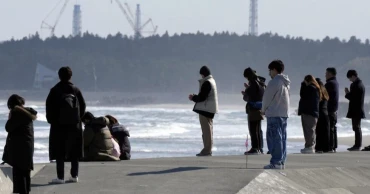
Japan marks 15 years since Tsunami, Takaichi calls for more nuclear energy
Japan on Wednesday marked the 15th anniversary of the devastating earthquake, tsunami, and nuclear disaster that struck its northeastern coast, as the government pushes for increased use of atomic energy.
The magnitude 9.0 quake and resulting tsunami on March 11, 2011, killed more than 22,000 people and forced nearly 500,000 to flee their homes, mostly due to flooding. In Fukushima, around 160,000 residents evacuated after radiation leaked from the tsunami-hit Fukushima Daiichi nuclear plant, with about 26,000 still living elsewhere due to lingering radiation fears or restrictions in their hometowns.
At 2:46 p.m., the country observed a moment of silence, marking the exact time the quake struck.
Prime Minister Sanae Takaichi, speaking at a ceremony in Fukushima, vowed to accelerate the region’s recovery over the next five years and to continue sharing “the valuable lessons learned from the disaster.” She has also pushed for faster restarts of nuclear reactors, supporting nuclear power as a stable energy source following a policy reversal in 2022 that ended a decade-long phase-out.
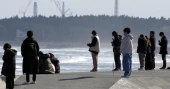
Early Wednesday, some residents of the tsunami-hit areas visited the coast to pray for missing loved ones. Over one million homes, schools, and offices in Iwate, Miyagi, Fukushima, and other coastal regions were destroyed or damaged. While infrastructure has largely been rebuilt, community and economic recovery has been slow, with many residents relocating permanently.
At Fukushima Daiichi, meltdowns occurred in three of six reactors, with at least 880 tons of melted fuel still inside. Radiation levels prevent full inspection, and large-scale removal is not expected until 2037 or later. Decontamination efforts produced massive amounts of slightly radioactive soil—enough to fill 11 baseball stadiums which the government plans to move, including for public works, but faces local resistance.
7 months ago
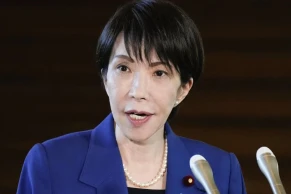
Western Japan shaken by strong quake, tsunami risk low
A strong earthquake struck western Japan on Tuesday, but there were no reports of major damage, life-threatening injuries, or tsunami risk.
The Japan Meteorological Agency (JMA) initially reported the quake in Shimane prefecture, northwestern Japan, as magnitude 6.2, later revising it to 6.4. The prefectural capital, Matsue, along with nearby cities—including some in Tottori prefecture—experienced the strongest shaking. The quake’s epicenter was inland at a depth of roughly 10 kilometers (6.2 miles).
JMA officials warned residents to remain cautious of possible aftershocks for about a week. Local fire departments reported a few minor injuries, and Shinkansen bullet trains in the area faced temporary suspensions or delays. The Nuclear Regulation Authority confirmed no issues at the Shimane nuclear power plant or nearby facilities.
Japan, situated on the Pacific Ring of Fire, is among the world’s most earthquake-prone regions.
9 months ago
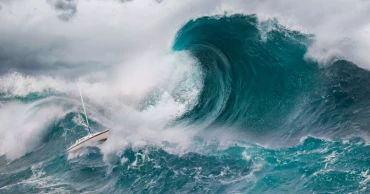
Japan issues tsunami alert after 7.6 quake
A powerful earthquake with a preliminary magnitude of 7.6 struck northeastern Japan late Monday night (December 08, 2025), prompting a tsunami warning for wide stretches of the Pacific coastline, according to the Japan Meteorological Agency (JMA).
The quake struck at 11:15 p.m. local time at a depth of 50 km and registered upper 6 on Japan’s seismic intensity scale of 7 in the hardest-hit areas, the agency said.
Read more: Earthquake: Matlab Bridge crack triggers fears as thousands cross every day
Tsunami warnings have been issued for coastal regions of Hokkaido, Aomori and Iwate prefectures, where waves as high as 3 meters are expected. The epicenter was located off the eastern coast of Aomori at 41.0 degrees north latitude and 142.3 degrees east longitude.
A tsunami advisory was also issued for Miyagi and Fukushima prefectures following the strong tremor. Authorities urged residents in the warned areas to move to higher ground immediately as aftershocks are likely.
Read more: Earthquake Alerts: Best Free Mobile Apps in 2025-26
10 months ago
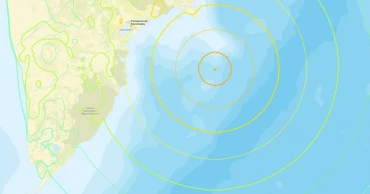
8.7-magnitude quake strikes Russia's far east, triggers Tsunami alerts across Pacific
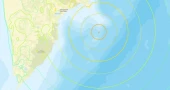
A massive 8.7-magnitude earthquake struck Russia’s Far East on Wednesday, triggering tsunami waves that reached Japan’s northern coastline and parts of the Kuril Islands, prompting widespread alerts across the Pacific including Alaska and Hawaii.
The tremor, which occurred at 8:25 a.m. Japan time, was initially recorded at magnitude 8.0 by Japanese and U.S. authorities, but was later upgraded to 8.7. The U.S. Geological Survey reported the quake struck at a depth of 19.3 kilometers (12 miles), about 250 kilometers (160 miles) from Japan’s Hokkaido island.
Shortly after the quake, tsunami waves began hitting coastal areas. Japan’s Meteorological Agency confirmed that a wave about 30 centimeters (1 foot) high reached Nemuro, on Hokkaido’s eastern shore. Meanwhile, the first waves also reached Severo-Kurilsk in Russia’s Kuril Islands, according to Governor Valery Limarenko. He assured that residents had evacuated to higher ground and were safe.
The Pacific Tsunami Warning Center (PTWC) issued alerts for multiple regions, warning that waves between 1 to 3 meters (3 to 10 feet) above normal tide levels could impact coastlines in Hawaii, Chile, Japan, and the Solomon Islands. In some parts of Russia and Ecuador, even higher waves were anticipated.
Tsunami alert issued following strong earthquake near Russia
In Hawaii, tsunami sirens blared across Honolulu on Tuesday evening local time, and residents were urged to move to higher ground. “Urgent action should be taken to protect lives and property,” the PTWC warned, with the first waves projected to arrive by 7 p.m.
Damage and evacuations were reported in areas closest to the quake’s epicenter on Russia’s Kamchatka Peninsula. The city of Petropavlovsk-Kamchatsky saw widespread panic, with residents running into the streets—many barefoot or without coats. Homes shook, furniture toppled, and cars swayed violently. There were also reports of power outages and mobile network failures.
Further evacuations were ordered on Russia’s Sakhalin Island, where emergency services were operating at full capacity, Russian news agency Tass reported.
The U.S. National Tsunami Warning Center, based in Alaska, issued tsunami warnings for the Aleutian Islands and a watch for parts of the U.S. West Coast—including California, Oregon, Washington—as well as Hawaii. Much of Alaska’s coastline, including parts of the panhandle, was also under alert.
Earlier this month, the same region experienced a series of strong undersea quakes near Kamchatka—the largest reaching magnitude 7.4. That quake occurred about 144 kilometers (89 miles) east of Petropavlovsk-Kamchatsky.
Tsunami warning lifted for Papua New Guinea after earthquake
The region has a history of powerful seismic activity. On November 4, 1952, a magnitude 9.0 earthquake struck Kamchatka, generating 9.1-meter (30-foot) waves in Hawaii, though no fatalities were reported.
Source: Agency
1 year ago
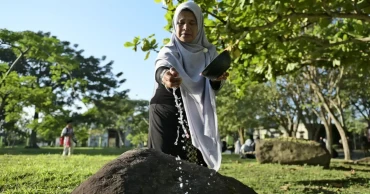
Prayers, tears mark 20 years of Indian Ocean tsunami that killed some 230,000 people
People gathered in prayer and visited mass graves in Indonesia’s Aceh province on Thursday to mark 20 years since the massive Indian Ocean tsunami hit the region in one of modern history’s worst natural disasters.
Many wept as they placed flowers at a mass grave in Ulee Lheue village, where more than 14,000 unidentified tsunami victims are buried. It is one of several mass graves in Banda Aceh, the capital of Indonesia’s northernmost province, which was one of the areas worst hit by a magnitude 9.1 earthquake and the massive tsunami it triggered.
“We miss them and we still don’t know where they are. All we know is that every year we visit the mass grave in Ulee Lhue and Siron,” said Muhamad Amirudin, who lost two of his children 20 years ago and has never found their bodies.
"This life is only temporary, so we do our best to be useful to others,” Amirudin, visiting the grave with his wife, said.
The powerful earthquake off the coast of the Indonesian island of Sumatra on Dec. 26, 2004, triggered a tsunami that killed around 230,000 people across a dozen countries, reaching as far as East Africa. Some 1.7 million people were displaced, mostly in the four worst-affected countries: Indonesia, Sri Lanka, India and Thailand.
More than 170,000 people died in Indonesia alone.
Even though 20 years have passed, survivors in Indonesia are still grieving the loved ones they lost to the giant wave that flattened buildings all the way to the provincial capital of Banda Aceh.
Hundreds of people gathered to pray at the Baiturrahman Mosque in downtown Banda Aceh. Sirens sounded across the city for three minutes to mark the time of the earthquake.
Read: Small tsunami waves splash ashore on remote Japanese islands
Infrastructure in Aceh has been rebuilt and is now more resilient than before the tsunami struck. Early warning systems have been installed in coastal areas to alert residents of incoming tsunamis, providing crucial time to seek safety.
The rebuilding efforts were made possible by the support of international donors and organizations, which contributed significant funds to help the region recover. Schools, hospitals, and essential infrastructure destroyed by the disaster have been reconstructed.
In Thailand, people gathered at a memorial ceremony in Ban Nam Khem, a small fishing village in Phang Nga province that bore the brunt of the devastating wave in the country.
The tsunami claimed the lives of over 8,000 people in Thailand, including many who remain missing, leaving a deep scar in the nation’s history. Nearly 400 bodies remain unclaimed.
Mourners shed tears and comforted each other as they laid flowers at the village’s tsunami memorial. Around 300 people joined a modest ceremony with Muslim, Christian and Buddhist prayers.
Urai Sirisuk said she avoids the seaside memorial park the rest of the year because the loss of her 4-year-old daughter still cuts deep every time she's reminded of it.
“I have this feeling that the sea has taken my child. I’m very angry with it. I can’t even put my foot in the water,” she said.
But, she said, “I still hear her voice in my ears, that she’s calling for me. I can’t abandon her. So I have to be here, for my child.”
In India, hundreds gathered at Marina beach in the southern city of Chennai in Tamil Nadu state. They poured milk into the sea to propitiate gods and offered flowers and prayers for the dead as drums beat in the background.
Read more:7.1 magnitude earthquake hits off southern Japan; tsunami advisory issued
According to official data, 10,749 people were killed in India, including nearly 7,000 people in Tamil Nadu alone.
“It has been 20 years since the tsunami,” said 69-year-old Sadayammal, who uses one name. “We are here to pay respects to the people who lost their lives.”
In Sri Lanka, survivors and relatives of tsunami victims gathered at the coastal village of Pereliya and laid flowers at a memorial that commemorates nearly 2,000 passengers who died when their train, the Queen of the Sea, was hit by the wave. Only a few dozen people are believed to have survived.
Anura Ranjith joined the mourners to pay respects to his younger sister, Anula Ranjani, and her 9-year-old daughter who were passengers on the train. Ranjith never heard from them after that day.
“I looked for them everywhere for years and still, no information about them. Their loss is a great sorrow and pain for me. I am still grieving,” he said.
Overall, more than 35,000 people died in Sri Lanka in the tsunami. People across the country observed two minutes of silence on Thursday in memory of those who lost their lives.
1 year ago

Two Decades After Tsunami, 'Baby 81' Embraces His Unique Identity
Rescued as an infant from the mud following the catastrophic Indian Ocean tsunami in 2004 and reunited with his parents after a dramatic legal battle, the boy once known as “Baby 81” is now 20 years old and aspires to pursue higher education.
Jayarasa Abilash’s journey has become a symbol of hope amid the devastation caused by one of modern history’s deadliest natural disasters. Sri Lanka alone lost over 35,000 lives, with many still unaccounted for.
At just 2 months old, Abilash was swept away by the tsunami in eastern Sri Lanka and later discovered by rescuers some distance from his home. Registered as patient number 81 at the hospital, he earned the moniker “Baby 81.”
Rare Whale Likely Died from Head Injuries: NZ Scientists
Murugupillai Jayarasa, Abilash's father, spent three days searching for his displaced family, possessing nothing but a pair of shorts. He first located his mother, then his wife, but their baby remained missing.
A nurse initially took the infant but returned him upon learning his parents were alive. However, the ordeal didn’t end there. Nine other families claimed the baby, prompting the hospital to demand proof before handing him over.
The case escalated to the police and eventually to court, which ordered a DNA test—a relatively new process in Sri Lanka at the time. Despite public calls for DNA testing, none of the other claimants followed through. A DNA test ultimately confirmed Abilash belonged to the Jayarasa family, reuniting them and attracting international media attention. The family even traveled to the U.S. for an interview.
Ancient genes pinpoint when humans and Neanderthals mixed and mingled
Now preparing for his final high school exams, Abilash dreams of studying information technology at university. Though classmates once teased him with nicknames like “Baby 81” or “tsunami baby,” causing embarrassment, he has since embraced his story.
Reflecting on his past struggles, Abilash recalled hiding from journalists revisiting his story each anniversary. His father reassured him, emphasizing his uniqueness.
As he matured, Abilash learned more about his experience and gradually shed his insecurities. Today, he humorously refers to “Baby 81” as his personal code word, joking that it’s the easiest way to find him online.
Jayarasa still vividly remembers those desperate days, even as other memories fade. However, the attention their story garnered also brought challenges. The family faced exclusion from relief programs under the assumption they had received funds during their U.S. trip. Gossip and jealousy further isolated them, leading to relocation.
In Nigeria's lithium boom, many mines are illegal and children do much of the work
Jayarasa hopes his son will remain thankful for their survival and use his experiences to assist others. Saving small sums from his hairdressing job, he built a memorial in their yard to honor tsunami victims when Abilash turned 12. The monument, featuring four cupped hands, serves as a daily reminder of loss and survival.
“Since many lives were lost and Abilash was spared, I felt compelled to create a memorial to honor those who passed,” Jayarasa explained.
1 year ago

Japan marks 12 years from tsunami and nuclear disaster
Japan on Saturday marked the 12th anniversary of the massive earthquake, tsunami and nuclear disaster with a minute of silence, as concerns grew ahead of the planned release of the treated radioactive water from the wrecked Fukushima nuclear plant and the government's return to nuclear energy.
The 9.0 magnitude earthquake and tsunami that ravaged large parts of Japan's northeastern coast on March 11, 2011, left more than 22,000 people dead, including about 3,700 whose subsequent deaths were linked to the disaster.
A moment of silence was observed nationwide at 2:46 p.m., the moment the earthquake struck.
Some residents in the tsunami-hit northern prefectures of Iwate and Miyagi walked down to the coast to pray for their loved ones and the 2,519 whose remains were never found.
In Tomioka, one of the Fukushima towns where initial searches had to be abandoned due to radiation, firefighters and police use sticks and a hoe to rake through the coastline looking for the possible remains of the victims or their belongings.
Also Read: S. Korea pushes to end Japan disputes over forced laborers
At an elementary school in Sendai, in Miyagi prefecture north of Fukushima, participants released hundreds of colorful balloons in memory of the lives lost.
In Tokyo, dozens of people gathered at an anniversary event in a downtown park, and anti-nuclear activists staged a rally.
The earthquake and tsunami that slammed into the coastal Fukushima Daiichi nuclear plant destroyed its power and cooling functions, triggering meltdowns in three of its six reactors. They spewed massive amounts of radiation that caused tens of thousands of residents to evacuate.
Over 160,000 people had left at one point, and about 30,000 are still unable to return due to long-term radiation effects or health concerns. Many of the evacuees have already resettled elsewhere, and most affected towns have seen significant population declines over the past decade.
At a ceremony, Fukushima Gov. Masao Uchibori said decontamination and reconstruction had made progress, but “we still face many difficult problems.” He said many people were still leaving and the prefecture was burdened with the plant cleanup and rumors about the effects of the upcoming release of the treated water.
The plant’s operator, Tokyo Electric Power Company Holdings, and the government are making final preparations to release into the sea more than 1.3 million tons of treated radioactive water, beginning in coming months.
Also Read: What’s happening at Fukushima plant 12 years after meltdown?
The government says the controlled release of the water after treatment to safe levels over several decades is safe, but many residents as well as neighbors China and South Korea and Pacific island nations are opposed to it. Fishing communities are particularly concerned about the reputation of local fish and their still recovering business.
In his speech last week, Uchibori urged the government to do utmost to prevent negative rumors about the water release from further damaging Fukushima’s image.
Prime Minister Fumio Kishida renewed his pledge to support the ongoing reconstruction efforts.
“The discharge of the treated water is a step that cannot be delayed,” Kishida told reporters after the ceremony. He repeated an earlier pledge that “a release will not be carried out without understanding of the stakeholders."
Kishida's government has reversed a nuclear phase-out policy that was adopted following the 2011 disaster, and instead is pushing a plan to maximize the use of nuclear energy to address energy supply concerns triggered by Russia’s war on Ukraine while meeting decarbonization requirements.
Uchibori's goal is to bolster the renewable energy supply to 100% of the Fukushima prefectural needs by 2040. He said last week that while the energy policy is the central government’s mandate, he wants it to remember that Fukushima continues to suffer from the nuclear disaster.
3 years ago
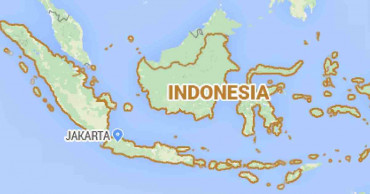
6.0-magnitude quake strikes off eastern Indonesia
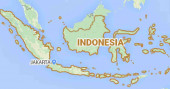
A 6.0-magnitude earthquake jolted Indonesia's eastern province of North Maluku early Tuesday, but there is no potential for tsunami, the meteorology, climatology and geophysics agency said.
Also Read: Indonesia quake kills 7 in Java, jolts Bali; no tsunami risk
The quake rocked at 08:44 Jakarta time (0144 GMT), with the epicenter at 108 km northwest of Halmahera Barat (West Halmahera) district of the province and the shallow of 10 km under the seabed, the agency said.
Also Read: Damaged roads, lack of gear hinder Indonesia quake rescue
4 years ago

Powerful quake off north Japan kills 4, more than 90 injured
A powerful 7.4 magnitude earthquake struck off the coast of Fukushima in northern Japan on Wednesday night, smashing furniture, knocking out power and killing four people. A small tsunami reached shore, but the low-risk advisory was lifted by Thursday morning.
The region is part of northern Japan that was devastated by a deadly 9.0 quake and tsunami 11 years ago that caused nuclear reactor meltdowns, spewing massive radiation that still makes some parts uninhabitable.
Prime Minister Fumio Kishida told a parliamentary session Thursday morning that four people died during the quake and the cause of their deaths are being investigated, while 97 others were injured. A man in his 60s in Soma city died after falling from the second floor of his house while trying to evacuate, and a man in his 70s panicked and suffered a heart attack, Kyodo News reported earlier.
Read:Magnitude 6.2 earthquake kills 7 on Indonesia’s Sumatra
The Japan Meteorological Agency early Thursday lifted its low-risk advisory for a tsunami along the coasts of Fukushima and Miyagi prefectures. Tsunami waves of 30 centimeters (11 inches) reached shore in Ishinomaki, about 390 kilometers (242 miles) northeast of Tokyo.
The agency upgraded the magnitude of the quake to 7.4 from the initial 7.3, and the depth from 60 kilometers (36 miles) below the sea to 56 kilometers (35 miles).
NHK footage showed broken walls of a department store building fell to the ground and shards of windows scattered on the street near the main train station in the inland prefectural capital of Fukushima city. Roads were cracked and water poured out from pipes underground.
Footage also showed furniture and appliances smashed to the floor at apartments in Fukushima. Cosmetics and other merchandise at convenience stores fell from shelves and scattered on the floor. In Yokohama, near Tokyo, an electric pole nearly fell.
The Tokyo Electric Power Company Holdings, which operates the Fukushima Daiichi nuclear plant where the cooling systems failed after the 2011 disaster, said workers found no abnormalities at the site, which is being decommissioned.
Japan’s Nuclear Regulation Authority said a fire alarm went off at the turbine building of No. 5 reactors at the Fukushima Daiichi but there was no actual fire. Water pumps for the spent fuel cooling pool at two of the four reactors at Fukushima Daini briefly stopped, but later resumed operation. Fukushima Daini, which survived the 2011 tsunami, is also set for decommissioning.
More than 2.2 million homes were temporarily without electricity in 14 prefectures, including the Tokyo region, but power was restored at most places by the morning, except for about 37,000 homes in the hardest hit Fukushima and Miyagi prefectures, according to the Tohoku Electric Power Co. which services the region.
The quake shook large parts of eastern Japan, including Tokyo, where buildings swayed violently.
East Japan Railway Co. said most of its train services were suspended for safety checks. Some local trains later resumed service.
Many people formed long lines outside of major stations while waiting for trains to resume operation late Wednesday, but trains in Tokyo operated normally Thursday morning.
A Tohoku Shinkansen express train partially derailed between Fukushima and Miyagi due to the quake, but nobody was injured, Prime Minister Fumio Kishida said.
He told reporters that the government was assessing the extent of damage and promised to do its utmost for rescue and relief operations.
Read:Japan's Kobe marks 27th anniversary of deadly quake
“Please first take action to save your life,” Kishida tweeted.
Chief Cabinet Secretary Hirokazu Matsuno said authorities were scrambling to assess damage. “We are doing our utmost in rescue operations and putting people’s lives first,” he said.
He urged residents in the affected areas to use extra caution for possible major aftershocks for about a week.
4 years ago