environmental pollution

PM orders stricter action against unchecked use of polythene, plastic
Prime Minister Tarique Rahman on Wednesday ordered the law enforcement agencies to take stricter action to stop the unchecked use of polythene and plastic in a bid to control environmental pollution.
He also asked the ministries, departments and agencies concerned to properly discharge their responsibilities in enforcing measures against the use of polythene and plastic.
Tarique gave the directives at a review meeting on controlling environmental pollution at Secretariat in the morning, said a release issued by the PM’s Press Wing.
10 days ago
Unregulated poultry farms push Feni into a growing environmental crisis
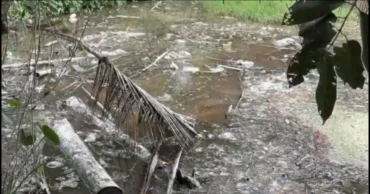
Unplanned, unregulated and unapproved poultry farms across Feni district are triggering severe environmental pollution, disrupting local biodiversity and putting thousands of residents at risk, according to locals and officials.
Residents have filed repeated complaints with government offices over the growing pollution caused by the mushrooming farms.
The district administration has responded with assurances of action, but meaningful intervention is yet to be seen.
According to data from the Department of Environment (DoE), Feni has 1,367 registered poultry farms, while another 1,814 have applied for environmental clearance.
Among these are 544 layer farms, 856 broiler farms, 384 Sonali farms, eight parent stock layer farms and 22 parent stock broiler farms.
However, the number of illegal and unapproved farms remains unknown. Officials estimate the actual figure to be more than double the number of registered farms.
A visit to several parts of Sonagazi upazila revealed poultry farms built haphazardly on rooftops, in residential yards, beside ponds, on croplands, along canals and directly next to roads.
Despite clear guidelines requiring clearance from the Livestock Department and compliance with structural standards, the vast majority of these farms have ignored the rules altogether.
During recent inspections, this correspondent found many farms operating without environmental clearance or Livestock Department licences, even though existing regulations require either DoE approval or registration with the Livestock Department before a farm can be established.
Because these farms have expanded outside the legal framework, environmental pollution has intensified across Sonagazi and other unions.
Read more: How Green Industries Can Reduce River Water Pollution in Dhaka City
The impact on local ecology is profound, while residents say their daily lives have become increasingly unbearable.
Agricultural lands are suffering extensive damage, with waste from an estimated 95% of the farms polluting water bodies and soil.
Dumped waste is contaminating canals, disrupting irrigation and creating shortages of clean water.
Although guidelines dictate that poultry farms must be located at least 200 metres from residential areas, many have been set up right beside homes, schools and mosques.
The foul odour makes nearby roads difficult to use, and locals report rising illness among residents and students of surrounding educational institutions.
Many residents say farm owners often wield local influence, making it difficult to protest. Those who raise concerns are reportedly harassed or threatened.
Farm waste has also reduced crop yields, while the constant stench makes it difficult for children and adults alike to move around the affected areas.
Mamtaz Begum, a 70-year-old resident of Char Elahi village under Motiganj Union, said she once lived peacefully.
But over the past four to five years, influential locals have set up layer farms near her home.
Waste from the farms has polluted ponds and croplands, while the smell, carried by the south wind, has worsened her breathing problems.
She fears she may eventually have to abandon her ancestral home.
Similar conditions prevail across Bogadana, Amirabad, Mongalkandi and Nawabpur unions, where unplanned and unapproved farms continue to proliferate without environmental clearance, livestock licences or even basic trade licences from the Union Parishad.
Residents say repeated complaints and even human-chain protests have failed to yield results, largely due to weak monitoring.
They demand strict action against the illegal farms.
With 100M birds dead, poultry industry could serve as example as dairy farmers confront bird flu
In Char Elahi village, a farm near the house of Mishu Soudagar was found just 15 yards from residential houses.
Between 40 and 50 households live within a 150-yard radius.
Waste is dumped into a small pit and nearby cropland, attracting flies and mosquitoes and producing an overpowering stench.
Dead chickens wrapped in plastic bags were also seen dumped in roadside drains and fields.
Kamal Hossain, a resident of the area, said locals must use the road beside the farm several times a day, enduring the unbearable odour.
Children face difficulties travelling to school, while mosquito infestations have escalated sharply.
Some farm owners, however, insist they are trying to comply. Ahsan Ullah of Bogadana Union said he started his farm to become self-reliant after returning from abroad.
Closing it now would cause severe financial loss, he said, adding that he has applied for clearance.
But nearby residents, including Pulak, Farida Begum, Khadija Begum and Abdul Shukur, said the farm’s waste has made life intolerable.
Strong hatchery, skilled workforce vital for sustainable growth of poultry sector
9 months ago

EC’s poster ban hailed as step towards cleaner, quieter elections
Environmental experts have lauded the Election Commission’s recent decision to prohibit the use of posters in election campaigns, calling it a timely move that could curb environmental pollution and minimise visual and social disturbances across the country.
They said the paper or posters contribute to deforestation, while the plastic coated posters culture —commonly seen during the rainy season— is an environmental disaster as it clogs drains and waterways, and pollutes the environment.
The Election Commission on June 19 approved in principle the draft of the Parliamentary Election Code of Conduct for Political Parties and Candidates 2025, incorporating a provision that bans the use of posters in the electoral campaigns in line with a recommendation made by the Electoral System Reform Commission.
But the provision for the use of billboards during the campaign has been included for the first time in the code of conduct.
Dr Abdul Alim, a member of the electoral reform commission, said the recommendation to prohibit posters was based on four key concerns: environmental degradation, indecent campaigning practices, unregulated expenses and violence triggered by disputes centering posters.
“The use of posters is an indecent practice which is not seen in most of the countries across the world, even a small country like Bhutan,” he told UNB, adding that there are enough alternatives like social media and billboards now.
He said the traditional posters contribute to deforestation and laminated and polythene-coated posters pollute the environment.
“The posters can’t be brought under count or monitoring of the Election Commission. And many incidents of violence were triggered from disputes related to the posters during the election campaign,” Dr Alim said.
According to the Environment and Social Development Organisation (ESDO), around 27,000 tons of plastic-coated posters and cards were used across the country in the 12th parliamentary election held on January 7, 2024. The estimation was made following a survey over printing presses in Dhaka, Chattogram, Sylhet, Rangpur, Khulna, Barishal, and Rajshahi cities.
EC speeds up election preparations after Prof Yunus-Tarique talks in London
ESDO Secretary General Dr Shahriar Hossain told UNB that the use of posters during the election campaign is not seen in any civilised country in the world. “The use of so many posters creates a nuisance. It is just a waste of money and damage to the environment.”
Environmental activist Prof Ahmad Kamruzzaman Majumder said the past bans on laminated posters were not enforced, leading to massive plastic waste during both national and local elections.
He welcomed the EC’s recent move that banned the use of posters in the election campaign saying that it would prevent social nuisance caused by indiscriminate display of posters.
“Plastic-coated posters worsen waterlogging in urban areas by blocking drainage systems, while burning them adds to air pollution,” said Dr Majumder, the Chairman of the Department of Environmental Science at Stamford University Bangladesh.
Besides, thousands of tons of papers are needed during the election campaign, which means it contributes to deforestation, he added.
Dr Majumder said if this ban is effectively enforced it may lead to a cleaner campaign culture in Bangladesh.
Bangladesh Poribesh Andolon (BAPA) General Secretary Alamgir Kabir also praised the EC’s step, saying it would save trees and reduce chemical pollution linked to paper production.
Bangladesh Poribesh Andolon (BAPA) General Secretary Alamgir Kabir said it is a good step that would ultimately save trees and reduce the discharge of untreated chemicals used in paper production and thus lessen the damage to the environment.
However, Kabir raised concern over the newly introduced allowance for billboards—particularly those made of panaflex—warning that they too could harm the environment if not regulated.
1 year ago

Govt. to announce incentive packages for block brick production: Environment Minister
Bangladesh's Environment, Forest and Climate Change Minister Saber Hossain Chowdhury on Saturday (February 24, 2024) said that the government would introduce incentive packages to promote the production of environmentally-friendly block bricks.
Saber came up with the announcement during a media interaction following a meeting with officials from the Forest Department and the Department of Environment at Feni Circuit House on Saturday.
Brick kiln owners can be benefited from these incentives as part of the government's efforts to transition away from air-polluting and land-damaging brick kilns, he said, emphasising the need for the designation of specific areas for waste recycling by municipalities.
The minister urged officials to take proactive measures to combat environmental pollution, including the prohibition of polythene use.
Read more: Govt working to promote climate-resilient crops: Saber Hossain
He stressed prompt actions in cases where environmental clearance is lacking and urged against delays in issuing such clearances.
Moreover, Minister Saber underscored the need for the daily clearance of medical and municipal waste and instructed divisional forest officials to reclaim encroached forest land and initiate afforestation projects in urban and coastal regions.
Chaired by Feni District Magistrate Shahina Akter, various officials including BRTA Chairman Nur Mohammad, Additional Superintendent of Police Din Mohammad, Additional District Magistrate Abishek Das, Divisional Forest Officer Ruhul Amin, and Feni Department of Environment Deputy Director Showkat Ara Kali, among others were present on the occasion.
Following the meeting, Feni Awami League General Secretary and local MP Nizam Uddin Hazari and Feni sadar municipality Mayor Nazrul Islam Swapon Miaji exchanged greetings with the environment minister with floral tributes.
Read more: Is There Any Alternative to Brick Kilns?
2 years ago

Is There Any Alternative to Brick Kilns?
For centuries, brick kilns, characterised by fiery chimneys and billowing smoke, have played a key role in the construction industry. Despite their contribution in providing essential building materials, their operations entail harmful impacts on human health, biodiversity and environment.
What is a Brick Kiln?
A brick kiln is a specialised facility used in the production of bricks, fundamental building blocks for construction. These kilns play a vital role in shaping the urban landscape. The process involves heating clay or other materials in furnaces to create bricks and contributes to the growth of infrastructure. However, the traditional methods employed in brick kilns can have environmental and health consequences, making it imperative to explore sustainable alternatives and technologies.
Impacts of Brick Kiln on Health
Particulate Matter Emissions
Brick kilns pose a major health risk due to the emission of particulate matter, including pollutants like sulfur dioxide and nitrogen oxides. Inhaling these pollutants can irritate the lungs, leading to coughing, wheezing, and shortness of breath. Prolonged exposure may contribute to chronic obstructive pulmonary disease (COPD).
Read more: 9 illegal brick kilns shut down, fined Tk 47 lakh in Sirajganj
Respiratory Issues
Prolonged exposure to emissions from brick kilns can lead to a range of respiratory problems. From workers within the kilns to residents in nearby communities, the inhalation of pollutants can result in asthma, bronchitis, and other respiratory ailments.
Occupational Health Risks
Workers directly involved in brick kiln operations face occupational health risks due to exposure to high temperatures, dust, and pollutants. Adequate safety measures and protective equipment are crucial to mitigating these risks.
Cardiovascular Problems
Brick kiln fumes, laden with pollutants, can obstruct arteries, elevate blood pressure, and disturb heart rhythms. These adverse effects heighten the likelihood of heart attack, stroke, and heart failure, underlining the severe cardiovascular risks associated with exposure.
Read more: 4 brick kilns shut down for polluting air in South Keraniganj
Skin Problems
Dust and irritants emanating from brick kilns inflict skin torment on workers, causing rashes, itching, and burns. The daily grind leaves exposed skin raw, rendering workers vulnerable and uncomfortable in their work environment.
Cancer
Inhaling brick kiln fumes conceal invisible dangers, harbouring carcinogens that escalate cancer risks over time. Exposed workers face heightened threats of lung, skin, and other cancers, emphasising the risks associated with prolonged exposure.
2 years ago

Dhaka’s air quality ‘unhealthy’ this morning
Dhaka's air quality slipped into the 'unhealthy' zone this morning (September 18, 2022).
With an air quality index (AQI) score of 165 at 9 am, the metropolis ranked second in the list of world cities with the worst air quality.
Vietnam’s Hanoi and Pakistan’s Lahore occupied the first and third spots in the list, with AQI scores of 172 and 156 respectively.
Read: Dhaka's air quality "moderate" this morning
An AQI between 101 and 200 is considered 'unhealthy', particularly for sensitive groups.
On the other hand, an AQI between 50 and 100 is considered ‘moderate’ with an acceptable air quality. However, there may be a moderate health concern for a very small number of people who are unusually sensitive to air pollution.
Similarly, an AQI between 201 and 300 is said to be 'poor', while a reading of 301 to 400 is considered 'hazardous', posing serious health risks to residents.
Read: Drizzle fails to clean Dhaka's air
AQI, an index for reporting daily air quality, is used by government agencies to inform people how clean or polluted the air of a certain city is, and what associated health effects might be a concern for them.
In Bangladesh, the AQI is based on five criteria pollutants -- Particulate Matter (PM10 and PM2.5), NO2, CO, SO2 and Ozone.
Dhaka has long been grappling with air pollution issues. Its air quality usually turns unhealthy during winter and improves during monsoon.
Read What can COP27 do for climate vulnerable countries?
With the advent of winter, the city’s air quality starts deteriorating sharply due to the massive discharge of pollutant particles from construction works, rundown roads, brick kilns and other sources.
Air pollution consistently ranks among the top risk factors for death and disability worldwide. Breathing polluted air has long been recognised as increasing a person’s chances of developing heart disease, chronic respiratory diseases, lung infections and cancer, according to several studies.
As per the World Health Organization (WHO), air pollution kills an estimated seven million people worldwide every year, largely as a result of increased mortality from stroke, heart disease, chronic obstructive pulmonary disease, lung cancer and acute respiratory infections.
Read Effects of Air Pollution on Unborn Children, Neonates, Infants
4 years ago

What can COP27 do for climate vulnerable countries?
As a result of continuous and rapid changes in climate, natural disasters - such as sea level rise, floods, droughts, river erosion, cyclones, and salinity - are becoming more extreme and destructive with time. It is affecting all the continents of the world. The impacts of climate change are causing loss of crops, and agricultural productions challenging the food security of the world today. In simple words, climate change is threatening the safety of life and property of people and animals around the world.
To fight these issues, the United Nations Framework Convention on Climate Change (UNFCCC) comes in. This 27th edition of the climate conference known as COP27 will take place in November, 2022. Let’s focus on what COP27 can achieve for the climate change affected countries.
What is COP27?
‘Cop’ means ‘Conference of the Parties. It is a United Nations initiative. In 1995, the first conference of COP was held in Berlin, Germany, which took place in a different country every year.
These conventions serve as the formal meeting of the UNFCCC (Conference of the Parties, COP) parties to discuss progress in attempting to alleviate the effects of climate change, and they began attending discussions beginning roughly in the mid-1990s. The conference also negotiated the Kyoto Protocol with an aim to establish legally binding obligations for developed countries to decrease their greenhouse gas emissions.
Read Huge work ahead of COP27; commitments need to turn into action: Robert Dickson
This year COP27 will take place at Sharm El Sheikh, Egypt, from November 6 to November 18. However, COP 27 was initially expected to occur from November 8-20, 2021. But, due to covid 19 pandemic, COP 26 was rescheduled from November 2020 to November 2021. That led to COP 27 from November 2021 to November 2022.
As of 2019, 197 countries have become UNFCCC members. So, this year it is expected that all the member countries will meet with their valuable proposal for the sake of the environment.
UNFCCC COP27 is going to be an important event regarding environmental pollution and climate change. The conference discusses the risks and solutions to climate change. This event is promising because it will help to create a consensus on how to prevent global climate change.
Read Bangladesh-UK Partnership: Experts to discuss priority climate actions Friday
What Should COP27 Achieve for the Vulnerable Countries?
The COP conference should aim to provide a space for vulnerable countries to share their experiences, learn from each other, and create new ideas on how to prevent climate issues. This would help reduce the risk of another devastating conflict in the future.
Mitigation
COP26 was the very first test of the Paris Agreement’s goal-raising function for mitigating climate change. In other words, preventing and reducing greenhouse gas emissions. Yet it fell short of reaching its objectives.
By the end of this century, if member states would implement all changes from the ‘nationally determined contributions or ‘NDCs,’ it would still be predicted that the world’s average temperature would rise by 2.4 degrees Celsius. The COP26 final outcome urges all the parties to increase their targets by 2030 to become compatible with NDCs by 2022. Therefore, COP27 is more significant than the previous COPs.
So, COP27 should achieve a mitigation plan so that the vulnerable countries’ risk gets reduced in the long run.
Read How Can One Person Reduce Environmental Pollution?
Adaptation
The COP26 urges the developed countries to double the adaptation financing along with the launch of a two-year work program towards the Global Goal Adaption (GGA). The GGA conducts international support to lessen the vulnerability of countries to climate change and adapt to the environment through holistic, sustainable development.
Vulnerable countries have been seeking assistance for decades. And it is expected that COP27 will bring out a proper adaptation plan for the affected countries.
Finance
The COP26 summit was a major point of frustration and anger for many developing nations. In particular, they expressed frustration and anger at the failure to deliver on promises of regular financing to assist them in adaptation and mitigation efforts.
There should be a move toward fulfilling historic pledges to provide annual climate financing of $100 billion from 2020 to 2025 every year, but those commitments are yet to be met. So, COP27 can be a milestone for vulnerable countries in getting their expected financing for mitigation and adaptation plans.
Read Effects of Air Pollution on Unborn Children, Neonates, Infants
Global Stocktake
COP 27 will host a Technical Dialogue as part of the 2021-23 global stocktake (GST). The GST will assess progress towards fulfilling the Paris Agreement, happening every five years in sync with the ratchet mechanism.
GST evaluates the progress made toward mitigation, adaptation, and preventive measures, assessing the mechanisms that help lessen climate change and its social effects. COP27 will be a crucial moment for scrutinizing the results of such deals. Hence, this can bring adequate outcomes for the susceptible countries.
Compensation for Loss and Damage
Loss of or damage to the environment refers to violations of the constraints of the natural environment that cannot be prevented by preventive measures or adaptation. Developing countries that are least responsible for climate change seek financial support for that irreparable loss and damages from the countries that are highly responsible for the climate crisis.
So, COP27 should achieve compensation for the affected countries.
Read E-Waste Crisis: Effects of Electronic Waste on Environment and Human Health
Final Words
The COP27 should make progress on agreement signings and declarations, which can help secure more financial support for vulnerable countries. The conference should provide them with new ideas on how to fight climate change, help them build resilience to climate shocks, and give them access to mitigation and adaptation plans. So far, we have discussed what COP27 should achieve for the climate vulnerable countries. Stay with us to know the updates of the COP27 conference in 2022.
4 years ago

Landslide Safety, Preparedness Tips: Dos and Don'ts
Natural disasters like landslides can demolish infrastructure, houses, structures and harm living beings like humans, pets, wildlife, forests, etc. Keep reading to find out more information on Landslide safety tips and ways of prevention.
What is a Landslide
A landslide occurs when large volumes of rock, soil, or debris slip down a slope. Debris and mudflows are water-saturated rivers of rock, soil, and other debris. They form when water quickly accumulates in the ground, such as after heavy rainfall or fast snowmelt, turning the land into a mudslide or "slurry" river.
At avalanche rates, they may flow quickly and strike with little or no notice. They may also continue many miles from their origin, expanding in size as they take up trees, stones, automobiles, and other debris.
Read: Acid Rain: Causes, Effects and Solutions
Landslides can be caused by a number of different things, such as the pressure of water from underground, rainfall, earthquakes, human activity, and other things.
When to get prepared for Landslide
While landslides may strike without notice, there are warning indicators to look for, particularly if you live in a landslide-prone location or where landslides have occurred before.
Changes in the landscape, such as the flow of precipitation, new fissures in a building's foundation or in paved areas, skewed trees, fences, and utility poles, and the noises of moving material are all symptoms of a landslide. Watch out for those signs and take the necessary cautions to be safe.
Read: School Fire Drills: Significance, Ways to Conduct Safely
How to prepare for Landslide
Landslides may also happen rapidly and without warning, so being knowledgeable about changes in and around your property that might indicate a landslide is imminent is the best way to prepare.
Safety Plan
Establish an emergency plan for your family or company that is in line with local emergency response and evacuation strategies. Make sure you have the correct insurance. Landslides may be insured by different Flood Insurance Programs in certain places.
The gathering of information is the first thing you should do in order to ensure your safety in the event of a landslide. Find out whether and how often landslides and mudslides have occurred in your town, and locate the evacuation routes and shelters in your region.
Read Effects of Air Pollution on Unborn Children, Neonates, Infants
As is the case with the majority of emergency preparations, you should design a household emergency plan that accounts for the chance that your family would be split apart in the event of a landslide. Prepare a portable emergency stockpiling kit that you are able to carry with you in the event that you are forced to evacuate.
Domestic Animal and Pet Safety
Develop a buddy system. If you are unable to care for or evacuate your pets yourself, make arrangements with nearby residents, neighbours, and family members to ensure that someone will be available to do so.
Make sure your pet has a microchip. Be sure to maintain an up-to-date address and phone number, and also include the contact information for a person who is located outside of your local region who can assist you in case of an emergency.
Read How Can One Person Reduce Environmental Pollution?
If you are unclear how to care for your pet in the event of an emergency, it is recommended that you get in touch with your local emergency management office, animal shelter, or animal control agency for extra guidance and information.
Consider the fundamentals for survival, such as food and water, just like you would with your family's emergency supplies box. Have two kits on hand: one bigger kit for sheltering in place and one lighter one in case you need to leave. Check your kits on a frequent basis to check that the contents, particularly meals and medications, are still fresh.
Property Protection
If you want to protect your home and property from being damaged by landslides, you should think about erecting nets, retaining walls, and cultivating sturdy vegetation. This is highly important on slopes and in regions where wildfires have decimated the surrounding plants and trees. It is not appropriate to destroy vegetation that has the potential to help prevent erosion.
Read: School Fire Hazard Safety: Essential preventive measures to minimise risk
Proper Shelter
If you are unable to escape, relocate to a higher level of your house and remain vigilant while listening to the weather radio or watching the weather on television. If you're in your car, be vigilant and keep an eye out for running water, which might signal the start of a landslide.
Do's and Don’ts During Landslide
In the event of a landslide, it is imperative that you safeguard yourself and your community by adhering to certain fundamental dos and don'ts until official aid comes.
What You Should Do
- If you are staying in a landslide-prone region, attempt to leave as soon as possible.
- Be wary of large stones that are unusually cracking or rolling.
- Keep an eye on the stream or channel's water. A change in colour from clear to muddy or an increase in water level might be concerning.
- Keep yourself out of the way of falling rubble or landslides.
- Keep an eye out for mudslides or debris overflow on the road.
- Contact the local government for assistance or aid.
- Notify your neighbours about the disaster.
- Simply bring your essential papers and valuables.
- Make your life a higher priority than your house furnishings or automobiles on the road.
Read How to stop global warming? How to combat climate change in Bangladesh?
What You Shouldn’t Do
- During the Landslide, avoid driving.
- Crossing a stream or a flooded river is not a good idea.
- Try to follow the government's directions and do not disobey them.
- Do not disregard moist places or any signs of a road or building fractures.
How to prevent the human causes of Landslide
Though a landslide is a natural disaster, human activities can influence the process. Land mismanagement may produce landslides, especially in mountainous canyons and coastal areas. Lower precipitation thresholds may cause landslides in regions burnt by forest and brush fires. Many landslides, mudflow, and debris flow hazards may be avoided through land-use zoning, competent inspections, and good design.
Conclusion
Landslides may be produced for a multitude of reasons, including earthquakes, storms, volcanic eruptions, fire, and human land alteration. So far we have mentioned how to stay prepared for landslides. If the people of a community follow a comprehensive landslide safety plan, the harm to life and property can be minimised.
Read: Apartment Fire Safety: Causes, Prevention, Ways to Stop Fire in Residential Buildings
4 years ago

Acid Rain: Causes, Effects and Solutions
In today's contemporary world, the phrase "acidic rain" is hardly unheard of. These days, the majority of the world's regions have been affected by the pollution in question. The term refers to precipitation that is much more acidic than the ordinary, as the name implies. It is detrimental not only to the water bodies, such as lakes, streams, and ponds, but also to the flora and fauna that make their homes within the environment in question. Stay with us to know why does acid rain occur, what are the impacts, and ways of prevention.
What is Acid Rain?
Acid rain is made up of water droplets that are extremely acidic due to air pollution, most notably the excessive levels of sulphur and nitrogen emitted by vehicles and industrial operations. Acid rain is sometimes termed acid deposition since this word encompasses various kinds of acidic precipitation.
The pH level of the water droplets, which measures the amount of acidity or alkalinity in the water, is used as a basis for determining acidity. On the pH scale, 0 represents the most acidic, 14 represents the most alkaline, and 7 represents neutrality. A lower pH indicates a more acidic substance, whereas a higher pH indicates an alkaline substance. The pH of regular rainfall ranges from 5.3 to 6.0, and it has a hint of acidity.
Read 129 countries to see increased droughts within next few decades
There is an abundance of acid deposition in the southeastern region of Canada, the northeastern part of the United States, and large areas of Europe, including some regions of Sweden, Norway, and Germany.
In addition, there is a possibility that acid deposition may have an impact on some regions of South Asia and South Africa in the not-too-distant future. It is imperative that steps be done in order to mitigate the devastating effects that acid rain has brought forth.
Though acid rain is a significant environmental issue that affects many regions of the globe, it is especially prevalent in large portions of the United States and Canada.
Read Bangladesh: On the frontline of a planet in peril
Causes of Acid Rain
Acid deposition may be created by naturally occurring sources such as volcanoes.
In the current world, burning of fossil fuels is the primary source of acid deposition because of the emissions of sulphur dioxide and nitrogen oxide.
These gases, when released into the atmosphere, combine with the water, oxygen, and other gases that are already there to produce sulfuric acid, ammonium nitrate, and nitric acid, respectively. After then, the wind patterns lead these acids to get dispersed across broad distances, and they eventually return to the land as acid rain or other types of precipitation.
Read Toxic gas, new rivers of molten lava endanger Spanish island
The production of electrical power and the combustion of coal both result in the emission of gases that contribute significantly to acid deposition. Because of this, man-made acid deposition started becoming a big concern throughout the Industrial Revolution.
In 1852, Scottish scientist Robert Angus Smith was the first person to uncover this phenomenon. In that year, he made the connection between acid rain and air pollution in Manchester, England, which is located in the United Kingdom. Though Acid deposition was identified in the 1800s, it began to get major public attention in the 1960s .
In 1972, the phrase "acid rain" was first used to describe this kind of deposition. The "New York Times" began publishing articles in the 1970s detailing issues that were happening in the Hubbard Brook Experimental Forest located in New Hampshire. These articles helped bring the issue to the attention of the general public.
Read Climate Change: How Bangladesh is being affected by Global Warming?
Effects of Acid Rain on Environment, Human, and Wildlife
Following their investigations in the Hubbard Brook Forest as well as other locations, researchers discovered a number of significant consequences of acid deposition on both natural and artificial ecosystems.
Impact of Acid Rain on Natural Environment
Aquatic environments are the ones that are most obviously impacted by acid deposition because acidic precipitation falls directly into aquatic environments. Deposition, both dry and wet, washes off of roadways, fields, and forests into bodies of water including lakes, rivers, and streams.
This acidic liquid is diluted when it travels into bigger bodies of water and mixes with the water there. However, over the course of time, acidity may build up and reduce the pH of the body of water as a whole.
Read How to stop global warming? How to combat climate change in Bangladesh?
In certain regions, acid deposition also causes clay soils to discharge aluminium and magnesium, which further reduces the pH of the soil in those areas. If the pH of a lake falls below 4.8, the plants and animals that live in it are in danger of dying. It is estimated that over 50,000 lakes in the United States and Canada have a pH that is lower than what is considered normal. A pH level that is too low in several hundred of these makes it impossible for any aquatic life to survive.
Acid deposition may have a considerable impact on forests, in addition to having an effect on bodies of water. As a result of the acid rain that falls on trees, the trees may lose their leaves, suffer damage to their bark, and have their growth stifled. Because these portions of the tree have been damaged, they are now more susceptible to attack from pests, diseases, and harsh weather.
Acid rain that falls on the soil of a forest is another source of environmental damage because it messes with the soil's nutritional balance, it kills the microorganisms that live in the soil, and it may occasionally lead to a calcium deficit. Because the humidity in the clouds envelops the trees at higher elevations, these trees are just as vulnerable to the issues that are caused by acidic cloud cover.
Read E-Waste Crisis: Effects of Electronic Waste on Environment and Human Health
Impact of Acid Rain on Man Made Environment
Acid deposition can also have an influence on architectural structures and artistic creations. When acid rain falls on structures, it interacts with the minerals that are present in the stones, which may occasionally cause the stones to deteriorate and wash away.
Deposition of acid may degrade concrete, as well as contemporary structures, automobiles, railroad tracks, aircraft, steel bridges, and pipelines both above and below ground. It can also cause train tracks to become corroded.
How Can We Prevent Acid Rain
Since a big proportion of our electrical source originates from fossil fuels like gas, coal and oil, enormous volumes of sulphur dioxide and nitrogen oxides are created which strongly contributes to acid rain.
Read How Can One Person Reduce Environmental Pollution?
While burning gasoline mostly accounts for nitrogen emissions, burning coal is the largest contributor to the release of sulphur dioxide. However, contemporary technologies may alleviate this difficulty substantially. There are techniques that may cut gas emission by up to 95 percent .
Another supplemental option is the move from fossil to renewable energy for the production of electricity. Some examples include geothermal, wind, solar or hydroelectric energy sources. By discontinuing the employment of coal, oil and gas, the nitrogen and sulphur emissions might be considerably decreased.
Since the excessive use of pesticides and fertilisers contribute to pollution with nitrogen oxides and sulphur dioxides which in turn lead to acid rain, a reduction in the use of these chemicals may help reduce the acid rain issue to a certain degree.
ReadEffects of Air Pollution on Unborn Children, Neonates, Infants
Conclusion
So far we have discussed the causes, efects and preventions of acid rain. There are really numerous things that you can do as an individual to help avoid it. Any effort you may take to preserve energy will minimise the number of fossil fuels that are used to create that energy, hence minimising the creation of acid rain. To fight this major issue, being aware and making the change from an individual perspective have no alternative.
4 years ago

Effects of Air Pollution on Unborn Children, Neonates, Infants
The air we breathe is polluted with a wide variety of pollutants that can have serious consequences on our health. Air pollution can cause respiratory problems, heart disease, stroke, asthma, and other illnesses in adults and children. But, have you ever wondered is an unborn child safe in its mother's womb? Stay with us to know how can air pollution create health issues in unborn children, neonates, and infants?
How Can Air Pollution Affect a Foetus in a Mother's Womb?
Air pollution has been shown to have a negative effect on both the unborn child and their mother. Air pollution can cause birth defects, decrease IQ levels in children, increase asthma rates, and increase the risk of death in both the mother and child. The effects of air pollution are serious, and it is important that pregnant women and their families be aware of the dangers it poses to their health.
Stillbirth
Stillbirth refers to a baby's death in late pregnancy weeks after 20 weeks. Stillbirth can occur at any time during the pregnancy but is most common in the third trimester. A study in 2018 found that there is a correlation between stillbirth and air pollution.
Read How Can One Person Reduce Environmental Pollution?
Low Birth Weight
Air pollution is a major global health threat, and it's having a profound impact on birth weight in children. Several studies found that air pollutants adversely affect to baby's birth weight. Also, due to air pollution, a baby's birth weight might drop to less than 2500 grams.
So, babies born to mothers who live in areas with high levels of air pollution are more likely to be born prematurely or with low birth weight. Low birth weight can lead to health problems later in life, such as heart disease, diabetes, high blood pressure, and more. In order to reduce the number of low birth weights, it is important for pregnant women to stay informed about the dangers of air pollution and to take steps to reduce their exposure.
Lung Development Issues
Air pollution has been linked to developmental problems in the lungs of unborn babies. Exposure to air pollution during pregnancy can decrease lung function in unborn children. It may develop childhood asthma and increase respiratory symptoms.
Read E-Waste Crisis: Effects of Electronic Waste on Environment and Human Health
Health Concerns in Pregnant Mothers
Air pollution is a major health concern for pregnant women. Air pollution can also increase the risk of preterm labour. And if a pregnant woman has exposure to indoor air pollution may have negative pregnancy outcomes at a higher rate. Indoor pollution can be toxins from cigarette smoke.
Impacts of Air Pollution on Neonates, and Infants
It can cause respiratory problems and fatalities in infants. However, the effects of air pollution on infants vary depending on the level of exposure and the infant's age. Infants who are very young or who have pre-existing medical conditions are at greater risk for serious health problems from air pollution.
Mortality Rate
Air pollution is a major public health concern across the globe. It can increase mortality in adults, and it has been shown to increase mortality in babies too. According to the World Health Organization, air pollution is responsible for approximately 600 000 deaths in children under 5 years annually. This is a major problem because the number of babies in the world is increasing, and air pollution is becoming more and more common. Not only are babies at risk, but also the elderly and people with respiratory diseases.
Read Climate Change: How Bangladesh is being affected by Global Warming?
4 years ago