stock market
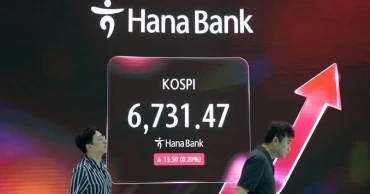
Asian stocks mixed after Wall Street slips following Fed rate hike
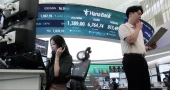
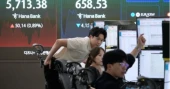
Asian markets were mixed Thursday after Wall Street ended lower following the US Federal Reserve's decision to raise interest rates for the first time in three years.
US stock futures were higher in early trading.
The Fed raised its key interest rate by a quarter percentage point to a target range of 3.75%-4.00% as it seeks to bring US inflation, which has remained above its target, under control.
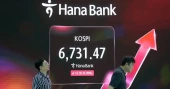
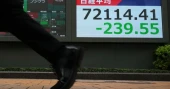
Japan's Nikkei 225 rose 0.2% to 64,067.53, while South Korea's Kospi gained 0.9% to 6,778.49. Hong Kong's Hang Seng Index fell 0.7% to 24,533.46, and the Shanghai Composite declined 0.4% to 3,877.46.
Australia's S&P/ASX 200 advanced 0.3% to 8,718.20.
Taiwan's Taiex climbed 1.3%, while India's Sensex edged up 0.3%.
On Wednesday, the S&P 500 fell 0.5%, while the Dow Jones Industrial Average dropped 1.2%. The technology-heavy Nasdaq Composite was little changed.
The market reaction was largely in line with expectations because the Fed's rate increase had been widely anticipated, said Lorraine Tan, director of equity research for Asia at Morningstar.
However, she said the ongoing war in Iran could continue to put pressure on inflation.
After the Fed's announcement, the yield on the two-year US Treasury note rose to 4.72%, compared with about 4.67% late Tuesday. The yield on the 10-year Treasury remained elevated at around 5.00%.
US government bond yields have stayed higher since the war began, as an energy shock linked to the conflict has increased inflationary pressure. Investors are also concerned about rising US government debt.
The US dollar weakened early Thursday to 156.04 Japanese yen from 156.26 yen. The euro rose slightly to $1.1467 from $1.1465.
Oil prices edged higher as oil flows through the Strait of Hormuz remained limited. The narrow waterway is a key route for global oil shipments.
Oil supply pressures have also increased after Saudi Arabia shut down a major oil pipeline while repairs are carried out.
Brent crude, the international benchmark, was up 0.1% at $105.89 early Thursday.
2 days ago
Asian stocks mostly rise ahead of Fed rate decision
Asian stocks were mostly higher Wednesday despite declines on Wall Street, as investors awaited the US Federal Reserve's decision on interest rates, with expectations high that it will raise rates.
US stock futures also edged higher. Markets widely expect the Fed to raise interest rates Wednesday for the first time in three years as US inflation remains elevated and above the central bank's target.
Japan's Nikkei 225 rose 0.7% to 63,923.00, despite official data showing the country recorded its fourth straight monthly trade deficit in August.
South Korea's Kospi gained 1.4% to 6,717.97, while Hong Kong's Hang Seng edged up 0.2% to 24,715.18. The Shanghai Composite Index advanced 0.7% to 3,891.60.
AI-related stocks remained volatile after US technology leaders called for slower development of artificial intelligence to improve safety.
SoftBank Group, a major investor in OpenAI, fell 1.5% after gaining 7.5% the previous day. Tokyo Electron, which makes chip manufacturing equipment, rose 2.1%, while Japanese memory chipmaker Kioxia Holdings declined 1.9%.
South Korea's SK Hynix gained 4.1%, while Samsung Electronics rose 2%.
Taiwan's Taiex advanced 0.7%, while TSMC, Taiwan's leading AI chipmaker, slipped 0.2%.
Australia's S&P/ASX 200 rose 0.3% to 8,696.50, while India's Sensex gained 0.5%.
Oil prices declined early Wednesday after rising the previous day, as tensions between the US and Iran continued and the closure of a key Saudi oil pipeline added to concerns over global supplies.
Brent crude, the international benchmark, fell 0.9% to $107.76 a barrel, although it remained well above the roughly $72 level recorded before the war began in late February.
US benchmark crude dropped 1.5% to $104.24 a barrel.
On Tuesday, Wall Street's S&P 500 fell 0.5%, while the Dow Jones Industrial Average declined 0.6%. The technology-heavy Nasdaq Composite lost 0.8%.
US AI stocks showed signs of stabilizing. Nvidia gained 0.6%, while Advanced Micro Devices rose 2.2%.
Rising US Treasury yields have also weighed on stocks. Bond yields have increased as the energy crisis caused by the Iran war has added to inflationary pressure, while the US national debt has continued to grow.
The yield on the 10-year Treasury note was close to 5% early Wednesday after briefly reaching 5.04% this week, its highest level in years.
In currency trading, the US dollar fell to 154.93 Japanese yen from 155.10 yen. The euro rose to $1.1554 from $1.1544.
3 days ago
Asian markets trade mixed after Wall Street rally led by tech stocks
Asian markets were mixed Friday after a rally in US technology stocks lifted Wall Street a day earlier.
Japan’s Nikkei 225 rose 1.3% to close at 65,020.94, while South Korea’s Kospi gained 1.7% to 6,690.72. Hong Kong’s Hang Seng jumped 1.8% to 25,658.73.
Australia’s S&P/ASX 200, however, fell 0.2% to 9,005.90, while the Shanghai Composite dropped 0.5% to 3,921.40.
On Wall Street, stocks finished higher Thursday as a recent rise in bond yields eased and major technology companies posted gains. The S&P 500 climbed 1.1%, the Dow Jones Industrial Average rose 1.2% and the Nasdaq composite advanced 1.4%.
Technology and communication services companies led much of the rally. Microsoft gained 2.7%, Apple rose 1% and Meta jumped 3%. Nvidia, the leading maker of advanced chips used in artificial intelligence systems, added 1.8% after announcing a $13 billion deal to acquire AI platform Hugging Face.
In energy markets, US benchmark crude rose 21 cents to $91.51 a barrel, while Brent crude slipped 2 cents to $95.50.
Energy prices have risen sharply amid the six-month US war with Iran, which has intensified in recent days. The Strait of Hormuz is particularly important because many countries rely on the route to bring Middle Eastern oil to global markets.
Iran fired on Kuwait on Thursday in retaliation for US airstrikes earlier in the week.
The yield on the 10-year US Treasury note, which affects mortgage and other borrowing costs, eased to 4.77% from 4.79% late Wednesday. The yield has climbed steadily this year after starting 2026 at around 4.20%.
Investors are also assessing the Federal Reserve’s next interest-rate decision. Recent comments by Fed Governor Christopher Waller have raised expectations that the central bank may keep its benchmark rate unchanged at its meeting in two weeks if upcoming data shows inflation is slowing.
Waller said he would be inclined to leave rates unchanged if inflation cools but could support a rate hike if the figures show prices are rising faster than expected.
Markets are also watching the Bank of Japan, which is due to meet later this month. Some analysts expect the central bank to raise its benchmark rate, although the size of any increase remains uncertain. A higher rate could also help support the Japanese yen.
In currency trading, the US dollar rose slightly to 156.18 yen from 155.84 yen. The euro was trading at $1.1632, little changed from $1.1631.
15 days ago
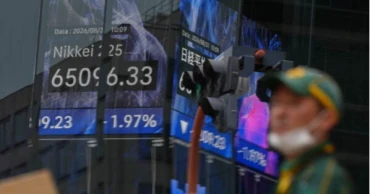
Asian stocks fall as global bond sell-off deepens
Asian stock markets fell sharply on Wednesday, following losses on Wall Street and a growing global sell-off in government bonds. U.S. futures also moved lower.
Japan's Nikkei 225 dropped 3% to 64,278.95, while shares of SoftBank Group fell 6.3%.
South Korea's Kospi lost 3.6%, with Samsung Electronics down 3.3% and memory chipmaker SK Hynix falling 3.5%.
Hong Kong's Hang Seng Index slipped 0.8%, while China's Shanghai Composite fell 0.9%. Australia's S&P/ASX 200 dropped 1.1%, and Taiwan's Taiex lost 1.5%.
The decline followed a weak session on Wall Street on Tuesday. The S&P 500 fell 0.7%, the Dow Jones Industrial Average dropped 0.8%, and the Nasdaq composite lost 1%.
Major technology companies were among the biggest losers, with Nvidia falling 1.5%, Amazon down 1.9% and Advanced Micro Devices, or AMD, dropping 2.4%.
Meanwhile, oil prices continued to rise after the United States launched another round of military strikes on Iran, which responded by firing missiles and drones across the region.
The conflict between the two countries has now entered its sixth month, increasing concerns over global energy supplies. The Strait of Hormuz, a key route for global oil shipments, remains largely closed.
Brent crude, the international benchmark, rose 1% to $95.56 a barrel. U.S. benchmark crude gained 0.7% to $90.88 a barrel.
The global bond sell-off also intensified as concerns grew over persistent inflation and rising government debt, particularly in the United States.
Bond yields rise when bond prices fall. Investors are demanding higher returns as they become more concerned about inflation, government borrowing and other risks.
The yield on the benchmark 10-year U.S. Treasury rose to around 4.80%, up from 4.75% on Monday. It had been as low as 4.20% in January.
The yield on the two-year Treasury, which is more closely linked to expectations for U.S. interest rates, climbed to about 4.40% from 4.34%.
In Japan, the yield on the 10-year government bond rose to around 3.02%, its highest level since 1996.
In currency trading, the U.S. dollar edged up to 160.27 Japanese yen from 160.17 yen. The euro slipped to $1.1578 from $1.1593.
17 days ago
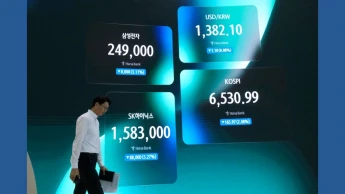
Asian Shares Mixed as US Steps Up Pressure on Iran
Asian stock markets were mixed Tuesday, while oil prices remained largely steady as investors watched for major economic developments later this week.
Regional markets moved within a narrow range, while US stock futures were little changed.
Oil prices were also broadly stable after US Treasury Secretary Scott Bessent announced new sanctions against Iran and warned that countries continuing to do business with Tehran could face penalties.
Japan's Nikkei 225 rose 0.4% to 65,811.19, while South Korea's Kospi fell 0.4% to 6,675.88.
Hong Kong's Hang Seng dropped 0.3% to 25,453.19 and the Shanghai Composite edged down 0.1% to 3,878.38. Australia's S&P/ASX 200 gained 0.6% to 9,158.70.
Taiwan's Taiex slipped less than 0.1%, while India's Sensex declined 0.3%.
Wall Street mixed
US stocks ended mixed Monday as some pressure in the bond market eased.
The S&P 500 fell 0.3%, moving further away from the record high it reached earlier this month. The Dow Jones Industrial Average gained 0.3%, while the Nasdaq composite lost 0.8%.
Technology stocks led the decline as investors remained concerned that the sharp rise in AI-related shares may have pushed valuations too high. There are also concerns that demand for AI chips could weaken if the technology fails to generate enough profits.
Nvidia, one of the biggest winners of the AI boom, will release its quarterly earnings report Wednesday. The results could influence the next major move in AI-related stocks.
Nvidia shares fell 2.9% Monday, making the chipmaker the biggest drag on the S&P 500. Micron Technology dropped 5.8% and Broadcom declined 2.6%.
Bond market in focus
The yield on the 10-year US Treasury note fell to 4.71% from 4.74% late Friday.
The decline came after the US Treasury Department announced plans to increase the size of its Treasury buybacks, a move that helped ease some pressure on longer-term borrowing costs.
However, analysts said the buybacks are relatively small and are unlikely to solve broader concerns over high US government debt and elevated oil prices.
Higher Treasury yields can increase borrowing costs across the economy, including mortgage rates, putting additional pressure on the housing market.
“The latest discussion about using Treasury General Account cash to help finance purchases of longer-dated bonds gave the market something to chew on Monday,” said Stephen Innes of SPI Asset Management.
“But there is a difference between forcing the bond market to blink for an afternoon and solving the underlying problem,” he said.
Fed chief's speech awaited
Federal Reserve Chairman Kevin Warsh is scheduled to speak Friday at the annual economic symposium in Jackson Hole, Wyoming.
Investors will closely watch his comments for clues about inflation and the Federal Reserve's approach to monetary policy.
Oil prices remain a major concern for markets because higher energy costs can push inflation higher.
Brent crude, the international benchmark, has remained above the $72-a-barrel level recorded before the war with Iran began in late February.
Early Tuesday, Brent crude was almost unchanged at $90.51 a barrel, while US benchmark crude rose less than 0.1% to $85.10 a barrel.
Brent prices moved between $72 and $102 a barrel last month as hopes of a US-Iran deal rose and fell. Such an agreement could allow oil tankers to move freely out of the Persian Gulf.
The latest US sanctions announced Monday also pushed Iran's currency, the rial, to a record low against the US dollar.
25 days ago
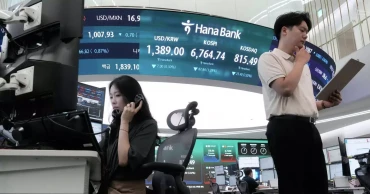
Asian shares mostly fall as bond market pressure intensifies
Asian shares mostly declined and oil prices slipped Monday as investors remained cautious ahead of a key gathering of top US economic officials at Jackson Hole later this week.
US stock futures also edged lower.
Japan’s Nikkei 225 fell 0.5% to 65,678.45, while South Korea’s Kospi dropped 3.5% to 6,664.36. Hong Kong’s Hang Seng Index declined 2.1% to 25,465.23 and the Shanghai Composite lost 0.7% to 3,877.30.
Australia’s S&P/ASX 200 bucked the regional trend, rising 0.5% to 9,107.40. Taiwan’s Taiex fell 0.5%.
Markets are awaiting the US inflation report for July, due Wednesday. The personal consumption expenditures (PCE) price index is the Federal Reserve’s preferred inflation gauge and, like the consumer price index, has indicated that inflation remains above 3%.
The Fed has struggled to bring inflation back to its 2% target. Inflation had moved closer to the goal in early 2025 before rising again following the introduction of broad US tariffs. It increased further in early 2026 after the Iran war disrupted oil shipments through the Strait of Hormuz.
Bond markets have also remained under pressure. Last week, rising Treasury yields prompted an unusual intervention by the US Treasury Department and raised concerns that higher borrowing costs could weaken consumer spending.
Treasury Secretary Scott Bessent announced that the government would double its purchases of longer-term bonds in an effort to reduce yields and mortgage costs. However, the 10-year Treasury yield climbed back to 4.73% Friday, its highest level in more than a year, and stood at 4.71% early Monday.
The 30-year Treasury yield also rose and remained close to its highest level since 2007.
Higher bond yields can weigh on economic activity and reduce the value of various investments.
Investors will closely watch Federal Reserve Gov. Kevin Warsh’s speech at the annual Jackson Hole gathering later this week for clues about interest rates and other policies.
On Friday, the S&P 500 gained 0.4%, marking only its second rise in six sessions after reaching a record high last week. The Dow Jones Industrial Average advanced 1%, while the Nasdaq composite rose 0.4%.
Strong corporate earnings have helped support US stocks, with most companies reporting better-than-expected spring profits.
Uncertainty over when oil tankers will again be able to move freely out of the Persian Gulf has also unsettled markets, pushing oil prices higher and raising inflation concerns.
The situation remained uncertain Monday after Iran’s new top security official warned that Tehran would regard support for fresh US economic measures against Iran as an “act of war.” Iran’s president, meanwhile, defended a memorandum of understanding with the United States as the best way to resolve the stalled conflict.
Brent crude fell 1.4% to $93.10 a barrel early Monday, while US benchmark crude dropped 1.6% to $85.63.
Bitcoin, which often benefits from lower interest rates and increased liquidity, was trading near $77,000 early Monday, according to CoinDesk.
In currency trading, the US dollar bought 158.89 Japanese yen, down from 158.94 yen late Friday. The euro was unchanged at $1.1678.
26 days ago
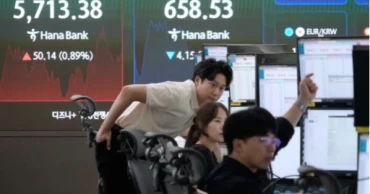
Oil prices fall, Asian shares mostly lower as chip stocks retreat
Oil prices fell and most Asian stocks traded lower Thursday as investors sold shares of major chipmakers, while South Korea’s benchmark Kospi extended its sharp losses.
Oil markets remained volatile after the United States said it had carried out a “heavy wave” of strikes against Iran in response to an attack on a US military base.
US stock futures edged higher after Wall Street ended lower on Wednesday.
In South Korea, the Kospi has come under heavy pressure following a sharp rally driven by the global artificial intelligence boom. Some analysts say the recent sell-off reflects growing concerns about the huge amounts technology companies are spending to expand AI-related capacity.
The Kospi was down 1.3% at 5,587.82 on Thursday after plunging 10.8% Tuesday and nearly 6% Wednesday. It has fallen more than 35% from its record high of above 9,000 reached in June, although it remains about 30% higher so far this year.
Samsung Electronics rose 2.4% after the technology giant reported record operating profit for the latest quarter, broadly matching market expectations.
Chipmaker SK Hynix fell 4% after dropping more than 9% Wednesday. The company reported a record quarterly operating profit that nearly increased sixfold, but the result fell short of analysts’ expectations, prompting investors to sell its shares.
Japan’s Nikkei 225 gained 0.6% to 61,778.02. SoftBank Group, which has invested in OpenAI, dropped 2.7%, while Tokyo Electron, a maker of chip production equipment, climbed 4.4%. Memory chipmaker Kioxia Holdings gained 7.5%.
Taiwan’s Taiex, another major beneficiary of the AI boom, advanced 0.8%, while leading chipmaker TSMC rose 1.8%.
Hong Kong’s Hang Seng index slipped less than 0.1% to 25,779.70, while the Shanghai Composite fell 1.2% to 3,784.55.
Australia’s S&P/ASX 200 declined 0.9% to 8,959.90, while India’s Sensex edged up less than 0.1%.
Oil prices remain volatileOil prices fell Thursday despite renewed exchanges of attacks between the US and Iran.
US President Donald Trump said Washington would hit Iran “very hard” after Iranian forces attacked a US base in Jordan.
Shipping through the Strait of Hormuz, a key route for global oil supplies, remains limited, raising concerns about disruptions to international energy markets.
Brent crude, the international benchmark, fell 1% to $87.18 a barrel after rising sharply the previous day. It was trading at around $72 a barrel in late February, before the war began.
US benchmark crude fell 0.9% to $83.74 a barrel.
US stocks end lowerOn Wall Street, the S&P 500 dropped 1.5% to 7,316.15 on Wednesday. The Dow Jones Industrial Average fell 2.2% to 51,594.14, while the tech-heavy Nasdaq composite declined 1.7% to 24,442.94.
Major chipmakers also suffered losses. Nvidia fell 3.6%, Advanced Micro Devices dropped 5.5% and Broadcom declined 2.8%.
US stocks were also pressured after the Federal Reserve kept interest rates unchanged, although some members of its policy committee had favored raising rates.
Fed Chairman Kevin Warsh reaffirmed his commitment to bringing inflation back to the 2% target. At the same time, he maintained his approach of providing financial markets with limited guidance about the central bank’s next interest-rate moves.
With fewer signals from the Fed, investors could face more volatile trading as uncertainty over the direction of interest rates continues.
“Did the Fed take an explicit change in its policy rate today?” Warsh asked at a news conference after the decision. “No, but I think that's the beginning of the story.”
In the bond market, the yield on the 10-year US Treasury note rose to 4.70% from 4.61% late Tuesday.
In early Thursday trading, the US dollar rose to 163.49 Japanese yen from 163.41 yen. The euro fell to $1.1454 from $1.1467.
1 month ago

Asian markets mostly rise, South Korea's Kospi tumbles nearly 5% amid AI stock selloff
Most Asian stock markets ended higher on Monday, but South Korea's benchmark Kospi index plunged nearly 5% as investors sold off artificial intelligence (AI)-related stocks.
Japanese markets remained closed for a public holiday, while US stock futures showed mixed trends.
Oil prices continued to rise, gaining more than 2%, as tensions between the United States and Iran intensified, raising fears of supply disruptions. Brent crude climbed 2.6% to $90.40 a barrel, while US benchmark crude rose 2.2% to $83.58 a barrel.
The latest gains came after the US carried out attacks for a ninth consecutive night, with Iran continuing retaliatory strikes against US allies across the Middle East.
Analysts at ING said the ongoing exchange of attacks could lead to wider conflict across the Persian Gulf if the situation continues to escalate. They also noted that tanker traffic through the Strait of Hormuz, a key route for global oil shipments, has slowed sharply, adding pressure to oil supplies.
In stock markets, South Korea's Kospi fell 4.9% to 6,490.97, dragged down by losses in major technology shares. Samsung Electronics dropped 4.4%, while memory chipmaker SK Hynix declined 3.3%.
Taiwan's Taiex index slipped less than 0.1%. However, Taiwan Semiconductor Manufacturing Co. (TSMC), the island's largest chipmaker, rose 2% after tumbling 7.3% on Friday. Investors had reacted negatively to the company's announcement that it would invest an additional $100 billion to expand chip production in the United States.
Elsewhere in the region, Hong Kong's Hang Seng Index advanced 2.1% to 25,105.78, the Shanghai Composite Index gained 1.2% to 3,808.39, and Australia's S&P/ASX 200 edged up 0.2% to 8,815.30. India's Sensex, however, fell 0.9%.
AI-related technology shares remained under pressure after heavy losses on Friday, reflecting growing concerns that the sector may be overvalued following months of strong gains. Many investors chose to book profits by selling their holdings.
Market sentiment was also affected by the launch of a new open-source AI model, Kimi K3, developed by Beijing-based Moonshot AI. The release drew comparisons with the "DeepSeek moment" in early 2025, when a Chinese AI model unsettled global markets by demonstrating that lower-cost Chinese AI systems could compete with leading products from companies such as Anthropic and OpenAI.
On Wall Street on Friday, the S&P 500 fell 1% to 7,457.69, the Dow Jones Industrial Average lost 0.8% to 52,146.42, and the Nasdaq Composite dropped 1.4% to 25,520.24.
Chipmakers also posted losses, with Nvidia falling 2.2%, while Broadcom and Advanced Micro Devices (AMD) each declined about 1%.
SpaceX shares dropped 5.4%, falling below their initial public offering price of $135 and hitting their lowest level since the company's Nasdaq debut last month.
In currency trading, the US dollar slipped to 162.37 Japanese yen from 162.43 yen, while the euro rose slightly to $1.1446 from $1.1438.
1 month ago
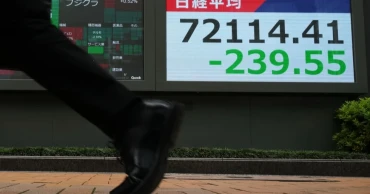
Asian shares mixed as Iran war uncertainty weighs on market sentiment
Asian stock markets traded mixed on Tuesday as investor caution returned amid uncertainty over efforts to end the war in Iran, cooling recent strong gains across the region.
Japan’s benchmark Nikkei 225 fell 0.9% in early trading to 71,681.29, while analysts said the market was taking a breather after a strong rally.
“We’ve had eight days of strong markets. The market was up about 12.5%, and now it has cooled off a little bit,” said Neil Newman, managing director and head of strategy at Astris Advisory Japan.
Australia’s S&P/ASX 200 edged up less than 0.1% to 8,822.10, while South Korea’s Kospi dropped sharply by 2.8% to 8,863.52. Hong Kong’s Hang Seng slipped 0.4% to 23,678.22, and China’s Shanghai Composite gained 0.2% to 4,170.58.
On Wall Street, U.S. stocks closed mixed on Monday as oil prices eased and major technology shares fell. The S&P 500 declined 0.4%, pulling 1.8% below its recent record high after a strong run of gains in recent weeks.
The Dow Jones Industrial Average rose 148 points, or 0.3%, while the Nasdaq Composite dropped 1.3%, dragged down by weakness in major tech stocks.
Oil prices eased after weekend discussions between the United States and Iran over the ongoing conflict. U.S. Vice President JD Vance said the talks had created a “good foundation for a successful final deal.”
Any resolution to the conflict could reopen the Strait of Hormuz, a critical route for global oil shipments. Iran had claimed it closed the strait, but U.S. Central Command disputed the claim.
In early trading Tuesday, U.S. crude oil rose 35 cents to $74.21 per barrel, while Brent crude added 23 cents to $78.13.
Bond yields also moved higher, with the 10-year U.S. Treasury yield rising to 4.50% from 4.46%, as markets speculated that the Federal Reserve could raise interest rates to contain inflation driven by higher energy costs.
Economists expect upcoming U.S. inflation data to show consumer prices rising to 4.1% in May, up from 3.8% in April.
In corporate trading, shares linked to SpaceX fell 16.4% to $154.60, marking a third straight decline after a recent surge following its stock market debut.
Major tech stocks also weighed on the S&P 500, including Alphabet, Amazon and Broadcom, which each dropped between 4% and 5%.
Overall, the S&P 500 lost 27.79 points to close at 7,472.79. The Dow gained 148.01 points to 51,712.71, while the Nasdaq fell 351.33 points to 26,166.60.
In currency markets, the U.S. dollar edged slightly higher to 161.60 Japanese yen, while the euro traded at $1.1427.
2 months ago

Under new leadership, can the stock market finally shed its 'casino' image?
Bangladesh's capital market has recently shown its strongest performance since the political storm of August 2024, with daily turnover crossing Tk 1,000 crore for nine consecutive trading days, marking the highest sustained level in nearly two years.
The hint of a recovery comes as market stakeholders express cautious optimism that the bourse may finally be able to shake off its long-standing "casino" tag - a term Finance Minister Amir Khosru Mahmud Chowdhury himself used at a pre-budget event in April, acknowledging that good companies avoid the market because they perceive it as a casino where no credible business would want to be listed.
The market's troubled history dates back to the 2010 share market scam, which wiped out the savings of lakhs of investors. Though the market should ideally rank second only to banks in the finance sector, it instead became synonymous with manipulation and investor despair, dominated by a small group of market manipulators.
When the Awami League government fell following the student-mass uprising in 2024, sweeping changes followed in nearly every sector, but the capital market saw little positive impact initially. Khondoker Rashed Maqsood was appointed chairman of the Bangladesh Securities and Exchange Commission (BSEC) in August 2024, but he failed to win back investor confidence during his tenure.
The Shibli legacy
Much of the market's troubles can be traced back to the tenure of Professor Shibli Rubayat Ul Islam, a Dhaka University academic appointed BSEC chairman by the Awami League government in May 2020. Combined with rampant loan defaults in the banking sector, manipulation across every segment of the capital market under Shibli's leadership pushed the economy into what observers describe as a dark chapter.
After the Awami League government's fall, a string of irregularities under Shibli came to light. He is currently in jail in connection with an Anti-Corruption Commission (ACC) case involving bribes amounting to nearly Tk 4 crore.
Dhaka Stock Exchange (DSE) director Minhaz Mannan Emon, who had spoken out against Shibli's irregularities, even faced a lawsuit over his remarks.
Describing that period, Minhaz said it was a genuinely dark time for Bangladesh's capital market, when no credible investors came forward and no good companies agreed to get listed.
He said only companies from which the Shibli commission could personally benefit were listed over those four years.
According to Minhaz, after taking charge in 2020 the commission listed shell companies through IPOs without due diligence, raising hundreds of crores of taka from the market - the fallout of which became visible from 2023 onward, discouraging fresh listings and eroding investor confidence altogether.
Investor confidence had begun to return after the change in government, evidenced by DSE turnover crossing Tk 2,000 crore on August 11, 2024, alongside rising share prices. However, this rally proved short-lived.
General investors say they had expected the interim government to appoint someone who genuinely understood market dynamics. Instead, they allege the Maqsood commission effectively halted the rally and focused on reform measures that further dampened sentiment.
Tarek Hossain, a general investor, acknowledged that the market had indeed been riddled with corruption, with several low-quality companies involved in insider trading and manipulation.
However, he argued the commission should have been mindful that lakhs of small investors had their money locked into the market, and abrupt decisions risked wiping out their capital.
Another investor, Adiba Akter, said that following the change of government, several companies were fined, directly affecting the market. Investors holding Beximco shares found themselves in particular difficulty, while several companies shut down altogether.
She said the commission should have pursued reforms through a structured process rather than daily ad-hoc decisions that kept dragging the market down.
From September 2024, market conditions kept steadily deteriorating under the Maqsood commission. Turnover, which had touched over Tk 2,000 crore two months earlier, fell to around Tk 300 crore in the first week of October. On October 3, a section of investors staged protests in front of the BSEC office in Agargaon demanding the commission's resignation, at one point locking the main gate of the commission's office.
Mizanur Rashid, president of the Bangladesh Capital Market Investors' Unity Council, who led the protests, said good companies had collapsed in the market while large investors withdrew funds out of disillusionment.
He noted that daily turnover that once exceeded Tk 300 crore within the first few hours fell to around Tk 300 crore for the entire day, sometimes even less, leaving protest as the only option.
Mizan added that the period under the Maqsood commission was nothing short of nightmarish for investors who had taken margin loans to invest, many of whom lost their principal and were left in debt instead of returns, driving them to take to the streets out of desperation.
Despite repeated demands for its resignation, the Maqsood commission remained in place beyond the interim government's tenure and survived roughly three months even after the national election.
In May, the BNP government, aiming to overhaul the capital market, appointed a new BSEC chairman along with three new commissioners.
New leadership, new momentum
On June 4, corporate figure Masud Khan was appointed BSEC chairman, with Nahid Mahtab, Tanvir Habib Rahman and Nafeez Al Tarik appointed as commissioners. Since the new commission took charge, the market has shown clear signs of recovery; notably, turnover exceeded Tk 1,000 crore on all nine trading days between June 2 and June 14.
According to investors, floor prices imposed on shares of Islami Bank PLC and Beximco Limited had been weighing on the broader market. One of the new chairman's first decisions was to lift these floor prices, with an assurance that no floor price would be imposed on any company's shares going forward, allowing the market to function on its own dynamics.
Masud Khan said the commission will grant stock exchanges full independence in market monitoring and oversight of listed companies to ensure transparency and accountability, with their powers to be expanded further if needed, as long as exchange decisions do not harm investor interests.
Budget roadmap raises hopes
Another major positive signal for the market came through the proposed national budget for FY2026-27, where the finance minister outlined a separate roadmap for the capital market, detailing the government's vision and upcoming measures.
In his budget speech, the finance minister said unnecessary complexities, delays, excessive cost-approval hurdles and ambiguities will be reduced to encourage good and promising companies to get listed, aiming to make the market more transparent, diversified and confidence-driven.
He also said the IPO process will be made time-bound and technology-driven, with the entire process moved online, and information exchange among issuers, issue managers, stock exchanges, the Central Depository Bangladesh Limited (CDBL) and the regulator integrated through a unified digital platform.
The minister expressed hope that repatriation and reinvestment of legitimate foreign investment profits, as well as proceeds from share or securities sales through Non-Resident Investor Taka Accounts, will be completed within a single working day going forward.
Market stakeholders view the appointment of the new chairman alongside the budget's emphasis on the capital market as positive developments. Brokerage officials believe the government's clear policy commitment to developing the market into an effective platform for long-term capital raising will have a positive impact.
DSE Brokers Association of Bangladesh (DBA) president Saiful Islam said the capital market has long failed to play its expected role due to a crisis of confidence, limited investment products and overreliance on bank financing.
He said if the policy commitments made in this budget to establish the capital market as a key driver of the economy are implemented, it will boost both domestic and foreign investment, create opportunities for new entrepreneurs to raise capital, and accelerate employment and industrialisation.
Market analysts also stressed the importance of building on reforms already introduced during the interim government's tenure in mutual funds, IPO and margin loan policies. They expect that if good companies can be brought to the market, the bourse will finally shed its image as a casino or a haven for insider trading.
Investment Corporation of Bangladesh (ICB) chairman Abu Ahmed said the capital market had deliberately been kept underdeveloped for years, despite having the potential to bring about major change in the country's economy, an opportunity no government has effectively utilised so far.
Expressing hope that the entry of a single good company could transform the market's character and bring back investors who had permanently exited, Abu Ahmed said multinational companies listed in the capital markets of India, Pakistan and Sri Lanka remain absent from Bangladesh's market, and the reasons behind this reluctance need to be identified and addressed.
He also proposed bringing major infrastructure assets under securitisation to further enrich the market.
Investors, meanwhile, hope that the new government's effective measures will help restore the respect long denied to those who invested in the capital market, who had often been dismissed as mere speculators.
3 months ago