Trump administration

Trump administration faces ammunition strain, weak public support for Iran war
US President Donald Trump said Thursday that while overall US ammunition stockpiles remain sufficient, supplies of some types are under increasing strain.
Speaking at the White House Oval Office, Trump said the United States has a “virtually unlimited supply” of some munitions, while others are “a little bit tighter,” without providing details.
His remarks came two days after reports said the US military had used nearly 80 percent of interceptors for a key missile defense system during the war with Iran, with commanders warning that ammunition stocks were “dangerously low.”
The Atlantic, citing current and former defense officials, reported that supplies of long-range weapons and advanced interceptors, including Patriot and THAAD missiles, had fallen to as low as 20 percent of desired levels.
Five months into the war, US public support for the prolonged conflict has weakened. A media poll found Americans who expect greater instability in the Middle East outnumber those expecting more stability by three to one.
A Marquette University Law School poll found inflation and cost of living were the top public concerns, followed by the economy and then the Iran conflict. Since January, 56 percent have cited inflation and living costs as a primary or secondary concern.
Labor Department data showed inflation rose to 3.3 percent in March, 4.2 percent in May and 3.5 percent in June, above the Federal Reserve’s 2 percent target.
Meanwhile, uncertainty over the Strait of Hormuz continues to threaten energy security. US crude imports from Saudi Arabia fell to zero in July, the first full month without such imports since 1985.
Trump said Thursday that no deal had been finalized to reopen the waterway, but negotiations with Iran were continuing and an agreement could be reached soon.
Saudi-based media, citing senior sources, reported that Iran and Oman had reached an understanding on reopening the Strait for 60 days, pending approval by Iran’s Supreme National Security Council.
1 month ago

Trump administration says clean energy grants were canceled based on states' political affiliation
The Trump administration has acknowledged in court filings that it canceled $7.6 billion in funding for hundreds of clean energy projects based on the political affiliation of the states receiving the grants.
According to the court documents, the grants were canceled because the projects were located in 16 states that voted for Democrat Kamala Harris in the 2024 presidential election.
The admission differs from previous statements by Energy Secretary Chris Wright and other administration officials, who had said the projects were dropped because they did not meet the country's energy priorities or represented poor use of taxpayer money.
Democratic lawmakers and environmental groups criticized the disclosure, accusing the administration of using federal funding for political purposes.
Representative Marcy Kaptur of Ohio and Senator Patty Murray of Washington said the court filing confirmed what they had long suspected—that nearly 300 energy projects were canceled simply because they were located in states that did not support President Donald Trump in the 2024 election.
They called the move an abuse of power and urged congressional Republicans to hold the administration accountable.
Last October, the Department of Energy announced that it had canceled 321 funding awards covering 223 projects, saying they failed to meet national energy needs or were not economically viable.
The canceled projects included efforts to build battery manufacturing plants, develop hydrogen technology, modernize the electric grid and expand carbon capture systems.
White House budget director Russell Vought defended the cuts at the time, saying funding intended to support what he described as the political left's climate agenda was being eliminated.
The affected projects were located in California, Colorado, Connecticut, Delaware, Hawaii, Illinois, Maryland, Massachusetts, Minnesota, New Hampshire, New Jersey, New Mexico, New York, Oregon, Vermont and Washington—all states that supported Harris in the 2024 election.
The funding cuts were challenged in court, while more than two dozen Democratic members of Congress requested a formal investigation by the Department of Energy's inspector general. The department's internal watchdog launched an inquiry in December.
Earlier court filings had already indicated that grant selections were influenced by whether recipients were based in Democratic-leaning, or "blue," states.
In the latest case, federal government lawyers also acknowledged using keywords related to diversity, gender, COVID-19 and vaccine hesitancy when reviewing projects to determine whether they conflicted with the administration's policy priorities.
Environmental groups said the court filing showed the administration had prioritized politics over energy infrastructure.
Holly Bender, chief program officer at the Sierra Club, said canceling the projects could lead to job losses, higher energy costs and increased pollution, while shifting billions of dollars toward fossil fuel projects instead of clean energy initiatives.
1 month ago

US deports thousands of Cubans, Venezuelans to risky conditions in Mexico: HRW
The United States has deported nearly 13,000 Cubans, Venezuelans and other migrants to Mexico, where many face serious risks including cartel violence and lack of basic support, according to a new report by Human Rights Watch released Wednesday.
Although Mexico has accepted such deportations before, the report says those sent under the Trump administration are often older and had lived in the US for many years. This makes it harder for them to find jobs and increases their need for medical care.
The findings are based on more than 50 interviews conducted in the southern Mexican cities of Tapachula and Villahermosa. The report comes as US authorities have expanded immigration enforcement as part of a wider mass deportation drive.
As a result, people who were not previously targeted — including Cubans who had lived in the US for decades — are now being deported. Since countries like Cuba and Venezuela often refuse or limit return flights, many migrants are instead sent to Mexico under special arrangements.
A Human Rights Watch researcher described the situation as extremely difficult, especially for older people who are suddenly removed from their lives and left in an unfamiliar and sometimes dangerous environment without proper support.
Cubans make up the largest group among those deported, with more than 4,300 sent to Mexico. Many had lived in the US since the 1980s or 1990s, often holding green cards before losing their legal status.
The report says over half had some form of criminal record, but only a small portion were linked to violent crimes, while about a quarter had no criminal history at all.
Most were detained during routine immigration check-ins, while others were picked up at workplaces or public places. None were given a chance to appear before a judge to challenge their deportation to Mexico, even when they expressed safety concerns.
Once in Mexico, many are sent to southern areas with limited job opportunities, poor access to healthcare and high levels of crime. The process to seek refugee status is also complicated, leaving many stuck without clear legal status.
Aid workers say shelters are now seeing older deportees, including people in their 80s — a shift from the younger migrants usually arriving.
Human Rights Watch has urged both the US and Mexico to make their deportation agreements public and ensure proper legal procedures are followed. It also called on Mexico to provide healthcare and legal pathways for those unable to return home, and on the US to halt such deportations until safeguards are in place.
3 months ago

Hillary Clinton alleges Epstein files cover-up by Trump administration
Former US secretary of state Hillary Clinton has accused the administration of President Donald Trump of deliberately delaying the release of files linked to disgraced financier Jeffrey Epstein, alleging a “cover-up” in their handling.
Speaking to the BBC in Berlin on the sidelines of the annual World Forum, Clinton said the documents should be made fully public without delay. “Get the files out. They are slow-walking it,” she said, arguing that transparency is essential and that everyone should be treated equally.
The White House rejected the accusation, saying the administration has released thousands of pages of material and has done “more for the victims than Democrats ever have,” while also cooperating with congressional requests.
Asked whether Andrew Mountbatten-Windsor should testify before a US congressional committee, Clinton said anyone asked to testify should do so. She stressed that appearing in the files does not imply wrongdoing, noting that Andrew has consistently denied any misconduct.
Millions of documents related to Epstein were made public earlier this month after Congress passed legislation requiring the US Department of Justice to release investigation materials. While the Justice Department says it has met the legal requirements of the Epstein Files Transparency Act, several lawmakers argue the disclosures remain incomplete and have called for the release of internal decision-making memos.
Epstein died in a New York jail in August 2019 while awaiting trial on sex trafficking charges, more than a decade after a previous conviction involving a minor. His death came as scrutiny over his network of powerful associates intensified.
Prince Andrew has faced renewed pressure from US officials and from the family of his accuser, Virginia Giuffre, to testify about his links to Epstein. He has denied wrongdoing and settled a civil case in 2022 without admitting liability. Giuffre died in 2025.
Both Clintons are due to testify before the House Oversight Committee later this month, with Bill Clinton scheduled to appear a day after Hillary Clinton. A planned contempt vote against the couple was dropped after they agreed to testify, marking the first time since 1983 that a former US president will appear before a congressional panel.
Bill Clinton, who is mentioned multiple times in the Epstein files, has said he cut off contact with Epstein years ago. Neither of the Clintons has been accused of wrongdoing by Epstein’s victims, and both have denied knowing about his criminal activities at the time.
Hillary Clinton said she and her husband have called for the hearings to be held publicly. “We have nothing to hide,” she said, adding that she believes the focus on the Clintons is being used to divert attention from Trump, who is also mentioned frequently in the files but has denied any wrongdoing.
Clinton said she had met Epstein’s associate Ghislaine Maxwell on a few occasions, while reiterating her call for full disclosure of all relevant documents, saying public scrutiny remains the best safeguard.
With inputs from BBC
7 months ago
Mexico transfers 37 cartel suspects to the US amid pressure from Trump administration
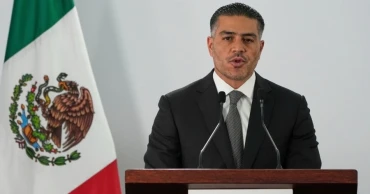
Mexico has transferred another 37 alleged members of drug cartels to the United States, the country’s security minister said on Tuesday, amid rising pressure from the administration of U.S. President Donald Trump to curb cross-border drug trafficking.
Mexican Security Minister Omar García Harfuch said in a post on X that those handed over were “high impact criminals” who “represented a real threat to the country’s security.”
The latest move marks the third such transfer in less than a year. García Harfuch said Mexico has now sent a total of 92 detainees to the United States as it seeks to respond to mounting threats from Washington.
Footage released by Mexican authorities showed handcuffed prisoners guarded by heavily armed, masked officers as they were boarded onto a military aircraft at an airport near Mexico City.
“As the pressure increases, as demands from the White House dial up, (Mexico’s government) needs to resort to extraordinary measures, such as these transfers,” said David Mora, a Mexico analyst at the International Crisis Group.
Read More: Mexico plans to build Latin America’s most powerful supercomputer
The U.S. State Department and Justice Department did not immediately comment.
Those transferred include figures from the Sinaloa Cartel, Beltrán-Leyva cartel, Jalisco New Generation Cartel, the Northeast Cartel and a Zetas splinter group based in Tamaulipas. Mexican officials said all face pending U.S. cases.
Among them was María Del Rosario Navarro Sánchez, the first Mexican charged in the U.S. with supporting a terrorist organization.
Trump has floated military action against cartels and recently said, “We’ve knocked out 97% of the drugs coming in by water and we are going to start now hitting land.”
7 months ago
US labels three Muslim Brotherhood branches as terrorist groups
The Trump administration has labelled three Middle Eastern branches of the Muslim Brotherhood as terrorist organizations, imposing sanctions on the groups and their members.
The U.S. Treasury and State departments announced Tuesday that the Lebanese, Jordanian, and Egyptian chapters pose a threat to American security and interests. The Lebanese branch was designated a foreign terrorist organization, while the Jordanian and Egyptian branches were listed as specially designated global terrorists for supporting Hamas.
“These designations reflect a sustained effort to stop Muslim Brotherhood chapters from violence and destabilization,” Secretary of State Marco Rubio said. Treasury Secretary Scott Bessent added that the administration will work to cut the group off from the financial system.
The Muslim Brotherhood branches in Egypt and Lebanon rejected the U.S. decision. Egypt’s branch said it “categorically rejects this designation” and will challenge it legally. The Lebanese branch said it operates openly within the law and called the U.S. decision “without legal effect” in Lebanon.
Trump’s executive order cited the Lebanese chapter’s role in launching rockets on Israel after Hamas’ October 7, 2023 attack and Jordan’s support to Hamas. The Muslim Brotherhood was founded in Egypt in 1928 and banned there in 2013. Jordan banned the group in April 2025.
Iran closes airspace for hours amid US tensions over crackdown on protests
Egypt welcomed the designation, calling it a “significant step” against extremism. Experts said the move may please some U.S. allies like the UAE but could strain relations with countries where the Brotherhood is tolerated, including Qatar and Turkey. It may also affect visa and asylum decisions in the U.S., Europe, and Canada.
8 months ago

US to suspend immigrant visas for 75 countries from Jan 21
The US State Department on Wednesday announced it will suspend the processing of immigrant visas for citizens of 75 countries whose nationals are considered likely to depend on public assistance while living in the United States.
The department, headed by Secretary Marco Rubio, said consular officers have been instructed to halt immigrant visa applications from the affected countries under a broader order issued in November that tightened rules for prospective immigrants who may become “public charges” in the US.
The suspension will take effect from January 21 and will not apply to non-immigrant visas, including temporary tourist or business visas.
“The Trump administration is bringing an end to the abuse of America’s immigration system by those who would extract wealth from the American people,” the State Department said in a statement. “Immigrant visa processing from these 75 countries will be paused while the State Department reassess immigration procedures to prevent the entry of foreign nationals who would take welfare and public benefits.”
The list of affected countries includes Russia, Iran and Afghanistan, along with several nations in Africa, according to the department.
The Trump administration has already imposed strict restrictions on immigrant and non-immigrant visa processing for citizens of dozens of countries, many of them in Africa.
8 months ago

Trump suspends immigration applications from 19 countries
The Trump administration has temporarily halted immigration applications, including green card requests, for individuals from 19 countries previously targeted by travel restrictions. The move follows recent policy changes prompted by the shooting of two National Guard troops.
According to a policy memo posted Tuesday by U.S. Citizenship and Immigration Services (USCIS), the pause affects decisions such as green card approvals and naturalizations for people from countries deemed high-risk. USCIS Director Joseph Edlow will determine when the suspension ends.
Migrants brace for uncertainty under Trump’s new immigration restrictions
Earlier this year, the administration banned travel from 12 countries and restricted access for seven more, citing security concerns. While earlier restrictions did not affect immigrants already in the U.S., the new directive subjects them to additional review, including potential interviews and referrals to law enforcement.
USCIS plans to prioritize cases for review within 90 days, reflecting heightened scrutiny following the Thanksgiving week attack near the White House by an Afghan national. Critics argue the policy penalizes immigrants collectively.
Source: AP
9 months ago

US. Airlines cancel 1,000 flights amid FAA-ordered service reductions
Travelers across the United States saw mostly on-time departures Friday (7th November 2025), even as airlines canceled more than 1,000 flights to comply with a Federal Aviation Administration (FAA) order tied to the ongoing government shutdown.
Despite a relatively stable day of travel, concern grew over additional cancellations expected in the coming week as the FAA reduces flight operations at major airports. The agency’s order follows a rise in absences among unpaid air traffic controllers, many of whom have gone nearly a month without pay.
While some travelers scrambled to adjust their plans—booking alternative flights or renting cars—the cancellations still represented a small portion of total U.S. air traffic. However, long lines and last-minute disruptions were reported at around 40 major airports, including Atlanta, Dallas, Denver, and Charlotte.
Airlines said they anticipate minimal disruptions through the weekend, and international routes remain unaffected. But Transportation Secretary Sean Duffy warned that if the shutdown continues past next week—when controllers miss another paycheck—flight cancellations could rise from 10% to as much as 20%.
Long Lines and Creative Travel Solutions
At Houston’s George Bush Intercontinental Airport, passengers waited in security lines that barely moved. “It was winding through every part of the terminal,” said traveler Cara Bergeron. “I’ve never seen anything like it.”
Read more: Wall Street set to open higher as investors eye earnings amid US shutdown
Other travelers faced bigger challenges. Karen Soika, a surgeon from Connecticut, learned her Newark flight had been moved to JFK Airport—an hour away. When rental cars were unavailable, she decided to rent a U-Haul truck and drive cross-country to Utah, where she is consulting on a TV production. Rental car companies like Hertz reported a sharp uptick in one-way rentals.
Airlines Work to Rebook Passengers
According to flight-tracking site FlightAware, Friday’s 1,000-plus cancellations were about five times Thursday’s total. Reagan National Airport saw the highest impact, with 18% of flights grounded, while O’Hare, Atlanta, Denver, and Dallas-Fort Worth each lost around 3% of scheduled flights.
United and American Airlines said they were able to rebook most passengers quickly, prioritizing cancellations on smaller regional routes to minimize disruptions. Delta canceled roughly 170 flights Friday, American about 220 per day through Monday, and Southwest around 120.
The FAA said the flight reductions will start at 4% of operations at the busiest airports and gradually increase to 10% next week.
“I just don’t want to end up stranded on an airport bench,” said traveler Michele Cuthbert of Columbus, Ohio. “Everyone’s paying the price for politics.”
Experts warn that if the shutdown drags on, cargo shipments could also be affected, since nearly half of U.S. air freight moves in passenger aircraft. “Air travel is a core part of America’s economic infrastructure,” said Greg Raiff, CEO of Elevate Aviation Group. “This will ripple through business, tourism, and freight.”
Why the Cuts Are Happening
The FAA said the service reductions aim to ease the burden on overworked controllers, many of whom are working six days a week with mandatory overtime. As financial stress mounts, more are calling out of work.
“I don’t want to see delays or disruptions,” Secretary Duffy said Friday at Reagan National Airport. “But safety must come first.”
Read more: Asian shares rise on Wall Street gains as tech stocks rally despite U.S. government shutdown
The FAA’s decision comes as the Trump administration continues pressuring Congress to end the government shutdown. Even if an agreement is reached soon, officials said the reduced flight schedules will remain in place until staffing levels stabilize.
At Denver International Airport, officials have opened a food pantry for unpaid federal workers and asked the FAA to approve using airport revenue to cover controller pay—so far, without response.
What Travelers Can Do
Airlines are navigating uncertain territory, said Loyola University Maryland professor Kerry Tan. “The unpredictability of the shutdown makes it difficult for carriers to plan efficiently,” he said.
Passengers are entitled to full refunds for canceled flights, though airlines aren’t obligated to cover hotel or meal costs unless cancellations are within their control, according to the Department of Transportation.
Travel adviser Christina Schlegel of Arlington, Virginia, advised passengers to stay calm, check flight updates regularly, and arrive early. “Think ahead,” she said. “Have a backup plan and know what other flight options are available.”
Read more: Trump embarks on three-nation Asia tour, set to meet Xi as US shutdown persists
10 months ago

US judge blocks use of Trump-era travel ban to bar 80 refugees
A U.S. federal judge has ruled that the Trump administration cannot use its travel ban to prevent 80 already-vetted refugees from entering the United States, marking a significant setback for the policy.
In a decision issued late Monday, U.S. District Judge Jamal Whitehead in Seattle stated that President Donald Trump's June executive order — which restricted entry from 12 countries — does not apply to refugees seeking asylum.
“In other words, by its plain terms, the Proclamation excludes refugees from its scope,” the judge wrote.
Whitehead ruled that denying entry to refugees would undermine their ability to apply for asylum, contradicting the very language of the presidential order. He directed the government to immediately resume processing the 80 “presumptively protected refugees” who had been rejected under the travel ban.
The U.S. State Department has not issued a comment on the ruling.
US manufacturing struggles persist despite subsidies and tariffs
Whitehead also outlined a vetting framework for refugees from the 12 banned countries and others who were denied entry after the Trump administration suspended the U.S. refugee admissions program just hours after taking office on January 20.
This suspension had left thousands of refugees — many already cleared after years of security screening — stranded in various parts of the world. Among them were family members of active-duty U.S. military personnel and over 1,600 Afghans who supported American forces during the war.
Several refugees and aid organizations, whose funding was frozen by the administration, filed lawsuits. They later sought class-action status to extend the court’s ruling to similarly affected refugees.
In May, Judge Whitehead said the suspension likely nullified Congress’s intent, noting that Congress had created and funded the refugee admissions program. He issued a preliminary injunction in February, halting the administration’s suspension of refugee processing and aid.
However, the 9th U.S. Circuit Court of Appeals paused much of that ruling in March, saying the administration was likely to prevail as the president holds broad authority over immigration decisions.
1 year ago