interim government
July Charter Implementation Order 'a document of infinite deception': Salahuddin
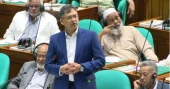
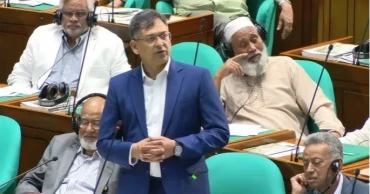
Home Minister Salahuddin Ahmed on Tuesday characterized the July National Charter (Constitution Reform) Implementation Order as an invalid legal document, labeling it a manifestation of "infinite deception" by the interim government.
“This order is a document of infinite deception by the interim government. I reiterate this again today,” he said, joining the two-hour discussion on a motion placed by the opposition leader in Parliament for summoning the session of the Constitution Reform Council.
Bangladesh Jamaat-e-Islami Ameer Dr Shafiqur Rahman placed adjournment motion in the House under the Section 62 of the Rules of Procedure, seeking the adjournment of the business of the House for the discussing summon of the session of the Constitution Reform Council as per the July National Charter (Constitution Reform) Implementation Order, 2025.
Speaker Hafiz Uddin Ahmad, Bir Bikram, moved the motion for two-hour discussion as the last agenda for Tuesday’s business in the House.
The Home Minister argued that the order holds no legal standing as it is categorized as neither a law nor an ordinance.
He, however, said they (the government) hold on to every single word of the July National Charter which was signed by the political parties as a historic document.
Salahuddin Ahmed pointed out the President had the jurisdiction to issue such orders only between March 1971 and April 1973, and that authority ceased following the formation of the first parliament in 1973.
He said 133 ordinances issued during the interim government have been introduced in parliament but the July Charter Implementation Order was not among them as it lacks legislative legitimacy.
He further questioned the President's authority to convene a session of the constitution reform council, citing the absence of constitutional provisions for such a body or its accompanying oath of office.
The Minister dismissed claims that the BNP opposes reform or the July Charter itself, asserting that the party upholds the spirit of the historic document.
“All the issues that were agreed upon in July National Charter 2025 with notes of dissent…. But where are the notes of dissent here (in the Order)?” he said.
"No order of the President can reduce the sovereignty of the parliament," Ahmed stated, citing Article 93 of the Constitution, which prohibits the President from issuing ordinances that change constitutional provisions.
Reaffirming the BNP's commitment to the July Charter, the Home Minister emphasized that the party intends to pursue democratic constitutional amendments through inclusive dialogue.
On behalf of the Leader of the House, he proposed the formation of a special parliamentary committee—including all represented parties and independent lawmakers—to draft a constitutional amendment bill based on broad consensus.
Later, Leader of the Opposition Dr Shafiqur Rahman suggested forming a parliamentary committee to take a decision on the implementation of the referendum results.
PM seeks steps to reduce school-time gridlock
“We want a solution. We want it on the basis of justice. After discussing this issue, if you think it is good, you can form a committee. However, we will call for the committee to be formed with an equal number of members from two sides,” he said.
He said if the committee is formed with majority from the ruling side, it will bring no good result. “We’ve raised our desire. Now the decision is yours,” he said.
Referring to the remark that the order is a document of endless fraud, he said the interim government and the President did this together on November 13, 2025 but the referendum was held on February 12, 2026. BNP officially congratulated the government for holding the parliamentary election and the referendum on the same day due to their demand. “So, the referendum was also their demand.”
"We will sincerely appeal to the government party - the people have accepted the referendum. If we also respect the people by accepting it, then this parliament will be respected. Let the public desire be reflected through this with our joint initiative,” said Dr Shafiqur Rahman.
Law Minister Md. Asaduzzaman said that all reform initiatives must be implemented within the framework of the Constitution, stressing that the constitution remains the supreme legal foundation of the state and parliament.
He said the July Charter is the central focus of current political discourse and that it represents the public mandate following the July 24 mass uprising. “The people have given us the mandate to conduct all activities under the constitution and bring necessary reforms through parliament,” he said.
The law minister explained that the July Charter outlines reform measures that must be adopted through parliamentary processes rather than through extra-constitutional means.
He emphasized that parliament is sovereign in law-making and cannot be compelled by unauthorized orders.
“The July Charter should guide reforms, but all actions must be taken through constitutional and parliamentary procedures,” he said, adding that national unity and democratic consensus are essential for sustainable constitutional reform.
Joining the discussion, BJP chairman Andaleeve Rahman (Partho) asked the NCP leaders not to turn into the Jamaat generation while representing Gen Z.
“You are our heroes. Those who fought (in the July uprising) are here (in Parliament). I would like to tell them that you represent Gen Z. You should not become Jamaat generation,” he said, pointing at the NCP leaders.
He said there is a tendency among some political actors to push them (BNP-led alliance) against the spirit of the July uprising for political advantage, which could harm national unity.
“We are seeing an attempt to push us against the spirit of July,” he said, adding that such “tagging politics” was also seen during the Awami League regime.
Questioning the formation of the Constitution Reform Council, the BJP chief said they wanted to remain within the constitutional process through which amendments are made.
He claimed that although around 70 percent of people voted “yes” in the referendum, 51 percent supported the BNP-led alliance (in the 13th parliamentary election) in favour of constitutional changes.
Focusing on the roles of different political parties and actors in the 2024 July movement, the BJP chief said, “You scored 12 runs from six balls. But we scored 300 runs before.”
Stressing the need for political unity over the spirit of July movement, he said, “We must respect the Constitution and at the same time we must respect the spirit of July.”
Earlier, NCP Member Secretary Akhter Hossen said BNP chairman Tarique Rahman on January 30 last had urged people to vote “yes” in the referendum during a pre-election rally in Rangpur, the birthplace of July martyred Abu Sayeed, but now BNP is showing reluctant to accept the referendum results.
“We want to ask the Prime Minister (Tarique Rahman) why you don't want to accept the verdict of the referendum after asking (the people) to vote 'yes' in the referendum," said the NCP leader.
Noting that the people had given their verdict in favour of implementing the July National Charter, he said terming the public verdict as unconstitutional is audacity and stigmatization of Parliament.
“Whether the Referendum Order is approved by Parliament or not, there is no chance of making the referendum illegal,” he said.
Besides, Jamaat lawmakers Md. Rafiqul Islam Khan (Sirajganj-4), Muhammad Nazibur Rahman (Pabna-1), Md Saiful Alam (Dhaka-12), Md. Shafiqul Islam (Patuakhali-2) and Md Nurul Islam (Chapainawabganj-3), and NCP lawmaker Md Abul Hasnat, who is widely known as Hasnat Abdullah (Cumilla-4), joined the discussion.
5 months ago
Special committee in parliament to review 133 ordinances by Apr 2
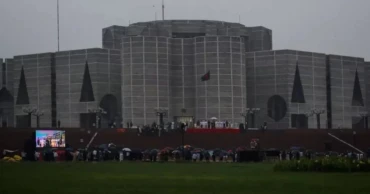
A total of 133 ordinances issued during the tenure of the interim government have been referred to a special parliamentary committee for review, with the panel asked to submit its report by April 2.
Law Minister Md Asaduzzaman moved the proposal in the Parliament on Sunday to send the ordinances to the special committee.
The House later adopted the proposal, formally placing the ordinances under the committee’s scrutiny.
The ordinances had earlier been tabled in Parliament by the Law Minister during the first sitting. On that day, the House also constituted the special committee to examine and sort the ordinances.
The committee will review the ordinances and place its recommendations before Parliament within the stipulated timeframe.
6 months ago
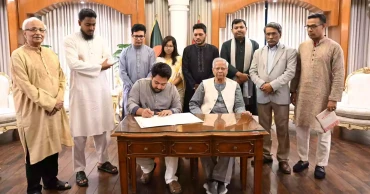
CA Prof Yunus thanks NCP for signing July Charter
Chief Adviser Prof Muhammad Yunus on Monday appreciated the National Citizen Party (NCP) for signing the July National Charter.
NCP Convener Nahid Islam and member secretary Akhtar Hossain signed the charter on behalf of the party in the presence of the Chief Adviser at the State Guest House Jamuna in the evening.
“The nation had the faith that the NCP would sign this charter, and today that faith has been fulfilled. Thank you for participating in this great work,” the CA said.
Prof Yunus delivers farewell speech as interim govt prepares to hand over power
Prof Yunus said the charter should guide actions at every level to build a new, humane Bangladesh, emphasising that all stakeholders must remain vigilant in implementing its principles.
The Chief Adviser also mentioned that the oath-taking ceremony for the members of the new parliament would be held on Tuesday and wished everyone success in the days ahead.
Nahid Islam said the MPs elected from his party would take their oaths tomorrow. “Although we were the last to sign the charter, we have been most active in implementing it. We will honor the trust the people have placed in us.”
Army Chief meets Chief Adviser Prof Yunus
National Consensus Commission Vice-Chairman Professor Ali Riaz, Commission member Badiul Alam Majumder and Special Assistant to the Chief Adviser Monir Haider, were present.
The NCP delegation included Monira Sharmin, Sarwar Tushar, Javed Rasin and Zahirul Islam.
7 months ago
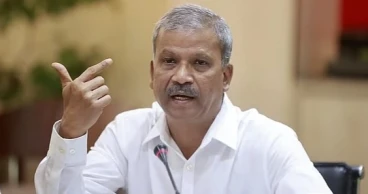
Amid criticism, Law Adviser Asif Nazrul lists ministry’s steps since taking charge
Law Adviser Dr. Asif Nazrul has outlined a wide range of legal and institutional reforms carried out by the Ministry of Law, Justice and Parliamentary Affairs since the July mass uprising, amid criticism over his role.
In a Facebook post, he said while the work was done collectively by the ministry, he had personally been involved in every initiative, often working long hours, including weekends, to ensure implementation.
Responding to critics, he urged them to review the ministry’s work before passing judgment.
South Plaza chosen for oath to honour July Uprising legacy: Asif Nazrul
According to the post, the ministry implemented 22 legal reforms, 15 institutional reforms and digitalisation measures, recommended withdrawal of 23,866 politically motivated harassment cases, supported genocide trials related to the July uprising, and significantly increased daily administrative output.
Legal Reforms
Among the key reforms highlighted:
The International Crimes (Tribunal) Ordinance was updated to align with international standards, incorporating enforced disappearance as a crime against humanity, ensuring witness protection, allowing international observers, introducing interim appeal provisions, and enabling victim compensation.
The Supreme Court Judges Appointment Ordinance established an independent Judicial Council to ensure merit-based appointments.
The Supreme Court Secretariat Ordinance ensured greater judicial independence by transferring administrative and financial authority over subordinate courts to the judiciary.
A Commercial Courts Ordinance introduced specialised courts with documentary-based trials, expedited case disposal, mediation, virtual hearings and online case management.
‘World Cup boycott was govt’s decision, I remain firm on this’: Asif Nazrul
The National Human Rights Commission Ordinance, 2025 restructured the commission, enhancing its investigative and compensation powers and establishing a national preventive mechanism against torture under OPCAT. Commissioners were appointed through a public notice and interview process for the first time.
The Prevention of Enforced Disappearance Ordinance, 2025 defined enforced disappearance, set maximum punishment including the death penalty, empowered the NHRC to investigate, mandated trial completion within 120 days, and provided compensation and property use provisions for victims’ families.
The July Mass Uprising (Protection and Accountability) Ordinance provided protection to participants of the uprising while ensuring accountability for serious crimes. It also withdrew civil and criminal cases filed against protesters for political resistance and barred new such cases.
Amendments to the Code of Civil Procedure introduced affidavit-based testimony, online summons and enforcement of decrees within the main suit.
Criminal law reforms ensured transparency and accountability in arrest and remand processes, safeguarded accused persons’ rights, removed gender-insensitive terminology and addressed false case harassment.
Mandatory pre-case mediation was introduced in certain disputes. In 20 districts, ADR initiatives led to a 339.86% increase in successful settlements between September and December 2025, while dowry cases fell by 79.74%.
Amendments to the Women and Children Repression Prevention Act set investigation and trial deadlines, introduced accountability for investigators, ensured witness protection, created separate tribunals for child rape cases and recognised abuse of male children as an offence.
Two options under consideration for oath of new MPs: Asif Nazrul
Reforms to the Representation of the People Order introduced postal ballots for expatriates and strengthened judicial oversight of election-related offences.
The Cyber Security Ordinance, 2025, formulated jointly with the ICT Ministry, repealed repressive provisions of the previous cyber law and cancelled related cases.
Amendments to Power of Attorney rules simplified procedures for expatriates, allowing execution without a valid Bangladeshi passport if supported by “No Visa Required” status, birth certificate or NID.
Marriage Registration Rules were amended to remove gender-discriminatory provisions and allow online marriage and divorce registration.
The ministry also assisted other ministries in drafting ordinances related to the Anti-Corruption Commission, Police Reform Commission and amendments to telecommunications law.
Institutional Reforms and Digitalisation
The ministry reported adopting three separate rules to strengthen judicial service independence, granting the Supreme Court authority to create judicial posts and establishing clear posting and promotion rules.
Information and Service Centres were established in all court premises nationwide to reduce harassment and provide case updates.
Centralised recruitment through the Bangladesh Judicial Service Commission was initiated to fill 2,733 vacant court positions.
Asset declarations of subordinate court judges were collected and reviewed as part of anti-corruption measures.
A Prosecution Monitoring Cell was formed to oversee cases related to crimes committed against students and civilians during July–August events.
Oman to reopen work visas for Bangladesh soon: Asif Nazrul
Digital initiatives included online testimony for government officials, regular e-cause list updates in 80% of courts, launch of e-Family Courts in Dhaka and Chattogram, introduction of e-bail bonds in nine districts reducing procedural steps from 14 to one, and full digitalisation of attestation services in the ministry.
The National Legal Aid Directorate was established, introducing emergency legal assistance, expatriate support and a new hotline (16699).
Civil court renaming removed confusion by replacing “Assistant Judge Court” with “Civil Judge Court” and “Senior Civil Judge Court.”
Civil and criminal courts were separated, and a record 1,605 new courts were created.
Registration services reforms introduced modern digital systems, with plans for biometric verification and online deed storage to prevent fraud.
Withdrawal of Harassment Cases
Following district-level review and ministry evaluation, 23,866 politically motivated cases were recommended for withdrawal. Public notices were issued to ensure affected individuals could apply.
Additionally, 410 speech-related cases under cyber laws and nearly all cases filed against student protesters during the July–August uprising were withdrawn, benefiting several hundred thousand people.
Genocide Trial Support
The ministry facilitated appointment of judges and prosecutors of the International Crimes Tribunal for genocide cases linked to the July uprising, provided logistical support and oversaw prosecution work. Four verdicts have been delivered, at least six cases are in final stages, and trials including enforced disappearance cases have begun.
Increased Administrative Output
In the past one and a half years, 2,281 files were disposed of at the ministerial level compared to 1,235 during the same period under the previous government. The ministry provided 578 legal opinions to various ministries and departments (compared to 210 previously) and organised a record 15 stakeholder consultations on lawmaking.
Rule of law biggest challenge despite progress: Asif Nazrul
It also provided secretarial support to reform commissions on the Constitution, election system, judiciary, enforced disappearance investigations and the National Consensus Commission.
For the first time, codification of rules and regulations has begun. A compilation of 127 ordinances and one order issued under the interim government has been published.
Due to the departure of previously appointed law officers during the past regime, around 5,500 law officers were newly appointed over the last 18 months — a record in Bangladesh’s history.
The ministry also provided secretarial assistance in appointing the Chief Justice and five Appellate Division judges, as well as 48 High Court Division judges.
Asif Nazrul mentioned that the details of work done at the Ministry of Expatriates’ Welfare would also be published before the nation in the near future.
7 months ago
ADP implementation rate at 5-year low
The Annual Development Programme (ADP) implementation rate has remained at a five-year low in the first seven months of the running fiscal during the tenure of the interim government, continuing the trend observed over the past several months, according to the latest progress report.
Data released by the Implementation Monitoring and Evaluation Division (IMED) under the Ministry of Planning shows that the pace of spending and execution has slowed significantly compared to previous years, raising concerns about delays in development activities.
NEC cuts ADP by Tk 30,000 crore
The implementation progress during the July–January period remains subdued. In the first seven months of FY2025–26, total spending reached Tk 50,556.29 crore, representing 21.18 percent of the annual allocation. During the same period of FY2024–25, implementation stood at Tk 59,876.87 crore or 21.52 percent.
In FY2023–24, the implementation rate for the July–January period was 27.11 percent with expenditure amounting to Tk 74,464.19 crore. The rate was 28.16 percent in FY2022–23 with spending of Tk 72,090.21 crore, while FY2021–22 recorded 30.21 percent implementation, with Tk 71,532.97 crore spent.
However, For the current fiscal year 2025–26, the total ADP allocation stands at Tk 238695.64 crore. In comparison, allocations in recent years were Tk 278,888.90 crore in 2024–25, Tk 274,874.02 crore in 2023–24, Tk 265,003.27 crore in 2022–23 and Tk 236,793.09 crore in 2021–22.
Officials said the current year’s rate is the lowest among the last five years for the corresponding period, indicating a continued slowdown in project execution.
Monthly data also reflects the sluggish pace. In January alone, ADP implementation in FY2025–26 stood at Tk 8,679.42 crore, accounting for just 3.64 percent of the annual allocation. In January of the previous fiscal year, spending was slightly higher at Tk 9,874.53 crore, or 3.55 percent of the allocation.
The persistent slowdown has been attributed to multiple factors, including administrative adjustments, cautious expenditure management and slower approval processes during the interim administration period.
Project officials have also pointed to delays in procurement, land acquisition and fund release as key reasons behind the lower execution rate.
Record low ADP implementation rate clouds Planning Ministry's performance in 2025
As per the economists, the ADP plays a critical role in driving economic activity, employment and infrastructure development.
A sustained slowdown in implementation may affect overall growth momentum, especially in sectors reliant on public investment.
Despite the lower execution rate, planning ministry officials expressed hope that spending would accelerate in the remaining months of the fiscal year as ministries and agencies traditionally speed up project implementation towards the end of the budget cycle.
The ADP is the government’s primary development budget, financing major infrastructure, social sector and regional development projects.
A higher implementation rate is generally seen as a sign of strong administrative capacity and efficient project management, while slower spending often signals bottlenecks in execution.
With less than half the fiscal year remaining, the pace of implementation in the coming months will be crucial in determining whether the government can narrow the gap with previous years or whether FY2025–26 will end with the lowest execution rate in recent times.
7 months ago
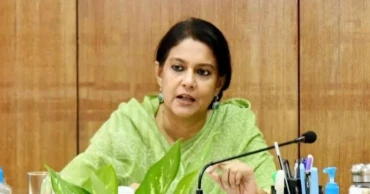
No journo jailed for expressing opinion during interim govt’s tenure: Rizwana
Information and Broadcasting Adviser Syeda Rizwana Hasan on Sunday said no journalist was sent to jail for expressing opinions during the interim government’s tenure.
“I am not aware of any journalist being arrested solely for criticism during our tenure. Any action taken against individuals was part of legal procedures based on available information,” she said responding to a question from a reporter at the Bangladesh Secretariat.
When her attention was drawn mentioning the names of two journalists she said they were not imprisoned for expressing their views or their social media posts. “The state machinery certainly had some specific information.”
Rizwana Hasan urges action for horn-free streets in Dhaka
There were many who had criticised the interim government but they were not arrested for expressing their views, she said.
About the performance of the interim administration, she said it is not appropriate to label the 18-month tenure as either a success or a failure. “I have tried my best. The people will evaluate.”
On the departure of the Chief Adviser’s Special Assistant Fayez Ahmed Tayeb, Rizwana said he had been living abroad and returned to the country for complete his state responsibility.
He had stayed away from his family for one and a half years, while his family remained in the Netherlands.
“He has simply returned to his family after finishing his responsibilities. There is no scope to present it otherwise,” she added.
Vote ‘Yes’ for accountable governance, moral leadership: Rizwana Hasan
On the election issue, the adviser said it has already been decided that future national elections will be held under a non-partisan government.
The caretaker government system has been reinstated following a court directive and subsequent elections will be conducted under that framework, she added.
7 months ago
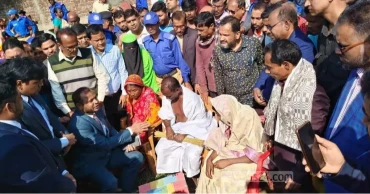
Govt provides financial, housing assistance to family of Dipu Das
The interim government is providing financial and housing assistance to Dipu Chandra Das, who was beaten and burned to death in the Square Masterbari area of Bhaluka Upazila in Mymensingh district on December 18, 2025.
Dipu Das was lynched by a mob, beaten severely, and later set on fire after being hung from a tree over allegations that he made an insulting remark.
As Dipu Das was the sole breadwinner, the government has assured comprehensive financial assistance to ensure the family’s security, including the construction of a permanent home.
10 arrested for killing Dipu Chandra Das in M’singh
The initiative will be implemented under the supervision of the UNO of Tarakanda Upazila, with Tk 25 lakh allocated for house construction through the National Housing Authority, based on the family’s needs, said the Chief Adviser’s press wing on Tuesday.
In addition, the government will provide Tk 10 lakh in cash to Dipu Das’s father and wife each, while an FDR worth Tk 5 lakh will be created to secure the future of his child, according to the Chief Adviser’s press wing.
Following the directive of Chief Adviser Prof Muhammad Yunus, Education Adviser Dr CR Abrar visited the home of the deceased on December 23, 2025, expressing condolences to the family on behalf of the government.
Speaking on Tuesday, Education Adviser CR Abrar described the killing as a “brutal and inexcusable crime that has no place in our society.” He said that no amount of state assistance could compensate for the loss of a human life, but emphasized that the government is committed to ensuring justice.
“The killing of Dipu Das through the spread of communal hysteria is a shame for the entire nation,” he said, adding that only justice can help overcome this collective disgrace.
He said the state respects the peaceful right of people of all religions, ethnicities, and communities to express their opinions - provided it is done with mutual respect. “Even in moments of disagreement, no one has the right to take the law into their own hands,” he added.
So far, 12 individuals directly involved in the incident have been arrested, and the investigation is ongoing. The education adviser reaffirmed that all those responsible would be brought to justice through due legal process.
Dipu’s killing in Mymensingh a heinous criminal act, reiterates govt
7 months ago
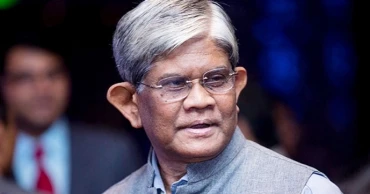
Adviser Salehuddin rates own performance at around 70 out of 100
Finance Adviser Dr Salehuddin Ahmed on Tuesday rated his own performance at ‘around 70 out of 100’, acknowledging that while significant initiatives were undertaken during his tenure, several key reforms remained unfinished due to structural and policy limitations.
“I would give myself close to 70 – perhaps 70 or 80. If it is 80, I would say we at least started the work. We initiated programmes in the interest of the people and had no hidden agenda,” he said while talking to reporters after holding the Purchase Committee meeting at the Bangladesh Secretariat.
The adviser said he would not award himself full marks as many intended initiatives could not be fully implemented.
Dr Salehuddin said although the government managed to launch a number of reforms, many could not be completed to the desired extent.
“There were expectations. Some of the plans we had could not be carried out, and even those we started could not be fully finalised,” he said, adding that this reality prevented him from claiming a perfect score.
The adviser emphasised that the continuous annual development programme (ADP) process had become more functional and streamlined.
Dr Salehuddin, however, admitted that the “real work” lay in initiating deeper policy reforms, particularly in the policy divisions.
On taxation, he said a comprehensive report had been prepared which would serve as a guideline for future reforms. “We are leaving behind a tax policy report. It will function as a guideline going forward.”
Responding to questions about the autonomy of Bangladesh Bank, the finance adviser said the issue had been considered carefully.
He acknowledged calls from various quarters to grant the central bank greater independence but noted that the matter was complex.
“We thought about it extensively. It is a loaded issue,” he said, referring to the legal and operational dimensions involved.
He explained that the Bangladesh Bank Order already outlines the structure and authority of the institution, and the question is not merely whether the governor or the ministry holds greater power. “It is not simply about whether a particular governor or minister will exercise control. The key issue is how much operational independence exists within the framework.”
The adviser suggested that any decision regarding central bank autonomy must be weighed against broader economic stability considerations.
Revitalising trade, job creation top challenges for next govt: Dr Salehuddin
Throughout his remarks, Dr Salehuddin maintained that the government’s economic measures were driven by public interest rather than political motives. “In political affairs, one may try to avoid certain issues, but in economic management these matters cannot be sidestepped.”
The Finance Adviser reiterated that while he was satisfied with initiating key reforms, unfinished tasks and unmet expectations justified a score below 100.
7 months ago

Govt signs two project documents with UNDP
The Economic Relations Division (ERD) and the United Nations Development Programme (UNDP) on Monday signed two project documents — Transformative Economic Policy Programme (TEPP) Phase II and Institutional Strengthening for Promoting Accelerated Transformation (ISPAT) — at the ERD office in the capital.
ERD Secretary Md Shahriar Kader Siddiky and UNDP Bangladesh Resident Representative Stefan Liller signed the documents on behalf of their respective organisations.
TEPP Phase II will run from January 2026 to March 2028 with a total budget of around US$3.57 million, funded by the UK Government.
Politically motivated arbitrary detentions persist under Bangladesh interim govt: HRW
According to a UNDP press release, the programme will strengthen Bangladesh’s trade and investment policy ecosystem to support a competitive post-LDC transition. It will enhance trade negotiation capacity, promote evidence-based policy analysis, support institutional reforms and improve the investment climate through the Ministry of Commerce (MoC) and the Bangladesh Investment Development Authority (BIDA).
The ISPAT project will be implemented from January 2026 to June 2027 with a budget of US$1.06 million, supported by the Australian Government.
The initiative aims to strengthen and modernise the NGO Affairs Bureau through the introduction of digital systems, improved transparency and gender-responsive service delivery. It will also support policy reform and capacity development to enhance NGO oversight and engagement in national development priorities.
Speaking at the event, ERD Secretary Md Shahriar Kader Siddiky said, “These initiatives reflect our commitment to a holistic approach to institutional strengthening — building capacity, enhancing transparency and accountability, and fostering evidence-based policymaking. Through these projects, we aim to develop confident and capable institutions and professionals who can effectively support good governance and Bangladesh’s economic transformation, particularly during the post-LDC transition.”
UNDP Resident Representative Stefan Liller said, “These two projects are highly strategic and catalytic, strengthening the institutions and policy ecosystems that underpin Bangladesh’s economic transformation and governance reforms. Working closely with the government and development partners, UNDP remains committed to supporting nationally led, forward-looking reforms that will deliver long-term impact.”
The signing of the two projects reaffirms the strong partnership between the Government of Bangladesh, UNDP and development partners in advancing the country’s economic transition, strengthening public institutions and promoting transparent, technology-enabled and citizen-centric service delivery.
Both TEPP Phase II and ISPAT are expected to play important roles in strengthening governance systems, fostering private sector competitiveness and supporting Bangladesh’s progress towards achieving the Sustainable Development Goals (SDGs).
Bangladesh govt urged to halt draft media ordinances, leave it to elected govt
7 months ago
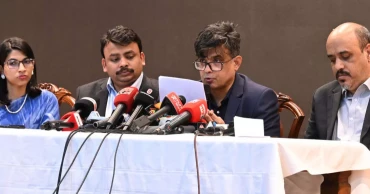
Interim govt to hand over power to elected govt by Feb 17-18
Chief Adviser’s Press Secretary Shafiqul Alam on Thursday said the interim government would hand over responsibility to the elected government as soon as possible following the national election, expressing optimism that the process would be completed by February 17 or 18.
“The transfer of power will be done as soon as possible. If members of parliament are sworn in within three days, the leader of the majority party will be invited to take the oath as Prime Minister. This could happen by February 15 or 16, and I do not think it will be delayed beyond February 17 or 18,” he told reporters at the Foreign Service Academy.
The 13th national parliamentary election is scheduled for February 12. A referendum on the implementation of the July National Charter will also be held on the same day.
Meanwhile, the Council of Advisers decided that all government, semi-government, autonomous, and semi-autonomous offices will operate from 9am to 3:30pm during the upcoming holy month of Ramadan.
The decision was taken at the meeting of the Council of Advisers held at the CAO with Chief Adviser Prof Muhammad Yunus presiding.
During office hours, a 15-minute break from 1:00pm to 1:15pm will be observed for Zohr prayers.
According to the Islamic Foundation, the holy month of Ramadan is expected to begin on February 19, subject to the sighting of the moon.
Press Secretary Alam said since assuming office in August 2024, the interim government has taken 526 decisions and issued 116 ordinances, with 439 decisions already implemented, reflecting an implementation rate of 83.46 percent.
He said the figures were presented earlier in the day at the weekly meeting of the Council of Advisers held at the Chief Adviser’s Office (CAO).
The interim government held 68 regular weekly meetings between August 8, 2024, and January 31, 2026, with Chief Adviser Prof Muhammad Yunus in the chair, and took 526 decisions.
Of these, 439 have already been implemented, marking an implementation rate of 83.46 percent, Alam said.
During this period, a total of 116 ordinances were issued, while 16 ordinances remain under process.
Of the pending ordinances, three have already received policy-level approval, he added.
The Press Secretary also said 30 policy-related instruments, including policies, guidelines, strategies, and action plans, were undertaken during this timeframe.
Among them, 16 have been signed or ratified, while the remaining 14 are currently under implementation.
In addition, the interim government has entered into 14 bilateral agreements during the same period.
Govt requests UN rights office to undertake investigation into Hadi murder
Highlighting the government’s performance, Alam said the implementation rate of decisions was exceptionally high compared with previous governments.
He emphasised that the ordinances were not limited to minor or symbolic changes; rather, many involved substantive reforms expected to have far-reaching and transformative impacts on the lives of the people of Bangladesh.
Chief Adviser’s Deputy Press Secretary Abul Kalam Azad Majumder, Senior Assistant Press Secretary Foyez Ahammad, and Assistant Press Secretary Shuchismita Tithi were present at the briefing.
7 months ago