vaccination
WHO urges urgent vaccination drive as measles risk remains high in Bangladesh
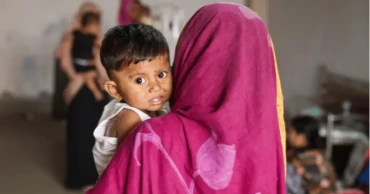
The World Health Organization (WHO) has called for immediate action to curb the ongoing measles outbreak in Bangladesh, warning that continued spread is likely without stronger surveillance, faster response systems, and improved vaccination coverage.
WHO recommended ensuring at least 95% coverage with both doses of the measles-containing vaccine across all municipalities alongside strengthening integrated surveillance systems to quickly detect suspected cases in public and private healthcare facilities.
Special emphasis has been placed on high-traffic border areas, where enhanced monitoring is needed to rapidly identify and respond to suspected infections.
The agency also stressed the importance of deploying trained rapid response teams and activating national protocols to contain imported cases and prevent the re-establishment of endemic transmission. Close coordination between national and local authorities is considered essential.
During outbreaks, WHO advisee strict hospital management measures, including isolating patients and minimizing contact with others to prevent in-hospital transmission.
Vaccination efforts should prioritise high-risk groups such as healthcare workers, transport and tourism staff, and international travelers.
The agency also recommended targeted immunization campaigns for migrant populations in border regions to boost overall immunity. Maintaining adequate vaccine stockpiles and ensuring access for vulnerable groups—including displaced and underserved populations—are also critical.
Despite the outbreak, WHO does not advise any travel or trade restrictions at this stage.
The agency has assessed the national risk as high due to ongoing transmission, a large number of susceptible children, immunity gaps, and suspected measles-related deaths. Most cases are among unvaccinated or partially vaccinated children, including infants too young for vaccination, raising concerns about severe outcomes and uninterrupted spread.
The outbreak marks a setback in Bangladesh’s earlier progress toward measles elimination and highlights growing vulnerability to sustained transmission. Cross-border movement further increases the risk, particularly through major urban hubs such as Dhaka, Chattogram, Sylhet, and Cox’s Bazar.
Measles remains a highly contagious disease and a leading cause of child mortality worldwide. In Bangladesh, the outbreak is driven by low immunity levels, with many affected children either unvaccinated or having received only one dose. Most cases—about 91%—are among children aged 1 to 14 years, indicating significant immunity gaps.
Although Bangladesh had previously achieved strong vaccination coverage and reduced measles incidence, recent vaccine shortages, gaps in routine immunization, and the lack of nationwide campaigns since 2020 have increased vulnerability.
Regionally, the risk remains high, with continued transmission across South-East Asia. Cross-border movement with India and Myanmar—where vaccination challenges and rising cases persist—further heightens the threat, particularly in border districts like Jashore and Chapainawabganj.
Globally, WHO rates the risk as moderate due to high population mobility and ongoing measles transmission worldwide, underscoring the need for sustained vigilance and immunization efforts.
4 months ago
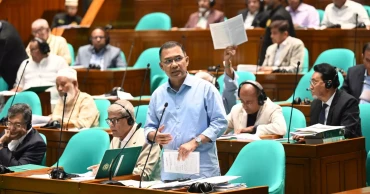
Steps taken to manage measles outbreak: PM
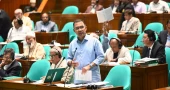
Prime Minister Tarique Rahman on Wednesday said the government has taken necessary steps to contain the measles outbreak, expressing sorrow over the deaths of children from the disease.
“Many of our children have died from measles. It is very unfortunate. We are trying to ensure that the situation can be managed in the coming days,” he told Parliament replying to a supplementary question from opposition lawmaker Salah Uddin Ahmed (Gazipur-4).
Thanking the lawmaker for raising the issue, Tarique Rahman described the situation as ‘very unfortunate’ and blamed the previous governments for the lapse.
Referring to the previous two governments, he said measles vaccines for children had not been imported for several years during both the past regime and the subsequent interim government which had been supported to ensure a free, fair and neutral election.
He said the problem became visible due to the lack of proper vaccination over the years.
Working with top priority to recover laundered assets: PM
However, the prime minister said the government moved quickly after the situation emerged, with support from Unicef Bangladesh.
“Unicef has helped Bangladesh a lot in this regard. They have quickly sent measles vaccines allowing us to begin vaccination. We have planne to vaccinate nearly two crore children,” he said.
Acknowledging a shortage of measles testing kits, he said the government is working to address the issue.
“A number of kits have already arrived. One kit can be used to conduct three tests,” he said, adding that some kits are currently at airport customs and steps are being taken to release them soon.
The House sat at around 3:00pm with Speaker Hafiz Uddin Ahmad in the chair.
The first 30 minutes of the sitting were allocated for the Prime Minister’s question time.
4 months ago
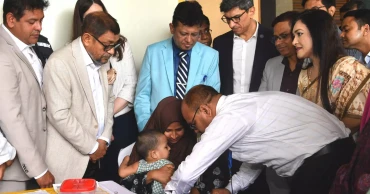
Nationwide measles-rubella vaccination campaign launched
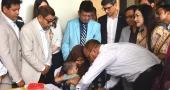
A nationwide emergency measles-rubella vaccination campaign was launched on Monday aimed at addressing the ongoing outbreak.
Health and Family Welfare Minister Sardar Md Sakhawat Hossain inaugurated the vaccination campaign around 8:15 am at Little Angel Seminary in Jinda Park, Rupganj Upazila of Narayanganj.
The initiative aims to vaccinate around 1.8 crore children aged 6 months to under 5 years across the country.
According to the Directorate General of Health Services (DGHS), Bangladesh recorded 36 measles-related deaths until 8:00am on Sunday (April 19).
During the same period, 181 suspected measles deaths were reported, while the total number of suspected cases rose to 23,606.
On April 5, the government, with support from UNICEF, WHO and Gavi, the Vaccine Alliance, launched an emergency measles-rubella vaccination campaign to protect more than 1.2 million children aged 6 months to 5 years in 30 upazilas in 18 high-risk districts.
The World Health Organization (WHO) urged all parents and caregivers to bring their children to the nearest vaccination centre and remains committed to supporting the government and partners to safeguard the health of every child across Bangladesh.
In Lakshmipur, the vaccination campaign began at 2,185 centers in the morning .
Civil Surgeon Dr Abu Hasan Shaheen inaugurated the programme at the District Sadar Hospital.
The campaign will continue until May 10.
According to the District Civil Surgeon’s Office, a total of 2,94,205 children are expected to be vaccinated in the district. To achieve this target, 2,185 centres have been set up, including six permanent and 2,179 temporary ones.
During the campaign, children aged between six months and five years will be vaccinated daily from 9am to 4pm.
The Civil Surgeon has urged guardians to take their children to the nearest vaccination centres to ensure vaccination.
4 months ago
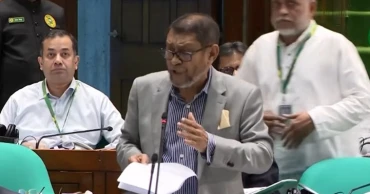
Measles surge stems from past vaccination gaps, minister tells JS
Health and Family Welfare Minister Md Sardar Sakhawat Husain on Monday told Parliament that the recent surge in measles cases in Bangladesh stems from vaccination gaps and mismanagement by previous governments, including the immediate past interim administration.
Responding to a notice raised by National Citizen Party (NCP) MP Akhter Hossen, he said the country’s last special measles-rubella vaccination campaign was conducted in December 2020 and has not been repeated in over five and a half years, although such campaigns are scheduled every four years.
“As a result, many children, including newborns, have remained outside the vaccination coverage and are now infected by measles,” the minister said.
He also clarified an earlier statement made to journalists on March 29, where he had said measles vaccination had not been conducted for the past eight years, which drew concern among field-level health workers.
In his notice, Akhter Hossen said suspected measles-related deaths have exceeded 115 in the past three weeks, with 20 confirmed ones.
He also alleged that thousands of children have been infected by the disease and highlighted serious gaps in healthcare facilities, including a lack of isolation wards, ICUs, and NICUs at district and upazila level hospitals, particularly in the Rajshahi region.
The NCP lawmaker further noted that although measles vaccination in Bangladesh typically begins at nine months of age, children as young as six months are now being infected, sparking concerns over surveillance and diagnosis.
In response, the minister said emergency vaccination drives have already begun in 30 high-risk upazilas across 18 districts from April 5 under the directive of Prime Minister Tarique Rahman.
The campaign targets children aged 6 to 59 months, with a goal of vaccinating 1.2 million children in the first phase.
“On the first day, 73,000 children were vaccinated against a target of 76,000 in 30 upazilas, achieving a 96% coverage,” Sakhawat said.
The programme will be expanded to Dhaka, Mymensingh and Barishal city corporations from April 12, and nationwide rollout is scheduled from May 3. Simultaneously, vitamin A capsules are also being administered.
Addressing concerns about hospital readiness, the minister said isolation wards have been set up in government hospitals nationwide.
In Rajshahi, an additional 250 isolation beds are being prepared, he said, adding that ICU and ventilation facilities are being strengthened, and a low-cost oxygen delivery system developed by icddr,b is being deployed.
Sakhawat also said the government is procuring vaccines on an emergency basis and that the World Bank has assured support, including loans and grants, to help combat the outbreak.
In a supplementary question, Akhter Hossen alleged persistent field-level mismanagement, saying despite budget allocations, patients are not receiving adequate isolation or ICU support.
He also noted that around 25% of the health sector budget remains unspent, including Tk 11,000 crore in the 2024-25 fiscal year.
In reply, the minister said Tk 604 crore in unspent funds from the COVID-19 period is being used to procure additional measles vaccines through UNICEF.
He added that all leave for health workers has been cancelled to strengthen field-level supervision, and coordination with development partners, including the World Bank and UNICEF, has been intensified.
5 months ago

Cholera vaccination campaign inaugurated among Rohingyas on Bhasan Char
Under the leadership of the Communicable Disease Control (CDC) of the Directorate General of Health Services (DGHS) and with support from the World Health Organization (WHO), icddr,b, and the Civil Surgeon Office of Noakhali, launched a cholera vaccination campaign in Noakhali's Bhasan Char Monday.
About 30,000 forcibly displaced Myanmar nationals (FDMNs), commonly referred to as Rohingyas, will be vaccinated using an orally-administered vaccine through this campaign.
Dr Mohammad Nazmul Islam, director of Disease Control and Line Director Disease Control Program at the DGHS, and Dr Firdausi Qadri, acting senior director of the Infectious Diseases Division of the icddr,b, were present at the inauguration of the vaccination campaign.
Dr Masum Iftekhar, district civil surgeon of Noakhali, was also present.
Since December 2020, almost 32,000 Rohingya people have been relocated to Bhasan Char. Unfortunately, a diarrhoeal disease outbreak took place in Bhasan Char in 2021 that affected 1,500 people and killed four.
To prevent a similar outbreak from happening, the CDC, DGHS, icddr,b, the WHO, and other development partners have taken the initiative to carry out an oral cholera vaccination (OCV) program in Bhasan Char.
At the inauguration, Nazmul said: "The government has been undertaking various initiatives to protect the forcibly displaced Myanmar nationals from infectious diseases. In line with that, we are undertaking an oral cholera vaccination campaign to keep them safe."
Read more: Prolonged presence of vast Rohingyas in Bangladesh "not tenable" in any consideration, Momen says in New York
Firdausi appreciated the collaborative vaccination effort and said, "icddr,b along with the Communicable Disease Control of the DGHS, other government agencies and development partners have successfully administered around five million doses of oral cholera vaccine to the Rohingya population since they fled persecution in Myanmar and arrived in Cox's Bazar in 2017.
The effort possibly prevented large epidemics and saved many lives. Encouraged by the success, we extended our efforts to Bhasan Char, which is susceptible to infectious diseases like cholera. Bangladesh's exemplary efforts in humanitarian settings should serve as a model for other parts of the world."
Starting on Monday, February 27, the first dose of the OCV campaign will continue until Wednesday, March 1, from 8 am to 5 pm through 25 centres in Bhasan Char. The second dose of the vaccine will be administered, possibly on March 19.
The two-dose Euvichol-Plus Cholera vaccine produced by EuBiologics of South Korea, which is given at least 14 days apart, will be administered to those who are above one year of age.
This vaccine is prequalified by the WHO and can be given to all except pregnant women and those who have received other vaccines within the last 14 days.
3 years ago

Thailand reinstates foreign arrival vaccination requirement
The Civil Aviation Authority of Thailand will reinstate the requirement that all international passengers show proof of full (two doses) vaccination before boarding flights to Thailand.
Saksayam Chidchob, Transport Minister of Thailand, stated yesterday that the Civil Aviation Authority had now formally notified concerned parties about the change in arrival rules for international travelers over the age of 18 that will take effect tomorrow, reports Bangkok Post.
“They will last at least until the end of the month,” he said.
Also Read: Bangladesh-Vietnam direct flights may begin this year-end
Everyone entering the nation needs to provide documentation of a complete immunization record or a letter of proof that they have recovered from Covid-19 infection in the last six months. Travelers who are unvaccinated must provide documentation explaining why they cannot receive a vaccination.
Airlines are required to check these documents before boarding passengers and are responsible for returning those who do not have the proper documentation to their point of origin.
The guidelines go into effect at the same time that China's border reopens following nearly three years of closures and restrictions.
3 years ago

China races to vaccinate elderly, but many are reluctant
Chinese authorities are going door to door and paying people older than 60 to get vaccinated against COVID-19. But even as cases surge, 64-year-old Li Liansheng said his friends are alarmed by stories of fevers, blood clots and other side effects.
“When people hear about such incidents, they may not be willing to take the vaccines,” said Li, who had been vaccinated before he caught COVID-19. A few days after his 10-day bout with the virus, Li is nursing a sore throat and cough. He said it was like a “normal cold” with a mild fever.
China has joined other countries in treating cases instead of trying to stamp out virus transmission by dropping or easing rules on testing, quarantines and movement as it tries to reverse an economic slump. But the shift has flooded hospitals with feverish, wheezing patients.
The National Health Commission announced a campaign Nov. 29 to raise the vaccination rate among older Chinese, which health experts say is crucial to avoiding a health care crisis. It’s also the biggest hurdle before the ruling Communist Party can lift the last of the world’s most stringent antivirus restrictions.
China kept case numbers low for two years with a “zero-COVID” strategy that isolated cities and confined millions of people to their homes. Now, as it backs off that approach, it is facing the widespread outbreaks that other countries have already gone through.
The health commission has recorded only six COVID-19 fatalities this month, bringing the country’s official toll to 5,241. That is despite multiple reports by families of relatives dying.
China only counts deaths from pneumonia or respiratory failure in its official COVID-19 toll, a health official said last week. That unusually narrow definition excludes many deaths other countries would attribute to COVID-19.
Experts have forecast 1 to 2 million deaths in China through the end of 2023.
Li, who was exercising at the leafy grounds of central Beijing’s Temple of Heaven, said he is considering getting a second booster due to the publicity campaign: “As long as we know the vaccine won’t cause big side effects, we should take it.”
Neighborhood committees that form the lowest level of government have been ordered to find everyone 65 and older and keep track of their health. They are doing what state media call the “ideological work” of lobbying residents to persuade elderly relatives to get vaccinated.
In Beijing, the Chinese capital, the Liulidun neighborhood is promising people over 60 up to 500 yuan ($70) to get a two-dose vaccination course and one booster.
Read more: China launches Covid-19 vaccine inhaled through mouth
The National Health Commission announced Dec. 23 the number of people being vaccinated daily had more than doubled to 3.5 million nationwide. But that still is a small fraction of the tens of millions of shots that were being administered every day in early 2021.
Older people are put off by potential side effects of Chinese-made vaccines, for which the government hasn’t announced results of testing on people in their 60s and older.
Li said a 55-year-old friend suffered fevers and blood clots after being vaccinated. He said they can’t be sure the shot was to blame, but his friend is reluctant to get another.
“It’s also said the virus keeps mutating,” Li said. “How do we know if the vaccines we take are useful?”
Some are reluctant because they have diabetes, heart problems and other health complications, despite warnings from experts that it is even more urgent for them to be vaccinated because the risks of COVID-19 are more serious than potential vaccine side effects in almost everyone.
A 76-year-old man taking his daily walk around the Temple of Heaven with the aid of a stick said he wants to be vaccinated but has diabetes and high blood pressure. The man, who would give only his surname, Fu, said he wears masks and tries to avoid crowds.
Older people also felt little urgency because low case numbers before the latest surge meant few faced risk of infection. That earlier lack of infections, however, left China with few people who have developed antibodies against the virus.
“Now, the families and relatives of the elderly people should make it clear to them that an infection can cause serious illness and even death,” said Jiang Shibo of the Fudan University medical school in Shanghai.
Read more: Reports of severe COVID in China are "extremely concerning", WHO
More than 90% of people in China have been vaccinated but only about two-thirds of those over 80, according to the National Health Commission. According to its 2020 census, China has 191 million people aged 65 and over — a group that, on its own, would be the eighth most populous country, ahead of Bangladesh.
“Coverage rates for people aged over 80 still need to be improved,” the Shanghai news outlet The Paper said. “The elderly are at high risk.”
Du Ming’s son arranged to have the 100-year-old vaccinated, according to his caretaker, Li Zhuqing, who was pushing a face-mask-clad Du through a park in a wheelchair. Li agreed with that approach because none of the family members have been infected, which means they’d be more likely to bring the disease home to Du if they were exposed.
Health officials declined requests by reporters to visit vaccination centers. Two who briefly entered centers were ordered to leave when employees found out who they were.
3 years ago

Govt starts administering 2nd booster dose of Covid-19 vaccine in Bangladesh
The government started administering the fourth dose (second booster) of Covid-19 vaccine today.
Professor Dr Ahmedul Kabir, additional director general (ADG) of the Directorate General of Health Services (DGHS), inaugurated the campaign at 9:30 am at Kurmitola General Hospital in Dhaka.
The government has taken the initiative to administer a fourth dose against Covid-19 as the antibody from the vaccine doesn't last long, said Ahmedul Kabir.
“Our aim is to vaccinate 80 lakh people in five categories at the moment though four crore people are eligible to receive the fourth dose in the country. Already 460 people have received the fourth dose on a trial basis,” he said.
Read More: 4th dose of Covid vaccine to be administered from Dec 20
The priority will be given to frontline workers and pregnant women, he added.
Dr Shamshul Haque, DGHS director of the vaccine campaign, said 15 crore people got the first dose, 12 crore the second dose, and 6.5 crore the third dose of vaccine against Covid-19.
“Still there are 1.33 lakh doses of vaccine in stock and will bring more after administering those. There are 11.5 crore people aged above 18 years and all will get vaccinated with the second booster dose in phases,” he added.
According to an earlier announcement, the fourth dose will be given at seven centers in the beginning. One hundred people will be vaccinated at each designated centre and they will be kept under observation for two weeks, said the ADG. All citizens having health risks will be vaccinated with the second booster dose from January 1 next year.
Read More: Citizens aged above 60 to get 4th dose of Covid vaccine: Health Minister.
3 years ago

Vaccination of children aged 5-11 years from Oct 11 in districts, upazilas
The government will start inoculating children aged between 5 to 11 years against Covid-19 in districts and upazilas from October 11.
A total of 2,26,38,737 children across the country will be brought under the vaccination campaign, said Dr Md Anwar Hossain Howladar, Secretary of Health Services Division under the Ministry of Health.
The date was announced at a national advocacy workshop on vaccinating children in the city Saturday.
From October 11 children at municipality level will be vaccinated and thus children at community level will get the Covid-19 vaccines, said the secretary.
Read: Bangladesh rolls out Covid vaccination programme for kids
With this, those who did not receive vaccine earlier will be brought under the coverage, he added.
“Many countries have no started vaccinating children yet but we have. We sought approval from the World Health Organization earlier and immediately after getting approval we’ve started vaccination campaign,” said the secretary.
4 years ago

First dose of Covid-19 vaccine won’t be administered after Oct 3: Health Minister
Almost 33 lakh people are yet to get the first dose of Covid-19 vaccine, but the government has decided to stop administering the first dose by October 3, Health Minister Zahid Maleque said today.
“Nearly 33 lakh people did not receive their first jab yet while 94 lakh people did not receive their second shot of Covid-19 vaccine across the country,” he said while speaking at a workshop over Covid-19 vaccination for children, aged 5-11 years, held at a Dhaka hotel.
He also urged people, who have not taken their first Covid-19 vaccine dose yet, to take the shot as soon as possible.
Read: Covid-19 vaccine consignment for kids arrive in Dhaka
“After the month of October, there is a possibility of first and second doses of Covid-19 vaccine being out of stock. If some remain, those will be expired. So, those who did not receive first, second and booster doses, have been asked to take their respective jabs immediately,” said the health minister.
Currently, 2.5 lakh people are working to ensure Covid-19 vaccination and of them 60,000 are administering the vaccines, he said, adding already 30 crore doses of Covid-19 vaccine have been administered across the country.
Talking about administering Covid-19 vaccine among children, Maleque said ten lakh children have received Covid-19 jabs and some 2.15 lakh children are waiting to receive the jabs.
Read: US donates additional 10mn Pfizer COVID-19 vaccine doses to Bangladesh
4 years ago