LDC graduation

Bangladesh must strengthen export competitiveness before LDC graduation: RAPID
Bangladesh must urgently strengthen its export competitiveness and diversify beyond its heavy reliance on readymade garments (RMG) to successfully navigate its graduation from the Least Developed Country (LDC) category, economists and policymakers said on Monday.
The observations came at a discussion on “LDC Graduation and Competitiveness” organised by Research and Policy Integration for Development (RAPID) at the Jatiya Press Club, where RAPID Chairman MA Razzaque presented a policy paper assessing Bangladesh's export prospects after LDC graduation.
Information Minister Zahir Uddin Swapan attended the programme as the chief guest.
Presenting the paper, Razzaque said Bangladesh's export sector has been facing mounting competitiveness challenges even before LDC graduation, with merchandise exports showing little momentum over the past four years.
According to the paper, Export Promotion Bureau (EPB) data show Bangladesh's merchandise exports declined by 0.6 percent in FY26, while RMG exports dropped by 1.6 percent.
UNCTAD data also indicate Bangladesh's exports grew by only 2 percent in 2025, compared with 7 percent growth in global exports.
The study noted that Bangladesh is falling behind several regional competitors. Cambodia recorded export growth of 17.3 percent in 2025, Vietnam 16.8 percent, Indonesia 6.9 percent, Sri Lanka 6.3 percent and China 5.5 percent.
Although Bangladesh exported goods worth about $48.2 billion in 2025 compared with Cambodia's $31.3 billion, Cambodia has rapidly narrowed the gap after expanding exports by around $9 billion since 2022, the paper said.
Razzaque warned that Bangladesh's exports remain excessively concentrated in a narrow range of products, particularly garments, making the economy more vulnerable to external shocks and intensifying global competition.
He said Bangladesh's export concentration is about four times higher than the average among developing countries, while new products contribute very little to export growth.
The study also highlighted that Bangladesh has become less export-oriented over time, with exports and trade accounting for a declining share of GDP, weakening one of the country's principal engines of structural transformation.
The paper cautioned that LDC graduation will reshape Bangladesh's access to key international markets.
While Australia and the United Kingdom are expected to retain largely duty-free access for Bangladeshi products under their existing preference schemes, exporters could face higher tariffs in major destinations, particularly the European Union, India, China, Japan and South Korea.
According to the presentation, even if Bangladesh secures the EU's GSP+ facility after graduation, apparel exports would still face a 12 percent tariff because of safeguard provisions, reducing the expected benefits for the country's largest export sector.
The study also warned that recently concluded trade agreements between the European Union and countries such as India and Vietnam could further erode Bangladesh's competitive advantage in the EU market.
Simulation exercises presented at the event suggested Bangladesh could face significant export losses under different post-graduation scenarios if competitiveness is not strengthened through policy reforms.
Beyond tariffs, Razzaque identified exchange-rate management, high domestic inflation, weak export diversification, rising production costs and limited productivity growth as key factors undermining Bangladesh's global competitiveness.
He stressed that nominal currency depreciation alone would not be sufficient to improve export performance if domestic inflation continues to offset its benefits.
The paper called for a comprehensive strategy centred on export diversification, productivity enhancement, trade facilitation, investment in non-RMG sectors, improved logistics, better infrastructure and stronger trade negotiations to ensure a smooth and sustainable transition after LDC graduation.
The discussion brought together policymakers, economists, business leaders and trade experts to examine policy options for maintaining Bangladesh's export momentum in the post-LDC era.
2 months ago
Bangladesh needs $300m investment to diversify exports before LDC graduation: Study
Bangladesh must urgently diversify its export base beyond garments and mobilise around $300 million in targeted public investments across six non-RMG sectors to cushion the economic blow of graduating from the Least Developed Country (LDC) status, according to a new competitiveness study.
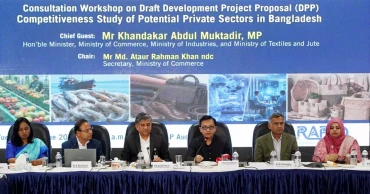
The findings of the study were presented by MA Razzaque, chairman of Research and Policy Integration for Development (RAPID), at a consultation workshop titled “Draft Development Project Proposal (DPP): Competitiveness Study of Potential Private Sectors in Bangladesh” held in the CIRDAP auditorium on Tuesday.
Commerce Minister Khandakar Abdul Muktadir was the chief guest at the event with Commerce Secretary Ataur Rahman Khan in the chair.
The study, prepared under the World Bank-supported Export Competitiveness for Jobs (EC4J) Project Phase II, maps out sector-specific constraints and a portfolio of nine infrastructure interventions targeting leather goods and footwear, agro-processed food, frozen fish and shrimp, handicrafts, IT-enabled services, semiconductors, and pharmaceuticals.
LDC Graduation
Bangladesh is on course to graduate from LDC status, which will strip the country of duty-free, quota-free access to major export markets and subject its goods to MFN tariff rates. The combined effect, the study warns, will raise the cost of exporting and erode Bangladesh's price competitiveness at a time when it can least afford it.
Under the EU's standard GSP regime, Bangladeshi apparel exports could face tariffs of up to 12 percent compared to zero under the current Everything But Arms arrangement. Footwear will face a 6 percent duty, fish a 7.16 percent tariff, and leather goods between 0 and 2 percent. Canada's GPT regime could subject apparel to average tariffs of 16 percent, and Japan's exclusion of leather from its concluded EPA would leave that sector exposed to MFN tariffs of around 11 percent.
A SMART partial-equilibrium simulation presented at the workshop projects Bangladesh's total export fall across key markets: a loss of $486.4 million, equivalent to 26.4 percent of market exports, to India; $5.8 billion, or 22.1 percent, to the EU under standard GSP; and $175.1 million, representing 10.4 percent of market exports, to China.
Recent UNCTAD estimates place total exports at risk at $17.7 billion, or 32.2 percent of Bangladesh's export base, with the EU accounting for 77.2 percent of projected losses and apparel and footwear making up 97 percent of exposure.
The study underscores just how structurally exposed Bangladesh is. Its export concentration, measured by the Herfindahl-Hirschman Index, is four times the developing country average and higher even than the LDC average, a reflection of the country's near-total dependence on RMG, which dominates shipments to every major market.
Of Bangladesh's 1,393 non-RMG products, only 346 export more than $1 million annually. Only 2 to 5 percent of domestically grown crops are ever processed for export. The country holds less than 1 percent of the world leather goods market despite a $101.7 billion global market size, and less than 0.05 percent of global fish and shrimp trade despite possessing natural aquaculture advantages.
Using the ITC Export Potential Map, RAPID estimates Bangladesh's overall untapped export potential at $32 billion, of which $5 billion relates to non-RMG products. Leather goods and footwear alone account for $2.6 billion of that unrealised potential. Home textiles, agro products, and sea animal products follow.
Six Priority Sectors
The study identifies six priority non-RMG sectors for Phase II intervention: agro-processed products, frozen fish and shrimp, leather goods and footwear, handicrafts, IT and IT-enabled services, and semiconductors. A seventh sector, pharmaceuticals, was subsequently added to the intervention portfolio.
Each sector faces acute structural bottlenecks that suppress export competitiveness. Bangladesh has only five mango hot water treatment units against Thailand's fifty or more, making it legally ineligible to export mangoes to the United States, Japan, or Australia. The government's sole irradiation facility in Savar has been closed for two years, cutting off access to the North American spice market. Cold chain gaps cause an estimated 26 percent post-harvest loss for fruits alone.
In shrimp farming, the sector requires 5 billion larvae annually but receives only 100 to 150 million from safe domestic sources, leaving farms reliant on disease-prone wild-caught broodstock. Bangladesh's fish and shrimp exports remain stuck in low-value raw forms, whole frozen shrimp while competitors like Vietnam command premium prices through value-added processed products.
The leather sector cannot prove the provenance of its raw material to European buyers, who increasingly require full supply chain traceability. In handicrafts, artisans capture less than 20 percent of the final export price, with middlemen absorbing most of the value.
The IT sector lacks GDPR-aligned data protection legislation, deterring European clients. And Bangladesh currently has only around 550 semiconductor designers against a minimum threshold of 5,000 needed to compete credibly.
The nine proposed interventions carry a combined project-level cost of $140.43 million, with projected economic benefits of $216.06 million, implying an overall positive return. Individual benefit-cost ratios range from 2.05 for the two Common Facility Centres for leather and footwear, to 4.59 for the National Drug Testing Laboratory.
The National Drug Testing Laboratory, at $5.13 million, will be housed at the Faculty of Pharmacy at the University of Dhaka and upgraded to achieve WHO prequalification and ISO/IEC 17025 accreditation. Its estimated annual economic benefit of $4.50 million reflects avoided overseas testing costs, faster export certification, and expanded pharmaceutical market access.
The IT/ITES advanced training programme across 22 centres, with a $3.82 million cost, carries the second-highest BCR of 4.11, driven primarily by wage premiums for trained workers placed in export-oriented firms.
Three Hot Water Treatment and quarantine centres for agro-processed exports, at $7.85 million, carry a BCR of 3.33, directly addressing phytosanitary compliance gaps that block mango exports to Japan and Europe. Two Brood Multiplication Centre hatcheries for the shrimp sector, at $5.41 million, carry a BCR of 2.13, with economic benefits concentrated in disease-loss reduction and improved post-larval survival rates.
The study also proposes establishment of two large General Engineering and Technology Centres, one at BSCIC Sirajdikhan in Munshiganj at $33.73 million and another at the Mirsarai Economic Zone in Chattogram at $33.79 million, to supply skilled workers and shared technical services to industrial clusters.
Across all components, including a $34 million LDC graduation preparedness component covering policy studies and private sector export readiness support, $81.85 million in construction and infrastructure, $134.65 million in machinery and equipment, $11 million in public sector capacity building, $12.5 million in private sector and business association support, and $20 million for project management, the total EC4J Phase II programme is estimated at $300 million with a 2 percent contingency.
Drawing on Phase I implementation experience, the study recommends against government-only management models, noting that the 50:50 public-private ownership structure for technology centres proved effective in ensuring financial sustainability.
For Phase II, the study recommends early private sector engagement in technology centre operations, shift to behaviour-change communication emphasising financial incentives, and resolution of procurement bottlenecks before facilities are commissioned.
Over a five-year horizon, the projected export growth from Phase II interventions could generate between 57,000 and 86,000 new jobs in agro-processing, 124,000 to 249,000 in frozen fish and shrimp, the largest employment-generating sector with 1.24 million current workers, 13,000 to 16,000 in IT-enabled services, and 20,000 to 24,000 in leather goods and footwear.
The study cautions that these estimates assume constant labour productivity and that actual outcomes may vary where growth is driven by automation or higher value-addition per unit rather than proportional volume expansion.
2 months ago

Trade deals alone won't save Bangladesh after LDC without reforms: SANEM
As Bangladesh is entering one of the most consequential economic transitions in its post-independence history, a major new policy study warns that the country's trade policy apparatus is not yet equipped to handle what lies ahead.
The paper titled “Strengthening Trade Competitiveness: Bangladesh's Strategy for Effective FTAs and EPAs”, authored by Prof Selim Raihan of Dhaka University and Executive Director of the South Asian Network on Economic Modeling (SANEM), was published recently under a joint SANEM and Australian High Commission policy paper series.
Using the Global Trade Analysis Project (GTAP) general equilibrium model, it simulates 10 distinct trade scenarios to measure the actual impact on Bangladesh's welfare, GDP, exports, and industrial structure under different policy choices.
Bangladesh's graduation from Least Developed Country (LDC) status, formally scheduled for 2026, has long been framed as a development milestone. The paper acknowledges that reality but immediately pivots to the risks it carries.
Bangladesh’s structural advantage of preferential market access, particularly the European Union's Everything But Arms (EBA) initiative, is now eroding as the recently concluded India-EU free trade agreement, the paper warns, will narrow Bangladesh's historical margin sharply, if not eliminate it altogether.
Bangladeshi exports will face standard tariff regimes when the EU and UK transition periods for Bangladesh's LDC preferences expire by 2029, unless new arrangements are secured.
The GTAP model quantifies the cost of inaction. In the post-LDC baseline scenario, where Bangladesh graduates with no compensating trade agreements, welfare falls by 2.4 percent of GDP, real GDP contracts by 1.5 percent, and exports shrink by 8.7 percent.
The sharpest blow lands on textiles and clothing, which contracts by nearly 8 percent. The paper calls this the "cliff-edge" effect.
"Trade agreements can support growth," the paper states, "but domestic reforms are the primary driver of sustained and inclusive welfare gains."
Japan EPAThe paper gives particular attention to the Economic Partnership Agreement (EPA) signed with Japan in February, Bangladesh's most comprehensive bilateral trade deal to date, and its first substantive preferential agreement beyond a limited arrangement with Bhutan inked in 2020.
The model projects the Japan EPA will deliver a welfare gain of 0.7 percent of GDP, a GDP rise of 0.8 percent, and export growth of 3.0 percent. The paper characterises these as "reliable and broad-based", the kind of stable, manageable adjustment appropriate for a country in transition.
But it cautions against complacency. The agreement covers over 7,000 tariff lines and extends into services, investment, intellectual property, labour standards, and regulatory cooperation.
The paper said customs systems must be modernised, rules of origin compliance strengthened, and quality and hygiene standards met for Japanese import approval. Without institutional upgrading, preferential access will remain largely theoretical.
"The Japan EPA is both an opportunity and a test," the paper states. "It imposes a need for preparedness that goes beyond the normal trade policy agenda."
China and RCEP
The two scenarios generating the largest export figures – a China FTA and RCEP accession – come with a prominent structural warning that the paper treats as among its most important findings.
In both cases, the textiles and clothing sector booms dramatically, up 10.99 percent under a China FTA and 13.36 percent under RCEP accession. But light manufacturing contracts by approximately 9 to 10 percent and heavy manufacturing by 8 to 10 percent in both scenarios.
The paper described this as "a classic case of specialisation driven by comparative advantage, but in a potentially unbalanced way."
Pursuing these deals risks deepening Bangladesh's dependence on garments while hollowing out broader industrial capacity through import competition from stronger regional partners, it said.
"This is a critical cautionary point," the paper notes. "The rise in exports is significant, but this structural result may not be so positive if it means over-relying on one sector and the erosion of industrial diversity."
The paper also flags an important modelling caveat: both scenarios assume full tariff liberalisation, whereas real-world RCEP commitments involve phased reductions, sensitive lists, and varying degrees of openness. Actual gains would be lower and more gradual, as would adjustment costs.
India FTA and The US FrameworkThe India FTA scenario reveals a pattern the paper considers diagnostically important. Exports rise by 5.7 percent, a solid headline figure, but welfare gains amount to only 0.2 percent of GDP and GDP growth just 0.3 percent.
The paper attributes this divergence to the fact that India already grants duty-free or near-duty-free access to a large share of Bangladeshi exports.
The incremental tariff benefit of a formal FTA is therefore limited. Meanwhile, import competition from India, particularly in light manufacturing, which contracts by 4.06 percent under this scenario, erodes gains elsewhere.
"The India FTA seems to solidify Bangladesh's comparative advantage in garments, but at the expense of undermining other sectors of industry," the paper concludes.
It evaluates the emerging bilateral trade framework with the United States (US) with notable candour. The arrangement under discussion offers selective tariff relief rather than comprehensive liberalisation, including conditions such as zero-tariff access on US imports, procurement commitments for American aircraft and energy products, and regulatory alignment in certain sectors.
The paper identifies a potential imbalance between the obligations Bangladesh would assume and the export gains it stands to receive.
It does not recommend withdrawal from negotiations, acknowledging that engagement with Washington carries geopolitical and investment-signalling value. But it warns that Bangladesh must enter such discussions with clear priorities and avoid binding itself to long-term commitments that do not serve its development interests.
Gulf FTAThe Gulf Cooperation Council (GCC) scenario, a newer inclusion in the modelling exercise, produces modest but targeted results: welfare up 0.2 percent, with exports and imports each rising 1.7 percent. The standout sectoral gain is in processed food, which registers the highest food-sector performance across all ten scenarios.
The paper argues the GCC holds genuine diversification potential, particularly given Bangladesh's large expatriate community and the expanding global halal economy spanning food, pharmaceuticals, and consumer goods.
However, it stresses that tapping this market requires credible halal certification systems, reliable supply chains, and compliance with international quality standards, none of which are yet fully in place.
Critical GapsAlongside the modelling, the paper conducts an extensive audit of Bangladesh's institutional readiness and identifies several critical shortfalls.
On negotiating capacity, it finds a shortage of skilled trade negotiators and legal experts capable of handling the complexity of modern FTAs and EPAs.
Responsibilities are fragmented across multiple ministries, institutional memory is weak, and private sector consultation is informal and inconsistent.
On trade defence, the paper notes that tools such as anti-dumping duties and safeguard measures, essential as markets open, are rarely deployed. The Bangladesh Trade and Tariff Commission lacks sufficient staffing and technical expertise. Awareness among affected firms of how to file cases is low, leaving domestic industries exposed to unfair import competition without adequate remedy.
On the fiscal dimension, the paper raises a concern that trade policy discussions frequently overlook: import duties constitute a major share of government revenue.
As Bangladesh liberalises tariffs under FTAs, fiscal pressures will mount. This must be addressed through a parallel transition to stronger domestic taxation, particularly a modernised VAT system and cannot be deferred.
Four-Pillar Framework
Drawing on both the modelling results and the institutional audit, the paper advances a four-pillar strategic framework.
The first pillar calls for sequencing trade partners by strategic priority, beginning with quality agreements such as Japan that build institutional capacity and establish compliance benchmarks, then engaging China and India more carefully in the medium term, and approaching broader regional frameworks like RCEP only after domestic readiness is secured.
The second pillar recommends establishing a dedicated FTA Negotiating Cell within the Ministry of Commerce, a permanent, multidisciplinary team capable of providing evidence-based negotiating positions, retaining institutional memory across negotiations, and coordinating across government.
The third pillar focuses on domestic reform as the primary driver of competitiveness: simplifying the tariff structure, modernising customs administration through a National Single Window, and investing in export diversification into pharmaceuticals, footwear, agro-processing, and higher-value-added garment segments.
The fourth pillar emphasises proactive trade diplomacy, engaging the WTO actively to preserve post-LDC policy flexibilities, building coalitions with other developing countries to strengthen Bangladesh's negotiating voice, and securing generous transition periods within agreements to allow industries adequate time to adjust.
The paper's overarching argument is captured in a phrase it returns to repeatedly: bridging the gap between access and ability. Trade agreements can open markets, but they cannot ensure that firms are ready to compete. They can reduce tariffs, but not structural weaknesses in productivity, logistics, or compliance.
The paper recommends the creation of a National FTA Roadmap with specific milestones and annual performance assessments, situating trade agreements within a cross-governmental and economy-wide strategy rather than treating them as isolated diplomatic achievements.
"The effectiveness of Bangladesh's FTA and EPA strategy will not be judged by the number of agreements signed," the paper concludes. "It will be judged by outcomes, whether exports grow and diversify, whether firms become more competitive, and whether new opportunities translate into better jobs and higher incomes."
4 months ago

Bangladesh braces for hike in commodity prices, warns Khosru
Finance and Planning Minister Amir Khosru Mahmud Chowdhury on Sunday warned that prices of essential commodities are set to rise in Bangladesh in the coming days due to ongoing global supply chain disruptions triggered by the Middle East conflict.
“Due to the supply chain crisis, not only fuel but other commodities will also get pricier in Bangladesh,” he told reporters after a National Multi-Stakeholder Consultation Workshop on LDC graduation preparedness at the Planning Ministry in Sher-e-Bangla Nagar.
Noting that this is not a problem affecting only Bangladesh but a global challenge, the minister said the ongoing energy crisis is already casting an adverse shadow over the national economy. “The prices of food items will go up as a consequence of this crisis.”
He also acknowledged the growing fiscal pressure on the government, pointing out that while other countries have significantly raised fuel prices, Bangladesh has refrained from doing so – a decision, which is straining state funds.
"How long we can keep fuel prices unchanged is difficult to say with certainty. We are purchasing fuel using state treasury funds, which will ultimately be a loss for the people," the minister said, adding that any decision on fuel pricing will be taken with public welfare as the foremost consideration.
On the question of LDC graduation, he ruled out any immediate move in that direction, stating that the BNP government has been working in line with its electoral manifesto to strengthen the economy.
Bangladesh, Khosru emphasised, will consider LDC graduation only after achieving adequate economic preparedness.
5 months ago

CPD calls for tax justice, FDI reform, review of US trade deal
Centre for Policy Dialogue (CPD) on Saturday urged major reforms in tax collection, business climate, trade deals and foreign investment management, warning that without evidence-based decisions and strong accountability, Bangladesh’s post-election economic transition could be at risk.
CPD said Bangladesh must urgently overhaul its revenue system, ease the cost of doing business, review recently signed trade agreements and strengthen foreign direct investment (FDI) facilitation to ensure sustainable growth and smooth graduation from Least Developed Country (LDC) status.
Presenting the study titled ‘New Government’s Priorities in Addressing Socio-economic Challenges: Introducing Knowledge-based Decision Making in the Executive and Legislative Process’ at its Dhanmondi office, CPD Research Director Dr Khondaker Golam Moazzem highlighted structural weaknesses in Sections 3, 4, 5 and 6 of the report covering revenue mobilisation, business environment, trade policy and FDI.
Tax-GDP Ratio
CPD said Bangladesh’s tax-to-GDP ratio has fallen to approximately 6.8 percent, the lowest in South Asia, significantly weakening fiscal capacity at a time of rising development needs.
The newly elected government has pledged to raise the ratio to 10 percent in the medium term and 15 percent by 2035. But CPD cautioned that revenue sustainability would remain uncertain without prioritising tax justice and plugging systemic leakages.
The study identified ‘leaking revenue’ as the weakest area across all decision-making indicators.
To address regressivity and inefficiency, CPD recommended consolidating the current eight VAT slabs into a simplified three-tier structure: standard, reduced and zero rates, with a long-term transition toward a two-tier system.
It also proposed eliminating tax exemptions for non-essential services, including exclusive clubs and stock market-related entities, and phasing out tax cut incentives for fossil fuel-based power producers.
Mandatory digital tax return submission, establishment of a digital tax dispute resolution system within 30–45 days and performance-based corporate tax incentives were among the key recommendations.
CPD further suggested linking revenue gains from VAT rationalisation to direct transfers for low-income households instead of broad reduced-rate exemptions.
Business Environment
The report noted that Bangladesh’s business environment continues to suffer from transport-logistics bottlenecks, unreliable utilities, regulatory complexity, corruption, weak human capital alignment and fragile banking systems.
It warned that corruption in administrative processes remains the most severe constraint to ensuring an enabling business environment.
Despite digital reforms such as the partial launch of “BanglaBiz” and activation of the Bangladesh Single Window system, CPD found that transparency and accountability remain weak.
The study recommended full backend digital integration across agencies under a unified document management framework to eliminate duplication of business licensing requirements.
It also called for establishing both a Tax Ombudsman and a Banking Ombudsman to address grievances and strengthen institutional accountability.
CPD raises concerns over power overcapacity, pushes for 'no new fossil' fuel policy
In the financial sector, CPD flagged high non-performing loans (NPLs) and limited SME access to financing as major barriers.
Although reforms such as the Bank Resolution Ordinance 2025 and Deposit Protection Ordinance 2025 were introduced, the think tank said credit allocation decisions lack transparency and efficient implementation.
It urged Bangladesh Bank to innovate credit assessment models, develop inclusive SME financing options with lower collateral requirements and exercise caution in interest rate reduction to avoid inflationary pressures.
US-Bangladesh Trade Agreement
CPD raised serious concerns over the recently signed “Agreement on Reciprocal Trade” between Bangladesh and the United States, saying several clauses may restrict Bangladesh’s trade policy autonomy.
The study alleged that the agreement includes discriminatory provisions relating to import licensing, technical standards and digital trade.
According to CPD, Bangladesh would be required to gradually eliminate tariffs on US-origin goods while facing potential additional tariffs if deemed non-compliant.
The report also claimed that Bangladesh would not be allowed to impose digital service taxes on US companies or introduce customs duties on electronic transmissions.
Other provisions cited include restrictions on retaliatory VAT measures, limitations on agreements with third countries that conflict with US standards and preferential access for certain US goods.
CPD warned that such clauses could severely jeopardise Bangladesh’s smooth transition strategy (STS) for LDC graduation, particularly in negotiating balanced free trade agreements (FTAs) and economic partnership agreements (EPAs).
It urged the government to withdraw from the agreement before formal notification exchange and revisit other deals, including the EPA with Japan, particularly provisions related to duty-free LNG imports that may delay energy transition.
FDI Reform
CPD identified six major structural challenges in attracting and retaining foreign investment, including fragmented approvals, policy unpredictability, institutional overlap, slow dispute resolution, land access bottlenecks and weak data systems.
The report said investment approvals remain sequential rather than parallel, even after the launch of BanglaBiz offering over 100 services and fast-track foreign loan approvals up to USD 10 million for export-oriented firms.
CPD recommended mandatory API-based integration among the Bangladesh Investment Development Authority (BIDA), National Board of Revenue, Registrar of Joint Stock Companies, Customs, BEZA and BEPZA to ensure simultaneous processing and real-time tracking.
The think tank called for converting profit repatriation commitments — including the 30-working-day resolution target — into binding legal standards through legislative amendments.
It also proposed designating specialised commercial benches within the High Court within 180 days and establishing a full-fledged International Commercial Court within 24 months.
To enhance transparency, CPD recommended creating a unified national FDI monitoring dashboard linked to the government’s target of raising FDI to 2.5 percent of GDP, with quarterly public reporting.
A national readiness audit of economic zones, including litigation-free land and confirmed utility capacity, should be completed within 180 days, the study added.
Dr Moazzem said that raising tax revenue, reducing business costs, negotiating trade agreements and attracting FDI must be guided by knowledge-based decision-making and parliamentary oversight.
He stressed that without structural reforms in fiscal governance, regulatory transparency and institutional accountability, policy initiatives may remain fragmented and ineffective.
“The new government has a strong electoral mandate. The challenge is to translate it into evidence-based, transparent and accountable decision-making,” he said.
CPD’s findings come as the government prepares to implement its first 180-day priority agenda following the February 12 national election.
6 months ago

Bangladesh to seek delay in LDC graduation, says Commerce Minister
The newly elected BNP government will take necessary steps to defer Bangladesh’s graduation from the Least Developed Country (LDC) status, Commerce Minister Khandaker Abdul Muktadir said on Wednesday.
“We will take all required measures to defer the LDC graduation. Work on the matter has already begun,” Muktadir told reporters at the Secretariat on his first day in office.
Muktadir said the government is keen to defer the graduation timeline and will do whatever is necessary to that end.
The initiative has started from the Ministry of Commerce and will be pursued in coordination with the Economic Relations Division (ERD) to expedite required communications and procedures.
Referring to long-standing demands from business leaders, he said the issue is being treated with utmost priority. “There is no obligation to send a letter within the first week, but we have started working on it from today.”
On the recent slowdown in exports, the Commerce Minister said Bangladesh’s export basket remains highly concentrated, with nearly 85 percent of total exports dependent on a single product.
To overcome the vulnerability, Muktadir stressed the need for diversification by adding new products and expanding into new markets. The private sector, particularly investment-oriented entrepreneurs, will receive necessary support, he said.
Responding to concerns over the Ramadan market, Muktadir said stable supply would ensure market stability. “The government has adequate stocks of essential commodities for Ramadan and the subsequent period, with sufficient supplies also in the pipeline. There is no reason to panic over the Ramadan market.”
Explaining the price hikes of certain items at the beginning of Ramadan, he said the increases are often driven by a one-off surge in demand as consumers tend to purchase for the entire month at once, temporarily impacting the retail market. “Such impact does not last long.”
Finance Minister Amir Khosru unveils ambitious reform plan on day one
Asked whether the onset of Ramadan immediately after the new government assumed office poses a major challenge, Muktadir said managing the holy month will be a crucial test for the government. “We must meet people’s expectations. There is no alternative to success.”
On foreign and domestic investment, the minister noted that investment does not flow amid uncertainty. A stable environment is the primary condition for attracting investment, as investors seek assurance of expected returns against their capital and labour.
Muktadir said Bangladesh has a large working-age population, with around 2 to 2.2 million people entering the labour market every year. Investment stagnation over the past two to three years has created significant pressure and failure to address the situation promptly could pose serious risks to employment and the broader economy.
State Minister for Commerce Md Shariful Alam and Commerce Secretary Mahbubur Rahman were present.
Later, the Commerce Minister exchanged views with senior officials and heads of departments under the ministry.
7 months ago

Policy reforms, ethical business key to competitiveness after LDC graduation: Business leaders
Analysts and business leaders on Thursday said comprehensive policy reforms, stronger institutional efficiency and an uncompromising commitment to ethical business practices are crucial for Bangladesh to sustain its competitiveness in the post-LDC graduation era.
The observations came at a high-level discussion titled “Business Climate in Bangladesh: Issues and Challenges of Ethical Practice”, jointly organised by the Federation of Bangladesh Chambers of Commerce and Industry (FBCCI) and the International Business Forum of Bangladesh (IBFB) at the FBCCI office in Motijheel.
Presenting the keynote paper, Dr Khondaker Golam Moazzem, Research Director of the Centre for Policy Dialogue (CPD), called for urgent ‘business process re-engineering’ to lower the cost of doing business and enhance the efficiency of government agencies.
Read More: Top business leaders meet Tarique Rahman, discuss economy, jobs
He said streamlining core services such as licensing, registration and customs clearance must go hand in hand with strengthening integrity and accountability among public officials to remove systemic bottlenecks.
During the open discussion, business leaders said creating a genuinely investment-friendly environment requires swift implementation of digitalisation, automation and a fully functional single window system to ensure transparency and predictability.
IBFB Director M S Siddiqui noted that several existing regulatory frameworks remain misaligned with ease-of-doing-business objectives, which can deter both domestic and foreign investment.
Responding to the concerns, Anti-Corruption Commission (ACC) Secretary Mohammad Kaled Rahim acknowledged procedural complexities in the system but reiterated the commission’s commitment to simplifying processes.
He urged members of the business community to report specific instances of harassment or irregularities to the authorities.
Foreign Secretary Dr Md Nazrul Islam said the interim government has already initiated complex institutional reforms, but emphasised that broad-based “behavioural reform” across both public and private sectors has now become a critical priority.
Read More: Govt signs deal with ‘Shukrishi’ to develop agri-business entrepreneurship
IBFB President Lutfunnisa Saudia Khan said ethical business practices are the foundation of inclusive growth and a stronger global image for Bangladesh.
She stressed that collective responsibility, transparency and continuous dialogue are as important as legal frameworks in addressing the challenges faced by entrepreneurs.
FBCCI Administrator Md Abdur Rahim Khan assured participants that the private sector’s recommendations would be formally conveyed to the government.
He also urged entrepreneurs to uphold responsible and ethical business conduct.
Former FBCCI directors, general body members, FBCCI Secretary General Md Alamgir, Head of FBCCI International Affairs Wing Md Zafar Iqbal, Adviser of FBCCI Safety Council Brig Gen (retd) Abu Nayeem Md Shahidullah, along with leaders from IBFB and various chambers and trade associations attended the event.
7 months ago
Bangladesh’s LDC graduation debate intensifies amid ‘economic risks’
Bangladesh’s scheduled graduation from Least Developed Country (LDC) status in 2026 faces growing uncertainty, with experts warning that deep structural weaknesses and an inadequate transition strategy pose serious risks to the economy.
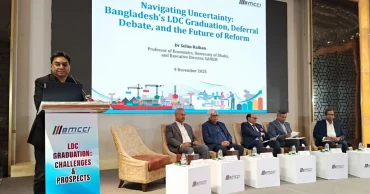
The remarks were made at a seminar on ‘LDC Graduation: Challenges & Prospects’ held on Sunday (9th November 2025) at a city hotel, organised by the Bangladesh-Malaysia Chamber of Commerce and Industry (BMCCI).
Senior policymakers, economists, and industry leaders to discuss strategic imperatives for the post-LDC transition, including trade competitiveness, institutional readiness, and inclusive development joined the seminar.
Commerce Secretary Mahbubur Rahman attended it as the guest of honour, while Professor Dr Selim Raihan, Executive Director of SANEM, delivered the keynote presentation. Economist Dr Zaidi Sattar, Chairman of the Policy Research Institute (PRI), chaired the seminar.
Read more: Tarique for urgent steps to tackle post-LDC graduation challenges
Other speakers included Dr Khondaker Golam Moazzem, Research Director at the Centre for Policy Dialogue (CPD); Dr A Razzaque, Chairman of Research and Policy Integration for Development (RAPID); Anwar-Ul-Alam Chowdhury (Parvez), President of the Bangladesh Chamber of Industries (BCI); and Faruque Hassan, former President of the Bangladesh Garment Manufacturers and Exporters Association (BGMEA).
Commerce Secretary Mahbubur Rahman said, “We request the United Nations General Assembly (UNGA) to visit Bangladesh to assess the latest situation ahead of the potential graduation. In addition to the EU and the USA, the government is in talks with Canada, Australia, Japan, South Korea, and other countries to boost bilateral trade and diversify export destinations.”
Dr Raihan highlighted that Bangladesh’s readiness for LDC graduation is under scrutiny amid global economic volatility and concerns over losing LDC-specific international support measures.
“The core risk lies in the trade sector, given Bangladesh’s heavy reliance on Ready-Made Garment (RMG) exports and duty-free, quota-free (DFQF) market access. The erosion of these trade privileges could cost the country billions in lost earnings and place additional pressure on foreign reserves,” he said.
Read more: Encouraged to see advanced preparation in Bangladesh for post-LDC graduation era: ADB Vice President
He pointed to persistent domestic structural challenges, including macroeconomic stress from low foreign reserves, fiscal gaps, high inflation, and global volatility; structural flaws such as weak tax collection, a fragile banking sector, high export concentration, and limited foreign direct investment (FDI); and reform deficits driven by entrenched ‘rent-seeking networks’ among political, business, and bureaucratic elites that continue to obstruct meaningful policy change
Dr Raihan also critiqued the government’s Smooth Transition Strategy (STS), describing it as ‘overly broad’ with an ‘overextended vision’ that risks becoming an unenforced policy document.
While the private sector advocates for a three-year deferral to gain ‘critical breathing space’ for compliance and to fast-track stalled reforms, securing a delay would be diplomatically challenging.
The UN Committee for Development Policy (CDP) requires evidence of ‘unforeseen and unmanageable’ shocks—not merely delayed reforms or poor preparedness—to grant a deferral. Experts also caution that seeking a delay could signal economic weakness, undermine investor confidence, and entrench complacency rather than promote essential reforms.
Dr Raihan concluded, “The real question is not timing but political will. Any deferral request must be transparent, evidence-based, and paired with a credible, time-bound reform agenda to ensure post-LDC resilience, rather than serving as a retreat.”
Read more: Munshiganj contingent of Advisory Council joins district-level consultation on LDC graduation
10 months ago
UN to support assessment on Bangladesh's LDC graduation readiness: Rabab Fatima
The United Nations (UN) has said it will support an 'independent readiness assessment' for Bangladesh's graduation from Least Developed Country (LDC) status, following a formal request from the country’s interim government.
"I have reaffirmed our full commitment to supporting Bangladesh in ensuring a smooth and sustainable graduation from the LDC category," said United Nations Under-Secretary-General Rabab Fatima on Monday, announcing that her office will support the independent readiness assessment.
She commended Bangladesh’s steadfast support to UNOHRLLS. "I am honoured to meet Chief Adviser Prof Yunus."
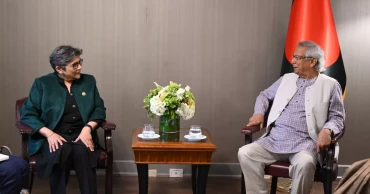
Fatima, who also serves as the UN High Representative for the Least Developed Countries, Landlocked Developing Countries, and Small Island Developing States, met the Chief Adviser at his hotel in New York on Monday (US time).
SDGs Affairs Principal Coordinator Lamiya Morshed, Foreign Secretary Asad Alam Siam, and Bangladesh’s Permanent Representative to the UN, Ambassador Salahuddin Noman Chowdhury were present at the meeting.
The readiness assessment is expected to begin within a month and be completed by mid-January, Chief Adviser’s Press Secretary Shafiqul Alam told UNB, adding that it will help make an informed decision.
He said it will be conducted jointly by an international consultant and a Bangladeshi expert to ensure a comprehensive and balanced evaluation.
The assessment will involve extensive consultations with key stakeholders, including government officials, business chambers, development experts, civil society leaders, donors, financial institutions, and political representatives, to determine whether Bangladesh is adequately prepared for the transition.
Chief Adviser Prof Yunus welcomed the initiative, emphasising the need for empirical evidence before proceeding with the graduation.
“It has become an emotional issue,” Prof Yunus said, highlighting the importance of objective data in informing policy decisions.
In response, Fatima noted that the UN's most recent economic data on Bangladesh is over two years old.
"A lot has changed since then," she said, underscoring the urgency of reassessing the country’s current economic landscape and for making an informed decision.
Prof Yunus also expressed concern over the future of Bangladesh’s pharmaceutical industry, which has significantly benefited from trade preferences tied to its LDC status.
He observed that graduation could put the sector at risk if adequate transition measures are not in place.
Prof Yunus seeks WTO support for Bangladesh’s smooth LDC graduation
11 months ago

LDC graduation: Business leaders urge BNP to seek 3-year deferment
Top business leaders in a meeting with BNP on Sunday voiced their concerns about the immediate impact of graduating from Least Developed Country (LDC) status and advocated for a three-year deferment.
“We have heard from the business community about the advantages and disadvantages. From this, it is quite clear that moving towards LDC graduation at this moment will not be helpful for Bangladesh’s present and future trade, business, and investment,” said BNP Standing Committee member Amir Khosru Mahmud Chowdhury after the meeting.
He said the statistics presented by the previous Awami League government in the context of LDC graduation have now come under question.
“Taking everything into account—Bangladesh’s future, economy, investment, business, and trade—if we truly want to keep moving forward towards the vision of a new Bangladesh, then at this moment LDC graduation needs to be put on hold,” the BNP leader said.
He mentioned that the business leaders discussed with them the necessity of deferring LDC graduation for now.
Khosru, who attended the meeting, said the business leaders also suggested that the government should formally write to the United Nations on this issue—clearly stating whether Bangladesh is genuinely ready for graduation at this stage.
He said the interim government needs to send a letter to the UN so that its representatives can come to Bangladesh and directly assess the ground reality of the country’s readiness.
Earlier, an 11-member business delegation, led by BGMEA President Mahmud Hasan Khan Babu, met BNP Secretary General Mirza Fakhrul Islam Alamgir at the party chairperson’s Gulshan office around 5pm.
After nearly the hour-long meeting, Amir Khosru and Mahmud Hasan Khan Babu talked to reporters about the outcome.
Other members of the business delegation included Tapan Chowdhury, AK Azad, Syed Nasim Manzur, Kamran Tanvirur Rahman, Ahsan Khan Chowdhury, Taskeen Ahmed, Mohammad Hatem, Fazlee Shamim Ehsan, and Dr Rashid Ahmed Hossaini.
Khosru said that almost all the leaders of Bangladesh’s business community, who drive the country’s economy, met Fakhrul and mainly discussed two issues—LDC graduation and the labour issue.
BNP’s Rizvi accuses Jamaat of trying to build ‘state within the state’
11 months ago