Poultry
Unregulated poultry farms push Feni into a growing environmental crisis
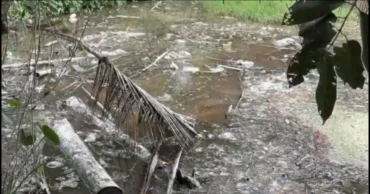
Unplanned, unregulated and unapproved poultry farms across Feni district are triggering severe environmental pollution, disrupting local biodiversity and putting thousands of residents at risk, according to locals and officials.
Residents have filed repeated complaints with government offices over the growing pollution caused by the mushrooming farms.
The district administration has responded with assurances of action, but meaningful intervention is yet to be seen.
According to data from the Department of Environment (DoE), Feni has 1,367 registered poultry farms, while another 1,814 have applied for environmental clearance.
Among these are 544 layer farms, 856 broiler farms, 384 Sonali farms, eight parent stock layer farms and 22 parent stock broiler farms.
However, the number of illegal and unapproved farms remains unknown. Officials estimate the actual figure to be more than double the number of registered farms.
A visit to several parts of Sonagazi upazila revealed poultry farms built haphazardly on rooftops, in residential yards, beside ponds, on croplands, along canals and directly next to roads.
Despite clear guidelines requiring clearance from the Livestock Department and compliance with structural standards, the vast majority of these farms have ignored the rules altogether.
During recent inspections, this correspondent found many farms operating without environmental clearance or Livestock Department licences, even though existing regulations require either DoE approval or registration with the Livestock Department before a farm can be established.
Because these farms have expanded outside the legal framework, environmental pollution has intensified across Sonagazi and other unions.
Read more: How Green Industries Can Reduce River Water Pollution in Dhaka City
The impact on local ecology is profound, while residents say their daily lives have become increasingly unbearable.
Agricultural lands are suffering extensive damage, with waste from an estimated 95% of the farms polluting water bodies and soil.
Dumped waste is contaminating canals, disrupting irrigation and creating shortages of clean water.
Although guidelines dictate that poultry farms must be located at least 200 metres from residential areas, many have been set up right beside homes, schools and mosques.
The foul odour makes nearby roads difficult to use, and locals report rising illness among residents and students of surrounding educational institutions.
Many residents say farm owners often wield local influence, making it difficult to protest. Those who raise concerns are reportedly harassed or threatened.
Farm waste has also reduced crop yields, while the constant stench makes it difficult for children and adults alike to move around the affected areas.
Mamtaz Begum, a 70-year-old resident of Char Elahi village under Motiganj Union, said she once lived peacefully.
But over the past four to five years, influential locals have set up layer farms near her home.
Waste from the farms has polluted ponds and croplands, while the smell, carried by the south wind, has worsened her breathing problems.
She fears she may eventually have to abandon her ancestral home.
Similar conditions prevail across Bogadana, Amirabad, Mongalkandi and Nawabpur unions, where unplanned and unapproved farms continue to proliferate without environmental clearance, livestock licences or even basic trade licences from the Union Parishad.
Residents say repeated complaints and even human-chain protests have failed to yield results, largely due to weak monitoring.
They demand strict action against the illegal farms.
With 100M birds dead, poultry industry could serve as example as dairy farmers confront bird flu
In Char Elahi village, a farm near the house of Mishu Soudagar was found just 15 yards from residential houses.
Between 40 and 50 households live within a 150-yard radius.
Waste is dumped into a small pit and nearby cropland, attracting flies and mosquitoes and producing an overpowering stench.
Dead chickens wrapped in plastic bags were also seen dumped in roadside drains and fields.
Kamal Hossain, a resident of the area, said locals must use the road beside the farm several times a day, enduring the unbearable odour.
Children face difficulties travelling to school, while mosquito infestations have escalated sharply.
Some farm owners, however, insist they are trying to comply. Ahsan Ullah of Bogadana Union said he started his farm to become self-reliant after returning from abroad.
Closing it now would cause severe financial loss, he said, adding that he has applied for clearance.
But nearby residents, including Pulak, Farida Begum, Khadija Begum and Abdul Shukur, said the farm’s waste has made life intolerable.
Strong hatchery, skilled workforce vital for sustainable growth of poultry sector
9 months ago

Prospects of Safe Broiler Chicken Farming
In the ever-evolving food industry, broiler chicken is one of the most popular preferences. This article delves into the subject of safe broiler chicken, a key issue in the future of the poultry industry. Let's find out how this chicken farming system plays an essential role in the food industry.
What is Safe Broiler Chicken?
The misuse of antibiotics in broiler farming has surfaced as a global public health menace, propelling the surge in popularity of antibiotic-free broiler meat production on a global scale. In this paradigm shift, emphasis is placed on alternative methods in broiler production in Bangladesh as well.
The safe broiler system prioritizes animal health, a conducive environment, and high product quality. This approach emphasizes the absence of hazardous ingredients, including antibiotics and growth hormones. It fosters a bio-preservative system and incorporates herbal supplements in animal feed.
The result is poultry reared in an eco-friendly manner, embodying the essence of safety and health consciousness in every aspect of production. Consumers increasingly seek assurance in their food choices. Meanwhile, the emergence of these chickens heralds a positive shift towards sustainable, health-centric practices in the poultry industry.
Read more: 10 Best Winter Teas to Fight Cold and Flu
Recent Advances in Broiler Breeding
Md. Shafiqul Islam, a professor in the pharmacology department at Bangladesh Agricultural University, and his associate Md. Abu Raihan Parvez has recently achieved breakthrough success in alternative broiler production. They were able to produce broilers without any form of antibacterial agents, using different types of herbal plant extracts in their laboratory.
In their research on broilers, they predominantly utilized various types of herbal extracts, noting their superior efficacy compared to antibiotics. The broilers exhibited significant weight gain, and this increase was notably rapid.
Moreover, the rate of morbidity and mortality among them was remarkably low. This research program, spanning five years, holds the potential for a significant leap toward the development of a more advanced poultry industry if implemented on a large scale.
Read more: Microwave Cooking: 7 Healthy Chicken Breast Recipes
2 years ago

Govt to help safe & sustained poultry production: Minister
The government will provide support to ensure safe and sustained poultry production, said Fisheries and Livestock Minister SM Rezaul Karim on Monday.
“Prime Minister Sheikh Hasina-led government will provide assistance to whatever is needed for the development of the poultry sector. The government is also sincere in solving any problem in the sector,” he said.
Rezaul was speaking at a discussion on ‘Safe and sustainable poultry production: Expectation and Plan’ held in the city on Sunday night. World’s Poultry Science Association, Bangladesh unit organised the discussion virtually.
The minister said steps will also be taken to make the poultry policy modern and demand-oriented.
Read: Grass-route level poultry farmers seeks government’s interference to stop commercial sale of ready broilers, layers by hatchery owners
The minister also urged all to consider the matter of branding for the development of the poultry sector with utmost importance.
He underlined the need for reducing the dependence on imported poultry feed. He advised the businesspeople to set up poultry feed industry in the country promising that the government will provide tax exemption for importing relevant machinery.
The minister also urged the big farm owners to manage their own waste management or else consumers will lose their interest in the food produced in the poultry sector.
4 years ago
.jpg)
Grass-route level poultry farmers seeks government’s interference to stop commercial sale of ready broilers, layers by hatchery owners
Grass-route level poultry farm operators have sought the government’s interference to stop commercial sale of ready broiler and layer chicken by hatchery owners.
They said that several hundred thousand small poultry farmers who mainly operate their business at grass-route level, cannot sustain because of the commercial selling of ready broiler and layer chicken by the big poultry owners.
They also placed 8-point demands to resolve their prevailing crisis in business from a discussion meeting at the National Press Club on Sunday.
Kazi Mostafa Kamal, secretary general of the Bangladesh Grass-Route Level Poultry Farmers Unity Council, placed the demands at a discussion meeting titled: ``Miseries of Grass-Route Level Poultry Farmers and Way Out”.
The function, with the organisation’s president Mizan Bashar in the chair, was also addressed by Trustee of the Gana Sastha Kendro Dr Zafrullah Chowdhury, Bangladesh Kalayan Party Chairman Maj (Gen (retd) Muhammad Ibrahim and journalist Mostafa Kamal Majumder.
Read: Provide emergency banking services in flood-hit areas: BB
The 8-point demands of the Bangladesh Grass-Route Level Poultry Farmers Unity Council include ensuring proper monitoring of small chicks by the Department Livestock Services, billing of electricity consumption at industrial rate, fixing the price of small chicks at Tk 30-32 as per the government’s notified order of 14th March 2010.
The other demands are free-supply of medicine and vaccines to the farmers to prevent the chickens from different diseases, providing soft and collateral-free loans to small-scale poultry farmers bringing them under a cooperative, and building shops at specific places in bazaars at every upazila to facilitate selling of the products by small farmers.
Kazi Kamal alleged that the small-scale farmers at grass-route level have been experiencing an anarchy-like situation for the last 12 years as they have to buy at Tk 90-100 per small chick from a few big hatchery operators.
The hatchery operators do not abide by the government’s order to sell the chicks at Tk 30-32, he added, saying that the price hike of poultry feeds also put them into big trouble.
“As a result, many small-scale poultry farmers left the business incurring huge financial loss,” he said.
Read: Air Astra prepares for IOSA ahead of commercial launch
Kazi Kamal said the big hatcheries are doing monopoly business in selling small chicks at their arbitrary rates violating the government’s order.
Dr Zafrullah Chowdhury urged the government to protect the small-scale poultry operators for the sake of the interest of the country.
4 years ago
.jpg)
Poultry Industry places 11-point demand
Poultry growers have placed 11 demands including access to easy and soft loans for the grassroot level poultry farmers through stimulus package, and checking the illogical price hike of poultry feeds and chicks.
Bangladesh Poultry Industry Forum (BPIF) placed the demands at a discussion meeting, organised by Bangladesh SME Forum, at Economic Reporters Forum (ERF) Auditorium in the city on Saturday.
With President of both Bangladesh SME Form and Bangladesh Poultry Industry Forum M Mamun in the chair, the event was addressed by former additional secretary Dr Sheikh Rezaul Islam, Dhaka University teacher Dr Latiful Bari, ERF general secretary MM Rashidul Islam, Borhanuddin, Abdur Rahim, Lotus Parvez, Manik Sheikh, Sujan Sarker, Tahmid Hasan and Masuma Khatun.
The BPIF leaders said the poultry industry has been experiencing a severe crisis due to recent increase in the price of its raw materials including feeds and chicks.
Read: Govt forming policy to safeguard poultry, dairy industries
“A strong syndicate of unscrupulous business has been responsible for the recent crisis and the government should find them out to punish them,” said M Mamun.
The BPIF leaders alleged that although the poultry products are selling at higher prices in the local market, the actual farmers at the grass root levels are not getting the benefit of it.
Rather, a middle group is being benefited from the increased price of the products, they observed.
They also said that the industry owners are not receiving due financial support from the government although a stimulus package was announced for the industrial sector.
Read: Thakurgaon poultry farmers brace for huge loss
Many poultry owners had to shut down their industries facing a huge loss in the business during the Covid-19 pandemic situation.
The farmers are now switching to other businesses from this losing concern, they observed.
They also demanded formulating a pro-industrial policy to support the poultry industry.
4 years ago

Govt forming policy to safeguard poultry, dairy industries
Fisheries and Livestock Minister SM Rezaul Karim on Wednesday said that the government is formulating a policy to safeguard the poultry and dairy industries of the country.
5 years ago