money laundering

Ex-secretary, family sued over Tk 400m money laundering
The Criminal Investigation Department (CID) of police has filed a case against former secretary and former executive member of the Bangladesh Investment Development Authority (BIDA) Md Khairul Islam (Mannan), his wife and son over allegations of laundering Tk 40 cr.
The case was filed with Gulshan Police Station of Dhaka Metropolitan Police (DMP) against Khairul Islam (Mannan), his wife Israt Jahan Mim and their son Morsalin Islam Sourdip after primary findings revealed their alleged involvement in fraud and money laundering in collusion with each other.
Primary investigation found that two shell companies—Meghmala International Ltd in the name of Israt Jahan Mim and Meghmala Estate Ltd in the name of Morsalin Islam Sourdip—were established.
Through these entities, loans of Tk 20 cr each, totaling Tk 40 cr, were taken from the Gulshan branch of First Security Islami Bank PLC in 2012 through fraud and forgery.
The investigation also revealed that the loan money was transferred and layered through various accounts to conceal its actual source.
The loan amount obtained through the fake companies was deposited in an account of Morsalin Islam Sourdip at the Dhanmondi branch of First Security Islami Bank PLC.
SHUJAN leader found dead in Gazipur
Later, Tk 400 million was debited from that account and deposited into another account titled “Union Bank (Proposed)” at the Banasree branch of First Security Islami Bank PLC.
CID’s investigation further found that Morsalin Islam Sourdip purchased sponsor shares of Union Bank PLC during its inception using the fraudulently obtained loan money.
CID Special Superintendent of Police (Media) Jasim Uddin Khan said the Financial Crime Unit of CID is currently conducting the investigation into the case.
He said the investigation and inquiry are continuing to uncover the full details of the crime and complete other legal procedures.
He also said the agency is giving highest priority to preventing money laundering and financial crimes and will continue its investigation to bring those involved in such offences under the law.
6 months ago
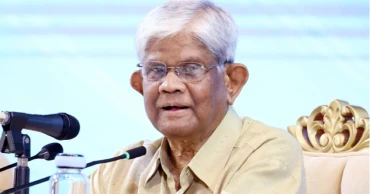
Money laundering trails identified, recovery still challenging: Dr Salehuddin
Finance Adviser Dr Salehuddin Ahmed on Tuesday said the government has made substantial progress in identifying individuals and destinations involved in money laundering, though recovering the funds remains a complex and lengthy process.
“Identifying money laundering is difficult, but you are aware that we have streamlined the processes,” he said while speaking to reporters after a meeting of the Advisers Committee on Government Purchase.
The adviser acknowledged that detecting illicit financial flows is inherently difficult but stressed that institutional mechanisms had been strengthened during his tenure.
Upon assuming office, Dr Salehuddin said, he convened a meeting on money laundering that had not been held for five years. “The first meeting on money laundering after five years was held after I took charge. Previously, such a meeting had not taken place.”
A sub-committee was subsequently formed to collect primary information and initiate action, he said, adding, “We have to take action from our side first. When we make requests abroad, they ask what steps we have taken domestically. Without demonstrating our own actions, it becomes difficult to seek cooperation.”
The finance adviser highlighted that mutual legal assistance procedures with foreign jurisdictions are highly complicated. “Mutual legal assistance is not simple. It involves numerous formalities and documentation. In some countries, such as Japan, documents must be translated into their language. You cannot simply send papers in English and expect results.”
He said those who launder money often employ highly skilled professionals and complex methods. “Those who have laundered funds have done so using very competent people. There is layering, multiple documentation and intricate financial arrangements. To detect this, we also need equally skilled professionals.”
Despite the challenges, Dr Salehuddin claimed that a significant amount of information has already been gathered. “Identification has been made. We know who has done it and in which countries. Many individuals hold passports in multiple countries. We are aware of where they are.”
He, however, declined to disclose the exact amount of money identified as laundered. “I am not stating the exact figure at this moment.”
The adviser clarified that not all overseas funds held by Bangladeshis are illicit. “Not everyone has transferred money illegally. Some funds abroad may be legal, with proper permission from Bangladesh Bank. For instance, export proceeds or retained earnings may lawfully remain outside the country.”
According to him, authorities have identified around 11 or 12 major cases, while information on others is also available. The National Board of Revenue (NBR), Bangladesh Bank and the Ministry of Finance possess relevant data, he added.
“The base has been created. The information is there with the NBR, Bangladesh Bank and the Ministry of Finance. If the next government is serious, they can take this forward,” said Dr Ahmed, urging the incoming administration to consolidate the progress made so far rather than restarting investigations from scratch.
“My strongest suggestion to the next government is: please try to consolidate what has been done. Many discoveries have already been made. There is no need to rediscover the same things,” he said.
Revitalising trade, job creation top challenges for next govt: Dr Salehuddin
He emphasised the need for stronger coordination among government agencies, pointing to existing gaps in inter-agency cooperation. “There is a lack of coordination among government departments and agencies. This needs to improve.”
Referring to asset declarations, the finance adviser said he had submitted his own statement of assets two years ago and that the matter had been forwarded to the Cabinet Division for necessary action in accordance with procedure. “Our accountability is to the Cabinet Division. We have submitted what was required. The relevant divisions will take action as per their mandate.”
Dr Salehuddin said that although recovering laundered funds is difficult and takes time, the necessary institutional foundation is now in place for future action.
7 months ago
ACC’s year of mixed outcomes: 249 cases closed, yet acquittals dominate
Over the past 11 months, Bangladesh’s anti-graft landscape has unfolded with a mix of progress, as the Anti-Corruption Commission (ACC) has wrapped up 249 cases since December 2024, but with more than half ending up in acquittal.
From December 2024 to October 2025, 512 cases were filed against corrupt people both at home and abroad, including money launderers, state fund embezzlers, loan defaulters and various government, private and political figures.
During the same period, 249 pending cases were resolved, resulting in convictions in 126 cases and acquittal in 123.
The ACC also reported recovering fines amounting to Tk 5,058 crore and confiscating assets worth Tk 321 crore.
Read more: Recovered gold not only Hasina’s, includes family members too, says ACC
According to 11 months of case and charge sheet statistics, the ACC received 11,630 complaints, but only 960 were accepted for inquiry.
Meanwhile, 798 enforcement operations were conducted, of which 188 are under investigation, 28 have resulted in cases, and four people were caught red-handed through traps. Besides, 23 public hearings were held.
During this period, the ACC says, a total of 512 cases were filed implicating 2,191 accused individuals. Charge sheets were submitted in 315 cases, naming 1,078 accused. A total of 73 cases were exempted under FRT (final report).
Following the fall of the Awami League government amid mass protests on August 5 last year, the ACC began investigating corruption by top politicians, businessmen and institutions. The commission found evidence of money laundering and corruption, prompting a series of cases and subsequent court orders to freeze and confiscate assets — a process that continues.
In the aftermath of the mass uprising, the ACC claimed it had achieved record success in its crackdown on corrupt individuals, confiscating and freezing unprecedented amounts of movable and immovable assets.
Between December 2024 and October 2025, the ACC seized and froze assets worth more than Tk 26,013 crore belonging to over 300 individuals and entities involved in corruption, embezzlement and money laundering.
By comparison, the total value of confiscated and frozen assets in all of 2024 was only Tk 361 crore. In the five years from 2020 to 2024, the combined figure stood at roughly Tk 3,450 crore, highlighting the dramatic surge in asset seizures over the past 11 months.
According to ACC’s asset management division and court sources, Tk 3,457 crore 83 lakh worth of assets were confiscated within the country during this period.
Besides, domestic bank and financial accounts containing Tk 22,226 crore 79 lakh were frozen, along with Tk 328 crore 38 lakh frozen abroad. In total, around Tk 26,013 crore 2 lakh 93 thousand in assets were confiscated or frozen both domestically and internationally.
Commenting on the overall development, ACC Commissioner Miah Muhammad Ali Akbar Azizi said, “I want to emphasise that the ACC is empowered with substantial legal authority. To expedite judicial proceedings, more special courts are required.”
Read more: ACC approves chargesheet against former IGP Benazir Ahmed
ACC has not yet become the fully empowered institution it needs to be, said its Chairman Mohammad Abdul Momen.
Responding to a question on whether the ACC is a ‘toothless tiger’, he said, “The ACC has both teeth and claws — though they may need further sharpening. The teeth are not as sharp as they need to be. The claws have not fully grown yet. We are somewhere in the middle stage.”
When asked whether the ACC faces political or external pressure, the chairman issued a strong warning, saying that anyone attempting to hinder corruption inquiries or investigations in the future will have their names publicly disclosed.
He emphasised that combating corruption is not solely the responsibility of the ACC.
Each government, autonomous, and private institution must strengthen their own audit mechanisms. “If institutions took action against corrupt officials based on their internal audit reports, many cases would not even need to come to the ACC,” he said.
Sharing data on recent ACC activities, Momen noted that an analysis of the 11 months from December 2024 to October 2025 shows that politicians account for the lowest number of ACC cases. During this period, 151 cases were filed against politicians, while only 28 cases resulted in charge sheets.
The chairman’s comments underline both the structural limitations of the ACC and the growing expectation for greater transparency, especially with the new warning to expose those who attempt to exert undue influence.
Read more: ACC to reveal names if pressure exerted to obstruct probe: Chairman
9 months ago

Dilip Agarwal sued for laundering Tk 678 cr
The Criminal Investigation Department (CID) has filed a case against Dilip Kumar Agarwal, owner of Diamond World, allegedly for laundering around Tk 678 crore though smuggling gold and diamond.
The Financial Crime Unit of CID filed the case against Dilip with Gulshan Police Station under Money Laundering Prevention Act on Monday night (November 17), said Jashim Uddin Khan, special superintendent of police (media) of CID.
On September 29, 2024, the CID began an investigation against Dilip after reviewing Diamond World Limited’s financial transactions, documents and bank accounts.
During the investigation, they found that the company had procured smuggled gold and diamond in the country.
Read more: Tk 1,200cr Money Laundering: CID moves to charge Salman Rahman, others
According to the case statement, Dilip had long been involved in money laundering and smuggling under the guise of gold and diamond business both at home and abroad as the proprietor of Diamond World and Diamond World Limited.
During investigation it was found that the company legally imported gold bars, jewelry, loose diamonds and other items worth Tk 38,47,48,011.52 from abroad through LCs from September 6, 2006 and February 8, 2024.
During the same period, it also acquired gold and diamonds worth Tk 6,78,19,14,014 from local market through purchase and exchange.
The company failed to show valid documents to the CID regarding the source or suppliers of these materials.
Read more: NBR launches customs risk management to address money laundering
10 months ago
NBR launches customs risk management to address money laundering
The National Board of Revenue (NBR) has issued a notification introducing the “Customs Risk Management Regulations, 2025” aimed at addressing economic risks such as money laundering and terrorism financing.
According to the notification, “economic risk” also refers proceeds of crime, other illegal financial activities, customs and tax evasion, and transnational organized economic crimes.
As part of this initiative, a dedicated Customs Risk Management Commissionerate (CRMC) will be established.
The CRMC will be responsible for collecting, analysing, and reviewing risk-related information to identify and categorise customs risks. It will create and manage risk profiles, update online risk registers, and classify goods consignments into risk-based lanes — Red, Yellow, Blue, or Green — using targeting intelligence, artificial intelligence (AI), and advanced data analysis techniques.
It will determine risk trends and nature by collecting data from national and international sources and analysing them, collect data for the purpose of monitoring and reviewing economic conditions, geographical conditions, customs duty rates, customs valuation, customs duty exemptions, regional and international agreements, market arrangements and other aspects that affect the duties and functions of customs, conducting necessary surveys and research activities and providing advice in taking remedial measures and formulating customs policies.
Bangladesh sees sluggish growth in new business and employment in Feb: Report
It will determine the criteria for the selection of consignments on the basis of random selection for all Customs Stations and Bond Commissionerates and to update the said criteria from time to time, monitor and supervise the effectiveness of risk management activities, to inform the Board and make necessary adjustments and to review the results of the activities taken against the Key Performance Indicators.
The CRMC will collect information and data from any government, semi-government and autonomous organization, any person or institution related to import and export, banks, financial institutions and other organisations and take the assistance of other organisations in analysing the information if necessary.
It will maintain confidentiality in the storage and use of confidential and sensitive information, sign any agreement or memorandum of understanding related to the functions of the Customs Risk Management Commissionerate on behalf of the National Board of Revenue, with the prior approval of the National Board of Revenue.
It will Issue risk warnings to all concerned departments, Identify the risk areas and, where appropriate, advising the concerned Customs House or Customs Station VAT Commissionerate to take timely steps to resolve them, Review the necessary information related to risks on a regular basis and updating the risk management indicators.
It will exchange information and regularly communicate and coordinate with various national and international organisations and institutions involved in risk management related to inter-country border trade, Prepare annual reports and presenting them to the Board; and Perform other duties assigned by the Board from time to time.
Only an elected government can drive real economic growth: Abdul Awal Mintoo
For the purpose of establishing proper customs control, the Customs Risk Management Commissionerate shall use ARMS (Automated Risk Management System) or a suitable automated electronic system to determine selectivity after analysing the risks related to cargo, passengers, agents and banks.
The Customs Risk Management Commissionerate shall collect the relevant data for risk management from the customs computer system.
Any information received from inside or outside Bangladesh or through confidential informants shall be collected, analysed and, if necessary, verified on-site and used as a risk management criterion.
The CRMC may follow and use the World Customs Organization Risk Management Model or International Best Practices or any risk management model approved by the Board and may establish a risk register and risk assessment database accordingly.
Bangladesh’s stock market plunges on week’s first trading day
In order to monitor the effectiveness of the selectivity system, CRMC shall prepare an annual evaluation report from the data stored in the customs computer system or ARMS or any system capable of identifying the effectiveness of the selectivity system and the results of the risk mitigation measures adopted on its basis.
1 year ago
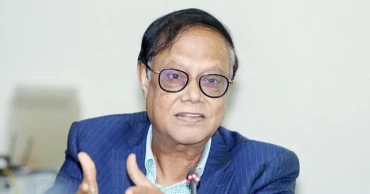
Money laundering stopped due to transparency in banking sector: BB Governor
Bangladesh Bank (BB) Governor Dr Ahsan H Mansur on Saturday said that money laundering from the country has been halted due to the implementation of good governance in the banking sector.
“Despite political unrest, remittance inflows have increased by $3 billion and exports by $2.5 billion over the last five months, marking a historic milestone in December,” said Dr Mansur while speaking at a programme titled ‘Branding Bangladesh: NBR and UN Peacekeepers Leading the Way’, held at a hotel in the capital on Saturday.
BB Governor reveals laundered money figures, reaffirms efforts to recover
Besides, he said, the government is spending Tk 7,000 crore annually on a 2.5 percent incentive to encourage remittances through official banking channels.
The Governor highlighted that remittance inflows through legal channels could rise further if intermediaries benefitting from the system are eliminated.
“At present, expatriates are sending remittances equivalent to around Tk 4,000 crore on average each day. This figure could double if middlemen are removed and the skills of Bangladeshi workers are enhanced,” he said.
Dr Mansur urged expatriates to send money directly through banking channels, cautioning that Dubai has overtaken Saudi Arabia as the leading source of remittances. “This is not a positive trend, as money from Saudi Arabia is being routed to Dubai before reaching Bangladesh. Certain institutions in Dubai are exploiting this opportunity to manipulate currency exchange rates.”
In response to a question from journalists, the governor revealed that “a single group based in Chittagong has laundered $20 billion abroad. Efforts are underway to recover these funds, with foreign assistance being provided.”
Former ED Ahsan Ullah joins central bank as advisor to the Governor
He said discussions are going on with international agencies, including the Federal Bureau of Investigation (FBI) in the United States, to repatriate the laundered money. Foreign lawyers are also being appointed to support the process.
Highlighting progress, Dr Mansur mentioned that 80 percent of the stolen reserve money has already been recovered, and legal proceedings are underway to retrieve the remaining funds. “I am confident that Bangladesh will win the case,” he said.
Foreign Affairs Adviser Md Touhid Hossain also addressed the event.
1 year ago

Joint teams formed to probe money laundering by businesses, influential figures
Ten joint teams have been constituted to investigate allegations of revenue evasion and money laundering involving prominent figures and business entities associated with the ousted Awami League government.
The Bangladesh Financial Intelligence Unit (BFIU) has uncovered the evidence of money laundering by influential business figures, according to sources at the Financial Institutions Division (FID) and Bangladesh Bank (BB).
The FID disclosed that the teams were established following consultations with and advice from the Ministry of Finance.
Online VAT services to remain suspended for 96 hours: NBR
An officer nominated by the Anti-Corruption Commission (ACC) will lead the investigation, with the BFIU acting as the coordinating body.
Members of the joint teams include representatives from the Customs Intelligence and Investigation Department and the Criminal Investigation Department (CID) of the police.
These joint teams will delve into allegations of money laundering involving several high-profile groups and individuals, including the S Alam, Beximco, Nabil, Summit, and Aramit Groups. Additionally, the teams are investigating former State Minister for Land Saifuzzaman Chowdhury for alleged money laundering.
A letter seeking information on their financial activities have already been dispatched to various countries, including the US, the UK, Singapore, Canada and the United Arab Emirates.
Senior FID officials revealed that on December 4, the BFIU sent a formal communication to the investigating agencies.
The letter detailed recent findings, which indicate instances of loan funds being diverted from various scheduled banks into different sectors through corruption, fraud, and forgery, in violation of banking regulations.
Pakistan keen to import medicine from Bangladesh
The letter states, “Information has been found against these business groups of tax and customs evasion, money laundering under the guise of foreign trade, and various illegal methods of money laundering abroad. It is necessary to conduct further investigation into whether these groups and individuals have embezzled bank loan money, laundered money acquired through various legal or illegal means, or smuggled it abroad.”
The investigation teams, comprising the ACC, CID, and Customs Intelligence and Investigation Department under the National Board of Revenue (NBR), are tasked with determining the extent of wrongdoing.
Timor-Leste President seeks to boost trade ties with Bangladesh
The ACC-nominated officer will lead the inquiry and, upon obtaining agency approval, will submit charge sheets to the court.
1 year ago

US Secret Service to train Bangladeshi officials in combating money laundering and terror financing
The United States Secret Service will train the officials of six Bangladeshi agencies to enhance their ability to tackle money laundering and terror financing.
Around 60 officials of the Bangladesh Financial Intelligence Unit (BFIU), four units of Bangladesh Police including the Criminal Investigation Department, the National Board of Revenue (NBR), the Anti-Corruption Commission (ACC), the Department of Narcotics Control, and Bangladesh Securities and Exchange Commission (BSEC) will get the trainings in two phases.
Among them, 20 officials of BFIU will take part in the training. A delegation of the American Secret Service will come to Bangladesh soon to conduct the training.
In the first phase, a five-day training programme will begin at the Police Staff College in the capital from November 10, followed by another five-day training session from November 17.
Another two sets of follow-up training for the second phase will begin respectively on February 2 and February 9 next year.
After the political changeover, all agencies responsible for tackling money laundering have become active.
1 year ago

‘Tycoons close to Hasina regime siphoned $17bn from banks with intelligence agency help’
In an interview with the Financial Times, Bangladesh Bank Governor Ahsan Mansur accused powerful business tycoons of siphoning $17 billion out of the banking sector during the Sheikh Hasina regime.
He alleged that members of the Directorate General of Forces Intelligence (DGFI), the country’s military intelligence agency, facilitated the takeover of major banks, which led to the systematic transfer of funds out of Bangladesh. According to Mansur, around Tk 2 lakh crore or $16.7 billion was extracted through methods such as loans to new shareholders and inflated import invoices, reports Financial Times.
NASSA Group owner Nazrul Islam Majumdar being investigated for multi-million dollar money laundering scheme
This was the biggest robbing of banks by any international standards, said Mansur. He asserted that the state-sponsored nature of the fraud would not have been possible without intelligence officials pressuring bank CEOs into compliance.
The governor specifically named Mohammed Saiful Alam, the founder and chairman of the industrial conglomerate S Alam Group, as being deeply involved in the scheme, claiming that at least $10 billion was “siphoned off” from the banking system with the assistance of DGFI. “Every day they were granting loans to themselves,” Mansur noted.
However, the S Alam Group, through law firm Quinn Emanuel Urquhart & Sullivan, denied the allegations, calling them unfounded. The group’s statement described the interim government's campaign against several leading businesses as a violation of due process, which undermined investor confidence and law and order in Bangladesh.
Sheikh Hasina fled to India on August 5, and her current location is unknown. Her tenure was plagued with accusations of vote rigging, opposition repression, and widespread corruption. The interim government, now led by Nobel laureate Muhammad Yunus, has vowed to retrieve the funds that were allegedly misappropriated under her administration, the report said.
Mansur disclosed that he had sought international assistance, including from the UK, to investigate the overseas assets of Sheikh Hasina’s associates. He recounted that during her regime, intelligence officials forced bank board members to sell their shares to Saiful Alam at gunpoint. They "hijacked" board members from their houses, he said, adding that one bank after another underwent the same coercive takeovers, added the report.
1 year ago

Bangladesh, US discuss collaboration to tackle money laundering, recover stolen assets
Bangladesh and the United States have discussed ways for strengthening collaboration to counter corruption, tackle money laundering and recover stolen assets.
The issues were discussed during a meeting between Foreign Secretary Md Jashim Uddin and acting Coordinator for Global Anti-Corruption Shelby Smith-Wilson in Washington, said the Ministry of Foreign Affairs on Sunday.
Talks also covered technical support for reforms, MLA (Mutual Legal Assistance (MLA) treaty and enhancing experience and expertise sharing in procurement systems, law enforcement, judiciary and media.
US values Bangladesh as a partner in Indo-Pacific region: Uzra Zeya
Meanwhile, US Under Secretary of State for Civilian Security, Democracy, and Human Rights Uzra Zeya said the United States values Bangladesh as a “partner” in the Indo-Pacific region and their “strong collaboration” as their leading partner on Rohingya response and number one source of Foreign Direct Investment (FDI).
She shared a brief message on X, formerly known as Twitter on Saturday as she had a meeting with the Foreign Secretary in Washington on October 11.
"Vital discussion with Foreign Secretary Jashim Uddin on US-Bangladesh humanitarian cooperation, accountability and democratic institutions and support for labour rights," she said.
The Foreign Secretary and Under-Secretary Uzra Zeya had “fruitful discussions" on the reforms of the democratic institutions and upholding of democratic values, accountability of human rights violations, humanitarian response and sustainable solutions of the Rohingya crisis and labour rights issues, according to the ministry.
He also had a "productive meeting" with US Deputy Secretary of State Richard Verma at the State Department, affirming renewal of commitment to deepen and expand bilateral ties, strengthen collaboration on areas of mutual interest.
The Foreign Secretary had a separate meeting with acting US Under Secretary for Political Affairs John Bass and discussed ways to deepen bilateral collaboration building on the momentum in the Bangladesh-US relationship and to advance impactful cooperation in priority areas.
He also had discussions on diverse issues at a meeting with US Special Assistant to the President and Senior Director for South Asia Lindsey W Ford at the White House.
They covered the interim government's reform agenda, democratic transition, economic and security issues, regional stability, Rohingya crisis and labour law.
Foreign Secretary also Jashim met Brendan Lynch, Assistant USTR for South and Central Asia and discussed mutual cooperation to diversify export, DFQF access of RMGs produced from cotton imported from US, simplification of registration and reduction of registration fees for pharmaceutical products, labour law reforms, and access to US International Development Finance Cooperation (DFC).
A lunch meeting between the Foreign Secretary and key officials focused on a wide range of issues of mutual interests.
The US officials included Assistant Secretary Ambassador Donald Lu, Acting Assistant Secretary Marta C Youth, Deputy Assistant Secretary Nicole Chulick, Deputy Assistant Secretary Monica Ager Jacobsen, as well as Director Alla P Kamins.
The Foreign Secretary visited New York before his tour to Washington and is scheduled to leave Washington on October 14.
1 year ago