dried fish
Study: 87% dried fish deemed safe, 13% contains pesticides
Only 13 percent of dried fish produced in Bangladesh were found to contain traces of pesticides, while the remaining 87 percent are considered safe for consumption, according to findings of a new study.
Researchers noted that even in the dried fish samples where pesticide residues were detected, the levels dropped significantly after cooking.
2-month fishing ban in Padma-Meghna to end tonight
The study, based on samples collected from five major dried fish-producing regions — Chattogram, Cox’s Bazar, Dubla Char, Chalan Beel (Natore), and Sunamganj — analyzed 405 samples in total. It found an average of 13 percent pesticide usage across the selected samples.
The study further revealed consumption preferences among regions.In Chattogram and Cox’s Bazar, Churi shutki is the most consumed variety (57% and 55% respectively) while in Chalan Beel, Taki shutki dominates (37%), and in Dubla Char, Loitta shutki is the preferred choice (46%).
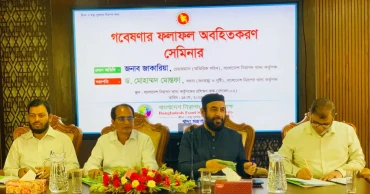
The findings were presented on Wednesday at a seminar titled “Presentation of Research Results” of organised by the Bangladesh Food Safety Authority (BFSA) at its headquarters in Shahbagh.
BFSA Member Dr Mohammad Mostafa chaired the seminar, while BFSA Chairman Jakaria attended as chief guest. Dr Md Ariful Islam, senior scientific officer at the Shrimp Research Centre under the Bangladesh Fisheries Research Institute, presented the research findings.
Panel discussants included Prof Dr Md Tajul Islam Chowdhury of the Department of Agricultural Chemistry at Sher-e-Bangla Agricultural University, and Dr Md Nazmul Bari, Principal Scientific Officer at the Bangladesh Rice Research Institute. Prof Dr Mohammad Shoeb, also a BFSA member, delivered the welcome address.
Jakaria stated that the research was part of seven studies undertaken during FY 2022–23. "The results reflect the researchers’ findings and not the official position of the BFSA. These do not represent the national picture, but provide limited insight. If higher levels of concern are found in preliminary studies, BFSA will propose broader research to relevant stakeholders," he said.
He further warned that the use of pesticides in dried fish would be treated as a punishable offense.
Stressing the need for clear definitions, he said, “Many practices are socially considered adulteration but may not be scientifically so. It’s crucial to define what qualifies as adulteration. The use of pesticides in dried fish should be treated as such.”
In his welcome speech, Dr Shoeb noted that certain banned pesticides are still being used in dried fish. He referenced a recent Basel Convention proposal that seeks to prohibit 10 such pesticides, two of which are currently in use in Bangladesh.
Dr Ariful Islam stated that 60 percent of the country’s protein intake comes from fish and meat. “Most dried fish producers lack formal education, leading to improper processing. Pesticides are often used when sunlight is insufficient — typically between October and March,” he said.
He added that most pesticide use is associated with sun-drying processes. Of 260 core samples analysed, only 13 percent contained detectable pesticide levels.
Daily per capita consumption of dried fish by region was found to be 15.72g in Cox’s Bazar, 14.48g Chattogram, 7.84g in Sunagang, 9.56g Chalan Beel, dubla Char in 12.22g.
Higher concentrations of endosulfan sulfate were detected in samples from all five regions, while smaller amounts of dieldrin, heptachlor epoxide, and beta-endosulfan were also found.
Dr Nazmul Bari highlighted the widespread use of polythene in dried fish processing and called for inclusion of microplastics in future studies. He also advocated for transitioning from traditional sun-drying methods to mechanical drying for improved safety.
Speakers noted that soaking dried fish in water or saltwater for a few hours can reduce harmful effects.
Researchers develop solution to lower emissions and enhance air quality from brick industry
The seminar was attended by representatives from various private organisations, government agencies, civil society members, and media personnel.
Dialogue calls for stronger research, policy integration to build greener, resilient South Asia
1 year ago

10,000 fishermen likely to gather at Dublar Char as dried fish processing season starts
A total of 10,000 fishermen from coastal areas are expected to gather at Dublar Char, popularly known as “Shutki Polli” or Dried Fish Village, as dried fish processing season kicked off.
Every year, several thousand fishermen and hired hands flock to the area to catch fish and make shutki (dried fish).
According to the forest department, this year, the authorities concerned have given permission to erect 108 makeshift houses and 78 depots for accommodation of fishermen and preservation of dried fish.
Bagerhat's Dublar Char abuzz as fish drying season begins
The fishermen will catch fish using 1500 trawlers in the Sundarbans. They will process the fish and keep those under the sun for drying.
Dublar Char is already buzzing with workers and traders after the authorities issued permits to fishermen to catch fish.
Thousands of Dublar Char fishermen take oath together with PM on Victory Day
Last year, the government earned Tk 6 crore revenue from Dublar Char and this year, a Tk 7 crore target has been set.
Different species of fish including Loitta, Faissa, Koral, Pomfret, Chhuri, Tuna and many more are being processed at Dublar Char. The demand of dried fish from the area is high as they are processed without using chemicals and formalin.
Dublar Char comes alive as Sutki fish season gets underway
Rabiul Islam, a fisherman from Rampal upazila, said he came to Dublar Char on Friday and spent a busy day making makeshift houses with bamboo, polythene and hogla (long dry grass used for sheds).
Shahid Mallik, president of Matsyajibi Samity, said thousands of fishermen have already reached the area while many went to the sea to catch fish.
Dilip Majumdar, officer-in-charge of Alorkol camp, said the fishermen are busy erecting makeshift houses and it takes two to three days to complete.
Some fishermen were busy processing their catch under the open sky, he said.
Rana Deb, assistant forest conservator of Sundarbans East zone, said the dried fish processing season began on November 3 and will continue till March 31, next year.
The fishermen will live in Alorkol, Majherkella, Narikelbaria and Shelar Char for five months.
Sheikh Mahbub Hasan, assistant conservator of Forests under Sharankhola Range, said the forest department has been asked to remain vigilant so that no one in the guise of fishermen can commit crimes on Dublar Char.
2 years ago
Love shutki? 7 spicy Bangladeshi dried fish recipes you can try
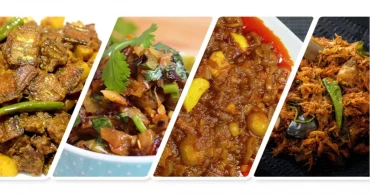
Shutki or dried fish are rich in protein and healthy fats like long-chain omega-3 fatty acid. They are also an excellent source of essential nutrients, including iodine, zinc, copper, selenium, and calcium. Dried fish is a common ingredient in many recipes from Bangladesh's Hill Tracts and coastal districts. Here are top 7 Bangladeshi dried fish recipes to try in your kitchen.
7 Dried Fish Recipes for Bangladeshi Kitchen
Chhuri Shutki Bhuna
Ingredients:
Chhuri Shutki 100 gm, garlic (chopped)- 2 tbsp, onion (chopped)- 1/4 cup, tomato (chopped)- 1/4 cup, green chili- 3-4 pieces, red chili powder- 1/2 ts, turmeric powder- 1/4 ts, cumin powder- 1/4 ts, coriander powder- 1/4 ts, oil- 3 Tbs, salt- 1/2 ts to or taste, and coriander leaf (chopped)- 1 Tbs.
Procedures:
First, fry the dried fish for 5 minutes. Then boil the fried fish with water for 4 minutes. Use a strainer to drain the water. Then remove the bones from the fish. Next, put oil in a pan and fry the chopped garlic for 10-12 seconds. Then add the chopped onion and fry as long as the onion becomes soft and tender.
Read more: These are the 10 Most Expensive Teas in the World
Add the tomato (chopped), green chili, red chili powder, turmeric powder, cumin powder, coriander powder, and salt. Cook as long as the oil starts to come out from the masala. Add the boiled fish and mix well. Pour some water and cook for 5-7 minutes. Finally, add the chopped coriander leaf and mix, and transfer to a dish. Serve with rice or khichuri.
Roasted Loitta Shutki Salad
Ingredients
5-7 pieces of Loitta Shutki, 15-20 pcs green chili, ½ cup onion (chopped), ¼ cup coriander leaves (chopped), and salt (as required).
Procedures:
You can use a charcoal BBQ grill if you have one. But if you don’t have one, you just place a net over your gas stove. Then put the dred fish over it. You need to put the heat on medium low. Burn both sides of the fish to make all parts crispy and well-cooked.
Read More: Top 10 Most Expensive Water Bottle Brands in the World
After charring, remove all burnt parts using a knife. Then cut or break the dried fish.
Next, roast all green chilies and make a coarse paste by grinding. Mix together the chopped onion, coriander leaves, salt, and roasted dried fish pieces. Enjoy with hot rice.
Chepa Shutki Bhorta
Ingredients
Chepa Shutki 6 pcs, garlic 1/2 cup (chopped), onion chopped 2 cups, green chili 6-8 pcs, mustard oil 1 tbsp, and salt (as required).
Read More: 10 Healthy Gluten-free Breakfast Recipes
Procedures:
First, heat oil in a pan and fry the shutki for 4 minutes on both sides. Chepa shutki can stick to the pan easily so you need to stir frequently. When done, transfer to a dish.
Then add some oil to the same pan and fry the chopped onions for 2 minutes, or as long as they turn lightly golden. Keep aside. Next, roast the green chili and garlic for 2 minutes.
Now, to prepare the bhorta, mix everything and use a blender or a sheel pata. Serve with white rice.
Read more: 7 Dosa Recipes for Bangladeshi Kitchen
3 years ago

Dublar Char comes alive as Sutki fish season gets underway
With the start of the season of Sutki fish (dried) thousands of fishermen have spanned out across the Bay of Bengal around the Sundarbans forest with boats and nets to catch fish.
Workers and traders are already buzzing about Dublar Char, known as the Sutki Palli or Dried Fish Village after the authorities issued permits to fishermen to catch fish, bring them on Dublar Char and process them into dried fish, a delicacy in Bangladesh.
Similar hectic activities are also being reported from 13 other small islands where live fish is processed into dried one. Starting from November 1 the season will last until March 31.
Read Also: Sundarbans fishermen remain a neglected lot
Dublarchar in the Sundarbans, a mangrove, is known as ‘Shutki Polli’ as every year, fishermen and people related to dried fish business throng in the area for catching fish and processing.
There are fishermen who make the catch and sell it to the dried fish traders. The traders employ workers, many of them allegedly underage, to process the fish into Sutki and supply it to the markets mainly in Chattogram, where it is especially popular.
Thousands of fishing families, workers and traders depend on this growing economic sector of Bangladesh.
Read Also: Cox’s Bazar to get dried fish-processing industry; Tk 199-cr project okayed
Different kinds of fish such as Loitta (bombay duck), Churi (knief fish) shrimp, pomfret, poa will be dried up and make ready for the market.
As many as 15,000 fishermen and traders (mohajon) gather at Dublarchar, Meher Ali char, Alorkol, Office Killa, Majherkilla, Shelar Char, Narikelbaria, Choto Ambaria, Boro ambaria, Manikkhali, Kabarkhali, Chaprakhali, Kokilmoni and Haldakhali chars every year. They live in makeshift huts on the islands for the entire season.
4 years ago

Cox’s Bazar to get dried fish-processing industry; Tk 199-cr project okayed
The Executive Committee of the National Economic Council (Ecnec) on Tuesday approved four development projects, including a Tk 199-crore one to set up a dried fish-processing industry in Cox’s Bazar to produce quality dried fish and increase its production minimising fish wastage.
5 years ago