Pakistan
Roadside bomb kills 6 soldiers in Pakistan; troops kill 10 militants in raids
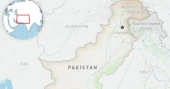
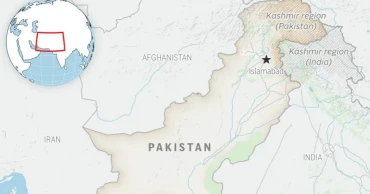
A roadside bomb hit a security forces convoy in northwestern Pakistan, killing six soldiers, while troops killed 10 suspected militants in several raids, the military and local police said Friday.
The bomb attack took place Thursday in Hangu district in Khyber Pakhtunkhwa province, officials said.
The military said security forces killed 10 militants during several intelligence-based operations targeting suspected hideouts in North Waziristan and Hangu districts on Thursday.
Pakistani security forces have suffered casualties in militant attacks this year. In June, three members of the country's Rangers force were killed and four others wounded in clashes with militants.
The military referred to the dead militants as "Khawarij," a term used by the Pakistani government for members of the Pakistani Taliban, formally known as Tehrik-e-Taliban Pakistan (TTP).
The TTP is a separate group from Afghanistan's Taliban but is allied with it. The Afghan Taliban returned to power in 2021.
Pakistan has repeatedly accused Afghanistan's Taliban government of allowing cross-border militant attacks and providing shelter to TTP members. Kabul has consistently denied the allegations.
1 day ago
India rejects Hague court order on Indus Waters Treaty with Pakistan
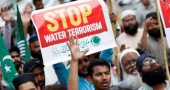
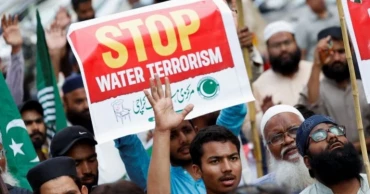
India has rejected a ruling by the Permanent Court of Arbitration in The Hague that directed New Delhi to continue following the 1960 Indus Waters Treaty with Pakistan, saying the tribunal has no authority over India’s sovereign decisions.
India suspended the decades-old water-sharing agreement in April last year after blaming Pakistan for an attack at a tourist site in Kashmir that killed 26 people. New Delhi said two of the three attackers were Pakistani. Islamabad has denied any involvement in the attack.
The dispute has once again brought the long-running Kashmir conflict to the centre of tensions between the two nuclear-armed neighbours.
The Indus Waters Treaty, signed in 1960, has survived three wars between India and Pakistan. The river system covered by the agreement provides water for about 80% of Pakistan’s agricultural land.
The international tribunal ruled Monday that the treaty remains legally binding and that India had no valid basis to suspend or end it.
It also ordered India to limit construction work on the Ratle Hydroelectric Plant in Kashmir. Under the order, work on parts of the dam, including the dam wall and power intake structure, must not go beyond specified levels.
The restrictions will remain in place until 90 days after a neutral expert appointed by the World Bank delivers a decision, which is expected by July 2027.
India’s Ministry of External Affairs, however, said New Delhi does not recognise the tribunal’s authority over the dispute and “categorically” rejected its ruling.
“This so-called Court of Arbitration has no jurisdiction whatsoever to pronounce on India’s sovereign decisions,” the ministry said in a statement.
It also said any present or future decisions by the tribunal would not affect India’s actions regarding projects being developed by the country.
India is officially a member of the Permanent Court of Arbitration.
Pakistan welcomed the tribunal’s interim measures. The Pakistani government said it was reviewing the ruling and considering how it could help restore engagement under the treaty’s legally binding provisions.
Source: Al Jazeera
18 days ago
Iran ready to deepen cooperation with Pakistan: President
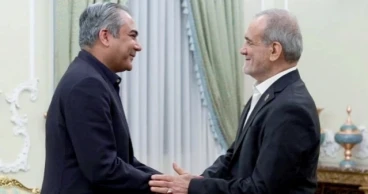
Iranian President Masoud Pezeshkian on Tuesday said Tehran is ready to expand and deepen cooperation with Pakistan in various fields.
He made the remarks during a meeting with visiting Pakistani Interior Minister Mohsin Naqvi, highlighting the “excellent relations and deep bonds” between the two countries, according to a statement on the Iranian president’s official website.
Pezeshkian said Iran and Pakistan share strong historical, cultural and people-to-people ties. He also welcomed Pakistani officials’ efforts to strengthen solidarity and relations with Iran.
The Iranian president said Tehran is willing to further expand ties with Pakistan in areas of mutual interest and create opportunities for joint cooperation.
He added that stronger bilateral ties and closer cooperation would help protect the interests of both countries and contribute to regional peace, stability and security.
Naqvi said his visit to Tehran was aimed at following up on agreements reached during a recent visit to Pakistan by Iranian Interior Minister Eskandar Momeni.
Describing Pakistan-Iran ties as “strong, age-old and unbreakable,” Naqvi said Islamabad is committed to further expanding relations with Tehran.
The Pakistani minister arrived in Tehran earlier Tuesday and was received by his Iranian counterpart. Later, he met Iranian Foreign Minister Seyed Abbas Araghchi and discussed diplomatic and bilateral issues, Iran’s official news agency IRNA reported.
In recent months, Pakistan has played a mediating role between Iran and the United States, helping the two sides exchange messages and pursue peace efforts.
With Islamabad’s mediation, Tehran and Washington signed a memorandum of understanding in June aimed at ending their conflict.
1 month ago
Coal mine blast in Pakistan kills 32, traps 10 miners
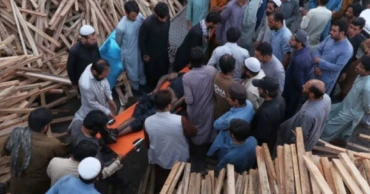
At least 32 miners were killed and 10 others remained trapped underground after a methane gas explosion at a coal mine in southwest Pakistan on Thursday.
The blast occurred at a mine on the outskirts of Quetta, the capital of Baluchistan province, government mine inspector Ghani Baloch said.
Seven bodies were recovered several hours after the explosion, while rescue teams later found 25 more, officials and the provincial disaster management agency said.
Rescue operations were continuing to locate and bring out the remaining trapped miners.
Baloch said rescuers would continue their efforts until all the trapped workers were found, but warned that the death toll could rise.
He said the chances of finding survivors decrease after methane explosions because oxygen levels inside the mine can fall sharply. Rescuers were also moving cautiously because of the dangerous conditions.
Authorities were handing over the recovered bodies to their families for burial, while relatives of the trapped miners waited anxiously for updates, Baloch said.
Baluchistan Mines and Minerals Minister Shoaib Nosherwani said rescue teams were working in extremely difficult conditions. He expressed condolences to the families of the victims and announced compensation of 500,000 Pakistani rupees (around $1,800) for each miner who died.
He also said authorities would investigate the cause of the explosion and review safety measures at coal mines.
A coal miners' union, meanwhile, blamed possible negligence for the accident and called for action against those responsible.
The Pakistan Central Mines Labour Federation urged the government to strictly enforce mine safety rules and take strong action against companies that fail to comply with safety regulations.
Deadly accidents are frequent in Pakistan's coal mining sector, particularly in Baluchistan, where many mines lack proper ventilation, gas monitoring systems and other basic safety facilities.
Mine workers and labour groups have long accused mine owners of failing to enforce safety rules and provide adequate protective equipment.
Despite the dangerous working conditions and low wages, thousands of people depend on coal mining for their livelihoods in Baluchistan, Pakistan's largest and least developed province, where poverty and unemployment remain widespread.
1 month ago
Iran-US talks to begin in Switzerland on Sunday, Pakistan says
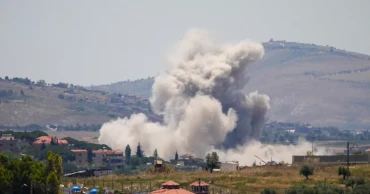
Technical-level talks between Iran and the United States on implementing their interim agreement will begin on Sunday in Bürgenstock, Switzerland, with Qatari mediators also taking part, Pakistan said on Saturday.
In Washington, US Vice President JD Vance confirmed that senior American negotiators Jared Kushner and Steve Witkoff were already in Switzerland and were working on the technical aspects of discussions related to Iran's nuclear programme.
Speaking to Fox News, Vance said he expected to travel to Switzerland "sometime in the next couple of days," while noting that coordinating the negotiations remained delicate.
The announcement came as Iran sent mixed signals over the future of the interim agreement following continued Israeli attacks in Lebanon.
Earlier on Saturday, Iran's joint military command announced that it had again closed the Strait of Hormuz, accusing the United States of acting in bad faith and failing to stop Israel's military operations in Lebanon.
In a statement carried by Iranian state television, the military command warned that additional measures had been planned if what it described as "aggression" continued.
Shortly afterward, Iranian state media reported that the country's negotiating team was heading to Switzerland, a trip that had originally been scheduled for Friday.
However, Iranian Foreign Ministry spokesperson Esmail Baghaei indicated that substantial progress in the negotiations was unlikely unless Washington fulfilled its commitments under the interim deal.
"This trip is therefore about demanding that the other side fulfill its obligations," Baghaei said, adding that talks on a final agreement would begin only after key commitments were honoured.
He warned that failure to implement those commitments could jeopardise the entire memorandum of understanding reached between the two sides.
The interim agreement, signed earlier this week, had led to the reopening of the Strait of Hormuz and revived hopes for broader negotiations over Iran's nuclear programme and regional stability. However, several key issues remain unresolved, and tensions over the fighting in Lebanon continue to threaten the fragile accord.
2 months ago
Iran war deal closer than ever, says Pakistan
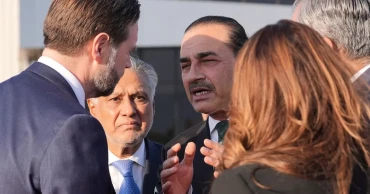
Momentum for a deal to end the Iran war appeared to grow Saturday as key mediator Pakistan said an agreement was closer than “ever before” and Iran made some of its most optimistic statements yet.
U.S. President Donald Trump said on social media the deal was “scheduled to get signed tomorrow,” and that the Strait of Hormuz would open immediately. Iran foreign ministry spokesperson Esmail Baghaei, however, said “although it will not happen tomorrow, the possibility that it could take place in the coming days cannot be ruled out."
Each side was expected to sign electronically.
Meanwhile, Trump was expected to discuss demining the Strait of Hormuz during the Group of Seven summit that starts Monday. And Iran’s state-run television said funeral ceremonies for former Supreme Leader Ayatollah Ali Khamenei, killed in the war's opening attack, will take place in July.
A senior U.S. official, who briefed journalists on condition of anonymity under rules set by the White House, said Trump planned to meet on the G7 sidelines with the leaders of Egypt, Qatar and United Arab Emirates to discuss efforts to wind down the war.
G7 members Britain and France have expressed interest in assisting with demining once the conflict is paused. It was not clear how many mines are in the strait that Iran has effectively controlled since shortly after the war began, virtually shutting down oil and natural gas shipments from the Persian Gulf. The U.S. has blockaded Iranian ports in response.
A tenuous ceasefire has been in place since April 7.
Pakistan says a deal to end the war is imminent
Pakistani Prime Minister Shehbaz Sharif said a deal aimed at ending the war was expected to be finalized within 24 hours. Pakistan's foreign ministry said the electronic signing ceremony was scheduled for Sunday, but did not provide details.
Sharif told his Qatari counterpart “a peace deal was ready for signatures by the relevant parties very shortly,” another statement said.
Iran signaled optimism but indicated more time was needed. Baghaei said in a statement carried by state TV that "the likelihood of finalizing the memorandum of understanding in the coming days is high.”
Iran has long expressed wariness in negotiations, pointing out that previous talks with the U.S. last year and early this year ended with attacks by the U.S. and Israel.
Baghaei said the memorandum under discussion was focused on ending the war and "at this stage, it has been decided that there will be no discussion of the nuclear issue.”
Iran's nuclear program and highly enriched uranium have long been at the center of tensions with the U.S. and Israel and an international source of concern.
Trump on social media asserted that “when all is calm,” the U.S. would go in and “downblend and destroy” the enriched uranium in Iran or in the U.S.
The apparent breakthrough came after Iran exchanged fire with the U.S. and Israel earlier in the week, threatening to rupture the ceasefire and push the Middle East back into full-scale war.
Iranian Foreign Minister Abbas Araghchi posted on X on Friday that an agreement “has never been closer.” Trump, who has asserted multiple times in recent weeks the countries were on the cusp of a deal, shared Araghchi’s post on social media.
Trump on Thursday claimed significant progress in negotiations, hours after he threatened to seize Iran’s oil industry.
Khamenei to be buried at the holiest of Shiite shrines
The funeral, burial and farewell events for Khamenei will occur between July 4 and 9 during Muharram, a traditional period of mourning in the Shiite Muslim calendar.
Khamenei is succeeded by his son, Mojtaba, who is considered less compromising and has not been seen publicly since the war began.
Funeral ceremonies are expected to begin in Tehran and move to Qom, a stronghold of many senior Shiite clerics, then to Mashhad, Khamenei's birthplace. He’ll be buried there at the Imam Reza Shrine, considered the holiest place among Shiite devotees.
Khamenei remolded the Islamic Republic following the death in 1989 of Ayatollah Ruhollah Khomeini, the fiery, charismatic ideologue who led the overthrow of the shah and installed rule by Shiite Muslim clerics.
Khamenei ruled far longer than Khomeini. He greatly expanded the Shiite clerical class and built the paramilitary Revolutionary Guard into the most important body underpinning his rule. The Guard became a military and business behemoth, the country’s most elite force and head of its ballistic missile arsenal — a key target for Israel and the U.S. in the war.
3 months ago

Mushfiqur’s 137 sets Pakistan 437-run target
Bangladesh's second innings came to an end at 390 on the third afternoon in Sylhet, setting Pakistan a massive and highly improbable target of 437 runs to win the second Test.
The innings break was triggered when veteran Mushfiqur Rahim was finally dismissed for a magnificent 137 off 233 balls.
Attempting to clear the boundary off Sajid Khan, Mushfiqur was caught at deep midwicket by Mohammad Abbas. His masterclass included 12 boundaries and a six, anchoring the lower order across the day to ensure Bangladesh drove their lead completely out of Pakistan's reach.
Off-spinner Sajid Khan wrapped up the tail to finish with figures of 3-126 from a marathon 33.2 overs, while paceman Khurram Shahzad was the pick of the Pakistani attack with 4-86.
Facing a heavily wearing Day 3 pitch that is already offering sharp turn, Pakistan brace for an uphill battle to save the Test match and prevent a 2-0 series sweep.
4 months ago
Bangladesh, India, Nepal, Pakistan among hardest-hit by monsoon disasters: ICIMOD
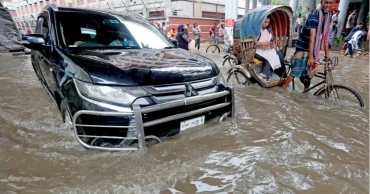
Bangladesh, India, Nepal and Pakistan were among the countries repeatedly battered by monsoon-triggered floods and landslides in 2025, as disaster risks continued to intensify across the Hindu Kush Himalaya (HKH) region, according to an analysis by the International Centre for Integrated Mountain Development (ICIMOD).
Four of the eight countries in the Hindu Kush Himalaya (HKH) region experienced more than 10 major disasters in 2025, according to data from ICIMOD analysis, highlighting the region’s growing exposure to hazard-related risks.
Asia accounted for a large share of disasters globally in 2025, a trend reflected in the HKH, which spans parts of South and East Asia.
Analysis of EM-Data (Emergency Events Database) shows that countries in the HKH region experienced economic losses of more than USD $6 billion in 2024 alone from these events, with most damage linked to water-related hazards such as floods, landslides and storms, said the HKH, noting that the situation continued into 2025.
Other hazards, such as glacial lake outburst floods, were also reported in select locations. Across the region, about 1.2 million people were displaced or directly affected by disasters during the year.
Globally, disaster-related economic losses in 2025 were estimated at more than USD $169 billion. In comparison, losses recorded across the HKH highlight how extreme events translate into disproportionate impacts in a region characterised by complex terrain and high exposure.
Data also shows that Myanmar, Pakistan, and China experienced a series of monsoon-induced floods in 2025, causing widespread damage to infrastructure and livelihoods.
Researchers link the increasing impact of disasters in the HKH to the growing prevalence of multi-hazard events.
Multi-hazards occur when more than one type of hazard, such as floods, landslides, or droughts, happen at the same time or when one hazard triggers another. Past examples in the region include the Kedarnath floods in Uttarakhand in 2013, and the South Lhonak glacial lake outburst flood in Sikkim in 2023, India, as well as the Melamchi flood in Nepal in 2021.
“Recent years show how floods, landslides, and other hazards are increasingly overlapping in mountain regions, amplifying damages to homes, infrastructure, and essential services,” said Pema Gyamtsho, Director General at ICIMOD, commenting on the regional trend.
Long-term data covering the period from 1975 to 2024 shows a decline in death rates and the number of people affected by disasters in the HKH after 2013.
Analysts caution that data gaps may influence this trend, but improvements in preparedness and early warning systems may also be contributing factors.
“The numbers are still worrying, but the post-2013 trend suggests fewer lives are being affected year on year, which may reflect better climate services and preparedness in parts of the region,” said Manish Shrestha, a hydrologist at ICIMOD. “Sustained investment in preparedness and planning remains critical as risks continue to rise.”
Early warning systems have been credited with reducing losses in some flood-prone areas. In eastern Nepal, alerts issued from a flood early warning system along the Khando River in 2024 helped inform and evacuate around 60,000 people living downstream.
Analysts note that reducing future disaster losses in the HKH will also depend on risk‑informed investments, where development and infrastructure planning take multi‑hazard risks into account.
Without integrating hazard and vulnerability data into investment decisions, exposed communities risk locking in higher losses as climate‑driven extremes intensify.
Experts warn that multi‑hazard risks are likely to intensify in the coming years as climate change alters weather patterns and increases the frequency and severity of extreme events, leaving exposed communities across the HKH vulnerable to escalating losses.
4 months ago

Nahid Rana’s five-wicket haul powers Bangladesh to comfortable win over Pakistan
Express pacer Nahid Rana produced a devastating spell of fast bowling to claim 5-40, dismantling Pakistan’s batting lineup and securing a comprehensive 104-run victory for Bangladesh on the final day in Mirpur.
He took five wickets in just 9.5 overs. His five wickets for just 40 runs are now the best of his career.
The win marks Bangladesh’s third consecutive Test triumph against Pakistan, sealing a dominant performance at the Sher-e-Bangla National Cricket Stadium.
Chasing a target of 268 on a rapidly deteriorating surface, Pakistan’s resolve crumbled under Rana’s raw pace and accuracy. The young quick utilized the afternoon heat to extract steep bounce and movement, leaving the visitors with no answers as they were bundled out for 163 in 52.5 overs.
Rana’s masterclass began in the morning session when he squared up Pakistan captain Shan Masood (2) with a delivery that straightened off the seam, forcing a thick outside edge to Litton Das. While Abdullah Fazal offered lone resistance with a gritty 66, Rana returned in the post-lunch session to clinical effect.
He broke a burgeoning partnership by inducing an edge from Saud Shakeel (15) before producing the delivery of the match to dismiss Mohammad Rizwan. The ball pitched outside off and jagged back prodigiously at 147 kph to rattle the stumps, leaving Rizwan stunned.
The victory was built on the foundation of a bold declaration by Bangladesh captain Najmul Hossain Shanto earlier in the day.
Shanto, who missed a historic second century of the match by just 13 runs, declared the second innings at 240-9 shortly before lunch. His 87, combined with Mominul Haque’s 56, set a target that proved unreachable for a Pakistan side still reeling from their first-innings collapse.
The match reached its climax when Rana charged in for the final blow against Shaheen Shah Afridi. Digging in a fierce, rising short ball, Rana forced the tailender into a defensive tangle.
The ball clipped the glove and looped gently to the waiting hands of the short-leg fielder, sparking wild celebrations across the venue.
As the catch was taken, Rana sprinted toward his teammates to celebrate his five-wicket haul, cementing a 104-run win that underscored a notable power shift in the rivalry.
The second and final Test of the series will take place in Sylhet from May 16th.
4 months ago
Pakistan warns of strong response to any attack on anniversary of clash with India
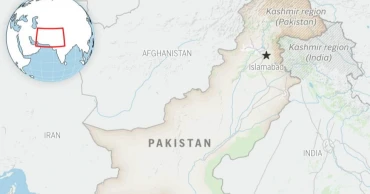
Pakistan on Thursday warned of a strong response to any future aggression as it marked the first anniversary of last year’s four-day military conflict with neighbouring India that pushed the two nuclear-armed rivals close to war before a US-brokered ceasefire ended the fighting.
In a statement, Pakistan’s military said any “hostile design” against the country would be met with “greater strength, precision and resolve” than during the May 2025 confrontation, which Islamabad named “Marka-e-Haq” or “Battle of Truth.”
The conflict erupted after gunmen attacked tourists in Indian-administered Kashmir, killing 26 people, most of them Hindu visitors. India accused Pakistan-backed militants of carrying out the attack, an allegation Islamabad denied while demanding an independent investigation.
On May 7 last year, India launched strikes inside Pakistan, prompting retaliatory attacks from Pakistan involving drones, missiles and artillery shelling. The clashes left dozens dead on both sides before a ceasefire was reached on May 10 through US mediation.
Pakistan had claimed during the conflict that it shot down at least seven Indian military aircraft, including a French-made Rafale fighter jet. India acknowledged losses but did not disclose details.
Donald Trump has repeatedly claimed credit for helping prevent a wider war between the two neighbours.
India and Pakistan have long maintained tense relations and have fought two of their three wars over the disputed Himalayan region of Kashmir, which both countries claim in full.
4 months ago