private universities
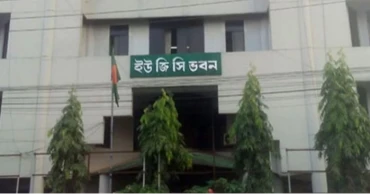
Govt action looms against 18 private universities in Bangladesh
The government is set to take legal action against 18 private universities for their failure to relocate to their permanent campuses, despite operating for over 12 years and receiving multiple deadline extensions.
The Ministry of Education has recently instructed the University Grants Commission (UGC) chairman to take action against these universities for not complying with the requirement under the Private University Act, 2010.
Rabindra University will be developed like Biswa Bharati: Planning Adviser
UGC Member Professor Dr Mohammad Anwar Hossen said, “These 18 universities have crossed the permitted time limits, some have taken 12, 15, even 20 years but still haven't shifted to their permanent campuses despite repeated reminders,” he said.
“We wrote to the Ministry of Education three months ago regarding what action can be taken. In response, the ministry has directed us to take action against 16 universities, but the number under scrutiny will ultimately be 18,” he added.
According to sources at the ministry, the Secondary and Higher Secondary Education Division wrote to the UGC chairman stating that the provisional approval period for 16 private universities has expired, yet they continue to operate without transferring academic activities to permanent campuses.
The letter cited Section 12(1) of the Private University Act, 2010, as the legal basis for action, they said.
When asked about the nature of action being considered, Dr Anwar Hossen said, “This will be decided in our upcoming monthly meeting, led by the UGC Chairman. Measures could include revoking approvals among other options.”
BU students lock admin offices demanding VC’s removal
He added that the deadline set earlier for moving to permanent campuses passed long ago, and even with fresh deadlines the universities may need another three to four years to complete the transition.
“Some universities have taken over a decade—12, 15, or 20 years—and still haven’t shifted. We will consider a range of responses in the meeting, from warnings to granting additional time based on individual circumstances,” he said.
Dr Anwar said among the 117 private universities currently operating in the country a large number still do not have permanent campuses. “Even so, many of them are still being given time,” he said.
In January 2023, the UGC had issued letters to 18 universities asking them to move to permanent campuses by December 31 of that year.
As they failed to comply with the directive student admissions were suspended at four universities, temporary campus admissions were halted at two others and the remaining 12 were given extended timeframes.
Of the 18 universities under scrutiny, nine are located in Dhaka. Those are University of Development Alternative (Satmasjid Road), Stamford University Bangladesh (Siddheshwari), Millennium University (Rajarbagh), People’s University of Bangladesh (Mohammadpur), Presidency University (Gulshan), Primeasia University (Banani), ASA University Bangladesh (Shyamoli), Sonargaon University (Panthapath) and Bangladesh University of Health Sciences (Mirpur).
The other universities are North East University Bangladesh (Sylhet), Isha Khan International University (Kishoreganj), North Western University (Khulna), Feni University (Feni), Port City International University (Chattogram), Chittagong Independent University (Chattogram) and Britannia University (Cumilla).
In a hurried move, Sonargaon University recently inaugurated an incomplete permanent campus at Khilgaon’s Ward 75 in the capital last Saturday.
KU authorities decide to expel student who attacked teacher; committee formed
According to the Private University Act, 2010, universities must shift to permanent campuses within seven years of establishment with a five-year extension allowed.
Failure to do so may result in penalties, including suspension of student enrollment.
1 year ago
UGC moves to ensure transparency in use of research funds by private universities
The University Grants Commission (UGC) has initiated strict monitoring mechanisms to ensure transparency in the utilisation of research funds at private universities in the country.
It has also begun work on drafting a set of guidelines to regulate the distribution and use of these funds.
As part of this initiative, the UGC has formed a committee to draft policies on how private universities should use their research allocations.
The committee is tasked with examining whether research is being conducted appropriately, whether a specific percentage of total income is being allocated to research and how those funds are actually being used, including whether they are being spent at all.
In an interview with UNB, UGC Member Professor Dr Mohammad Anwar Hossen, who oversees private universities, shared these developments.
“All private universities are expected to maintain transparency in the use of research funds. There should be accurate information available on how research funds are being spent,” he said.
“UGC currently lacks the means to monitor this in detail. However, a committee is now working on a guideline to address this," Professor Anwar Hossen said.
Service rules in the offing to protect rights of pvt univ teachers
He added that there had previously been no formal policy on research funding. “We are now developing one to ensure that research funds are spent properly. Many universities also receive foreign funding for research and related activities, but there was no regulation for this either. We are working to create guidelines covering these aspects as well, and we aim to complete it soon.”
Professor Hossen also expressed concern over the lack of student involvement in research and the minimal output in terms of publications.
“We are observing this closely to ensure improvement. Besides, proper methods for linking international funds with national development goals and ensuring correct financial practices will be devised," he added.
Professor Hossen mentioned that private universities are required to offer 6% of their total student intake as scholarships — 3% for underprivileged students and 3% for children of freedom fighters.
He went on to say, “Whether these scholarships are actually being provided and the criteria for awarding them are now under scrutiny. A separate committee is handling this matter. All members of the committee, including a former secretary, a former district judge, and several respected academics, are known for their honesty and competence.”
UGC formulating strong policy to regulate foreign university branches in Bangladesh
“This committee is preparing a guideline on how scholarships should be awarded, and whether they are being given at all. The committee will also report its findings to the court,” Professor Hossen mentioned.
According to UGC sources, under the Private University Act, 2010, each private university is required to allocate a specific portion of its annual budget for research.
This fund must be utilised for the development and expansion of research activities.
University general funds are operated under the joint signatures of an official nominated by the Board of Trustees and the treasurer. These funds may only be used to cover necessary university expenses.
Besides, by 30 September of each financial year, each university must submit the income and expenditure statement of the previous year to the UGC and the Ministry of Education.
1 year ago

UGC may appoint administrators to private universities if graft allegations proven
The University Grants Commission (UGC) may dissolve the Boards of Trustees (BOTs) of private universities if allegations of financial irregularities are substantiated, and appoint administrators to oversee the institutions' operations.
Boards of Trustees (BOTs) of at least 20 to 30 private universities are facing serious allegations of money laundering, fund misappropriation and financial irregularities, UGC Member Professor Dr Mohammad Anwar Hossen told UNB in an interview.
"Where there are substantial allegations against the boards of private universities, we will consult with the government and if necessary appoint administrators to ensure proper governance. If more innovative or better ideas come from the government, we are open to that too—but whatever is done will follow legal procedures,” he said.
Asked about the nature of the allegations, Dr Anwar Hossain said the primary accusations involve money laundering, embezzlement of university funds, and various other irregularities.
When asked how the UGC is gathering such information, he said, “Data is coming from multiple sources—ACC (Anti-Corruption Commission), our own investigations, media reports, and also directly from some universities.”
The UGC has already formed separate committees to investigate the allegations against each of the universities in question.
“We’ve found serious irregularities in 20 to 30 universities. Committees have been formed to investigate them independently. Once the reports are ready, they will be sent to the Education Ministry for further action,” he said.
He said an investigation report on Southern University has already been submitted, and the UGC has recommended appointing an administrator there. “We’ve sent the recommendation to the government. Once it gives nod, an administrator will be appointed.”
Asked when the administrator might be appointed at Southern University, he said, “The process is underway.”
Bangladesh’s economy holds glimmers of hope amid IMF-ADB’s lower growth forecasts: Experts
Regarding the composition of the investigation committees, Dr Anwar said, “Most of the conveners are from outside UGC. In some cases members include university teachers and retired judges. But, for every committee, we have ensured that our designated officer who oversees the respective university is included.”
According to UGC sources, the list of complaints against BOTs continues to grow as student numbers—and with it revenues—increase annually.
There is a severe lack of transparency in income and expenditure, said the sources.
An UGC official preferring anonymity old UNB that that most of the Board of Trustees had been formed under political influence during the previous government’s tenure and are now operating universities as profit-making businesses.
“Necessary action will be taken under the Private University Act, 2010, if the allegations are proven. We had initially wanted the education ministry to handle this matter, but the responsibility has been handed over to us,” the official said.
“A full commission meeting chaired by the UGC chairman will decide on the action to be taken against the universities found guilty,” he added.
1 year ago

UGC asks private unis to conduct educational activities at permanent campuses
The University Grants Commission (UGC) of Bangladesh on Sunday asked the private universities to conduct all educational activities at their permanent campuses within the stipulated timeframe.
The private universities whose temporary certificate has already expired will have to shift to their permanent campuses, said UGC member Prof Mohammad Anwar Hossain.
7-member advisory committee formed to oversee DAP implementation
He made this call while visiting the permanent campus land of Ishaka International University Bangladesh in Kishoreganj district on Saturday, said a press release here on Sunday.
Prof Hossain provided necessary directions to the university authority to improve education, research, and the physical and mental development of students.
1 year ago

UGC asks 4 private universities to stop enrollment for failing to fulfill conditions
The University Grants Commission (UGC) has asked four private universities not to admit new students for their failure to fulfill some of its conditions.
Those universities are Prime Asia University, Stamford University, Bangladesh, Asha University and Victoria University, said a press release of UGC on Thursday.
Besides, the UGC issued a public notice on the steps taken against 18 private universities as the tenure of their temporary certificates has expired and they have failed to transfer their activities to permanent campuses within the timeframe.
The four universities were asked to fully stop student enrollment for failure to shift activities to permanent campuses and not taking any visible initiative to build permanent campuses.
Apart from this, new student enrollment at temporary campuses of State University and Manarat University will completely remain suspended but it will continue at its permanent campus.
In the notice, Dhaka International University, Royal University, Southeast University, City University, The Millennium University and Bangladesh University were given time to transfer their activities to permanent campuses by March 31 this year.
If the universities fail to comply with the UGC directives within the stipulated time, the student admission to the institutions will remain halted and temporary campuses of the universities will be declared illeal.
Read more: Pvt universities’ permanent campuses: UGC to go tough as deadline ends on Dec 31
Brac University, University of Development Alternative, Green University, Uttara University, Progressive University and The People's University were asked to transfer their all activities by June 30 this year after noticing visible improvement in developing permanent campuses and their written commitments.
The student enrollment at those universities will be halted from July 1 this year once they fail comply with the directive.
Earlier on April 11 last year, the UGC issued notice asking to take measures regarding the expiry of temporary certificate and transfer to permanent campuses by December 31 last year.
As per the ‘Private University Act-2010’, there is an obligation to transfer all kinds of activities to a permanent campus within 12 years of its establishment.
Read more: UGC warning private unis to maintain standards: Biswajit Chanda
3 years ago
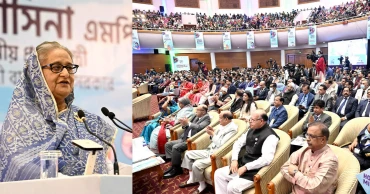
Public universities lagged behind pvt ones in adopting online classes during pandemic: PM
Prime Minister Sheikh Hasina today (December 12, 2022) said that public universities in Bangladesh lagged behind in adapting to virtual or online class when the government tried to introduce it during the Covid-19 pandemic.
“Let me share something regrettable. Our public universities were a bit slow in using the digital system in education during the pandemic period. They were far behind (compared to private universities),” she said.
The Prime Minister said this while attending the inaugural programme of Digital Bangladesh Day 2022.
ICT Division organised the programme at Bangabandhu International Conference Center (BICC) with the theme ‘Advanced Technology Inclusive Development’.
Read more: From ‘Digital Bangladesh’ to ‘Smart Bangladesh’ by 2041, PM announces
Sheikh Hasina said that during the pandemic, public universities expressed reluctance to go for online classes.
“Private universities started that (online classes) quickly. But our public universities (did not), even Dhaka University (did not start promptly),” she said.
She said that after repeated requests, public universities of the country introduced online classes.
“That was the reality. When a system is beneficial to us, why should we not adopt that?” – she questioned.
Read more: $230bn needed: PM seeks support from global partners to implement climate adaptation plan
If there were no ‘Digital Bangladesh’, what would have happened during the Covid-19 pandemic, she wondered. “Everything would come to a standstill.”
The Prime Minister also elaborated on her government’s ICT-friendly initiatives and Vision 2041 to establish Smart Bangladesh.
She mentioned that successful implementation of Digital Bangladesh made it possible for the government to keep the economy, education and other activities running properly during the pandemic.
Regarding the economic situation worldwide due to the coronavirus pandemic and Russia-Ukraine war, sanctions and counter-sanctions, Sheikh Hasina said that prices of essentials have increased globally.
Read More: Huawei ICT Incubator announces top 6 startups from Bangladesh
“Developed countries are facing a volatile situation. Even developed countries like Great Britain have declared recession. By the grace of Allah, we are still able to run our economic wheel,” she said.
3 years ago

Two senior AL lawmakers blast corruption and tax proposals on private universities
Prof. Md. Ali Ashraf, a frontline Awami League MP from Cumilla-7, on Sunday said that corruption and money laundering continue despite the government’s vow to stop the vices.
Also on Sunday, another senior ruling party MP Mohiuddin Khan Alamgir from Chandpur-1 castigated the budget proposals to impose taxes on the income of private universities and medical colleges.
Read: New budget proposals inadequate in tackling poverty, say rights groups
Both the legislators were speaking on the Supplementary Budget in the parliament.
Ali Ashraf said, “Our heads go down with shame and hate due to some big thieves.” This is not for what the nation had fought the Liberation War, he said.
“We took part in the country’s Liberation War not for love for our own lives… not with the hope of getting and enjoying something,” he said.
“We had fought in response to the call of Bangabandhu Sheikh Mujibur Rahman to free the people and to see smile on their faces,” he said.
Read: New budget underestimated impacts of COVID-19 pandemic, says SANEM
He said that although the Prime Minister Sheikh Hasina and her government unequivocally have vowed zero tolerance against corruption and those involved in money laundering, “I think adequate and proper steps should be taken in this regard.”
The AL MP also suggested that the government should overhaul the tax administration to increase its efficiency, transparency, honesty and sincerity. “Otherwise, we will not be able to reach our desired destination.”
Lawmaker Muhiuddin Khan criticized the government for imposing tax on the income of private universities and medical colleges in the budget for fiscal 2021-22.
He said, such measures are not education friendly.
Read:Budget fails to reflect people’s aspirations: BNP
He mentioned that spreading of education through private entrepreneurship will be hindered due to imposing of such tax.
Mohiuddin Khan also proposed that the government forms a bank commission and a tax commission for bringing reforms in these two sectors.
5 years ago

UGC asks private universities to update syllabuses
University Grants Commission (UGC) has called on the private universities to step forward to update the syllabus of their ongoing academic programs.
5 years ago