Gaza Strip
At least 52 killed in Gaza amid Israeli strikes as UN demands ceasefire
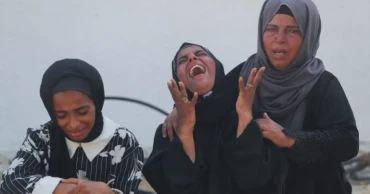
Israeli military operations across the Gaza Strip have resulted in at least 52 fatalities since early Thursday, according to medical sources cited by Al Jazeera. The casualties occurred as the United Nations General Assembly approved a resolution calling for an immediate and unconditional ceasefire in the territory.
Al Jazeera’s sources said that 26 of those killed were targeted by drone strikes while waiting in line for aid from the Gaza Humanitarian Foundation (GHF), a relief initiative backed by the United States and Israel.
Gaza civil defence official Mohammed el-Mougher told AFP that al-Awda Hospital received around 10 bodies and approximately 200 injured individuals following an Israeli drone attack near an aid distribution site close to the Netzarim checkpoint in central Gaza. Al-Shifa Hospital in Gaza City reportedly received six more bodies from similar strikes on aid queues in the Netzarim and as-Sudaniya areas.
Since the GHF began distributing aid in late May, dozens of Palestinians have died while trying to access supplies, according to Gaza’s civil defence agency. The GHF’s distribution method has drawn criticism from the United Nations. Philippe Lazzarini, head of the UN agency for Palestinian refugees (UNRWA), described the system as ineffective and potentially dangerous. Writing on X, Lazzarini said, “This model will not address the deepening hunger. The dystopian ‘Hunger Games’ cannot become the new reality,” calling instead for experienced humanitarian actors to be allowed to lead relief efforts.
In a separate incident, two people were reported killed by Israeli shelling in the Bir an-Naaja area west of Jabalia refugee camp in northern Gaza, according to a source at al-Shifa Hospital.
36 Palestinians killed while trying to access aid in Gaza, say officials
Meanwhile, Hamas condemned what it described as a deliberate Israeli move to cut communication infrastructure in Gaza, calling it an “aggressive step” in an ongoing “war of extermination.” The group urged the international community to intervene to protect civilians and critical facilities.
The communications blackout has hampered humanitarian coordination. UNRWA confirmed it had lost contact with its staff in Gaza. Deputy UN spokesperson Farhan Haq said military activity had likely severed the last remaining internet cable into the territory, leaving emergency and humanitarian services disconnected.
These developments coincided with the UN General Assembly’s adoption of a resolution demanding an immediate, unconditional, and permanent ceasefire. The resolution passed with broad support among the 193-member body, despite opposition from Israel, which labeled the measure a “politically motivated” and “counterproductive charade.” A similar resolution was vetoed by the United States in the Security Council last week.
Reporting from UN headquarters, Al Jazeera’s Gabriel Elizondo noted the resolution received two-thirds majority support, including backing from countries such as Germany, Austria, and Ukraine, which had previously abstained from similar votes. The resolution emphasized accountability, urging member states to take action to ensure respect for international humanitarian law.
Israel says Greta Thunberg has been deported after Gaza-bound ship she was on was seized
While the resolution is non-binding, Elizondo said the vote adds diplomatic pressure on Israel by signaling widespread international concern. Palestinian UN envoy Riyad Mansour welcomed the resolution and called for its full implementation. “This is the heart of the resolution,” he said, expressing gratitude to the countries that voted in favor, particularly Spain and others that supported the initiative.
Source: With inputs from Al Jazeera
1 year ago
At least 21 Palestinians killed while heading to Gaza aid hub, hospital and witnesses say
At least 21 people were killed and scores wounded Sunday as they were on their way to receive food in the Gaza Strip, according to a Red Cross field hospital and multiple witnesses. The witnesses said Israeli forces fired on crowds around a kilometer (1,000 yards) from an aid site run by an Israeli-backed foundation.
The military did not immediately respond to requests for comment. The foundation said in a statement that it delivered aid “without incident" early Sunday and has denied previous accounts of chaos and gunfire around its sites, which are in Israeli military zones where independent access is limited.
Officials at the field hospital said at least 21 people were killed and another 175 people were wounded, without saying who opened fire on them. An Associated Press reporter saw dozens of people being treated at the hospital.
New aid system marred by chaos
The Gaza Humanitarian Foundation ’s distribution of aid has been marred by chaos, and multiple witnesses have said Israeli troops fired on crowds near the delivery sites. Before Sunday, at least six people had been killed and more than 50 wounded according to local health officials.
The foundation says the private security contractors guarding its sites have not fired on the crowds, while the Israeli military has acknowledged firing warning shots on previous occasions.
The foundation said in a statement that it distributed 16 truckloads of aid early Sunday “without incident,” and dismissed what it referred to as “false reporting about deaths, mass injuries and chaos.”
Shooting broke out near distribution hub
The gunfire on Sunday erupted at a roundabout around a kilometer (1,000 yards) from the distribution site, in an area that is controlled by Israeli forces, witnesses said.
Ibrahim Abu Saoud, an eyewitness, said Israeli forces opened fire at people moving toward the aid distribution center.
“There were many martyrs, including women,” the 40-year-old resident said. “We were about 300 meters (yards) away from the military.”
Abu Saoud said he saw many people with gunshot wounds, including a young man who he said had died at the scene. “We weren’t able to help him,” he said.
Gaza ceasefire talks gain momentum as Israel accepts a US proposal
Mohammed Abu Teaima, 33, said he saw Israeli forces open fire and kill his cousin and another woman as they were heading to the hub. He said his cousin was shot in his chest and died at the scene. Many others were wounded, including his brother-in-law, he said.
“They opened heavy fire directly toward us,” he said as he was waiting outside the Red Cross field hospital for word on his wounded relative.
The hub is part of a controversial new aid system
Israel and the United States say the new system is aimed at preventing Hamas from siphoning off assistance. Israel has not provided any evidence of systematic diversion, and the U.N. denies it has occurred.
U.N. agencies and major aid groups have refused to work with the new system, saying it violates humanitarian principles because it allows Israel to control who receives aid and forces people to relocate to distribution sites, risking yet more mass displacement in the territory.
The U.N. system has struggled to bring in aid after Israel slightly eased its total blockade of the territory last month. Those groups say Israeli restrictions, the breakdown of law and order, and widespread looting make it extremely difficult to deliver aid to Gaza's roughly 2 million Palestinians.
Experts have warned that the territory is at risk of famine if more aid is not brought in.
The war began when Hamas-led militants stormed into southern Israel on Oct. 7, 2023, killing some 1,200 people, mostly civilians, and abducting 251. They are still holding 58 hostages, around a third of them believed to be alive, after most of the rest were released in ceasefire agreements or other deals.
UN, Aid Agencies condemn US-Israel-Backed Gaza aid effort after fatal incident
Israel's military campaign has killed over 54,000 people, mostly women and children, according to Gaza's Health Ministry, which does not say how many of the dead were civilians or combatants. The offensive has destroyed vast areas of the territory, displaced around 90% of its population and left people almost completely reliant on international aid.
1 year ago
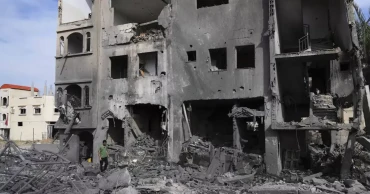
Israeli strikes across Gaza kill at least 60 people, health officials say
Israeli strikes overnight and into Tuesday have killed at least 60 people across the Gaza Strip, according to Palestinian health officials.
Israel has launched another major offensive in the territory in recent days, saying it aims to return dozens of hostages held by Hamas and destroy the militant group.
Israel eases Gaza blockade to allow minimal food supplies amid renewed military offensive
On Monday, Israeli Prime Minister Benjamin Netanyahu began allowing a small number of aid trucks into Gaza for the first time in 2 1/2 months, saying he had been pressured to lift a blockade on the territory's 2 million Palestinians that had sparked fears of famine.
But U.N. agencies said the handful of trucks that entered were nowhere near enough to meet the massive need for food, medicine and other supplies. Some 600 trucks a day had entered during a ceasefire earlier this year.
Two strikes in northern Gaza hit a family home and a school-turned-shelter, killing at least 22 people, more than half of them women and children, according to the Gaza Health Ministry.
A strike in the central city of Deir al-Balah killed 13 people, and another in the nearby built-up Nuseirat refugee camp killed 15, according to the Al-Aqsa Martyrs Hospital.
Two strikes in the southern city of Khan Younis killed 10 people, according to Nasser Hospital.
There was no immediate comment from the Israeli military, which says it only targets militants and blames Hamas for civilian deaths because the group operates in densely populated areas.
Israeli strikes across Gaza kill at least 66 people, hospitals and medics say
The war in Gaza began when Hamas-led militants attacked southern Israel, killing some 1,200 people, mostly civilians, and abducting 251 others. The militants are still holding 58 captives, around a third believed to be alive, after most of the rest were returned in ceasefire agreements or other deals.
Israel’s retaliatory offensive, which has destroyed large swaths of Gaza, has killed more than 53,000 Palestinians, mostly women and children, according to Gaza’s Health Ministry, which doesn’t differentiate between civilians and combatants in its count.
The war has displaced around 90% of its population, most of them multiple times.
1 year ago

Israel launches new major military operation in Gaza
Israel has launched a major operation in the Gaza Strip to pressure Hamas to release remaining hostages, the defense minister said Saturday, following days of intensive strikes across the territory that killed hundreds of people.
Defense Minister Israel Katz said that Operation Gideon Chariots was being led with “great force” by Israel’s army.
Israel’s Prime Minister Benjamin Netanyahu vowed earlier in the week to escalate pressure on Hamas with the aim of destroying the militant group that has ruled Gaza for nearly two decades.
The operation comes as US President Donald Trump concluded his trip to the region without a visit to Israel. There had been widespread hope that Trump’s trip could increase the chances of a ceasefire deal or the resumption of humanitarian aid to Gaza, which Israel has prevented for more than two months.
Israeli strikes kill 93 people in Gaza as Trump wraps up Middle East visit
Negotiations between Israel and Hamas have yet to achieve progress in Qatar’s capital, Doha. Hamas, which released an Israeli-American hostage as a goodwill gesture ahead of Trump’s Mideast trip, insists on a deal that eventually ends the three-year war — something Israel said it won't agree to.
More than 150 people have been killed in Israeli strikes in the last 24 hours, according to Gaza’s Health Ministry. It said almost 3,000 have been killed since Israel broke a January ceasefire on March 18.
Of the hostages who remain in Gaza, Israel believes as many as 23 are still alive, although Israeli authorities have expressed concern for the status of three of those.
Israeli strikes kill at least 64 people in Gaza as Trump wraps up his Middle East visit
The war began on October 7, 2023, when Hamas-led militants attacked southern Israel, killing 1,200 people and abducting 251 others. Israel’s retaliatory offensive has killed more than 53,000 Palestinians, many of them women and children, according to Gaza’s Health Ministry, which doesn't differentiate between civilians and combatants.
1 year ago
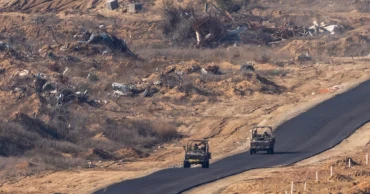
Israel seizes 50% of Gaza by destroying land to extend buffer zone
Israel has significantly increased its control over the Gaza Strip since resuming its conflict with Hamas last month. It now holds more than half of Gaza, pushing Palestinians into smaller areas of land.
The largest area under Israeli control is along the Gaza border, where the military has destroyed Palestinian homes, farmland, and infrastructure, rendering the region uninhabitable. This military buffer zone has doubled in size recently.
Israel describes this expansion as a temporary measure to pressure Hamas into releasing hostages taken during the October 7, 2023 attack that initiated the war. However, human rights organizations and Gaza experts argue that the area could be used for long-term control.
Prime Minister Benjamin Netanyahu stated last week that Israel would retain security control in Gaza even after Hamas is defeated and would encourage Palestinians to leave.
This systematic destruction near the Israeli border has been ongoing since the war began 18 months ago, according to testimonies from five Israeli soldiers. They shared with The Associated Press how the military razed everything, leaving Palestinians with nothing to return to.
Israel ‘deliberately targeting’ journalists in Gaza
A report released by Breaking The Silence, an anti-occupation veterans group, detailed how the military's actions in the buffer zone have laid the groundwork for Israeli control of the area. In response to the soldiers’ testimonies, the Israeli army emphasized that its operations are aimed at securing the country and improving security for communities affected by the October 7 attack.
In the early stages of the war, Israeli forces forcibly displaced Palestinians near the border, creating a buffer zone more than a kilometer deep. They also seized land in Gaza known as the Netzarim Corridor, isolating the north from the southern part of the territory.
Since the conflict resumed last month, the buffer zone has expanded, sometimes extending up to 3 kilometers into Gaza. This zone, along with the Netzarim Corridor, now constitutes at least 50% of Gaza, according to experts.
Netanyahu has suggested creating another corridor cutting through southern Gaza to isolate the city of Rafah. Israel’s control of Gaza also includes areas where civilians were recently ordered to evacuate before planned attacks.
Satellite images show neighborhoods that once housed hundreds of thousands of Palestinians, now reduced to rubble, with several new Israeli military outposts.
After the ceasefire in January, Palestinian Nidal Alzaanin returned to his home in Beit Hanoun, only to find it destroyed. His land now forms part of the buffer zone, and the war’s resumption forced him to leave again.
The destruction in the buffer zone has been methodical, with soldiers reporting the demolition of farmland, buildings, and industrial complexes. One soldier described the buffer zone as a "kill zone," with anyone entering the area shot at.
The long-term plans for the buffer zone remain unclear, though Netanyahu has said Israel intends to use it to pressure Hamas and push for the removal of Palestinians from Gaza. Rights organizations argue that such actions may amount to war crimes or ethnic cleansing. Israel rejects these accusations, claiming its actions aim to protect civilians.
1 year ago
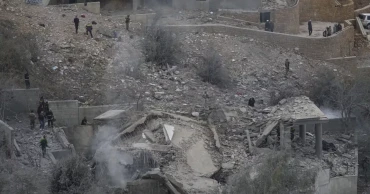
Israeli strikes kill 46 people in the Gaza Strip and 33 in Lebanon, medics say
Israeli airstrikes killed at least 46 people in the Gaza Strip in the past day, including 11 at a makeshift cafeteria in an Israeli-declared humanitarian zone, medics said. In Lebanon, warplanes struck Beirut’s southern suburbs and killed 33 people elsewhere in the country on Tuesday.
The latest bombardment came as the United States said it would not reduce its military support for Israel after a deadline passed for allowing more humanitarian aid into Gaza. The State Department cited some progress, even as international aid groups said Israel had failed to meet the U.S. demands.
In Lebanon, large explosions shook Beirut’s southern suburbs — an area known as Dahiyeh, where Hezbollah has a significant presence — soon after the Israeli military issued evacuation warnings for 11 houses there.
There was no immediate word on casualties. The Israeli military said it targeted Hezbollah infrastructure, including command centers and weapons production sites, without providing evidence.
Another Israeli strike on an apartment building east of Beirut killed at least six people. Wael Murtada said the destroyed home belonged to his uncle and that those inside had fled from the Dahiyeh last month. He said three children were among the dead and other people were missing.
An Israeli airstrike on a residential building in central Lebanon killed 15 people, including eight women and four children, and wounded at least 12 others, Lebanon’s Health Ministry said. The strike came without warning, and state media said the building was sheltering displaced families.
Israel has been carrying out intensified bombardment of Lebanon since late September, vowing to cripple Hezbollah and stop more than a year of cross-border fire by the Lebanese militant group.
A rocket exploded in a storage building in the northern Israeli town of Nahariya on Tuesday, killing two people, first responders said. Another two people were wounded by shrapnel in a separate impact outside the town.
A Hezbollah drone smashed into a nursery school near the northern Israeli city of Haifa on Tuesday morning, but the children were inside a bomb shelter and there were no injuries. The impact scattered debris across the playground.
Israeli strikes across Gaza kill 46
At the same time, Israel has continued its 13-month campaign in Gaza set off by Hamas’ Oct. 7, 2023, attack into southern Israel.
An Israeli strike late Monday hit a makeshift cafeteria used by displaced people in Muwasi, the center of a “humanitarian zone” that Israel’s military declared earlier in the war.
At least 11 people were killed, including two children, according to officials at Nasser Hospital, where the casualties were taken. Video from the scene showed men pulling bloodied wounded from among tables and chairs set up in the sand in an enclosure made of corrugated metal sheets.
Read: Israeli strikes kill 14 Palestinians in Gaza
A strike on a house in the northern town of Beit Hanoun killed 15 people on Tuesday, including relatives of Al Jazeera journalist Hossam Shabat, who has been reporting from the north.
Mohamed Shabat and his wife Dima, both volunteer doctors at Kamal Adwan Hospital, were killed along with their daughter Eliaa, according to hospital director Hossam Abu Safiya.
Strikes in central and southern Gaza killed another 20 people, according to Palestinian medical officials.
The Israeli military had no immediate comment on the strikes.
Under US pressure, Israel allows more aid into Gaza
Hours earlier, the Israeli military announced a small expansion of the humanitarian zone, where it has told Palestinians evacuating from other parts of Gaza to take refuge. Hundreds of thousands are sheltering in sprawling tent camps in and around Muwasi, a desolate area with few public services.
Israeli forces have also been besieging the northernmost part of Gaza since the beginning of October, battling Hamas fighters it says regrouped there.
With virtually no food or aid allowed in for more than a month, the siege has raised fears of famine among the tens of thousands of Palestinians believed to still be sheltering there.
The United States gave Israel a 30-day deadline — that expired this week — to improve the humanitarian situation in Gaza, calling on it to allow at least 350 truckloads to enter each day, among other things.
So far, Israel has fallen short. In October, 57 trucks a day entered Gaza on average, and 75 a day so far in November, according to Israel’s official figures. The United Nations puts the number lower, at 39 trucks daily since the beginning of October.
Israel has announced a flurry of measures in recent days to increase aid, including opening a new crossing into central Gaza and some small deliveries of food and water to the north. But so far the impact is unclear.
More forced evacuations in isolated northern Gaza
The military announced Tuesday that four soldiers were killed in Jabaliya, bringing to 24 the number of soldiers killed in the assault there since it began.
Palestinian health officials say hundreds of Palestinians have been killed, though the true numbers are unknown as rescue workers are unable to reach buildings destroyed in strikes. Israel has ordered residents in the area to evacuate. But the U.N. has estimated some 70,000 people remain.
Read more: Saudi Crown Prince demands immediate end to Israel’s war in Gaza, Lebanon
Many Palestinians there fear Israel aims to permanently depopulate the area to more easily keep control of it. On Tuesday, witnesses told The Associated Press that Israeli troops had encircled at least three schools in Beit Hanoun, forcing hundreds of displaced people sheltering inside to leave.
Drones blared announcements demanding people move south to Gaza City, said Mahmoud al-Kafarnah, speaking from one of the schools as sounds of gunfire could be heard. “The tanks are outside,” he said. “We don’t know where to go.”
Hashim Afanah, sheltering with at least 20 other people in his family home, said the forces were evicting people from houses and shelters.
The U.N.’s top humanitarian official, Joyce Msuya, told the Security Council on Tuesday that “acts reminiscent of the gravest international crimes” are being committed in Gaza. “The daily cruelty we see in Gaza seems to have no limits,” she said, pointing to recent developments in Beit Hanoun.
Israel’s campaign in Gaza has killed more than 43,000 Palestinians, according to local health authorities that do not distinguish between civilians and militants in their count but say more than half the dead are women and children. Israel says it targets Hamas militants who hide among civilians.
The war in Gaza began when Hamas-led militants stormed into southern Israel on Oct. 7, 2023, killed around 1,200 people, mostly civilians, and abducted about 250 as hostages. Around 100 hostages are still inside Gaza, about a third of them believed to be dead.
1 year ago

Israeli strike on Gaza kills a family of 8
An Israeli strike on the central Gaza Strip has killed a family of eight, Palestinian medical officials said Sunday, as Israeli forces battled Palestinian militants and pushed for the evacuation of hundreds of thousands of people from the territory's north.
Israel is also waging an air and ground campaign against Hezbollah in Lebanon, and is expected to strike Iran in retaliation for a missile attack earlier this month, though it has not said how or when.
The strike in Gaza late Saturday hit a home in the Nuseirat refugee camp, killing parents and their six children, who ranged in age from 8 to 23, according to the Al-Aqsa Martyrs Hospital in nearby Deir al-Balah, where the bodies were taken.
It said another seven people were wounded, including two women and a child in critical condition. An Associated Press reporter counted the bodies and filmed funeral prayers held at the hospital.
More than a year into the war with Hamas, Israel continues to strike what it says are militant targets in Gaza nearly every day. The military says it tries to avoid harming civilians and blames their deaths on Hamas and other armed groups because they operate in densely populated areas.
The military rarely comments on individual strikes, which often kill women and children. In recent months, it has repeatedly struck schools being used as shelters by displaced people, accusing militants of hiding among them.
Israel presses for full evacuation of northern Gaza
In northern Gaza, Israeli air and ground forces have been attacking Jabaliya, where the military says militants have regrouped. Over the past year, Israeli forces have repeatedly returned to the built-up refugee camp, which dates back to the 1948 war surrounding Israel's creation, and other hard-hit areas.
Israel has ordered the full evacuation of northern Gaza, including Gaza City. An estimated 400,000 people remain in the north after a mass evacuation ordered in the opening weeks of the war. The Palestinians fear Israel intends to permanently depopulate the north to establish military bases or Jewish settlements there.
The military confirmed Saturday that hospitals were included in the evacuation orders but said it had not set a specific timetable. It said a medical convoy scheduled to transfer patients from the Kamal Adwan Hospital in recent days was canceled for security reasons — without elaborating — but that the convoy had delivered fuel to the hospital on Saturday.
The war began when Hamas-led militants stormed into southern Israel on Oct. 7, 2023, killing some 1,200 people, mostly civilians, and abducting around 250. Around 100 hostages are still being held in Gaza, a third of whom are believed to be dead.
Israel's bombardment and ground invasions of Gaza have killed over 42,000 Palestinians, according to Gaza's Health Ministry, and left much of the territory in ruins. Palestinian medical officials do not say whether those killed by Israeli forces are militants or civilians, but say women and children make up over half the fatalities. Israel says it has killed over 17,000 fighters, without providing evidence.
Israel expected to strike Iran as fighting rages in Lebanon
Lebanon's Hezbollah, which is allied with Hamas, began firing rockets into Israel on Oct. 8, 2023, drawing retaliatory airstrikes. The conflict dramatically escalated in September with a wave of Israeli strikes that killed Hezbollah's leader, Hassan Nasrallah, and most of his senior commanders. Israel launched a ground operation into southern Lebanon earlier this month.
At least 2,255 people have been killed in Lebanon since the start of the conflict, including more than 1,400 people since September, according to Lebanon's Health Ministry, which also does not say how many were Hezbollah fighters. At least 54 people have been killed in the rocket attacks on Israel, nearly half of them soldiers.
Iran, which supports Hezbollah and Hamas, launched around 180 ballistic missiles at Israel to avenge the killing of Nasrallah, an Iranian general who was with him, and Ismail Haniyeh, the political leader of Hamas, who died in an explosion in Iran's capital in July that was widely blamed on Israel.
1 year ago

Israeli police clash with worshipers at Jerusalem holy site
Israeli police raided Al-Aqsa Mosque in Jerusalem’s Old City early Wednesday and attacked Palestinian worshippers, Palestinian media reported, raising fears of wider tensions as Islamic and Jewish holidays overlap.
The incidents sparked a wave of Palestinian protests, condemnations and violence. The Israeli military said sirens warning of incoming rockets sounded in Israeli communities around the Gaza Strip.
Tension has already been high in east Jerusalem and the West Bank for months, and fears of further violence were fueled with the convergence of the Muslim holy fast month and the Passover.
Such confrontations at the contested holy compound, the third holiest shrine in Islam that is also the most sacred site in Judaism and referred to as the Temple Mount, have sparked deadly cross-border wars between Israel and Gaza's Hamas rulers in the past, the last was in 2021.
Videos on social media purportedly showed Israeli police officers beating Palestinians with batons and rifle butts at the mosque in the contested hilltop site revered by both Muslims and Jews.
The official Palestinian news agency, Wafa, reported that dozens of worshipers, who spend all the night in Ramadan praying, were injured when the police raided the mosque.
It was not immediately clear what sparked the violence. The Israeli police said it used force to evacuate worshippers who were holed up at the mosque with fireworks, rocks, and sticks. They added that an officer was injured in his leg by a stone and that dozens of “rioters” were arrested.
Talab Abu Eisha, 49, said more than 400 men, women and children were praying at Al-Aqsa when the police encircled the mosque.
“The youths were afraid and started closing the doors,” he said, adding that police forces “stormed the eastern corner, beating and arresting men there."
”It was an unprecedented scene of violence in terms of police brutality and intention to hurt the youths," he said, denying police claims that young men were hiding fireworks and rocks. He added that the police prevented all men under 50 years old from passing through the Old City's gates leading to the compound for the dawn prayers.
The violence in Jerusalem triggered protests and condemnations from Palestinians. in Gaza, Hamas called for large protests and people started gathering in the streets, with calls to head for the heavily guarded Gaza-Israel frontier for more violent demonstrations.
The Palestinian leadership condemned the attack on the worshippers. The spokesman of Palestinian President Mahmoud Abbas, Nabil Abu Rudeineh, warned Israel that such a move “exceeds all red lines and will lead to a large explosion."
In Gaza, Palestinian militant groups Hamas and Islamic Jihad also called for Palestinian residents of Jerusalem, the West Bank, and Israel to go and gather around Al-Aqsa Mosque and confront Israeli forces.
The Israeli military said Gaza militants fired two barrages of rockets toward southern Israel. Five rockets were intercepted and four landed in open areas. There were no reports of casualties or damage.
Earlier on Tuesday, a Palestinian suspect stabbed two Israelis near an army base south of Tel Aviv , police said, in the latest incident in a yearlong spate of violence that shows no sign of abating.
The Magen David Adom paramedic service said first responders treated two men for serious and light stab wounds in the incident on a highway near the Tsrifin military base. The men were taken to a nearby hospital for treatment their injuries.
Israeli media identified the two victims as soldiers.
Police said that civilians at the scene apprehended the suspected attacker, who was taken into police custody for questioning.
Israeli-Palestinian violence has surged over the last year, as the Israeli military has carried out near-nightly raids on Palestinian cities, towns and villages and as Palestinians have staged numerous attacks against Israelis.
At least 88 Palestinians have been killed by Israeli fire this year, according to an Associated Press tally. Palestinian attacks against Israelis have killed 15 people in the same period.
3 years ago

Palestinian officials say house fire in Gaza Strip kills 21
A fire set off by stored gasoline in a residential building killed 21 people Thursday evening in a refugee camp in the northern Gaza Strip, the territory's Hamas rulers said, in one of the deadliest incidents in recent years outside the violence stemming from the Israeli-Palestinian conflict.
The blaze erupted on the third floor of a three-story building in the crowded Jabaliya camp, according to the Palestinian militant group Hamas. No one inside the house survived.
The Civil Defense in Gaza, which is run by Hamas, attributed the cause of the fire to gasoline that was being stored in the building. It was not immediately clear how the gasoline ignited. Officials said an investigation was underway.
Flames were seen spewing out of the windows of the burning floor as hundreds of people gathered outside on the street, waiting for fire trucks and ambulances.
Read more: 4 Palestinians killed in flare-up as Israel counts votes
Gaza, ruled by Hamas and under a crippling Israeli-Egyptian blockade, faces a severe energy crisis. People often store cooking gas, diesel and gasoline in homes in preparation for winter. House fires have previously been caused by candles and gas leaks.
Palestinian President Mahmoud Abbas offered condolences to the families of the dead and declared Friday a day of mourning.
Tor Wennesland, the United Nations’ Middle East peace envoy, expressed “heartfelt condolences to the bereaved families, relatives and friends of those who died in the accident; the Government, and the Palestinian people.”
Hussein Al-Sheikh, a senior Palestinian Authority official, called on Israel to open its border crossing with Gaza to allow for the evacuation of those injured who need advanced medical care to Palestinian hospitals in the West Bank and Jerusalem. It was later confirmed that all in the house had died.
COGAT, the Israeli body controlling the Erez Crossing with the Gaza Strip, did not comment.
Read more: Israel and Gaza militants exchange fire after deadly strikes
But Israel’s Defense Minister Benny Gantz sent his condolences to the Palestinians, writing on Twitter that “we have offered our assistance in evacuating injured civilians to hospitals via COGAT. The State of Israel is prepared to provide life-saving, medical aid to Gaza residents.”
3 years ago
.jpg)
Death toll from weekend Israel-Gaza fighting rises to 47
The death toll from last weekend's fighting between Israel and Gaza militants has risen to 47, after a man died from wounds sustained during the violence, the Health Ministry in Gaza said Thursday.
Israeli aircraft struck targets in the Gaza Strip and the Palestinian Islamic Jihad militant group fired more than a thousand rockets over three days of fighting, the worst cross-border violence since an 11-day war with Hamas last year.
According to the Health Ministry, 47 people were killed, among them 16 children and four women. Israeli strikes appear to have killed some 30 people, among them several militants and two senior Islamic Jihad commanders, one of whom Israel said it targeted in order to foil an imminent attack. As many as 16 people might have been killed by rockets misfired by Palestinian militants.
Also read: Cease-fire between Palestinians, Israel takes effect in Gaza
It wasn't immediately clear how the man whose death was announced Thursday was wounded.
A cease-fire took hold Sunday night, bringing an end to the fighting, in which no Israelis were killed or seriously wounded.
Israel and Gaza’s militant Hamas rulers have fought four wars and several smaller battles over the last 15 years at a staggering cost to the territory’s 2 million Palestinian residents.
Also read: Israel, militants trade fire as Gaza death toll climbs to 24
4 years ago