Enforced disappearances
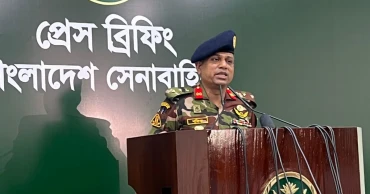
Action if army members found guilty of disappearances: Army headquarters
No army personnel will be spared if proved involved in enforced disappearances, said Colonel Md Shafiqul Islam, Staff Colonel of the Military Operations Directorate.
“When army personnel are on deputation, we don’t have direct control over them. However, investigations are ongoing. If anyone is proved involved in enforced disappearances, the army will take action,” he said at a press briefing held at Dhaka Cantonment on Thursday.
Replying to a question, he said ahead of the next general election, the army is working to ensure a stable situation in the country.
Colonel Shafiqul said 80 percent of the looted arms have already been recovered and expressed the hope that the remaining weapons would also be retrieved soon.
Around 12,000 arms had gone missing, of which approximately 9,000 have been recovered so far, he added.
2 KNA operatives killed in Bandarban army operation; arms recovered
The army official also informed that 4,790 people received treatment at Combined Military Hospitals (CMHs) during the last year July movement.
Currently, 22 patients are undergoing treatment at the Combined Military Hospital (CMH), Dhaka.
The law and order situation has improved significantly compared to previous periods, with the army remaining deployed to support efforts in maintaining peace.
1 year ago

Commission on enforced disappearances to be formed soon: Law Adviser
A strong commission on enforced disappearances will be formed under a newly proposed law on the issue, said Law Adviser Asif Nazrul on Monday.
The draft legislation would be finalised within the next month, he said while talking to reporters at the Secretariat following a meeting with a delegation of United Nations Working Group on Enforced or Involuntary Disappearances (WGEID).
Adviser Asif Nazrul trashes report by Indian portal as false, defamatory
When asked whether a future government might scrap the law, the adviser said, “Regardless of whether it's BNP, Jamaat, NCP, or any other party — they have all been victims of enforced disappearances. They have all raised their voices against it. In fact, BNP and Jamaat were the most affected.”
“The UN Working Group wanted to visit Bangladesh several times in the past, as far back as 12 years ago. But under the previous fascist Awami League government — who we believe were responsible for these disappearances — the visits were denied. They did not even respond to the UN’s letters,” he said.
“Our government has made a commitment to investigate and prosecute enforced disappearances,” he said, adding that during Monday’s meeting, the UN team appreciated some of the government’s ongoing initiatives.
“They welcomed our move to establish an investigation commission and to draft legislation. They also recommended extending the commission's mandate and we will present that suggestion to the Chief Adviser,” said the Adviser.
The law adviser also said the proposed law would aim to establish a strong, independent commission on enforced disappearances.
The UN delegation also advised engaging with the families of the disappeared, issuing missing person certificates and forming a search committee -- all of which, he noted, are already being considered in the draft law. “They have also offered to provide intellectual support for the law-making process.”
UN team praises interim govt for steps against enforced disappearances
When asked about the recent visit to South Africa led by the Chief Justice and whether a Truth and Reconciliation Commission (TRC) would be formed in Bangladesh, Asif Nazrul said, “The TRC model, which gained global attention after its implementation in South Africa, has also been adopted by countries like Sri Lanka and Nepal -- though it remained unsuccessful.”
The TRC typically includes four components: Truth-Seeking – Understanding what actually happened.
“That process is already underway here,” he noted, citing the UN’s fact-finding report and ongoing investigations and trials in Bangladeshi tribunals.
He also referred to filmmaker Mostofa Sarwar Farooki’s initiative to set up a ‘July Museum’ at the former Ganabhaban premises as part of this truth-seeking effort.
Memorialisation – Preserving the collective memory of these events. “The museum will serve that purpose,” he said.
Amnesty – “This is more complex,” he acknowledged.
“There may be scope for amnesty in cases involving minor offenses committed without malicious intent — a practice seen in many countries.”
Reconciliation – Building national consensus by ensuring appropriate punishment for the main perpetrators.
He also emphasised the importance of reparation, adding that compensation for victims must go beyond monetary terms.
“For example, survivors of the July incidents who suffered permanent injuries could be provided with employment opportunities,” he said.
Reflecting on the recent South Africa visit, the adviser said, “We held several meetings during the trip. In the next phase, we plan to organise a regional conference led by the Chief Justice. We aim to bring in representatives from Sri Lanka, Nepal and South Africa, along with Bangladeshi political parties, civil society members, human rights groups and students to discuss a way forward based on collective opinions.”
1 year ago

Hasina’s trial a priority for interim govt: Shafiqul Alam
The interim government is prioritising the prosecution of former Prime Minister Sheikh Hasina and her associates for their alleged involvement in murders and enforced disappearances, said CA’s Press Secretary Shafiqul Alam on Sunday.
Speaking at the opening of a training programme for agricultural journalists at the Press Institute of Bangladesh (PIB) in the capital, Alam said some 3,500 people went missing and around 2,000 youths were murdered under Hasina’s administration.
“The process to ensure justice is already underway,” he added.
Election Timeframe Await Consensus
Pointing at the media, Alam revealed that Chief Adviser Professor Muhammad Yunus has set two potential timelines for the national elections.
But, he said, finalising the election date will depend on consultations with political parties.
Dismissing rumours of plans to ban the Awami League, he said, “The interim government has no intention to dissolve the party. Political parties themselves must address such matters. However, the Awami League continues to spread false information instead of expressing regret to the nation.”
Macroeconomic Stability
During the session, the press secretary highlighted the government’s efforts to stabilise the economy by tackling inflation and ensuring steady commodity prices.
He attributed the success to increased supply and measures to counteract market syndicates.
Alam also criticised Hasina’s regime for creating food insecurity through falsified production data. “Official reports indicated a surplus in food production, but actual figures on the ground did not match. These falsified records inflated food prices, as traders were aware of the real production levels.”
Read: Hasina to be brought back, put on trial: Press Secretary
Alam pointed out that despite claims of surplus rice production last year, Bangladesh imported 12.5 million tonnes of rice. Drawing historical parallels, he remarked, “In 1974, the nation suffered a severe famine due to the false production claims made during Sheikh Mujibur Rahman’s leadership.”
Data Integrity
Alam said the interim government has initiated reforms to ensure the accuracy of economic data. “In the past, inflation and GDP figures were manipulated, creating an imbalance in the economy despite over six per cent growth,” he said.
Alam assured that the publication of accurate data would enable citizens to reap the benefits of a sustainable economy and agriculture.
Responding to questions on public sector pay, Alam noted that salaries for government employees in Bangladesh remain the lowest in South Asia. “A dearness allowance is a logical step to address this issue.”
He said that macroeconomic stability is crucial to reducing income disparity, even amid growing purchasing power.
Read more: No info on whether Hasina granted Indian citizenship: MoFA
The government, he said, remains focused on creating a resilient economy and sustainable agricultural practices to support the nation’s long-term needs.
1 year ago
Geneva set to host first-ever World Congress on Enforced Disappearances
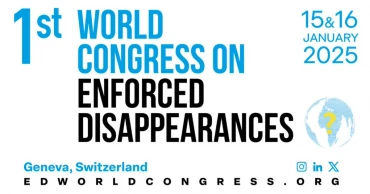
The first World Congress on Enforced Disappearances will convene from January 15-16 in Geneva, marking a pivotal step in the global fight to prevent and eradicate this egregious human rights violation.
This historic event will bring together governments, victims, civil society organisations that support their daily fight, and international bodies to foster dialogue and chart a collective path forward to end enforced disappearances worldwide, according to a media advisory issued by the UN Treaty Bodies from Geneva.
Over the course of the two-day event, panel discussions will be held on topics such as international responsibility for the forcibly disappeared, strengthening search procedures, and protecting victims, rights defenders, lawyers and journalists.
Read: BNP lodges complaints with ICT over 2276 crossfires,153 enforced disappearances
The Congress, open to the press and the public, is co-organised by the UN Committee on Enforced Disappearances (CED), the UN Working Group on Enforced or Involuntary Disappearances (WGEID), the UN Human Rights Office, and the Convention Against Enforced Disappearances Initiative (CEDI).
The event will take place at the Geneva International Conference Centre (CICG).
The Committee on Enforced Disappearances monitors States parties’ adherence to the International Convention for the Protection of all Persons from Enforced Disappearance, which as of to date, has been ratified by 77 States parties.
Read: Enforced Disappearances Commission submits report finding Hasina’s involvement, recommends disbanding RAB
The Committee is made up of 10 members who are independent human rights experts drawn from around the world, who serve in their personal capacity and not as representatives of States parties.
1 year ago

HRW calls for probe into allegations of enforced disappearances, torture in Bangladesh
Human Rights Watch has said Bangladesh authorities should investigate recent allegations of enforced disappearances and torture.
“Bangladesh’s Detective Branch has previously been implicated in allegations of grave human rights abuses by local human rights groups, including enforced disappearances and torture, “Meenakshi Ganguly, South Asia director at Human Rights Watch, said on Friday.
The New York-based rights watchdog said that allegations of torture in Bangladesh are rarely investigated or prosecuted. Following a review in July 2019, the UN Committee against Torture described the Bangladesh police as a “state within a state,” asserting that “in general, one got the impression that the police, as well as other law enforcement agencies, were able to operate with impunity and zero accountability.”
Only one case of torture has been convicted under Bangladesh’s Torture and Custodial Death (Prevention) Act since it was passed a decade ago, it said citing media reports.
Read more: US did not impose new sanctions as human rights situation has improved: Law Minister
Bangladesh has ignored repeated requests from the UN Committee Against Torture to follow up its recommendations, as required, it said adding that the committee’s recommendations included independent monitoring of all detention sites and investigation of all allegations of torture or ill-treatment by law enforcement officials.
Bangladesh's security forces are under increased scrutiny following the designation of human rights sanctions by the US government and in the lead-up to general elections slated for early 2024.
Bangladesh authorities should implement the recommendations by the Committee Against Torture, investigate allegations, and hold perpetrators accountable, HRW added.
3 years ago

Govt must stand trial in people’s court: Fakhrul
BNP Secretary General Mirza Fakhrul Islam Alamgir on Thursday warned that the current government must be tried by the people’s court for the violation of human rights and indulgence in enforced disappearances and extrajudicial killings.
5 years ago