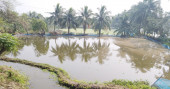
Shrimp farming
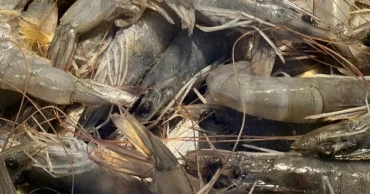
Bangladesh suspends Vannamei shrimp fry imports amid disease concerns
The Ministry of Fisheries and Livestock on Thursday (January 15, 2026) suspended all new and existing approvals for importing shrimp fry for Vannamei farming, citing risks of disease transmission and environmental pollution linked to the exotic species.
In a media release issued in the afternoon, the ministry said the decision was taken following a high-level meeting held on January 7, chaired by Fisheries and Livestock Adviser Farida Akhter, to review the environmental, social and economic impacts of Vannamei shrimp farming in Bangladesh and determine future actions.
Read more: Safe, quality shrimp production must be prioritised: Adviser Farida
The meeting noted that Vannamei shrimp is an import-dependent species and that the import of its fry poses risks of disease outbreaks, environmental degradation, and adverse impacts on indigenous species, including Bagda (black tiger shrimp) and Galda (freshwater prawn).
In this context, participants opined that unregulated expansion of Vannamei shrimp farming would not be appropriate.
The discussion emphasised keeping Vannamei shrimp farming limited to controlled, intensive and environmentally compliant systems. It was also decided that the activities of already approved Vannamei farmers would be closely monitored, with on-site evaluations to ensure full compliance with stipulated farming conditions.
Until such evaluations are completed, all forms of new and existing approvals for importing Vannamei shrimp fry will remain suspended, the media release said.
The meeting further decided to undertake necessary research to assess the environmental, social and economic impacts of Vannamei shrimp farming. Future policy and administrative decisions will be taken based on the findings of these studies.
At the same time, the ministry underscored the need to prioritise the expansion of domestic shrimp farming by boosting the production of indigenous Bagda and Galda shrimp, rather than relying on imported species, and to take up suitable projects to support this goal.
Read more: Human chain demands enforcement of law to stop saline shrimp farming in cropland
Fisheries and Livestock Secretary Abu Tahir Muhammad Zaber, Additional Director General of the Department of Fisheries Md Zia Haider Chowdhury, senior ministry officials, and fisheries officers from relevant districts, also attended the meeting.
9 months ago

Can shrimp farmers recover from Amphan-Yaas double blow?
Till even the start of 2020, farming of freshwater shrimp, otherwise known as 'white gold' among Bangladeshis for its lucrative export value, and the newer addition of crab farming in the same ponds and enclosures as the shrimp combined to paint a very optimistic future for the sector, with the promise of ample export earnings once the pandemic was over.
Eighteen months later, the shrimp and crab farmers have lost not just income by way of lower demand, but also much of their assets in two natural disasters – Cyclones Amphan and Yaas- that brought tidal surges that washed away entire fish enclosures.
For the owners, it is now a question of survival, and by doing so, keeping the 1 –1.5 million people employed naked in the sector and its offshoots in jobs. But they almost certainly cannot do it now without some form of bailout from the government - their dues have piled up, and many face the prospect of forced closure. Indeed, there have been scores of closures.
Read: Yaas leaves behind Tk 60 crore worth of damage, losses in Khulna
Shrimp farmers must be wondering whether there is some curse over them, preventing them from meeting their potential. Every year since 2013-14 fiscal has seen their sector hit by some major disruption, coming with new challenges for Bangladesh's ''white gold" or commercial shrimp production. Viral infections, drought, heavy rain, flood, tidal surge, and cyclones are wiping away shrimp enclosures.
According to the Export Promotion Bureau (EPB), Bangladesh exported 41,236 tonnes of shrimp worth $545 million in the 2013-14 fiscal year.
Since then, shrimp export has been dropping. By the 2018-19 fiscal year, exports decreased by 34 percent to $361 million. In that fiscal year, the country exported 29,543 tonnes of shrimp.
The slump in demand for Bangladeshi shrimp over this period can also be partially attributed to the explosion in popularity of the white leg shrimp.
Read Tropical Storm or Cyclone Preparedness Checklist 2021
Most of the farmers are also suffering continuous losses because of the drop in prices after the onset of the pandemic and the actions of syndicates of frozen food entrepreneurs.
Also, Cyclone Yaas and the resultant floods have shattered the hopes of shrimp and fish farmers of the coastal districts and nearby areas.
Shrimp, white fish, and crabs in farms and ponds over vast stretches of land in many villages of Bagerhat, Khulna, and Satkhira have been washed away by gushing floodwater and tides, causing huge losses to the farmers.
Also, houses, structures and equipment surrounding the ponds and farms were washed away.
Read: Shrimp farmers count losses from cyclone in Koyra
Aquaculture farmers and shrimp cultivators, who have already counted losses worth crores of taka, do not know how long it will take them to recover the losses.
Shrimp farming, which once lifted many people out of poverty, has now become synonymous with loss.
The fate of many, who invested all their hopes and money to renovate the pond, now hangs in balance. So, they are looking for other ways to protect themselves including the introduction of an insurance scheme and moving to other professions.
There was a shortage of shrimp fries at the beginning of the year. Also, viral infections and drought hit most of the shrimp enclosures during the farming season. A huge quantity of shrimp died in enclosures from viral infections.
Read CSOs, MPs demand Tk 150 bn for coastal protection
5 years ago

Bagerhat shrimp industry reeling under double whammy of rain and drought
Shrimp farmers in Bagerhat have been left reeling by the storm surge, and aftermath and excessive drought while the price of shrimp continues to fall due to the outbreak of the Covid-19 epidemic.
6 years ago
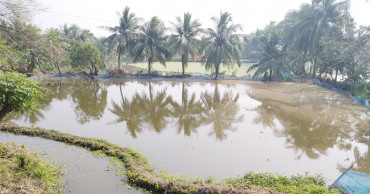
Shrimp farming in Bagerhat braces for huge losses
Shrimp farmers in the district are counting losses in the wake of a cruel double blow that severely depleted their stocks of the fish known as ‘white gold’.
Barely one and a half months ago, shrimp worth Tk 25 crore died in different parts of the district due to oxygen failure following heavy rain. With shrimp farmers still reeling from the huge losses, cyclone ‘Bulbul’ unleashed its fury in the coastal districts on November 10, dealing another blow to the shrimp farmers here.
Around 7,500 enclosures were damaged by the cyclonic storm in the district with gushing water washing away different species of white fish, including prawn, and putting the livelihoods of the farmers on edge.
The tidal surge which ‘Bulbul’ brought with it broke the banks of the enclosures while uprooted trees fell into those in many places, resulting in the pollution of water as tree leaves rotted beneath water.
According to sources at the district fisheries office, a Tk 25-crore shrimp, known as the ‘white gold’ of Bangladesh due to its lucrative export value, died due to oxygen failure after heavy rain swept the district on September 22 last.
Already facing huge losses, cyclone Bulbul came as a double blow for the shrimp farmers in different upazilas, including Sadar, Chitalmari, Fakirhat and Mongla, the district.
6 years ago