CAB

Power tariff hike to fuel inflation, hurt consumers, businesses: CAB
The Consumers Association of Bangladesh (CAB) on Wednesday expressed concern over the latest increase in electricity tariff, warning that the move could intensify inflationary pressures and raise the cost of living for ordinary people while increasing production costs across key sectors of the economy.
Reacting to the price hike, CAB Vice President SM Nazer Hossain said energy, including electricity and gas, is a fundamental driver of economic activity, and any increase in energy prices inevitably has widespread consequences.
“We have repeatedly said that electricity, gas and other forms of energy are the backbone of the economy. When energy prices increase, economic activities are naturally affected. The impact is felt not only in households but also in industries, agriculture, transport and other productive sectors,” he said.
According to the CAB, higher energy costs increase production expenses, which are ultimately passed on to consumers, affecting people from all walks of life and potentially fuelling inflation.
It said the tariff increase comes shortly after the new government assumed office, sending negative signal to consumers as well as those involved in industry, trade and commerce.
The CAB also criticised the process through which the electricity tariff was raised, noting that CAB and other stakeholders had repeatedly urged the authorities to address inefficiencies, irregularities, corruption, system losses and capacity charge-related issues before imposing additional burdens on consumers.
“Instead of taking effective measures to resolve these long-standing problems, the burden has once again been shifted onto small and marginal consumers. This is very unfortunate,” Nazer said.
He argued that while many countries are considering subsidies or bill relief for low-income consumers, reducing subsidies and increasing tariffs for small users is difficult to justify.
The CAB leader also expressed concern over the lack of visible progress in promoting renewable energy, despite a global shift towards cleaner energy sources. “Across the world, governments are prioritising renewable energy. We have yet to see comparable initiatives here. This could create long-term challenges for the economy.”
He further pointed to what he termed a significant disparity in electricity distribution between urban and rural areas, saying persistent power shortages in many rural regions are creating frustration among residents.
Although the Bangladesh Rural Electrification Board is responsible for distributing around 80 percent of the country’s electricity, the CAB alleged that mismanagement, irregularities and capacity constraints are hampering the government’s goal of ensuring universal access to electricity.
The CAB called for urgent measures to address these issues and improve the overall efficiency and reliability of the power sector.
3 months ago

Bangladesh’s overheated onion market costs consumers Tk 3.5 crore more every day
In a shocking surge, onion prices have doubled in just 10 days, forcing consumers to shell out an extra Tk 3.5 crore every single day.
Amid this price turmoil, the government’s ‘hesitation’ over import approvals has left both shoppers and farmers stranded, caught in a tightening grip of uncertainty and financial strain.
Consumer rights groups and market experts say the crisis is driven by delayed imports, weak market management and syndicate activities.
The Consumers Association of Bangladesh (CAB) has calculated that the country’s daily consumer demand for onions stands at around 7,000 metric tonnes. With prices rising from Tk 60–70 per kg to Tk 110–120 per kg in a short span, the extra daily burden on consumers’ pockets reaches Tk 3.5 crore.
Read more: Govt may allow onion imports if prices remain high this week
Former director general of the Directorate of National Consumers’ Rights Protection and CAB president AHM Safiquzzaman criticised the government’s indecision. “The government is indecisive on onion imports. Meanwhile, consumers are losing crores of taka daily,” he said.
Commerce Adviser Sk Bashir Uddin said the government would allow imports if prices do not come down this week, but warned that local farmers could suffer losses as a result.
Safiquzzaman argued that import approval should have come in September–October. “By delaying imports until after the price surge, consumers are suffering. Limited imports earlier could have prevented the current shortage,” he said, adding that some unscrupulous traders are exploiting the situation while the Commerce Adviser searches for syndicates.
The CAB president also questioned the Agriculture Ministry’s claim of 3.5 million tonnes of onion production this year, saying it is unreliable. Currently, onions are scarce in farmers’ hands and largely held by wholesalers, leaving imports as the only viable solution.
On Thursday, the Bangladesh Trade and Tariff Commission (BTTC) recommended onion imports to the commerce and agriculture ministries, citing weak market management and manipulation by intermediaries as reasons behind runaway prices.
Read more: Onion prices skyrocket in Dhaka; from Tk 70 to Tk 120 per kg
Data shows that while onion prices remained relatively stable over the past two to three months, they surged 37–42 per cent in the last week.
BTTC said the abnormal price hike indicates market mismanagement and syndicate activity.
Abdul Bayes, former vice-chancellor of Jahangirnagar University and an agricultural economist, said, “Without breaking syndicates and corporate oligarchies in agriculture, such dilemmas will recur. Unscrupulous groups exploit these situations at the expense of farmers and consumers.”
Most onion imports come from India, where prices are around Tk 16 per kg (USD 195 per tonne).
BTTC noted that even with a 10 per cent import duty, prices could drop by Tk 50 per kg domestically.
The Agriculture Ministry, however, said 75,000 tonnes of domestic onions would arrive within a week, with early December seeing the harvest of small ‘murikata’ onions.
“We have informed the Commerce Ministry that new onions will reach the market within two weeks. Whether any import decision has been formally made is not yet known to us,” said Additional Secretary Mahmudur Rahman.
Read more: Onion import through Benapole Port resumes after 2.5 years
Historical analysis by the Trading Corporation of Bangladesh (TCB) shows onion prices typically spike by over 100 per cent in November compared to March, providing opportunistic traders with profit margins while farmers lack produce.
In districts like Pabna, Faridpur and Rajbari, farmers have planted ‘murikata’ onions, with production costs around Tk 1,500 per maund.
Rokonuzzaman, a farmer from Goalanda in Rajbari, said, “Last year’s 'murikata' crop incurred losses. With Indian onions entering the market, the price per maund drops to Tk 1,200–1,400, forcing farmers to sell at a loss. This year, prices below Tk 2,000 per maund would still cause losses.”
Market stakeholders blame the ministry’s lack of foresight for creating a situation where consumers bear the brunt while farmers face uncertainty.
Read more: Onion farmers in Shailkupa hit by fertiliser shortage during peak season
10 months ago
BNP to revoke power sector indemnity provision if voted to power: Rizvi
BNP Senior Joint Secretary General Ruhul Kabir Rizvi on Saturday said their party would abolish the indemnity provision in the power sector if it returns to power.
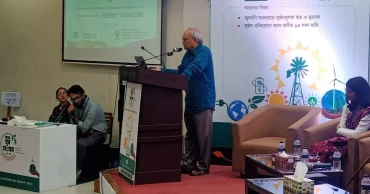
Speaking at the ‘CAB Youth Parliament 2025’ organised by the Consumers Association of Bangladesh (CAB) at Dhaka University, Rizvi said the indemnity law had legalised massive corruption in the power sector.
“During the fascist regime, hundreds of thousands of crores of taka were looted from the energy sector. Using the indemnity law as a tool, money was siphoned off abroad,” Rizvi alleged.
He said through rental and quick rental power projects, the previous government unleashed a wave of plunder in the energy sector, and the indemnity provision had paved the way for further large-scale corruption.
“BNP stands firmly against such looting. Once in power, BNP will definitely repeal the indemnity,” he affirmed.
Read more: Salahuddin slams ‘mismatch’ between July Charter and Commission report
Rizvi said investment in the energy sector had declined and stressed that Bangladesh must start focusing on renewable energy now.
“The previous government never thought about energy for people. Although the current interim government’s intentions regarding renewable energy seem right, their actions are not yet visible,” he observed.
The BNP leader said that the party’s 31-point reform agenda places special emphasis on renewable energy, adding that acting chairman Tarique Rahman has repeatedly highlighted the issue in his speeches.
“BNP has also pledged to plant 250 million trees across the country,” Rizvi said, adding that the party has always been serious about environmental issues. Apart from tree planting, our acting chairman has repeatedly talked about restoring the navigability of 20,000 km of canals, wetlands, and dead rivers,” he added.
On the country’s renewable energy potential, Rizvi said Bangladesh needs to explore more alternative sources beyond solar and wind power.
“Currently, only 4.71 percent of the national grid’s electricity comes from renewable sources. If Bangladesh can produce biofuel like Brazil—from sugarcane husks and other byproducts—it can make significant progress in this sector,” he said.
Rizvi identified investment as the major challenge in renewable energy, saying that foreign investments are often delayed or blocked due to bureaucratic hurdles. “Overcoming these challenges is crucial to take the renewable energy sector forward,” he added.
Read more: Fakhrul slams Jamaat for ‘spreading lies’ to mislead people ahead of election
10 months ago

CAB demands strict action against Soybean oil syndicates
Consumers Association of Bangladesh (CAB) on Tuesday urged the government to take strict action against the Soybean oil syndicate as ‘edible oil is going beyond the reach of consumers due to the manipulation of syndicates’ in the domestic market.
This demand was made in a statement.
In the statement, the organisation said an old syndicate—active again since August 5—is now dominating the soybean oil market.
The group is creating an artificial crisis by raising prices, thereby putting pressure on the government while securing hefty profits, it said.
Asian shares trade mixed amid investor worries after Wall Street tumble
The statement said that despite government policy support—such as duty waivers and VAT reductions—several powerful companies have deliberately reduced oil supply, destabilising the market.
Although the government approved a price hike of Tk 14 per litre from April 14, the syndicate is now reportedly trying to push for an additional Tk 7 increase.
Citing global trends, CAB noted that the international price of soybean oil dropped from USD 1,667 per ton in 2022 to USD 1,022 in 2024 but the domestic prices have continued to climb.
Currently, loose soybean oil is being sold in the retail market for Tk 180 per litre—Tk 11 more than the official rate.
CAB blamed four to five major companies for controlling the market saying they used similar tactics during the previous government to exploit consumers.
“They are still creating instability in the same way,” the statement said. “If the syndicate is not dismantled and market transparency and competition are not ensured, the crisis will only deepen.”
CAB urged the government to take immediate, strict action against the syndicate, strengthen market monitoring, and ensure proper implementation of policy support measures.
The organisation also criticised traders for failing to boost supply after the National Board of Revenue removed a 5 percent import duty following the Commerce Ministry’s price hike decision.
1 year ago

CAB demands withdrawal of VAT, SD to ease inflation
The Consumers Association of Bangladesh (CAB) has urged the government to withdraw its recent decision to increase VAT and supplementary duties on over 100 essential goods and services, citing its potential to exacerbate inflation and intensify public suffering.
Following recommendations from the International Monetary Fund (IMF), the National Board of Revenue (NBR) issued a notification imposing higher VAT and supplementary duties on items such as mobile and internet services, medicines, LPG, fruits, biscuits, detergents, soaps, tomato ketchup, kitchen towels, raw materials for rod production and other products, it said in a statement on Sunday.
CAB Chattogram division leaders expressed concern that the decision would worsen the struggles of lower- and middle-income families already reeling from high inflation and soaring costs of essentials.
The statement said food inflation in 2024 remained consistently high, peaking near 14% in November and around 13% in December.
Govt's VAT, SD hike on 100+ products suicidal: DCCI
Prices of non-food essentials also rose sharply, making it increasingly difficult for families to manage people’s expenses, it added.
The recent VAT hikes will only fuel inflation further, creating an environment ripe for unscrupulous businesses to raise prices indiscriminately, the CAB leaders said.
CAB leaders said that previous initiatives such as withdrawing VAT and import duties on 29 items, failed to benefit consumers due to the absence of monitoring, as corporate groups and importers pocketed the savings.
They also criticised the decision to raise VAT on life-saving medicines, warning of dire consequences for families already burdened with rising medical costs.
CAB urged the government to focus on broadening the VAT base, simplifying tax procedures, and preventing tax evasion.
They also called for increased transparency and accountability in the NBR.
Speakers at CAB event in Chattogram call for social resistance against dishonest traders
Instead of imposing indirect taxes that disproportionately affect low-income groups, the government should emphasise direct taxation to ensure equitable revenue collection, the statement added.
CAB leaders demanded the immediate withdrawal of the VAT and supplementary duty hike or at least its suspension until after Ramadan to mitigate public suffering.
1 year ago

Costly rental power plants keep getting extensions, even in the era of surplus capacity
Despite demand being nearly half of electricity generation capacity, the government of Bangladesh continues to extend the tenure of costly rental power plants.
The latest decision for extension of contract for a gas-based rental power plant was made in the Cabinet Committee on Government Purchase on November 8.
As per the decision, a 55 MW gas-based rental power plant of Precision Energy Ltd. will get an extension of 5 years to their existing contract with the state-owned Bangladesh Power Development Board (BPDB).
Under the Power Purchase Agreement (PPA), the BPDB will buy electricity from the plant at a tariff rate of US Cent 5.7 (equivalent to about Tk 6) per kilowatt hour while it has been buying electricity from base-load plants at around half the price.
Read: Despite surplus electricity, contracts of 10 rental power plants extended in four months
For instance, the government has been purchasing electricity from Summit-GE's Bibiyana 450 MW gas-fired power project at US 3.32 cents per kilowatt-hour, with a contract for a period of 22 years.
The government approved a PPA in October 2021 under which Consortium of (1) Edra Power Holdings Sdn Bhd, Malaysia and (2) Winnievision Power Ltd, Bangladesh, will set up the 660 MW base-load combined cycle plant and the BPDB will purchase electricity from the plant over a contract period of 22 years at a levelised power tariff of US 3.679 Cents (equivalent to Tk 2.94) per kilowatt hour to be run by local gas.
The move for continuing the extension of rental and quick rental power plants' contracts raised the eyebrows of the energy experts.
Many experts and power industry insiders believe that such a move to continue entertaining the costly rental power plants will increase the burden on the government for more subsidies, at a time when the sector has already been facing huge capacity payments' obligation with surplus capacity of electricity generation reaching about 50 percent.
Read: Power flow set up from Payra plant to Rampal sub-station
Last year, the government extended the contracts of at least 10 rental power plants with a new provision of “No Electricity, No Payment” but kept a fund allocation of Tk 6,564.08 crore to pay the owners of the rental power plants.
This time also Tk 1205.40 crore was kept as allocation while approving the latest extension proposal of Precision Energy's 55 MW Ashuganj gas-fired rental power plant which will be paid in in next 5 years.
According to the Power Division’s official statistics, as of September 13, 2023, the country's power generation capacity was 27,834 MW including off-grid renewable and captive power, while the highest generated in a day was 15,648 MW.
The BPDB official data shows the country generated 14,021 MW on September 26, while covering the excess demand by resorting to load shedding of 113 MW.
Read: 5 rental power plants with 457 MW get 2-year extension
The demand was decreasing with the coming winter and the country's power demand was recorded to be 10,954 MW on November 8 while on-grid installed capacity was showing 25,339 MW meaning that the surplus capacity was more than double at 14,385 MW.
State Minister for Power, Energy and Mineral Resources Nasrul Hamid, however, defended the extension of the rental power plants’ contracts saying that the deals were extended for “emergency necessity” to tackle the current situation when last year 10 rental power plants' contracts were extended.
“As there is a gas shortage, we have to run liquid-fuel based rental and quick rental power plants on full capacity to meet the demands," he had told UNB.
He also said these plants don’t oblige the government to make 'capacity payment' - i.e. payment for unused electricity, that was the case with some earlier contracts. “As a result, the cost of electricity from these extended rental power plants came down by 30-40 percent from the original cost," Nasrul Hamid said.
The government documents show that of the approved 5 plants in March last year, three belong to Summit Group, one belongs to Dutch-Bangla Group and one to Orion Group.
'Admit the mistake first'
About the country's growing surplus electricity and extension of rental power plants, vice president of Consumer Association of Bangladesh (CAB) Prof M Shamsul Alam said: “There will be a big indiscipline in the power sector as pressure for private sector’s capacity payment will continue to go up while import of primary fuel will be increasing. Finally, it will lead to energy insecurity."
Read: Deal period with rental, quick rental power plant owners can’t be extended: BPDB Chairman
In such a situation, he said, the only way-out is that the government has to admit first it has done a mistake by giving permission to the private sector for excessive power generation without consideration of the demand and then change the current policy and strategy.
Otherwise, the situation will be more difficult to manage as pressure from the International Monetary Fund (IMF) is coming to raise electricity tariff again. If so, it will further push up inflation, he added.
2 years ago

Growing backlog in payments to independent producers a bottleneck in power sector
The growing backlog in payment obligation is emerging as a major problem in Bangladesh's power sector that may impede the growth of the sector.
According to official sources, the payment mode in Bangladesh Government's power purchase agreement (PPA) with the private sector has mainly been made in foreign currency, specially, the US dollar.
As per the existing arrangement, as a single payer the state-owned Bangladesh Power Development Board (BPDB) pays to the private power producers in local currency against its purchase of electricity.
Under the PPA, the private power producers are allowed to convert the payments into US dollars to meet their different kinds of payment obligations like bank loan, fuel and machinery imports and also paying foreign staff salaries.
If the investors are foreign companies, they can repatriate their profits in US dollars, said the officials of the BPDB.
They also noted that the BPDB always remains in constant contact with power producers, their banks and the central bank to smooth the foreign currency repatriation.
But following the dollar crisis in the country, official sources said in recent months, both the BPDB and the private power producers have been experiencing severe problems in getting dollars from their banks and also from the Bangladesh Bank.
Official sources said the BPDB has been struggling to keep up with its payments owed to the private power producers for more than a year.
Officials at the Power Division and BPDB said currently the total owed to the Independent Power Producers (IPPs) is $3.5 billion (equivalent to over Tk 35,000 crore) as of September 2023.
Read: Rooppur Nuclear Power Plant to receive fresh batch of uranium from Russia’s Rosatom at ‘Graduation Ceremony’ tomorrow
As per contract with the government, the IPPs are facing dual problems with their bills. First, they are not getting bills on time and secondly, they are getting partial bills, but not being able to convert the payment into foreign exchange due to the dollar crisis.
A top BPDB official admitted the problem to UNB, saying that they had reached an understanding with Bangladesh Bank under a mediation of the Finance Ministry that the central bank will provide on average $20 million every day to BPDB to cover its costs.
“But we’re not getting more than $10-15 million a day,” a top BPDB official told UNB on condition of anonymity as the issue is very sensitive and he is not allowed to speak on the issue.
He also said that if measures are not taken to contain the growing dues in the power sector it will further aggravate the problem.
Read: Japan provides $1500 million to implement Matarbari coal-fired power plant
Admitting about the payment backlog, Imran Karim, former president of Bangladesh Independent power Producers Association (BIPPA), said the government should take necessary measures to clear the dues in the power sector.
"Otherwise, it will accumulate the dues and create a major problem in the sector", he told UNB.
Energy experts said the country is heading for problems in the power sector and it would have a big impact on the overall economy pushing up inflation further.
Eminent energy expert and advisor to the Consumers Association of Bangladesh (CAB) Prof M Shamsul Alam said the government has been put in such a major problem because of its wrong planning in the power sector.
He said that as a result of the wrong planning, the country is witnessing 50 percent surplus power in summer and 70 percent in winter, for which it is heading towards a disastrous situation.
“There will be a big indiscipline in the power sector as pressure for private sector’s capacity payment will continue to go up while import of primary fuel will be increasing. Finally, it will lead to energy insecurity,” he told UNB.
Read more: Cabinet purchase body approves proposals including 3 solar power plants in private sector
2 years ago

Country may witness 70% surplus in electricity generation capacity this winter
More than two-thirds of the total power generation capacity will remain idle this coming winter, as more power is added to the national grid from the private sector pushing up the capacity payment obligation of the government of Bangladesh.
It comes at a time when already the government’s outstanding bills to the private sector power producers has ballooned out to $3.5 billion.
According to the Power Division’s official statistics, as of September 13, 2023, the country's power generation capacity was 27,834 MW including off-grid renewable and captive power, while the highest generated in a day was 15,648 MW.
Bangladesh Power Development Board (BPDB) official data shows the country generated 14,021 MW on September 26, while covering the excess demand by resorting to load shedding of 113 MW.
It means half the power generation capacity remains utilised, while load shedding is also unavoidable.
Read: Japan provides $1500 million to implement Matarbari coal-fired power plant
According to power industry insiders, the surplus power situation will be getting worse in the coming winter with more electricity coming to the national grid from the private sector power plants in the next few months and installed generation capacity may cross 30,000 MW, increasing the surplus electricity to about 70 percent as demand usually dips during the season.
The expected boost to capacity includes 1,224 MW from S Alam Group’s power plant in Bashkhali of Chattagram (of which first unit of 620 MW already came to the grid), 718 MW electricity from Reliance Power LNG-based Plant in Meghnaghat, 590 MW from LNG-based GE-Summit Meghnaghat-2 power plant and 584 MW from LNG-based Unique Group’s power plant in Meghnaghat.
The sponsors of these plants are working hard to persuade the government to allow them to officially commission their plants as all of them are ready for operation. But due to shortage of gas they are not allowed to start operation.
Read: First shipment of uranium for Rooppur nuclear power plant arrives in country
In the meantime, more electricity from some of the recently completed power plants already came to the grid, including the second unit of the Adani Group’s 1,600 MW coal-fired power plant, and 620 MW from the second unit of Rampal Power Plant.
Last winter, the power generation came down to below 10,000 MW with the decreasing demand.
BPDB record shows the generation was recorded at 9,134 MW on December 31 in 2022. Experts believe the generation will remain below 10,000 MW in the coming winter as demand is not increasing at a faster pace.
Though 70 percent electricity will remain idle, the sponsors will get their payments in the form of capacity charges as per their contract with the government, said the BPDB officials.
Read: Climate change and the shift to cleaner energy push Southeast Asia to finally start sharing power
The government is already struggling to keep up with its payments owed to the private power producers.
Officials at the Power Division and BPDB said currently the total owed to the Independent Power Producers (IPPS) is $3.5 billion (equivalent to over Tk 35,000 crore) as of September 2023.
As per contract with the government, the IPPs are facing dual problems with their bills. First, they are not getting bills on time and secondly, they are getting partial bills, but not being able to convert the payment into foreign exchange due to the dollar crisis.
A top BPDB official admitted the problem to UNB, saying that they had reached an understanding with Bangladesh Bank under a mediation of the Finance Ministry that the central bank will provide on average $20 million every day to BPDB to cover its costs.
Read: Power Cell engages top US consultancy in move towards ‘Smart Grid’
“But we’re not getting more than $10-15 million a day,” a top BPDB official told UNB on condition of anonymity as the issue is very sensitive and he is not allowed to speak on the issue.
Energy experts said the country is heading for problems in the power sector and it would have a big impact on the overall economy pushing up inflation further.
Eminent energy expert and advisor to the Consumers Association of Bangladesh (CAB) Prof M Shamsul Alam said that with the 50 percent surplus power in summer and 70 percent in winter, the country will be heading towards a disastrous situation.
Read: S Alam Group’s 1320 MW Banshkhali coal-fired power plant starts commercial operation
“There will be a big indiscipline in the power sector as pressure for private sector’s capacity payment will continue to go up while import of primary fuel will be increasing. Finally, it will lead to energy insecurity,” he told UNB.
In such a situation, he said, the only way-out is that the government has to admit first it has done a mistake by giving permission to the private sector for excessive power generation without consideration of the demand and then change the current policy and strategy.
Otherwise, the situation will be more difficult to manage as pressure from the International Monetary Fund (IMF) is coming to raise electricity tariff again. If so, it will further push up inflation, he added.
2 years ago

With higher spice prices, consumers feeling the pinch this Eid-ul-Azha
Prices of almost all spices have doubled in a year, and consumers are particularly feeling the pinch ahead of Eid-ul-Azha when consumption of spices is high.
Despite sufficient stock and import of essential spices, traders at both wholesale and retail level hiked the prices of onion, ginger, garlic, cardamom, cinnamon, clove, cumin, turmeric, and coriander.
SM Nazer Hossain, vice-president of the Consumers’ Association of Bangladesh (CAB), told UNB that prices of essential commodities have already gone up, and the hike in prices of spice will further burden the already hard-up low- and middle-income people.
Though there is enough stock of spices to meet the demands during Eid, traders are indiscriminately hiking the prices to make more profit – due to lack of proper monitoring, he said.
Spice prices soar in Faridpur ahead of Eid-ul-Azha
According to the Trading Corporation of Bangladesh (TCB), on June 22, 2022, cumin was sold at a minimum price of Tk 380 and a maximum of Tk 450 per kg. The price of cumin has increased more than twice in one year.
Before Eid-ul-Azha, other spices are also beyond the reach of low-income people. Prices of most spices, including locally grown onion, garlic, dried chillies, green chillies, turmeric, ginger, and cinnamon have increased.
Among them, the prices of ginger and garlic have almost doubled. The UNB correspondent’s visits to Shyambazar, and Karwan Bazar – two major wholesale and retail markets in Dhaka – confirmed the latest prices today (June 24, 2023).
There were enough stocks of ginger imported from Myanmar, Vietnam, and Indonesia in Shyambazar on Friday. The wholesale price of ginger is Tk 120 to Tk 250 per kg depending on the quality. In Karwan Bazar, the retail price was Tk 250 to Tk 350 per kg.
TCB said that even a year ago, ginger was sold between Tk 60 to Tk 100 per kg at the retail level.
Spice prices shoot up ahead of Eid despite sufficient stock
Traders say that China is the biggest supplier of ginger in the country. But due to its high price, Chinese ginger is not available in the country right now. Stock of Indian ginger is also low in the market. Mainly because of this, the price of ginger has more than doubled within a year.
The price of dried chilli has also increased. A year ago, dried chillies were sold at Tk 220 to Tk 250 per kg, but this year, it is being sold at Tk 300 to Tk 340 per kg. Indian dried chillies are being sold at a higher price of Tk 380 per kg. In retail markets, such as Karwan Bazar, the price of imported dried chillies has also gone up to Tk 480 per kg.
Coriander is being sold at Tk 165 to Tk 220 per kg, cloves at Tk 1,500 to Tk 1,600 and cinnamon at Tk 410 to Tk 480 per kg in Karwan Bazar, Shyampur and Sutrapur Bazar.
According to TCB, a year ago, coriander was sold at Tk 120 to Tk 150, cloves at Tk 1,050 to Tk 1,200 and cinnamon at Tk 400 to Tk 450 per kg.
Traders say that due to the dollar crunch, importers are not able to import enough spices. The prices of some species are high in the global market as well.
No shortage of spices in market ahead of Eid: Spice Traders Association
Import costs have also increased. Apart from that, the production cost of spices in the country has also gone up due to the increase in fertiliser, fuel, and labour costs. Also, the cost of transportation is high. Mainly due to these reasons, the price of spices has gone up.
3 years ago

CAB urges govt to readjust edible oil prices
Consumers Association of Bangladesh (CAB) has urged the government to readjust edible oil prices in the country following their continuous downward trend in the international market.
SM Nazer Hossain, Vice-President of the CAB central committee made the call through a statement on Saturday.
In the statement, Nazer said Bangladesh Trade and Tariff Commission (BTTC) should readjust the prices of edible oil as the price of this daily essential is decreasing regularly in the international market.
He also blamed the BTTC for its reluctance every time for the edible oil price adjustment.
Alleging that BTTC only works for the interest of the businessmen, the CAAB vice president said, when prices of edible oil go up in the international market, BTTC raises the price in the local market. But when, price decreases in the international market, it does not show interest to readjust the prices.
The statement said the prices of edible oil went ups and down five times from October last year to June this year, while Bangladesh has hiked the oil price in three phases.
Read: Edible oil prices to come down soon: Commerce Secretary
On May 5, 2022, the government approved a fresh hike in the prices of soybean and palm oil by Bangladesh Vegetable Oil Refiners & Vanaspati Manufacturers Association on grounds of an increase in the global market.
BVOVMA fixed bottled soybean oil at Tk 198 per litre while loose soybean oil at Tk 180 per litre.
It means bottled soybean oil price increases by Tk 38 per litre and loose soybean oil price up by Tk 44 per litre.
4 years ago