Parliamentary Standing Committees
Majority of political parties want 100 reserved seats for women in Parliament: Ali Riaz
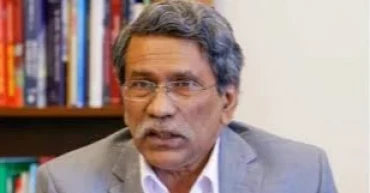
Most political parties on Tuesday reached a consensus on keeping 100 seats aside for women in the next national parliament, said Vice-Chairman of the National Consensus Commission Ali Riaz.
Talking to reporters after the day’s session of the commission, Riaz said there was no significant opposition, apart from one or two parties, to the idea of increasing the number of reserved seats for women.
He, however, said discussions are still going on regarding the method by which women will be elected to these reserved positions.
"After an entire day of discussion, we have yet to reach a decision regarding the mechanism of women's representation in these seats. It would be unrealistic to expect a decision on such an important issue in just one day. We hope to finalise the matter within the next week," Ali Riaz said.
He highlighted that nearly all political parties agreed on amending Article 70 to allow MPs to express independent opinions, except in cases of money bills and votes of confidence.
Besides, Ali Riaz said there was unanimous agreement on appointing opposition members to chair several key parliamentary standing committees — namely Public Accounts, Privileges, Estimation, and Public Undertakings.
DMP urges political parties to avoid road protests on working days
Parties also agreed to ensure proportional representation for the opposition in other parliamentary roles.
Regarding the process of appointing the Chief Justice, Riaz said, "Most political parties are in favour of amending the Constitution in this regard. But, there are disagreements over the procedural changes required for the appointment. A final decision on this matter is yet to be reached."
On the proposal for a bicameral legislature, Dr Riaz said many parties are still not in agreement in principle, suggesting the need for further discussion. Talks also included the idea of allocating 100 seats in the proposed upper house, he added.
About the allegations of favouritism towards the National Citizens’ Party (NCP) and Gono Odhikar Parishad, Ali Riaz said the commission is striving to maintain neutrality and work collectively with all political parties on matters of national importance.
1 year ago
Four key parliamentary committees to be chaired by opposition: Salahuddin
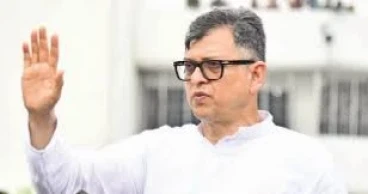
Four out of the 50 parliamentary standing committees in the upcoming Jatiya Sangsad will be chaired by members of the opposition, said BNP Standing Committee member Salahuddin Ahmed on Tuesday.
Talking to reporters during a lunch break in the second phase of discussions with the National Consensus Commission at the Foreign Service Academy on Tuesday, Salahuddin said all political parties have reached an agreement on the allocation of four significant committee chairmanships to the opposition.
“These are the Public Accounts Committee, Privileges Committee, Estimation Committee and Public Undertakings Committee. Everyone in the commission’s meeting agreed on this proposal,” he said.
Regarding the remaining committees, Salahuddin added, “Not just these four, there will be proportional representation of the opposition based on numerical strength in the other standing committees as well.”
Movement over govt service ordinance to continue until its withdrawal: Protesters
On the much-debated Article 70 of the Constitution, which currently disqualifies a Member of Parliament for voting against their own party, Salahuddin said there has been a consensus to allow MPs voting freedom in matters excluding confidence motions and money bills.
He, however, said BNP maintains a firm position that members must not vote against their party on issues related to war situations and national security. “BNP has decided to remain steadfast on this matter. If elected, we will amend Article 70 to include these two exceptions.”
About the issue of reserved seats for women, Salahuddin said, “Most political parties are in agreement regarding the provision of 100 reserved seats for women. However, there are differing views on the electoral method. We hope today’s discussions will lead to a resolution.”
In addition to the proposed July Charter, he said, each political party's individual manifesto will be given due importance in the electoral process.
The meetings with the National Consensus Commission are part of ongoing efforts to create a broader political consensus ahead of the next general election.
1 year ago

6 Parliamentary Standing Committees reconstituted
Six Parliamentary Standing Committees were reconstituted on Wednesday.
5 years ago