US-China trade
Supreme Court ruling against Trump’s tariffs adds uncertainty to US-China trade relations
The U.S. Supreme Court’s decision to strike down President Donald Trump’s sweeping tariffs has introduced new complexity into U.S.-China relations, which were already fraught with tension. Both nations are maneuvering to avoid a full-blown trade war that could destabilize the global economy, while still competing for leverage in negotiations.
Although the ruling appears to strengthen China’s position, analysts predict Beijing will approach this advantage cautiously, recognizing that Trump has other methods for imposing tariffs. Both sides are also keen to preserve a fragile trade truce and stabilize relations ahead of Trump’s planned trip to Beijing.
“This ruling will boost China’s negotiating position with Trump’s team before the summit, but they are prepared for the scenario where no substantial changes occur,” said Sun Yun, director of the China program at the Stimson Center in Washington.
Trump, frustrated by the ruling, announced plans to impose a temporary 10% global tariff, later increasing it to 15%, while exploring alternative routes to impose import duties. He justified the tariffs by highlighting China as the biggest challenge to U.S. economic, technological, and military dominance.
“China amassed hundreds of billions of dollars in surpluses with the U.S. They rebuilt China, including its military, with our help,” Trump told reporters on Friday. “I have a strong relationship with President Xi, but he now respects our country.”
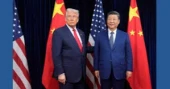
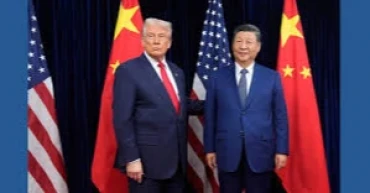
The White House confirmed Trump’s visit to China is scheduled for March 31 to April 2, where he will meet with President Xi Jinping.
Xi to Focus on Relationship, Not Court Ruling
Xi is unlikely to aggressively highlight the Supreme Court decision when meeting with Trump, opting instead to build a stronger personal rapport with the U.S. president, said Ali Wyne, senior advisor at the International Crisis Group.
"The more Xi can strengthen this relationship, the more likely it is that the fragile trade truce between the U.S. and China will hold, and Trump may be more open to security concessions that offer China greater flexibility in Asia,” Wyne said.
The Chinese Embassy's spokesperson Liu Pengyu commented that trade wars are not in the interest of either country and called for collaboration between Washington and Beijing to ensure stability in economic and trade relations, benefiting both nations and the global economy.
New Uncertainty for Other U.S. Trade Partners
The Supreme Court ruling has also introduced uncertainty for other U.S. trade partners, particularly in Asia, many of whom had reached trade deals to ease the turmoil caused by Trump’s tariffs.
“I expect most Asian countries to proceed cautiously, with existing agreements remaining in place as both sides assess the situation in the coming weeks,” said Dan Kritenbrink, a former U.S. State Department official.
He noted that Japan, a key U.S. ally, is especially important to watch ahead of Prime Minister Sanae Takaichi’s planned visit to Washington in March, as Japan’s relationship with China has worsened in recent months.
Trump’s Alternatives for Tariffs
After returning to the White House early last year, Trump used emergency powers to impose 20% tariffs on Chinese goods, citing Beijing’s failure to curb the flow of chemicals used in fentanyl production. He later expanded this authority to impose reciprocal tariffs on multiple countries, including a 34% levy on China. In response, China retaliated, and tariffs soared into the triple digits before both sides backed down.
Following multiple rounds of trade negotiations and a summit between Trump and Xi in South Korea in October, the two countries agreed to a one-year truce with a 10% baseline tariff. Trump also lowered the fentanyl tariff to 10%, while China resumed efforts to restrict the export of certain substances used in opioid production.
Wendy Cutler, vice president of the Asia Society Policy Institute, suggested the Trump administration could quickly implement a backup plan. The U.S. Trade Representative is investigating China’s adherence to a previous trade agreement, and if China is found to be non-compliant, tariffs could be imposed under U.S. trade law.
Rep. Ro Khanna, the leading Democrat on the House Select Committee on the Chinese Communist Party, urged the administration to adopt a tougher strategy that "holds China accountable for its unfair trade practices and leverages the power of our allies."
Trump’s Flexibility with Tariffs
Gabriel Wildau, managing director at Teneo consultancy, said Trump has already demonstrated his willingness to use various legal authorities to impose tariffs on China, much as he did during his first term. Beijing likely believes the tariffs can be maintained or reintroduced with minimal difficulty.
However, Wildau added, “Beijing hopes they can persuade Trump to reduce the tariffs in exchange for guarantees or other concessions.”
6 months ago
Tokyo stocks rise on hopes for progress in US-China trade talks
Tokyo stocks ended higher Tuesday, lifted by hopes for easing tensions as the United States and China prepare to hold trade talks for a second day.
Japan's benchmark Nikkei stock index, the 225-issue Nikkei Stock Average, ended up 122.94 points, or 0.32 per cent, from Monday at 38,211.51, Xinhua reports.
The broader Topix index, meanwhile, finished 0.83 point, or 0.03 per cent, higher at 2,786.24.
US and China in trade talks in London after Trump's phone call
On the stock market, sentiment was lifted after senior US officials made positive remarks following the conclusion of the first day of high-level trade talks between the world's two largest economies in London on Monday, analysts said.
But gains were limited as investors cautiously awaited the outcome of negotiations to see whether Washington and Beijing can come up with specific agreements, they added.
1 year ago
.jpg)
China warns US over economic talks with Taiwan
China on Monday warned the United States of potential “serious damage” to their relations over US-Taiwan economic talks, reports AP.
6 years ago
Asian shares slip, Europe mixed amid US-China trade tensions
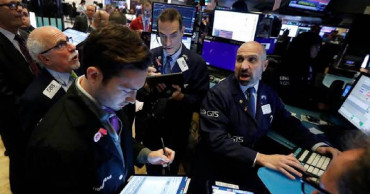
Asian shares slipped Tuesday while European indexes were mixed in early trading following a drop on Wall Street amid pessimism over U.S.-China trade tensions.
6 years ago