Bangladesh Jamaat-e-Islami
Govt fails to deliver in 12 key areas in first six months: Jamaat
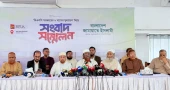
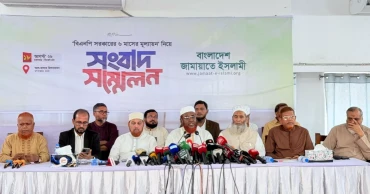
Bangladesh Jamaat-e-Islami on Tuesday claimed that the BNP government had failed completely in 12 key areas, including maintenance of law and order, the energy and banking sectors, controlling commodity prices, maintaining administrative neutrality and implementation of the referendum verdict, during the first six months of its tenure.
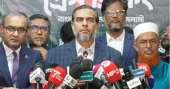
"In the first six months of the government's tenure, we are presenting to the nation the utter failures of the government on all the issues that I have mentioned, including the public verdict of the referendum, the July Charter, law and order, energy security, commodity prices, administrative security, neutrality," said Jamaat Secretary General Mia Golam Porwar.
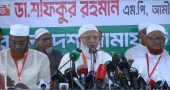
He was addressing a press conference arranged at the Al-Falah Auditorium in the city’s Moghbazar to raise the first six-month failures and achievements of the current government, formed through the February 2026 general election.
The Jamaat leader, however, praised the government for the foreign exchange reserve situation and the 'positive tendency' displayed by accepting a proposal placed by the Opposition Leader to form a special parliamentary committee to solve the energy crisis a few months ago.
About the referendum, Porwar described the government’s negative role over the public verdict reflected in the referendum as the first failure of the government.
“The nation is now being pushed towards a conflict, and the dream of a new Bangladesh, achieved through a sea of blood in the July Mass Uprising, is about to end,” he said.
Regarding the energy crisis, the Jamaat Secretary General said the government failed to solve the gas, energy and electricity crisis.
He said the country’s daily gas demand was around 3,800 million cubic feet, against a combined domestic production and import supply of only 2,700-2,800 million cubic feet, leaving a daily shortfall of about 1,000 million cubic feet.
The crisis was affecting industries, power plants, CNG stations and other consumers, he said.
Porwar said gas production from 20 producing gas fields was around 1,630 million cubic feet per day in July, but the government had failed to make visible progress in increasing production to address the long-term crisis.
Raising another major failure, Porwar alleged that state-owned and government institutions and local government bodies were being used to rehabilitate leaders and activists of the ruling party.
He claimed that leaders and activists of the Chhatra Dal, Jubo Dal and BNP had been appointed to at least 11 government posts, autonomous corporations and positions in the Election Commission.
He also alleged that ruling party-affiliated people had been appointed to Zila Parishads, development authorities and city corporations.
“Merit, interviews and qualifications are not necessary for government appointments. A BNP party position has become a major qualification,” he said.
Regarding law and order, the Jamaat leader said the situation had deteriorated despite the government’s pledge to give the issue priority.
He cited figures that he attributed to Transparency International and other organisations, saying 605 murders, 294 robberies, 194 abductions and 3,416 incidents of violence against women and children were recorded during the first 100 days.
He alleged that the number of murders, robberies, abductions, thefts and incidents of violence against women and children had continued to rise. A number of 915 murders, 461 robberies, 286 abductions, 3277 thefts, 5,448 incidents of violence against women and children were recorded till May 2026, he added.
On foreign policy, Porwar said the government had failed to turn its declared “Bangladesh First” policy into a coordinated operational framework.
He also said there had been no visible progress on unresolved issues, including the extradition of former Prime Minister Sheikh Hasina.
On commodity prices, he said the rising cost of essentials was squeezing the purchasing power of general people. “Inflation has reached 9.16 percent, food inflation 8.69 percent and non-food inflation 9.61 percent,” he said.
The Jamaat leader said the cost of food, housing, transportation and other essentials was putting increasing pressure on the incomes of lower- and middle-income families.
He also criticised the government over the banking sector, saying non-performing loans had reached Tk 5,88,704 crore at the end of March, accounting for 32.26 percent of total loans.
He said defaulted loans had increased by Tk 31,427 crore in just three months, while there had been no visible progress in resolving liquidity problems in weak banks, restoring depositors’ confidence or easing pressure from high interest rates.
Porwar also alleged that government intervention in Islami Bank had contributed to instability in the banking sector.
He also criticised the government for allowing the enforced disappearance and human rights related ordinances to lapse, its poor performances in education, agriculture particularly for the fertiliser crisis, judiciary and health sectors.
Jamaat leaders AHM Hamidur Rahman Azad, Abul Hasnat Mohammad Abdul Halim, Matiur Rahman Akanda and Shafiqul Islam Masud, among others, were present.
1 month ago

Khelafat Majlis quits Jamaat-led 11-party alliance
Khelafat Majlis on Saturday officially announced its withdrawal from Bangladesh Jamaat-e-Islami-led 11-party alliance.
The decision was taken at the party's third general meeting of its Central Majlis-e-Shura at the Institution of Diploma Engineers, Bangladesh (IDEB) auditorium in the capital.
Khelafat Majlis will abstain from all future programmes and activities of the 11-party alliance, the party said in a press release signed by the party's Central Publicity Secretary Engineer Abdul Hafiz Khasru.
Young Jamaat leader quits party, stages symbolic milk bath over allegations against MP Nazrul
.However, the party noted that it would consider participating in the future if the need arises to build a broader coalition.
Party sources revealed that following the 11-party divisional rally in Chattogram on June 13, Khelafat Majlis officially asked the alliance not to use the party’s name or its leaders' names on banners or promotional materials for any future events.
Later, when the party’s name was used at a rally in Rangpur it was withdrawn following objections from Khelafat Majlis.
Since then, the party's name has not been used in any alliance programmes.
Addressing their stance, party leaders noted that while they were part of the initial understanding and maintained a slight presence in some post-election programmes of the 11-party alliance, they have refrained from participating in alliance activities for several days.
1 month ago
Jamaat holds protest rally in Dhaka against fuel, power price hikes
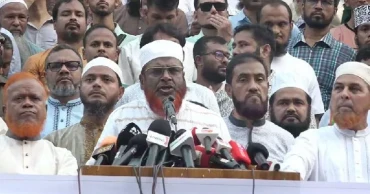
Bangladesh Jamaat-e-Islami on Thursday staged a protest rally and demonstration in the capital against repeated increases in fuel and electricity prices, as well as the rising cost of essential commodities.
The programme, organised by the party's Dhaka city units, was held at the north gate of Baitul Mukarram National Mosque at around 5 pm.
Addressing the gathering as the chief guest, Jamaat Secretary General Mia Golam Parwar urged the government to curb corruption instead of increasing electricity tariffs.
He claimed that public dissatisfaction with the government had become evident within three months of its assumption of office and alleged that people were expressing frustration through slogans directed at ministers.
Parwar alleged that the government had failed to fulfil its election pledges and accused it of ignoring public opinion on various issues, including constitutional reforms and electricity pricing.
He said stakeholders at a recent public hearing had recommended against raising electricity prices, but the government was proceeding with plans to increase tariffs by nearly 17 percent.
The Jamaat leader called on the government to withdraw the proposed electricity price hike immediately.
Speaking as a special guest, Jamaat Assistant Secretary General Rafiqul Islam Khan alleged that the government had increased fuel prices twice within a month and raised gas prices earlier, contributing to inflationary pressure on consumers.
He also expressed concern over the country's law and order situation and criticised the appointment of the chairman of Islami Bank Bangladesh PLC, alleging that the appointee had previously resigned from a senior position at the central bank amid allegations of irregularities.
Rafiqul Islam Khan further accused the government of politicising state institutions and rehabilitating individuals linked to the former Awami League administration.
He urged the government to respect public opinion and avoid policies that, according to him, go against public interests.
The rally was conducted by Shafiqul Islam Masud. Among others, central executive council member Mubarak Hossain, Dhaka South Nayeb-e-Ameer Helal Uddin and Dhaka North Assistant Secretary Yasin Arafat addressed the gathering.
Following the rally, a procession marched from the north gate of Baitul Mukarram through Paltan intersection and Bijoynagar before ending at Kakrail. Party leaders claimed that thousands of activists participated in the demonstration.
3 months ago
Jamaat to back just causes, resist injustice: Ameer
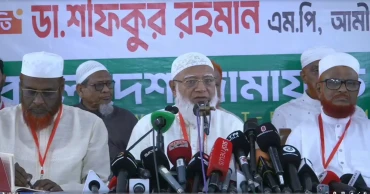
Bangladesh Jamaat-e-Islami Ameer and Leader of the Opposition Dr Shafiqur Rahman on Friday said his party will support the government on all just causes while firmly opposing injustice and any actions that undermine people’s rights.
Speaking at the District and Metropolitan Ameer Conference of the party at Al-Falah Auditorium in the capital, he said Jamaat’s stance is “clear” on issues of public interest. “We will support the government on all just causes, but will stand as a barrier in case of injustice and any actions that deprive people of their rights, wherever they occur.”
The Jamaat chief said his party rejects what he called “deception and fraud” surrounding the referendum.
He urged the government to accept the verdict of the referendum, saying his party will extend full cooperation in its implementation.
Shafiqur Rahman criticised the handling of the post-July political transition, alleging that the interim government failed to ensure a credible and acceptable transfer of power through the election.
He also questioned the credibility of the latest parliamentary election, claiming it was “engineered” and failed to reflect public expectations.
The Jamaat ameer voiced concerns over governance, alleging politicisation in key sectors, rising prices of essentials, energy shortages and increasing public hardship.
He reiterated that Jamaat will continue to work with the people and raise public concerns both inside and outside parliament.
Senior party leaders, including nayeb-e-ameers, the secretary general, assistant secretaries general, central executive council members and district and metropolitan leaders, were present at the conference.
5 months ago
Jamaat condemns Khamenei’s killing, holds protest rally in Dhaka
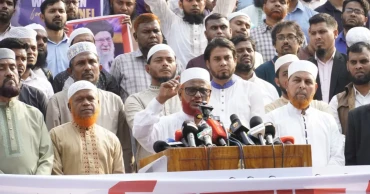
Bangladesh Jamaat-e-Islami on Sunday held a rally protesting a heinous attack on Iran by the United States and Israel and the assassination of Iran’s Supreme Leader, Ayatollah Ali Khamenei.
The rally began at 3:00 pm at the north gate of Baitul Mukarram National Mosque.
Thousands of leaders and activists joined the programme, where Jamaat-e-Islami Nayeb-e-Ameer ATM Azharul Islam was present as the chief guest.
Will extend full support to all reasonable govt steps: Jamaat Ameer
Speaking at the rally, Azharul Islam strongly condemned the attack on Iran and the killing of its supreme leader and hundreds of civilians. “This attack is not only against Iran and the Muslim world; it is against democracy, humanity and human rights.”
He also said that those who believe in democracy cannot remain silent and must condemn this attack.
The Jamaat leader also urged the United Nations (UN) and the Organisation of Islamic Cooperation (OIC) to take appropriate action.
“If tensions in the Middle East prolong, life in other parts of the world, including Bangladesh, will become difficult,” he warned.
He called for an immediate end to the war for the sake of global peace and stability.
Among others, Jamaat-e-Islami Assistant Secretary General Maulana Rafiqul Islam Khan, Publicity Affairs Secretary Advocate Motiur Rahman Akand, and Nurul Islam Bulbul, MP, also spoke at the rally.
6 months ago
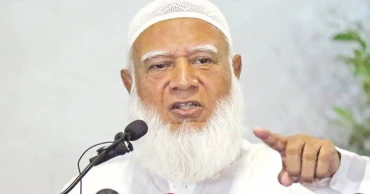
Ameer-e-Jamaat to cast vote in Monipur Centre
Bangladesh Jamaat-e-Islami Ameer Dr Shafiqur Rahman will cast his vote at 8am on Thursday.
He will vote at the Monipur High School (Boys’ Branch) polling centre in his constituency, Dhaka-15, located at 60 feet area, Jamaat said in a statement on Wednesday.
Meanwhile, Chief Adviser Prof Muhammad Yunus and BNP Chairman Tarique Rahman will cast their votes at the Gulshan Model School and College centre in the capital.
7 months ago
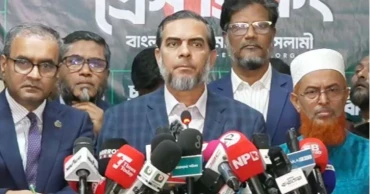
Jamaat leader’s arrest with cash ‘stage-managed drama’, party claims
Bangladesh Jamaat-e-Islami Assistant Secretary General Ahsanul Mahboob Zubair on Wednesday claimed the arrest of Thakurgaon district Jamaat Ameer Belal Uddin with a large amount of cash as a `stage-managed drama by law enforcers’.
Speaking at an emergency press conference at the party’s central office in Moghbazar, he claimed that the recovered money was not related to the election but was linked to Belal Uddin’s personal business transactions.
He alleged that law enforcement agencies had fabricated the incident.
“It is a stage-managed drama by some law enforcement members. He (Belal) has already clarified that he travels for business purposes. As banks were closed, he had to carry out transactions in cash. That is why he had some money with him. This is very normal,” Zubair said.
A businessman may carry cash for family or other legitimate needs, he said, adding, “Even in a restricted area like an airport, where movement is limited, a drama has been staged claiming he was carrying money for a specific purpose, and various news reports are being circulated to give it a different meaning.”
Jamaat leader arrested at Saidpur Airport with Tk 50 lakh in cash
Zubair said Belal Uddin, a senior and responsible leader, fell ill due to ‘mental torture’ following the incident and is now undergoing treatment at a hospital. “We firmly state that Jamaat-e-Islami conducts its policymaking activities with utmost transparency,” he added.
He alleged that the incident was being deliberately used to divert attention and mislead the public, reiterating that the money was not election-related but belonged to Belal Uddin’s business.
The Jamaat leader also claimed that candidates, polling agents and party leaders are facing attacks in different parts of the country. “Various conspiracies are being carried out to create panic among voters,” he said, alleging that some members of the administration were favoring a particular party.
“If the administration deviates from neutrality, people will not spare anyone,” he warned.
Earlier in the day, police detained Belal Uddin at Saidpur Airport in Nilphamari with a large sum of cash. During preliminary interrogation, police said the total amount seized was estimated at around Tk 50 lakh.
7 months ago
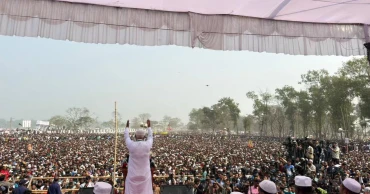
Jamaat Ameer vows to restore life to Teesta
Bangladesh Jamaat-e-Islami Ameer Dr Shafiqur Rahman on Wednesday pledged to restore the Teesta River, saying his party is committed to reviving its flow and safeguarding the livelihoods of those dependent on it.
“Teesta will be the economic hub of North Bengal,” he said while addressing an election rally at the Teesta Barrage helipad ground, jointly organized by the Nilphamari and Lalmonirhat district units of the party.
Dr Shafiqur Rahman said the river’s water would make the entire North Bengal fertile and prevent thousands of families from becoming destitute due to river erosion. “We promise to implement the Teesta plan at any cost, Inshallah,” he added.
Want to see peace in hill areas, says Jamaat Ameer
He emphasized that the party will prioritize national interests. “We will not hurt anyone’s interests, but we will not accept it if someone harms our interests first,” he said.
Dr Shafiqur Rahman also highlighted other development priorities, including modernizing the Burimari land port, and said, “Bangladesh’s development will start from the Teesta bank. The people of this region have been deprived for ages.”
He added that the party is committed to remaining with the people through good and difficult times.
Referring to the upcoming election, he said, “This election is to show a red card to those who have been dishonest with the nation. Politics is not business or extortion; it is the king’s policy. On February 13th, a new sun will rise in the eastern sky of Bangladesh. We want to build a new Bangladesh with everyone.”
He stressed the need for a change in power and said, “We will never leave the people of the country. We have announced that North Bengal will become the agricultural capital of the country. Employment in this region will drive national development, and crops produced here will meet domestic needs and be exported abroad, Inshallah.”
Ballot seals seized in Lakshmipur, Jamaat leader, another sued
Addressing women, Dr Shafiqur Rahman said, “Currently, mothers and sisters are being humiliated. We will give our lives if necessary, but we will not let anyone take away their honor. We view the 90 million women of this country as our mothers, and they will be educated, empowered, and able to contribute to building the nation safely and with dignity, Inshallah.”
On the referendum, he said, “Yes means freedom, and no means slavery. We all will cast 'Yes' vote on February 12, Inshallah, and encourage others to vote.”
The rally was presided over by Lalmonirhat district Jamaat Ameer Advocate Abu Taher and moderated by Nilphamari district Jamaat secretary Maulana Antazul Islam.
Special guests included Jamaat central assistant secretary Maulana Abdul Halim, Rangpur-Dinajpur region assistant director Principal Maulana Momtaz Uddin, team member Abdur Rashid, Nilphamari district Jamaat Ameer Principal Maulana Abdus Sattar, and leaders of the 11-party alliance in Nilphamari and Lalmonirhat districts.
7 months ago
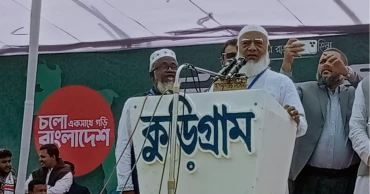
Truth can never be hidden: Jamaat Ameer about hacked X handle
Bangladesh Jamaat-e-Islami Ameer Dr Shafiqur Rahman on Wednesday said his X account was hacked four days ago to circulate false information and the perpetrator has finally been identified and arrested.
“After my account was hacked, a group started launching attacks chanting ‘tai re nai re’. Shamefully, even some senior leaders endorsed it. However, our cyber team quickly identified the accused and police arrested him. Truth can never be hidden,” he said.
Shafiqur made the remarks while addressing an election rally organised by the 11-party alliance at Kurigram College ground.
He said Jamaat-e-Islami does not want to establish a partisan government, even though it is the ‘largest party of the current era’. “We do not want dynastic politics or group-based rule. We do not even seek victory for Jamaat. What we want is the victory of 18 crore people.”
People no longer support family-centric politics: Jamaat Ameer
Referring to the movement in Rangpur region in 2024, he recalled the role of Abu Sayed, saying his bravery had ignited the July movement.
“He took three bullets to his chest, not his back. That is heroism. You are truly fortunate people,” he told the gathering.
Dr Shafiqur said Abrar Fahad was the first to embrace martyrdom as an uncompromising fighter against authoritarianism, followed by Abu Sayed, Sharif, Osman Hadi and others.
“Nearly 1,400 people have been martyred one after another. The bodies of these 1,400 heroes are now on the shoulders of this nation. Our rivers have turned red with their blood. We will never betray these martyrs,” he said.
He also pledged that if Jamaat comes to power, development work would begin from Kurigram, which he described as one of the most backward districts in the country.
Among others, NCP Member Secretary Akhtar Hossain, Kurigram district Jamaat Ameer Azizur Rahman Swapan, candidates from the four parliamentary constituencies of Kurigram, and senior leaders of Jamaat and the 11-party alliance were present at the rally.
7 months ago
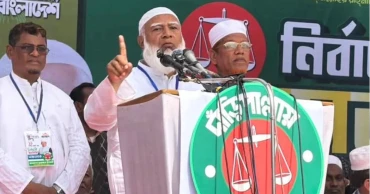
Laundered money to be brought back, promises Jamaat Ameer
Bangladesh Jamaat-e-Islami Ameer Dr Shafiqur Rahman on Monday vowed to recover laundered money from abroad if his party comes to power.
Speaking at an election rally at Gorakhata Adarsha High School ground in Cox’s Bazar, he said that Tk 28 lakh crore had been looted from Bangladesh and smuggled abroad—an amount that, according to Bangladesh Bank, is four times the country’s annual budget.
"This is the people's money. It has been stolen by thieves, robbers, and looters and sent abroad. We promise to bring it out, and deposit it in the state treasury. Then Bangladesh will develop on the basis of justice. No more injustice will be allowed," he said.
Vote for Jamaat to build a Bangladesh free of corruption, drugs and extortion: Shafiqur Rahman
Shafiqur Rahman said the party does not seek victory for itself alone. "We do not want the victory of Jamaat-e-Islami. I want the victory of 18 crore people. If 18 crore people win, everyone will win. If a party, family, or group wins, violence will be unleashed on the nation. We condemn that type of victory. We do not need it," he said.
Regarding youth employment, he said young people do not want unemployment allowances but demand jobs.
He mentioned Maheshkhali-Kutubdia as a potential site for development and suggested that, with Matarbari as the center of the deep seaport, Bangladesh could create a hub surpassing Singapore or Hong Kong.
Criticising the current leadership, Shafiqur Rahman said the future of Bangladesh cannot be built by corrupt, extortionist, loan defaulter and robber leaders.
The expectations of the youth cannot be fulfilled by such leadership. Bangladesh will be built by people with character, honesty, patriotism, and commitment to the people, he said.
The Jamaat chief also announced that the country’s most deprived areas would be prioritised for development.
Jamaat supports women leadership in politics: Shafiqur Rahman
He said Moheshkhali would be developed as a smart economic zone, providing employment to young men and women regardless of religion or party affiliation, based on their qualifications and patriotism.
Leaders and activists of Bangladesh Khelafat Majlis, Khelafat Andolon, Bangladesh Nizam-e-Islam Party, Bangladesh Development Party, Jatiya Ganotantrik Party (JAGPA), National Citizen party (NCP), Liberal Democratic Party (LDP), Amar Bangladesh Party, and Bangladesh Labour Party attended the rally.
7 months ago