soil
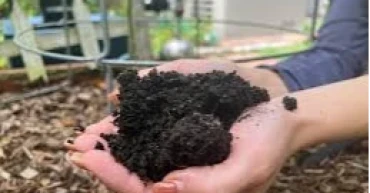
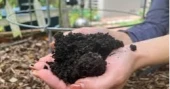
Soil is key to a healthy garden, experts say
A lush, beautiful garden is a common dream, but experts say the secret to achieving it starts below the surface with healthy soil.
While many gardeners focus mainly on plants, a garden depends on a strong foundation. Soil is not just dirt; it is a living system filled with nutrients, organic matter and countless organisms such as bacteria, fungi, insects and worms. A 2023 study published in the ‘Proceedings of the National Academy of Sciences’ says soil may contain about 59% of all life on Earth, making it the most biodiverse habitat.
These organisms play a vital role by controlling harmful pests, turning organic material into natural fertilizer and improving air flow and drainage in the soil. Maintaining soil health is therefore essential for a successful garden.
Before planting, experts advise checking soil structure. Sandy soil drains water too quickly, while clay soil holds too much moisture both can harm plant growth. To improve soil quality, add 3–4 inches of compost, leaf mold or well-rotted manure and mix it gently into the top 6–12 inches. However, avoid over-tilling, as it can damage beneficial organisms, increase erosion and bring weed seeds to the surface.
In later seasons, simply spread organic matter on top and let it break down naturally.
Testing soil pH is also important, as different plants grow best within specific pH ranges. Gardeners can use simple home test kits and adjust levels with lime or sulfur if needed. It is also useful to check key nutrients nitrogen, phosphorus and potassium to guide fertilizer use.
Experts stress that building healthy soil takes time. Slow-release fertilizers and organic materials are better long-term choices than quick chemical fixes, which should be used only in urgent cases.
Gardeners are also advised not to walk on planting areas, as compacted soil limits air and water flow and restricts root growth.
Leaving soil bare can lead to erosion, nutrient loss and weed growth. Instead, plant ground cover or apply organic mulch such as bark, straw or dry leaves. A 2–3 inch layer of mulch helps retain moisture, regulate temperature and reduce weeds, but it should be kept away from plant stems to prevent rotting.
Jessica Damiano, a gardening writer for The Associated Press, shares regular tips in her award-winning Weekly Dirt Newsletter.
6 months ago
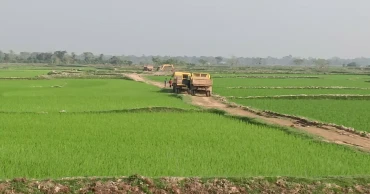
Illegal topsoil extraction threatens ‘Gaillar Haor’, croplands in Sunamganj
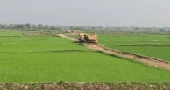
Fertile farmlands of ‘Gaillar Haor’ in Shantiganj upazila of Sunamganj district has been facing severe degradation as an influential syndicate continues large-scale illegal extraction of topsoil, posing a serious threat to local agriculture and rural infrastructure.
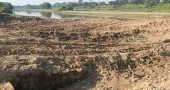
The upper fertile layer of cropland, commonly known as topsoil, in Alampur village under Purba Pagla Union, is being indiscriminately removed using excavators, according to local people.
The soil is reportedly being used to fill private homesteads and roads, while the ongoing operation has disrupted both agricultural productivity and daily life.
During a recent visit to the area, this UNB correspondent observed multiple excavators digging deep pits across vast stretches of cropland.
Read more: Unchecked soil lifting threatens Gomti River, infrastructures in Cumilla
The extraction continued day and night, with rows of heavy dump trucks transporting the soil to different locations.
The constant movement of trucks has damaged newly built rural roads, intensifying public suffering.
Local people alleged that the illegal activity is being carried out under the direct leadership of influential former local representatives Saidul Islam and Kalam Mia.
Farmers affected by the soil removal expressed deep concern and said they feared retaliation if they protested openly.
Several farmers, speaking on condition of anonymity, said the removal of topsoil, the most fertile portion of farmland, has permanently destroyed soil productivity. They warned that deep excavation has also increased the risk of adjacent farmlands collapsing.
If the haor is carved up like this, there will be no land left for cultivation in the future, said Jamaluddin, a farmer.
They demanded immediate and strict intervention from the administration.
Under the Soil and Sand Management Act, 2010, extracting soil from agricultural land for commercial or personal use is a punishable offence.
Locals, however, alleged that the syndicate continues its activities by evading administrative oversight or using political influence.
Beyond agricultural damage, the operation has also caused severe deterioration of rural roads.
Read more: Overuse of chemical fertilisers threatens soil health in northern Bangladesh
Heavy trucks carrying soil have led to road collapses, making daily movement increasingly difficult for villagers.
When contacted, Fatema Tuz-Zohra, Assistant Commissioner (Land) of Shantiganj upazila, said the administration is aware of the issue.
“Cutting topsoil from cropland is completely illegal. We have received information about soil extraction in Alampur village. A mobile court will be conducted there soon,” she assured.
Those who were involved in the act would not be spared and legal action will be taken, including the seizure of machinery used in the illegal activity, she said.
Meanwhile, experts from civil society urged for exemplary punishment, including imprisonment and confiscation of excavators, to protect the haor’s fragile ecosystem.
Read more: BIWTA dredging restores navigability of Sunamganj rivers; boosts trade, employment
They also feared that if the government did not take immediate action, Shantiganj’s agricultural economy and ecological balance could suffer irreversible damage.
8 months ago
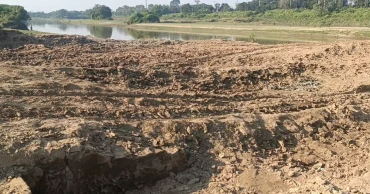
Unchecked soil lifting threatens Gomti River, infrastructures in Cumilla
Along the quiet banks of the Gomti River in Cumilla, an environmental crisis is unfolding in plain sight. As the winter dry season settles in, the river’s embankments, which shield nearby homes, farms and infrastructure, are being carved away by a surge of illegal soil extraction.
Local residents say the scale is unprecedented as soil is being removed almost continuously along both banks of the river, often in the presence of authorities and transported to brick kilns and construction sites across the district.
From Palpara to Golabari in Adarsha Sadar upazila, tractors move in and out of the riverbanks throughout the day. Villagers describe it as an ‘open season’ for soil lifters.
Read more: Six jailed for illegal soil extraction from govt land in Feni
A five-kilometre stretch on the northern bank and nearly 25 kilometres along the southern side have turned into extraction zones, locals say. The result is visible erosion -- sections of the embankment are collapsing, and parts of an adjacent paved road have already begun to break apart.
During a recent visit, at least 20 tractors were seen operating along the southern bank — in areas stretching from Durgapur to Samar Char. So relentless is the activity that operators have cut into the embankment itself to create makeshift access routes.
The northern side is no different. Soil is being dug out near electric poles, beneath tree roots and even in front of a police outpost at Chhatrokhil. Extraction continues near Chanpur Bailey Bridge and the western edges of Kaptanbazar.
Read more: Two jailed for illegal soil extraction in Chandpur
Residents say at least seven temporary ghats have been set up to load and transport the excavated soil across the river. They accuse local administrations of ‘silent permission’, allowing the practice to carry on despite widespread environmental damage.
10 months ago
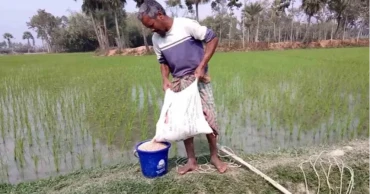
Overuse of chemical fertilisers threatens soil health in northern Bangladesh
Soil fertility in eight districts of northern Bangladesh is steadily deteriorating, raising concerns about long-term agricultural productivity, according to a new research report by the Rangpur Divisional Soil Resource Development Institute (SRDI).
Researchers say that fertility loss, nutrient imbalance, and increasing soil acidity are spreading rapidly across the region, with organic matter, the foundation of healthy soil, falling to its lowest recorded levels in some areas.
“The decline is so severe that even heavy application of chemical fertilisers is failing to translate into higher productivity,” the report warns.
Researchers estimate that fertilisers worth hundreds of crores of taka are wasted annually, as crops are unable to absorb essential nutrients.
The SRDI conducted tests on soil samples from 38 upazilas across five districts in the Rangpur division. Md. Saifur Rahman, chief scientific officer of the institute, said healthy soil must contain adequate levels of nitrogen, phosphorus, potassium, sulfur, zinc, calcium, magnesium, boron, molybdenum, iron, manganese, copper, chlorine and organic matter to sustain crop production.
Read more: Enough fertilizer in stock to last till December: Agriculture Secretary
“Fertilisers should be applied based on soil health tests and nutrient requirements. This ensures satisfactory crop yields while preventing qualitative deterioration of the soil caused by arbitrary fertiliser use, which can reduce production,” he said.
The alarming soil condition is not confined to the north, he noted, but is also seen across other regions of Bangladesh.
Fertiliser Misuse
Md Sirajul Islam, additional director of the Rangpur Agricultural Extension Department, highlighted the widespread use of chemical fertilisers. “At least 20 types of fertilisers, both legal and illegal, are being used in agriculture. Farmers are most familiar with seven, including urea, molybdenum, magnesium, phosphorus, boron, potassium, and sulfur,” he said.
Farmers often rely on estimates rather than scientific measurement, resulting in imbalanced or inadequate application.
“Proper application is essential for soil health,” he said, warning that the issue affects not only the Rangpur and Rajshahi-Barendra regions but also districts across other river basins.
Experts pointed out that about 80% of farmers directly involved in agriculture are uneducated and apply fertilisers without guidance, exacerbating the decline in soil health.
Read more: Shahjalal Fertilizer Factory resumes production after five-month closure
Alarming Decline of Essential Nutrients
SRDI scientists say a healthy crop requires 16 essential nutrients, 13 of which must come from the soil. Latest tests, however, show nine of these nutrients are now at minimum or critical levels in many parts of northern Bangladesh.
Organic matter has dropped to 1–2% instead of the ideal 5%, soil pH has fallen to 4.4–5.5 rather than 6.0–7.5, nitrogen levels are 0.09–0.18% against a recommended 0.27–0.36%, and sulphur is far below the optimum 22–30 ppm.
Biological Systems under Threat
Excessive chemical use, coupled with reduced application of cow dung, compost, crop residues and other organic materials, has sharply reduced soil biodiversity. Beneficial organisms such as earthworms, which naturally mix soil layers and maintain fertility, have declined significantly.
“This breakdown of biological processes is damaging the soil’s long-term health,” said Saifur Rahman.
Although Bangladesh has 39 fixed soil-testing laboratories and several mobile labs, the majority of farmers never have their soil tested. Experts warn that without accessible soil testing and proper fertiliser use training, the country could face significant drops in food production in the coming years.
Read more: Hidden hands in the fields: Dealers blamed for artificial fertiliser shortage in north
Looming National Crisis
The SRDI report cautions that if current trends continue, Bangladesh may face reduced yields in staple crops, increased pest outbreaks, and a rising dependence on fertiliser imports. These challenges could make cultivation costlier and reduce farmers’ profit margins.
10 months ago
.jpg)
Pressure on some water, soil ecosystems at critical point: UN
The pressure on water and land ecosystems at the global level was intense and, in some cases, at a critical point, which might put the goal of feeding the world's population by 2050 at risk, a UN report said Thursday.
The "State of the World's Land and Water Resources for Food and Agriculture – Systems at breaking point (SOLAW 2021)," launched by the UN Food and Agriculture Organisation (FAO), highlighted that around 33 per cent of the planet's soil was marked by moderate to high degradation.
While the trends in resource use were on the rise, and so was soil degradation, the availability of new land to devote to agricultural production was low.
Adding the effects of climate change and loss of biodiversity would mean that "the current agrifood production patterns are not proving to be sustainable," according to the report.
"Against this backdrop, it is clear that our future food security will depend on safeguarding our land, soil, and water resources," FAO Director-General Qu Dongyu said.
Also read: World Soil Day observed focusing quality soil for growth
"The same agrifood systems could play a crucial role in changing these patterns, alleviating the current pressures on water and soil ecosystems, and reversing the land degradation process," he added.
"Sustainable agricultural practices could lead to direct improvements in the state of land, soil and water, generating ecosystem benefits and reducing emissions from land," the FAO report said.
Yet, it added that only a "much-reformed land and water governance" would allow remedial land management.
"Any advance in transforming food systems to meet future demand will require a focus on land resource planning in which systemic analyses of land, soils, and water are combined with poverty and food security monitoring," it said.
Also read: Illegal soil mining is Feni's biggest challenge
4 years ago
.jpg)
Japan aims to bring back soil samples from Mars moon by 2029
Japan’s space agency plans to bring soil samples back from the Mars region ahead of the U.S. and Chinese missions now operating on Mars, in hopes of finding clues to the planet’s origin and traces of possible life.
The Japan Aerospace Exploration Agency, or JAXA, plans to launch an explorer in 2024 to land on the Martian moon Phobos to collect 10 grams (0.35 ounce) of soil and bring it back to Earth in 2029.
The rapid return trip would put Japan ahead of the United States and China in bringing back samples from the Martian region despite starting later, project manager Yasuhiro Kawakatsu said in an online news conference Thursday.
Also read: Want to pretend to live on Mars? For a whole year? Apply now
NASA’s Perseverance rover is operating in a Mars crater where it is to collect 31 samples that are to be returned to Earth with help from the European Space Agency as early as 2031. China landed a spacecraft on Mars in May and plans to bring back samples around 2030.
JAXA scientists believe about 0.1% of the surface soil on Phobos came from Mars, and 10 grams could contain about 30 granules, depending on the consistency of the soil, Kawakatsu said.
Tomohiro Usui, professor at the Institute of Space and Astronautical Science, said soil on Phobos is likely to be a mixture of material from the moon itself and material from Mars that was spread by sandstorms. Collecting samples from multiple locations on Phobos could provide a greater chance of obtaining possible traces of life from Mars than obtaining soil from a single location on Mars, he said.
Any life forms that might have come from Mars will have died because of harsh solar and cosmic radiation on Phobos, JAXA scientists said. The NASA and the European Space Agency missions focus on potential life forms and evolution of the area of the Jezero crater, believed to be an ancient lake.
Also read: China’s Mars rover touches ground on red planet
By studying Phobos soil samples including material from Mars, scientists hope to learn about the evolution of the Martian biosphere, Usui said.
He said Japanese research on Phobos and NASA’s samples from specific locations in the Martian crater can complement each other and could lead to answers to questions such as how Martian life, if present, emerged and evolved in time and place.
Last December, a JAXA probe, Hayabusa2, brought back more than 5 grams (0.19 ounce) of soil from the asteroid Ryugu, more than 300 million kilometers (190 million miles) from Earth, in the world’s first successful return of an asteroid sample.
5 years ago
.jpg)
Living in fear of the mighty Padma
Originally a resident of the Isaeel Shibrampur area in Goalundo upazila's Daulatdia union, Jalil Sikder now lives with his family in a hutment on a Good Samaritan's land in Nasir Sardar Para.
"We were rendered homeless after our house was washed away by the mighty Padma river in front of our eyes last year. Thanks to a benevolent person in Isaeel Shibrampur, we have a roof over our heads," he says.
Riverbank erosion is a common problem along the Padma during the rainy season.
And Jalil is also not the lone sufferer. Over the years, several families in the riverine areas of the upazila's Daulatdia and Debgram unions have been rendered homeless by such engulfing calamity.
READ: Padma boat capsize: Bodies of missing AIUB student, cousin found after 8 days
Some 2,000 families still living in the riverine areas of the two unions are now spending sleepless nights. Their fears are tangible, with monsoon rains barely a week away.
"Every day, the river is washing away some three to four bighas of land. The erosion aggravates during the monsoon when the Padma overflows its banks. It's high time that the authorities took safety measures without any delay," says Hazrat Sheikh, a resident of Devgram's Munshibazar area.
"In the past three years, some 300 families have been forced to abandon their houses in Devgram. What we get from the local authorities after every monsoon is only assurances of better preparedness for next year," says Ruby Khatun, a resident of Aziz Sardar Para.
Read Riverbank erosion destroys homes and hopes
Upazila Chairman Mostafa Munshi admits the problem the riverine areas face during the monsoon. "I have sought Rajbari-1 MP Kazi Keramat Ali's help in this regard," he says.
According to the Rajbari-1 MP, all preparations are underway for starting the construction of an embankment from Ferry Ghat to Debgram Antarmor to prevent erosion.
"The Executive Committee of the National Economic Council will soon begin work on Daulatdia and Paturia Ghat modernisation projects worth around Tk 650 crore," he says.
Upazila Nirbahi Officer (UNO) Azizul Haque Khan recently visited the affected areas. "For the time being, the Water Development Board is placing sand bags along the ferry ghat," he says.
READ: Padma devours SESDP Model High School in Madaripur
5 years ago