TRNB
Robin elected TRNB president, Faruk general secretary
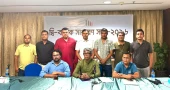
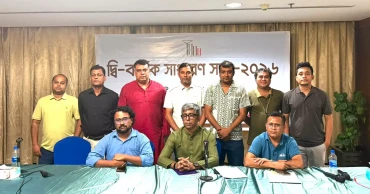
Masuduzzaman Robin of Jamuna Television and Faruk Hossain of the Daily Inqilab have been elected president and general secretary, respectively, of the Telecom and Technology Reporters’ Network, Bangladesh (TRNB).
Among the other office-bearers, Al-Amin Dewan of TechShohor was elected treasurer, while Hasnain Imtiaz of Samakal was elected organising secretary.
The three elected executive committee members are Samir Kumar Dey of The Daily Ittefaq, Shuvo Khan of Somoy Television and Mahmudul Hasan of The Daily Star.
The election was held at Sayeman Beach Resort in Cox’s Bazar on Thursday under the supervision of Chief Election Commissioner Abbas Faruq, with Mohiuddin Mohammad Hasan Bhuiyan and Ismail Hossain serving as election commissioners, according to a press release.
2 months ago
New policy to end 15 years of telecom irregularities: Taiyeb
The interim government is working on a new telecom policy aimed at reforming the sector, ending 15 years of what it termed “fascism,” and ensuring a generational transformation in service delivery, said Faiz Ahmad Taiyeb, Special Assistant to the Chief Adviser on Posts, Telecommunications and ICT.
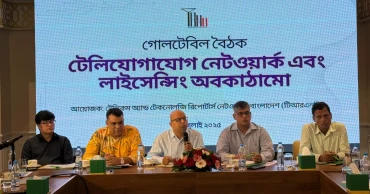
Speaking at a roundtable titled “Telecom Network and Licensing Policy Reform”, organised by the Telecom and Technology Reporters Network, Bangladesh (TRNB) at a hotel in Dhaka on Saturday, Taiyeb said the policy is being shaped to shift from mere connectivity to service-oriented networks.
“The new generation demands a new kind of transformation. That’s why we are preparing a policy focusing on next-generation services. We are clearing out the clutter in the sector—even if it hurts vested interests,” Taiyeb said.
“Logical suggestions will be considered, and the government's positive initiatives should be welcomed,” he added.
Referring to operator profits, he said, “Operators are earning Tk 400 crore in dividends and still express dissatisfaction. It’s time they look out for national interests.”
Taiyeb made it clear that licences will no longer be limited arbitrarily.
Instead, he said, the number will depend on performance and obligations.
Licences issued merely for toll collection in the past will be discontinued, he added, noting that research would determine the optimal number of licences and foreign company representatives must work in the country’s broader interest.
Committed to helping Bangladesh maintain inclusive growth path: WB VP
On improving services, he warned, “Mobile operators must enhance service quality or risk losing customers.”
He also highlighted efforts to free up low-band frequencies and reform the existing telecom ecosystem.
BTRC Chairman Major General (retd) Md Emdad Ul Bari said telecom is a real-time service and any changes must be sustainable.
“With less than 50% of the population using the internet, licence cancellation is not on the table. The policy includes a migration plan, and stakeholder collaboration is essential,” he said.
Posts and Telecommunications Division Secretary Zahurul Islam said the new policy would attract both domestic and foreign investment.
ISPA President Aminul Hakim called for eliminating tax disparity, stating, “ISPs meet 65–70% of the 7.5 terabit demand yet pay 15% tax, while mobile operators with 35% market share pay none.”
AMTOB Secretary General Mohammad Zulfikar, presenting the keynote, said telecom operators are central to the digital economy. “Despite 65 million social media users, 90 million remain unconnected. Rising operating costs, along with investment caps in the proposed policy, are alarming for the sector,” he warned.
The discussion was chaired by TRNB President Samir Kumar Dey, with a welcome speech by General Secretary Masuduzzaman Robin.
Grameenphone CEO and AMTOB President Yasir Azman, Banglalink CEO Johan Buse, Teletalk MD Nurul Mabud, corporate affairs heads from major operators, World Bank consultant Mahtab Uddin Ahmed, and Fiber@Home CIO Suman Ahmed Sabir also spoke at the event.
1 year ago

Regulator shouldn't allow monopoly in MFS: Mustafa Jabbar
Healthy competition should be ensured in the fast-growing mobile financial services (MFS) segment for the benefit of the users and the operators, and the regulator needs to ensure that no one acts like a monster, said Post and Telecommunications Minister Mustafa Jabbar Saturday.
Jabbar was addressing the webinar "Competition and Partnership in MFS Industry" organised by Telecom Reporters' Network Bangladesh (TRNB).
"Lack of interoperability is a huge bottleneck of this industry. If the banks can enjoy interoperability, then why cannot the MFS do it?" Jabbar asked.
Md Mofizul Islam, chair of Bangladesh Competition Commission said the market will not be sustainable if competition can be ensured.
"We have not got any complaint from the customers about substandard services that hurt market competition. However, it is our responsibility to sit with the Bangladesh Bank and the Bangladesh Telecommunication Regulatory Commission (BTRC) to settle the issues as there are huge cross-cutting points among us when it comes to MFS," Mofizul said.
He said they wrote to the Bangladesh Bank one year earlier to know about the situation of MFS but are yet to get any reply.
However, BTRC chair Shyam Sunder Sikder said, "There is a monopoly in the MFS. Nagad was the first service provider to disrupt it. But still, the market competition is uneven. So regulations on the significant market power holder is needed. The cash-out charge of Tk 20 is not acceptable."
Dutch Bangla Bank is the parent company of Rocket, the first MFS carrier of the country. The bank's Managing Director Abul Kashem Md Shirin said 70% of the pricing for the service is enjoyed by agents. "Agents get benefitted in many ways as it is not their primary business. Only the regular users get affected."
Tanvir A Mishuk, co-founder and managing director of Nagad, said, "A fair competition will only help the end-users. Two years back, when we started, the monopoly in the market beggared belief. We have reduced the cash-out or send money charge."
Mizanur Rashid, the chief commercial officer of bKash, said the government should take decisions based on a win-win situation for all. "The time and travel costs are not being taken into consideration while referring to the high charges."
Barrister M Iftekhar Jonaed, a lawyer of the Supreme Court, said the competition commission has the legal capacity to intervene in the sector to break the monopoly. "One of the tasks of the commission is to ensure that no firm enjoys an undue advantage because of its monopoly market share."
TRNB Secretary General Samir Kumar Dey said, "As one operator is holding the majority of the market share, the cost for cash out or bill pay at the user side is not going down. Although some small operators are trying to lower the service costs, it is not becoming effective because of the uneven competition."
5 years ago

Rashed new TRNB president, Samir general secretary
Telecom Reporters' Network Bangladesh (TRNB) has got a new president and general secretary.
Rashed Mehedi, special correspondent of Daily Samakal, and Samir Kumar Dey, senior reporter of Daily Ittefaq, have been picked for the posts.
TRNB is a professional body of journalists who focus on telecommunications and information technology sectors in Bangladesh and South Asian countries.
The new seven-member committee of TRNB was elected for 2021 at the organisation's annual general meeting at a Habiganj hotel on Thursday.
5 years ago