Asia-Pacific Economic Cooperation
Xi vows to defend free trade at APEC as Trump skips key summit
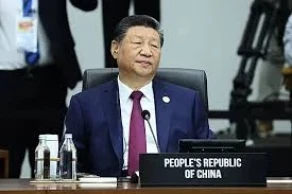
Chinese President Xi Jinping pledged to defend global free trade at the Asia-Pacific Economic Cooperation (APEC) summit on Friday, where he took center stage after U.S. President Donald Trump skipped the meeting.
The annual regional forum, held this year in the South Korean city of Gyeongju, opened a day after Trump departed the country. His earlier meeting with Xi had produced agreements aimed at easing the trade tensions that have rattled the global economy.
Although the two leaders’ talks dominated attention, Trump’s absence from APEC underscored his continued rejection of large multilateral gatherings. Critics warn that this could further damage America’s reputation in a forum representing almost 40% of the global population and more than half of world trade.
Xi Calls for Unity and Open Trade
Addressing APEC’s opening session, Xi urged member nations to strengthen cooperation amid global uncertainty.
“The more turbulent the times, the more we must work together,” he said, noting that the world faces “rapid changes and increasing volatility.”
He emphasized the importance of stable supply chains, countering U.S. efforts to separate from China economically. Xi also called for deeper collaboration in green industries and clean energy.
Read more: Xi, Carney meet in South Korea to rebuild strained China-Canada ties
In a written message to the APEC CEO summit, Xi reaffirmed that China remains open to investment and committed to the multilateral trading system.
“Those who establish a presence in the Chinese market will seize key opportunities in global competition,” he wrote. “Investing in China means investing in the future.”
Representing Trump, U.S. Treasury Secretary Scott Bessent said Washington’s efforts to rebalance trade were aimed at ensuring “fair and reciprocal” terms, and at creating more resilient production networks that reduce dependence on vulnerable sectors.
Xi’s Diplomatic Meetings
The summit marked Xi’s first visit to South Korea in 11 years. On the sidelines, he met with Japanese Prime Minister Sanae Takaichi, Canadian Prime Minister Mark Carney, and Thai Prime Minister Anutin Charnvirakul.
During talks with Takaichi, Xi called for a “constructive and stable relationship for a new era,” while Takaichi expressed hopes of addressing bilateral issues and building a stronger personal rapport with Xi.
Xi is also expected to meet South Korean President Lee Jae Myung on Saturday, with discussions likely to include North Korea’s nuclear program.
APEC’s Growing Challenges
Founded in 1989 to promote free and open trade across the Asia-Pacific, APEC now faces mounting challenges, including U.S.-China rivalry, supply chain disruptions, aging populations, and the impact of artificial intelligence on employment.
Under Trump, Washington has shifted from cooperation to competition with Beijing, with tariff hikes and an “America First” agenda unsettling global markets and challenging decades of globalization.
Read more: WHO: Militia Assault on Darfur hospital came in multiple waves
Opening the summit, host President Lee urged members to focus on solidarity and shared prosperity.
“We may not always stand on the same side, but we can unite around our common goal of mutual growth,” he said.
Canada’s Carney echoed that sentiment, announcing plans to double his country’s non-U.S. exports within a decade, citing “one of the most profound global shifts since the fall of the Berlin Wall.”
Despite the positive tone after Trump and Xi’s meeting, experts warn that tensions could flare again as both nations vie for dominance in manufacturing and emerging technologies like AI.
“Bringing the two largest economies together to ease tariff and export disputes helped avert the worst outcomes for global trade,” said Leif-Eric Easley, professor at Ewha Womans University. “But APEC should be more than a platform for trade truces — it must advance cooperation on sustainable and digital trade.”
South Korea Seeks Consensus
As host, South Korea is pushing for all 21 member economies to adopt a joint statement — a goal that eluded APEC in 2018 due to U.S.-China friction.
Foreign Minister Cho Hyun recently said that while a strong pro–free trade statement may be difficult, Seoul hopes for a broader declaration highlighting regional peace and prosperity.
This year’s agenda also prioritizes collaboration on artificial intelligence and demographic challenges.
Read more: Have deep relations with US, extensive economic ties with China: Touhid Hossain
11 months ago

Huawei brings financial aid, free service for Asia-Pacific SMEs
Global ICT infrastructure and smart devices provider Huawei has launched "SME Support Program" with ecosystem partners in the Asia-Pacific to deliver more technical support for economic recovery amid the pandemic.
Each eligible Small and medium enterprise (SME) applicant could receive coupons worth up to $3,000 and free professional consulting service including cutting-edge cloud solutions for a variety of industry scenarios including financial service, education, e-commerce, gaming, IoT, application development, and enterprise applications.
SMEs that have an account on the Huawei Cloud official website but have never used any paid service could apply for the SME Support Program page and receive consultation from cloud experts.
Also read: Huawei posts 3.8% growth in 2020
Applications will be reviewed based on the company's cloud needs and the readiness of workloads for cloud deployment. This programme will continue until December 31 this year.
SMEs are the engines of growth and innovation in the Asia-Pacific Economic Cooperation (Apec) region. They account for over 97% of all business and employ over half of the workforce across Apec economies.
They contribute significantly to economic growth with their share of total economic output ranging from 40-60% in most economies of the region, according to Apec.
Also read: Technology can be engine for human progress: Huawei’s Senior Vice President
The pandemic has forced businesses to accelerate their digital transformation and move to the cloud one to three years ahead of schedule.
"Huawei Cloud is now working with over 19,000 partners and 1.6 million developers and is committed to strengthening the digital economy to support a sustainable economic recovery. It offers over 220 services in categories such as storage, network, security, big data, AI, and IoT," read a press release.
Read Huawei joints with BUET to make ICT talent ecosystem in country
5 years ago