S Alam Group

Bank officials block Ctg–Cox’s Bazar highway protesting termination of 7,000 employees
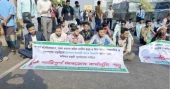
Vehicular movement on the Chattogram–Cox’s Bazar highway came to a standstill for four hours on Sunday after bank officials staged a blockade in Patiya upazila, protesting the termination of 7,000 employees from banks controlled by the S Alam Group.
Several hundred officials took to the streets around 8am, demanding that their jobs be reinstated.
As part of the protest, they locked the main entrances of 20 banks in Patiya upazila until noon, halting operations at 45 banks, including First Security Bank, Islami Bank, Janata Bank, Sonali Bank and Pubali Bank.
Before marching onto the highway, the protesters held a meeting at Patiya Ideal High School. They left the scene after 12 noon.
Tensions rose when they attempted to stop the reopening of the National Bank branch at Patiya Police Station intersection.
The local administration and law enforcement, including Patiya Upazila Nirbahi Officer Farhanur Rahman, Additional Superintendent of Chattogram Police Asaduzzaman, Patiya Circle ASP Ariful Islam, and Patiya Police OC Md Nuruzzaman, arrived at the scene to defuse the situation.
ACC to sue S Alam Group chairman, 30 others over embezzlement of Tk 553 crore
“We only have one demand -- give us back our jobs,” chanted the demonstrators, who claimed that the layoffs took place after the change in government in August 2024.
They alleged that employees from several private banks, including Islami Bank Bangladesh Ltd, Social Islami Bank Ltd, Al-Arafah Islami Bank, Global Islami Bank, Union Bank, and First Security Islami Bank, were unfairly dismissed without prior notice.
Most of the terminated employees are residents of Patiya upazila, they added, warning of tougher movements if their demands for reinstatement and compensation are not met soon.
Sources said multiple S Alam Group-owned banks were involved in the mass terminations, which took place after August 5, 2024.
Patiya Upazila Nirbahi Officer Farhanur Rahman told UNB, “We have no direct role in their demands, but we’ve informed higher government authorities. Our main focus was to ensure the protest did not lead to any untoward incident.”
1 year ago
ACC to sue S Alam Group chairman, 30 others over embezzlement of Tk 553 crore
The Anti-Corruption Commission (ACC) on Monday approved a case against S Alam Group Chairman Mohammad Saiful Alam and 30 others for allegedly embezzling TK 553.21 crore in loans from First Security Islami Bank (FSIB) through a shell company using forged documents.
According to ACC findings, the accused, including current and former senior officials of FSIB, colluded with Mohammad Alamgir Huda, proprietor of the non-existent firm M/S Huda Enterprise, to obtain fraudulent loans from the bank's Anderkilla branch in Chattogram.
ACC launches fresh raid on BCB over graft allegations
The initial loan was sanctioned on November 9, 2016, amounting to TK50 crore under Bai-Murabaha (Hypo) investment and TK 55 crore under LC facilities. The approval was allegedly made without complying with standard banking procedures, including verifying the borrower's credit history, business address, insurance policies, trade license, legal opinion, or proper valuation of collateral.
Subsequent investigations revealed that funds were transferred to various other fictitious companies, such as Venus Tradings Ltd, Reasonable Traders Ltd, Abdul Awal & Sons Ltd, and Union Pacific Source & Trade, before eventually being routed to entities linked to S Alam Group—allegedly in violation of the Money Laundering Prevention Act.
The loan facilities, despite irregularities, were renewed annually from 2018 to 2023, during which the sanctioned loan limits were exceeded multiple times, reaching a total misappropriation of over Tk 553 crore.
Charges have been brought under Sections 409/109/420/467/468/471 of the Penal Code, Section 5(2) of the Prevention of Corruption Act, 1947, and Sections 4(2) and 4(3) of the Money Laundering Prevention Act, 2012.
Accountability-driven reforms enhanced passenger services at HSIA: Outgoing ED
Among the 31 accused are current and former senior executives of FSIB, including former Managing Director Syed Waseque Md Ali, former Deputy Managing Director Md Zahurul Haque, and several others from investment, international, monitoring, treasury, and risk management divisions.
1 year ago
Islami Bank to auction S Alam linked company to recover money
Islami Bank Bangladesh PLC has issued a notice to auction the assets of Infinity CR Strips Industries Limited, a subsidiary of S Alam Group, to recover outstanding loans.
The Islami Bank published the auction notice for the sale of the company's assets in a national daily on Sunday (March 23).
According to the notice, Islami Bank's total debt to the company, including interest and principal, is Tk 2,738 crore as of March 20, 2025. To recover this money, Islami Bank will sell Infinity CR Strips Industries' mortgaged 201.75 acres of land, including buildings and installations. The lands are located in Chattogram.
DGHS ex-driver Malek gets 13 yrs jail
The notice asks interested buyers to bid (offer prices) by April 27.
Currently, S Alam Group holds about 83 percent of Islami Bank's shares, which are seized on the orders of Bangladesh Bank. After the fall of the Awami League government, the board of Islami Bank was also dissolved. This ended the authority of S Alam Group over the bank.
Earlier, Janata Bank issued an auction notice to collect the loan by selling the mortgaged assets of various subsidiaries of S Alam Group.
1 year ago
Bangladesh Bank moves to reshape troubled banks
Initiatives are underway to enhance Bangladesh Bank’s authority in resolving troubled banks and stabilising the financial sector, officials said.
Several weak banks are deteriorating further due to liquidity being tied up with industries linked to the S Alam Group, which has almost defaulted.
Bangladesh Bank, the country’s central bank, recently disclosed that approximately Tk 3.45 lakh crore in loans have defaulted within the banking sector.
This figure is expected to rise further once the assets of these weak banks are assessed.
A significant portion of the defaulted loans belongs to troubled banks.
The central bank has already appointed auditors to evaluate the asset quality of these institutions to determine their future.
Election Commission rejects 20 reform proposals citing threat to authority
A new law is being introduced to manage the country’s struggling banks, which may involve mergers or liquidations.
To this end, Bangladesh Bank has finalised the draft of the Bank Resolution Ordinance 2025, which will grant the central bank the authority to oversee financial institutions, including banks.
Bangladesh Bank Governor Dr Ahsan H Mansur recently stated that Bangladesh had witnessed one of the world's largest banking sector scams due to the abuse of state power, leading some banks to the brink of collapse.
He explained that auditors—both domestic and international—are conducting assessments in consultation with the World Bank.
Once the asset evaluations are completed, Bangladesh Bank will decide the fate of these banks.
Dr Mansur said, “We do not yet know the true quality of the assets held by some troubled banks. However, a preliminary investigation suggests that over 80% of their loans were issued to a single group, while the remaining deposits were allocated to benefit the same group’s affiliates.”
He pointed out that some banks would struggle to survive as their liabilities exceed their assets.
Restoring Trust in the Banking Sector
Dr Mansur emphasised the need to restore public trust in banks, stating that Bangladesh Bank will take all necessary measures to achieve this.
A central bank official noted that most troubled banks are relying on loans from Bangladesh Bank, as their recovery rate is alarmingly low.
These banks issued loans in violation of standard banking regulations, leading to their inability to recover despite liquidity support from the central bank.
What Lies Ahead for Troubled Banks?
A new law is being introduced to manage the country’s weak banks, potentially involving mergers or liquidations.
Bangladesh Bank has finalised the Bank Resolution Ordinance 2025, which was recently published on the Financial Institutions Division’s website, inviting feedback from stakeholders.
The draft ordinance states that Bangladesh Bank must be granted resolution powers to ensure financial stability by safeguarding depositors’ interests and addressing capital or liquidity risks, insolvency, or threats to a bank’s existence. Consequently, efforts are underway to finalise this law.
Surge in substandard products in Bangladesh exposes gaps in govt oversight
The ordinance also specifies that in the event of a conflict with existing laws, its provisions will take precedence.
Under the ordinance, a 'bridge bank' will be established to manage struggling financial institutions. This entity, created by Bangladesh Bank, will oversee the operations of a failing bank to maintain uninterrupted banking services throughout the resolution process.
The bridge bank will ensure the continuity of essential banking functions while addressing financial instability until the troubled banks undergo merger, liquidation, or other necessary restructuring.
The draft ordinance highlights several key objectives, including:
Protecting depositors' funds
Minimising government financial assistance
Preventing the depreciation of bank assets
Reducing creditor losses
Ensuring overall financial sector stability
When Bangladesh Bank decides to resolve a scheduled bank, it will issue a formal notification and implement the resolution mechanism under this ordinance.
The proposed legislation empowers the central bank to transfer shares, assets, and liabilities of the resolved bank to a third party.
Current Weak Banks in Bangladesh
As of November 2024, the following banks have been identified as weak:
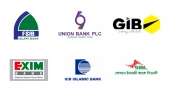
First Security Islami Bank’s
Islami Bank Bangladesh PLC
Social Islami Bank
Union Bank
Global Islami Bank
Second report of committee to reform NBR expected next month, focusing on automation
National Bank
Exim Bank
ICB Islami Bank
Bangladesh Commerce Bank
NRB Bank
Padma Bank
Among these, Islami Bank Bangladesh PLC has shown signs of recovery, benefiting from a large customer base and strong public support. The bank has regained customer confidence domestically and internationally, as evidenced by its leading position in remittance inflows.
Causes Behind the Failure of Weak Banks
High levels of bad debt
Insufficient liquidity
Weak management
Financial irregularities and corruption
Inability to compete in the market
A bank is classified as weak when its liquidity or solvency is compromised. This can occur if its financial resources, risk profile, or business model deteriorates significantly.
Dr Selim Raihan, a professor of Economics at the University of Dhaka and Executive Director of the South Asian Network on Economic Modelling (SANEM), pointed out that banking sector reforms have taken place worldwide, including in the United States.
"As per global practice, weak banks can be merged and in some cases, multiple troubled banks are consolidated under a stronger institution for better management. This has happened in Bangladesh before, particularly after independence," he said.
1 year ago
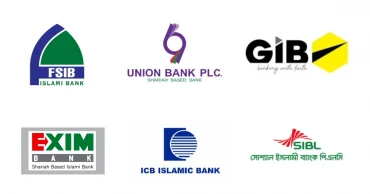
MDs of Bangladesh’s 6 crisis-hit banks sent on forced leave
The Managing Directors (MDs) of six crisis-hit banks have been placed on compulsory leave to facilitate an international audit, as instructed by Bangladesh Bank (BB), officials said.
The directive is aimed at shariah-based banks owned by S Alam Group.
First Security Islami Bank (FSIB) has already acted on this instruction, sending its MD, Syed Wasek Md Ali, on forced leave for the next three months.
The decision was made in an emergency meeting of the bank’s board of directors on Saturday (January 4).
Mohammad Abdul Mannan, FSIB’s chairman, confirmed the development. The bank’s Additional Managing Director, Abu Reza Md. Yahia, has been appointed as acting MD.
Five more banks are on the central bank’s list for similar actions. These are Union Bank, Global Islami Bank, Exim Bank, ICB Islami Bank and Social Islami Bank. The process of sending their MDs on leave is currently underway.
Banks in Bangladesh faced catastrophic year in 2024 amid liquidity crisis
An official from BB revealed that an emergency meeting with the boards of directors of these banks was held last Thursday (January 2).
Bangladesh Bank spokesperson Husneara Shikha said, "The decision for the six bank MDs to remain on leave is a collective resolution by the respective banking boards. Bangladesh Bank will conduct audits and asset quality reviews on these six banks.”
This measure, she said, aims to prevent the managing directors from making undue interventions during the process. “The leave is temporary at this stage. If they are found innocent after the audit, they will be allowed to resume their roles without any restrictions. However, if irregularities are detected, appropriate actions will be taken following due regulations. This decision by the central bank aligns with international practices."
During the meeting, the central bank ordered the removal of senior officials, including MDs closely associated with S Alam Group, to ensure a transparent investigation and further necessary actions.
In compliance with these instructions, FSIB’s board promptly convened and decided to send its MD on leave.
Many struggling banks recovering: Bangladesh Bank Governor
Meanwhile, Social Islami Bank, which has recently been freed from S Alam’s control, has scheduled an emergency board meeting for Sunday (January 5).
Similar changes to the leadership of the other banks are anticipated soon.
Mohammad Abdul Mannan, who took over as chairman of FSIB on September 1 following a BB-led restructuring of the board, said the move aligns with efforts to reform the banking sector. He replaced Saiful Alam Masud, head of S Alam Group, who previously chaired the bank.
Mannan himself was removed from Islami Bank in 2017 after S Alam took control.
A chairman of another affected bank, speaking on condition of anonymity, said, “The MDs who served during the period of corruption will be sent on leave temporarily, enabling international audit organisations to work impartially through the central bank.”
This decision was reportedly taken on the recommendation of the Banking Task Force, formed to drive reforms in the sector.
1 year ago

S Alam Group-appointed Islami Bank MD Monirul Moula ‘forced to leave’
Mohammed Monirul Moula, Managing Director (MD) of Islami Bank Bangladesh PLC, was reportedly forced to vacate his office on December 19 under contentious circumstances.
Moula, who was appointed in January 2021 during the tenure of S Alam Group’s dominance over the bank’s board, reportedly faced resistance from within the organisation.
A group of officials allegedly blocked his entry into the office and demanded he leave.
Read: IBBL launches ‘Smart Bangladesh Smart Banking’ campaign
Since the incident, sources said, Moula has been absent from his duties, and an additional managing director has assumed interim responsibilities.
Islami Bank is working with Bangladesh Bank to finalise the appointment of a new MD, according to a high-ranking official at the bank.
Despite being removed from his office, sources indicate that Moula has not yet submitted his resignation.
1 year ago
S Alam Group's mortgaged property being auctioned for first time
Janata Bank has announced an auction of the collateral property of ‘Global Trading Corporation Limited’, a subsidiary of S Alam Group, to recover defaulted loans of Tk 1,850 crore.
Janata Bank hopes to recover a fifth of the dues by selling off the group’s collateral land in Chattogram, Gazipur
This marks the first time a bank has moved to auction the mortgaged assets of an S Alam Group, a business conglomerate, amid allegations that the group siphoned off billions of taka from various banks through loans during former Prime Minister Sheikh Hasina's 15-year tenure.
High Court orders S Alam Group to submit asset list
The bank announced the auction, set for November 20, in newspapers on November 1 and invited interested parties to submit their bids.
According to bank insiders, the value of the mortgaged assets, consisting of 1,860 decimals of land across Chattogram and Gazipur, have a maximum market value of Tk358 crore, which is less than a fifth of the total amount due.
This valuation is almost five times less than the amount owed. It is not possible to fully recover the defaulted debt by selling this property. Further legal action may be required to recover the outstanding balance.
According to section 12(3) of the Debt Court Act, the money can be recovered by selling the collateral property before the bank files a case.
S Alam Group alone took more than half of loans of Islami Bank: new chairman Al Masud
In an audit report of the Comptroller and Auditor General (CAG) of Bangladesh in 2021, the Global Trading Corporation has taken additional loans beyond the credit limit without complying with the guidelines of Bangladesh Bank.
According to S Alam Group's website, the global trading corporation established in 2012 was engaged in the trading of industrial raw materials, commercial products, and construction materials.
According to the report, in 2012, Global Trading Corporation initially took a loan of Tk 650 crore from Janata Bank's Chittagong corporate branch located in the General Insurance Building.
Singapore seeks asset information on S Alam Group
This loan has reached a total of Tk1070.65 crore until the year 2021. Of this, Tk 617.47 crore is PAD (Payment Against Document), Tk 223.18 crore is LTR (Trust Receipt) loan and Tk 229.99 crore is CC hypo loan. The amount of loan with interest increased to Tk 1850 crores in September 2024.
1 year ago
Travel ban imposed on S Alam Group owner, family members
A Dhaka court has issued a travel ban on Saiful Alam, the owner of S Alam Group, his wife Farzana Parveen and 11 family members.
Dhaka Metropolitan Senior Special Judge Mohammad Zoglul Hossain passed the order in response to a petition from Anti-Corruption Commission’s Public Prosecutor Mir Ahmed Ali Salam on Monday.
Travel ban imposed on former NSI DG, his wife
In addition to Saiful Alam and his wife, those barred from leaving the country include his sons Ashraful Alam and Ahsanul Alam, brothers Morshedul Alam, Shahidul Alam, Rashedul Alam, Abdus Samad, Osman Gani, and Mohammad Abdullah Hasan, Abdus Samad’s wife Shahana Ferdous, Osman Gani’s wife Farzana Begum, and an unidentified man, Miskat Ahmed.
1 year ago

Shooting in front of Islami Bank head office: 5 sustain bullet injuries
Five people including four officials of Islami Bank Bangladesh Limited (IBBL) PLC sustained bullet injuries in a clash between two groups of the bank in front of its head office in Motijheel area of Dhaka on Sunday (August 11, 2024).
Four of the injured identified as officials Mamun, Abdur Rahman, Baki Billah and godown guard Shahfiullah Sardar are now undergoing treatment at a hospital.
Sources said some officials under the banner of ‘Anti-Discrimination Banker Society’ were trying to hold a rally in front of the head office in the morning.
Read more: Islami Bank continues to reject cheques of ‘suspicious companies’
Some bank officials, who work for the S Alam Group, barred them from holding the rally, resulting in a scuffle between them, they said.
At one stage, shots were fired at the protesters, leaving five people injured, they said.
A tense situation has been prevailing in and around the bank following the incident.
Motijheel Police Station’s Officer-in-Charge Abul Kalam Azad could not be reached over mobile phone despite repeated attempts.
Read more: Executives appointed by S Alam will not be allowed to enter Islami Bank: CBA of the bank
2 years ago

S Alam Group to import 12 lakh MT of daily essentials for Ramadan
S Alam Group will import 12 lakh metric tonnes of daily essentials to ensure uninterrupted supply of essential consumer goods and to keep prices affordable for the month of Ramadan.
With an investment of more than hundreds of millions of dollars, the effort accounts for approximately 50 percent of the nation's total food demand for Ramadan. sugar, edible oil, wheat, lentils, and chickpeas are among the imported products, according to a press release.
Coca-Cola appoints Nahar Choudhury as first Bangladeshi managing director
S. Alam Group fulfills 30, 20 and 35 percent of the current domestic market demand of oil, wheat and sugar respectively. The company is working diligently to increase the supply to 50 percent this year. Like previous years, S Alam Group has taken initiatives to import huge volume of daily necessities during Ramadan to benefit the mass people, it said.
The country's annual sugar demand is 24 lakh MT, with the month of Ramadan alone accounting for 2.72 lakh MT. S Alam Group is importing 641,300 MT of sugar, which is more than twice the demand during Ramadan, the release also said.
The yearly demand for edible oil in Bangladesh is about 22 lakh metric tons. Out of which, three lakh metric ton is demanded during Ramadan. S. Alam Group is importing 2 lakh 58 thousand metric tons of edible oil, 86 percent of the demand during Ramadan, to ensure market stability, it also said.
FBCCI President invites Sri Lankan investors to invest in Bangladesh's SEZ
The annual demand of wheat in the country's market is about 63 lakh metric tons (excluding domestic production). Consumers require about five lakh 28 thousand metric tons of wheat every month. S Alam Group is importing One lakh 78 thousand metric tons of wheat, 34 percent of the demand during Ramadan, to ensure market stability.
Bangladesh’s demand for lentils stands at six lakh tons annually, with a monthly requirement of 50 thousand tons. The demand for lentils surge during Ramadan, reaching one lakh tons. S. Alam Group is importing 50 thousand metric tons of lentils, meeting 50 percent of the demand during Ramadan.
Similarly, annual chickpea demand is one lakh 36 thousand metric tons, with demand during Ramadan standing at 91 thousand metric tons. S. Alam Group is importing 50 thousand metric tons of chickpeas during Ramadan, covering 55 percent of the demand during Ramadan.
The company is optimistic that these proactive measures will contribute to maintaining affordable prices in the country's market during the Ramadan season, ensuring accessibility for the general populace.
Daraz launches Bangladesh’s first-ever free delivery festival
“We have once again undertaken the proactive step of importing essential products in large quantity to meet the overall demand during Ramadan. Some of these imported items are in stock, while several shipments are awaiting clearance. Our commitment aligns with the government's objective of ensuring affordability for the people during Ramadan. In the event of any shortages during the Holy month, we remain prepared to take further measures to import additional products.”
2 years ago