MCCI

Bangladesh PMI climbs to 57.8 in July on manufacturing rebound
Bangladesh's Purchasing Managers' Index (PMI) rose to 57.8 in July, pointing to a broad-based strengthening of the economy led by a rebound in manufacturing that coincided with the strongest monthly export earnings in nearly a year, according to a study unveiled on Monday.
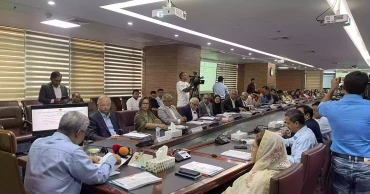
The Metropolitan Chamber of Commerce and Industry (MCCI), in association with Policy Exchange Bangladesh, presented the findings at a seminar at the MCCI office in Gulshan.
The presentation showed agriculture and services continued to expand in July, while construction activity remained only marginally below the neutral 50-point threshold that separates expansion from contraction.
Manufacturing led the recovery with a reading of 65.4, followed by services at 56.0, agriculture at 55.2, and construction at 49.3.
The presentation described the PMI as a monthly, survey-based economic indicator that tracks the health of an economy through the responses of senior private-sector executives across agriculture, manufacturing, construction and services.
A reading above 50 indicates expansion, below 50 signals contraction, and exactly 50 means no change from the previous month.
Citing central bank and academic research, including from the European Central Bank, the US Federal Reserve Bank of Dallas, and the Federal Reserve Bank of St. Louis, the study noted that PMI readings are released ahead of official GDP data, are not revised after publication, and have historically shown a strong correlation with actual GDP growth in major economies.
The Bank for International Settlements has found PMIs to be reliable concurrent indicators of real economic activity, according to the presentation.
The Bangladesh PMI programme was conceptualised in 2022 in the backdrop of COVID-19 recovery, with concept development in early 2023 and formal initiation in November 2023 with support from the UK's Foreign, Commonwealth and Development Office (FCDO), in association with the Singapore Institute of Purchasing and Materials Management (SIPMM).
The first survey round was conducted in December 2023, followed by three additional rounds by March 2024 to finalise the methodology and build the survey panel.
The index currently draws on a panel of 400 companies across four sectors, 212 in services (53 percent), 92 in manufacturing (23 percent), 50 in construction (12.5 percent) and 46 in agriculture (11.5 percent), collectively representing about 100 percent of GDP-weighted coverage across major economic sub-sectors, including wholesale and retail trade, real estate, transportation, manufacturing (large, small and cottage industries), and crops and horticulture.
The presentation traced the PMI's trajectory from December 2023 to July 2026, highlighting sharp swings tied to specific shocks: a 27-point plunge between June and July 2024 during the July Uprising, when a nationwide curfew and a 10-day internet blackout shut factories, banks and the Dhaka-Chittagong highway; an 8.8-point drop between March and April 2025 linked to long public holidays, early US tariffs on apparel, and energy-supply constraints; a 7.8-point slide between October and November 2025 amid weak global demand and investment caution ahead of national elections; and a 9.9-point fall between May and June 2026 as manufacturing and construction slipped into contraction due to long Eid holidays, the monsoon onset, fading pre-Eid demand, and the introduction of a new 15 percent VAT.
The seminar also flagged persistent shortages in Bangladesh's economic data infrastructure, noting that surveys such as the Household Income and Expenditure Survey (HIES) and Labour Force Survey (LFS) are conducted only once every five and three years, respectively, leaving governments and businesses to plan on outdated data.
Speakers at the seminar said the improvement across sectors reflected firmer business confidence, a better external outlook, and expectations of a more supportive environment following the national budget.
They said this creates blind spots between survey rounds, prevents local-level policy targeting, and constrains private investment due to weak online data-sharing and limited transparency.
Frequent, rapid surveys and modern economic indices such as the PMI, they said, are essential to generate real-time insights and strengthen evidence-based decision-making across the economy.
The seminar drew participation from representatives of major Bangladeshi companies across the four surveyed sectors, including BRAC Bank, Standard Chartered Bank, Robi Axiata, Pran-RFL Group, Square Pharmaceuticals, Berger Paints, and ACI, among others.
19 days ago
MCCI urges NBR to make upcoming budget ‘supportive, not punitive’
Metropolitan Chamber of Commerce and Industry (MCCI) on Saturday called on the National Board of Revenue (NBR) to frame the forthcoming national budget as a support mechanism for businesses rather than a burden as domestic industries continue to weather high interest rates and a persistent dollar crunch.
MCCI President Kamran T Rahman handed over the chamber's pre-budget proposals to NBR Chairman Abdur Rahman Khan at a meeting at NBR office in the capital.
Noting that member institutions of MCCI contribute nearly 50% of national revenue, Kamran said the chamber remained committed to working as a close partner of the NBR in building an investment-friendly and transparent tax regime.
“At a time when high interest rates of 12% to 14% and dollar shortages are driving up raw material import costs, small and medium entrepreneurs are bearing the heaviest burden,” he said, urging that the next budget prioritise relief over restriction.
Key proposals
On broadening the tax net, the MCCI president noted that despite more than one crore e-TIN holders, fewer than half file returns regularly, a structural weakness the chamber has repeatedly flagged.
With around 90% of Bangladesh's economy dependent on the informal sector, he proposed introducing a symbolic minimum tax of Tk 100 to Tk 1,000 and a one-page digital return filing system via mobile app to draw the informal workforce into the tax fold and curb tax evasion.
On the effective tax rate, the MCCI observed that advance income tax (AIT), tax deducted at source (TDS) and various restrictions push the actual tax burden on many businesses to between 40% and 50% far above the nominal rate.
The chamber called for the unconditional reduction of the corporate tax rate and a shift from turnover-based to actual income-based taxation.
On digital transformation of the tax system, MCCI proposed replacing the separate platforms for income tax, VAT and customs with a unified taxpayer profile, rationalising VAT rates, automating input tax credits and introducing online hearings at the assessment, appeal and tribunal stages to reduce cost and improve administrative efficiency.
On the rationalisation of the Primary Source Rule (PSR), the chamber said mandatory PSR compliance across 39 categories is hampering ease of doing business. It urged that the system be simplified, made logically consistent and rendered digitally verifiable to ease the compliance burden on taxpayers.
On the super-rich tax, MCCI cautioned that raising tax rates on high-income earners risks discouraging honest taxpayers and increasing the likelihood of capital flight. It argued that expanding the tax net is a more effective and sustainable route to revenue growth than hiking rates.
On SME support, the chamber called for a separate and enabling tax framework for small and medium enterprises, including reduced turnover taxes, input tax credit facilities and rational cuts in VAT and duties on raw materials, measures it said would lower production costs, sharpen competitiveness and ultimately boost revenue collection over the long term.
Kamran also welcomed the NBR's reform initiatives under the newly elected government and expressed hope that the chairman would provide clear direction on the overall reform roadmap, including the future of the Revenue Policy and Revenue Management Ordinance 2025, which lapsed without being enacted into law. “A clear institutional separation between policy formulation and revenue administration would significantly improve transparency, accountability and predictability in the tax system.”
MCCI President concluded by expressing confidence that, under the farsighted leadership of the Prime Minister and the guidance of the Finance Minister, a pro-growth tax policy would be enacted that simultaneously raises government revenue and expands the space for business and employment.
4 months ago

Bangladesh October PMI records faster expansion rate at 61.8
The October reading of the Bangladesh Purchasing Managers’ Index (PMI) gained 2.7 points from the previous month to post a faster expansion rate at 61.8.
This latest PMI reading was attributed to a faster expansion rate for all the key sectors of agriculture, manufacturing, construction and services.
“The latest PMI readings indicate that the overall Bangladesh economy continued to expand, primarily driven by favourable crop conditions and expectations of a good harvest in the agricultural sector,” said Dr M Masrur Reaz, Chairman and CEO, Policy Exchange Bangladesh.
Other sectors of the economy also posted faster expansion rates, going into the final quarter of the year, with monthly growth in exports and inflation gradually waning, he said on Sunday (9th November 2025).
Read more: Economic Affairs Committee okays import of crude oil
Metropolitan Chamber of Commerce and Industry (MCCI), Dhaka and Policy Exchange Bangladesh (PEB) released the Bangladesh Purchasing Managers’ Index (PMI) October report on Sunday.
The PMI is a pioneering initiative that aims to offer timely and accurate insights into the country's economic health to help businesses, investors and policy makers make informed decisions.
It was developed by MCCI and Policy Exchange, with support from the UK Government and technical support from Singapore Institute of Purchasing & Materials Management (SIPMM).
The agriculture sector posted its 2nd month of expansion, and at a faster rate. The sector posted faster expansion readings for the indexes of new business, business activity, and input costs, and the employment index reverted to an expansion reading.
The order, however, backlogs index posted a faster contraction rate.
Read more: Govt laid foundation for promising new chapter in Bangladesh-US relations: Shafiqul Alam
The manufacturing sector posted its 14th month of expansion, and at a faster rate. The sector posted expansion readings for the indexes of new orders, new exports, factory output, input purchases, finished goods, imports, input prices, employment, and supplier deliveries. The order backlogs index recorded a more rapid decline.
The construction sector posted its 2nd month of expansion, and at a faster rate. The sector posted expansion readings for the indexes of new business, construction activity, employment, and input costs. The order backlogs index posted a slower contraction rate.
The services sector posted its 13th month of expansion, and at a faster rate. The sector posted expansion readings for the indexes of new business, business activity, employment, and input costs. The order backlogs index reverted to an expansion reading after recording 2 months of contraction readings.
In terms of the future business index, slower expansion rates were recorded for all key sectors of agriculture, manufacturing, construction and services.
Read more: Economy must move beyond narrow wealth accumulation: Prof Yunus
10 months ago
Bangladesh’s PMI drops by 5.8 points, signals slower economic expansion
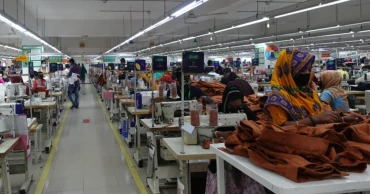
Bangladesh’s overall Purchasing Managers’ Index (PMI) dropped by 5.8 points in June compared to May, reaching 53.1, signalling a slower pace of expansion across key sectors of the economy.
The decline marks a notable shift in economic momentum, driven largely by the first-time contraction in the construction sector, while the agriculture, manufacturing and services sectors all registered slower expansion rates.
Metropolitan Chamber of Commerce and Industry (MCCI), Dhaka and Policy Exchange Bangladesh (PEB) released the Bangladesh Purchasing Managers’ Index (PMI) June report today (Monday).
The PMI is a pioneering initiative that aims to offer timely and accurate insights into the country's economic health to help businesses, investors and policy-makers make informed decisions.
It was developed by MCCI and Policy Exchange, with support from the UK government and technical support from Singapore Institute of Purchasing & Materials Management (SIPMM).
Bangladesh’s PMI drops 8.8 points in April, settles at 52.9
According to the latest PMI data, the agriculture sector continued its expansion for the ninth consecutive month, albeit at a reduced pace.
The sector reported its first-ever contraction in the employment index. However, it saw faster expansion in new business, business activity, input costs, and order backlogs.
The manufacturing sector marked its tenth straight month of expansion, but also at a slower rate. It reported contraction in input purchases, finished goods, imports, and employment.
Meanwhile, new orders, export orders, factory output, input prices and supplier deliveries all recorded slower expansion rates. Notably, order backlogs posted an expansion after 10 months of contraction.
After six months of growth, the construction sector experienced a reversal, entering contraction territory in June.
The sector posted declines in new business, construction activity, employment and order backlogs, while input costs rose at a slower pace. The services sector maintained its expansion for the ninth month in a row but with reduced strength.
The sector posted contraction readings in new business, business activity and order backlogs. On the other hand, employment and input costs saw a faster pace of expansion.
Bangladesh’s PMI jumps to 58.9 in May
In terms of business outlook, the future business index reflected mixed sentiment. Slower expansion expectations were reported in manufacturing and construction, while agriculture and services showed improved optimism for the coming months.
Despite the June downturn, the overall PMI figure above the 50 mark still indicates expansion—though at a more subdued pace—highlighting the need for close monitoring of sectoral dynamics amid shifting economic conditions.
1 year ago

Bangladesh’s economy stabilising on exports and remittances: MCCI review
Bangladesh’s economy has gradually been recovering from political instability and a banking loan scam, according to a review by the Metropolitan Chamber of Commerce and Industry (MCCI).
“Exports posted robust growth during the period as did the earnings from remittance inflows. The slide experienced by the foreign exchange reserves was halted, and the exchange rate of Bangladeshi Taka (BDT) against US dollars stabilised, although some volatility in the reserve position continues to persist,” said the review.
Improved trade and current account balance, along with the overall balance of payments situation, have allowed for some easing of import restrictions.
The economy as a whole has been moving towards macroeconomic stability, according to the MCCI review titled Economic Situation of Bangladesh, conducted for the October-December quarter (Q2) of the 2024-25 fiscal year.
However, the economy still faces significant challenges, including inflationary pressures, a shortfall in revenue collection, slow public spending, diminished job opportunities, a sluggish investment climate, and the need to rebuild public confidence in the banking system, the review noted.
The Bangladesh Bank has maintained a tight monetary policy stance to curb inflation and stabilise the exchange rate.
The central bank’s efforts, along with positive trends in exports and remittances, are expected to support broader economic recovery in the coming months, the review expressed optimism.
Draft Renewable Energy Policy fails to support sustainable transition away from fossil fuels: experts
According to the MCCI review, data on the country’s industrial sector for the quarter under review (Q2 of FY25) is yet to be available. But the sector registered lower growth of 2.13 per cent in Q1 of FY25, compared to 3.98 per cent in the previous quarter (Q4 of FY24).
Besides, the industry sector’s share in GDP increased by 2.33 per cent to 37.71 per cent in Q1 of FY25 from 35.38 per cent in Q4 of FY24.
According to recently released data from the Bangladesh Bureau of Statistics (BBS), the manufacturing sub-sector registered lower growth of 1.43 per cent in Q1 of FY25, compared to 6.45 per cent in the previous quarter (Q4 of FY24).
On the other hand, the share of the manufacturing sub-sector in GDP increased to 25.62 per cent in Q1 of FY25 from 24.26 per cent in Q4 of FY24.
According to Bangladesh Bank (BB) data, broad money (M2) recorded lower growth of 7.57 per cent in December 2024, compared to 8.60 per cent at the end of December 2023.
December’s growth fell short of the central bank’s target of 8.20 per cent for December 2024, as set in the Monetary Policy Statement (MPS) for July-December 2024.
1 year ago

Economy gradually recovering after July-August movement: MCCI
The Metropolitan Chamber of Commerce and Industry (MCCI) has said the economy has been gradually recovering despite the political instability after the July-August movement.
In its quarterly economic review for July-September 2024 (Q1 of FY25) revealed on Thursday, the MCCI said the country saw improvements in exports, imports, remittances, and foreign exchange reserves despite many economic challenges during July-September.
It has identified several pressing economic challenges including high inflation, declining external demand, a revenue shortfall, slow public expenditure, reduced job opportunities, and sluggish investment.
The agriculture sector employed about 45% of the labor force and contributed 12.84% to GDP in Q4 of FY24, up from 9.41% in Q3 of FY24. Strong government support and favorable natural conditions, aside from localised flooding, enabled the sector to achieve a growth rate of 5.27% in Q4 of FY24, slightly higher than the 5.16% growth in Q3, said a press release.
It said while data for Q1 of FY25 is pending, the industrial sector experienced slower growth of 3.98% in Q4 of FY24, down from 6.25% in Q3. The sector’s GDP share also fell to 35.38% in Q4 from 40.50% in Q3. The manufacturing sub-sector showed a similar trend, with growth declining to 6.45% in Q4 from 6.93% in Q3.
The services sector grew by 3.67% in Q4 of FY24, slightly down from 3.81% in Q3. However, its GDP contribution increased to 51.78% in Q4, up from 50.09% in Q3, it added.
Adani fraud allegations rock Indian Parliament as opposition demands probe into billionaire's firms
Data from the Bangladesh Power Development Board (BPDB) indicates that power generation reached a maximum of 15,717 MW on September 20, 2024.
On September 30, actual generation was 13,176 MW against a demand of 13,946 MW, resulting in 340 MW of load shedding.
Broad money (M2) growth slowed to 7.88% in September 2024, below the central bank’s target of 8.20%.
Private sector credit grew by 9.20% year-on-year, falling short of the 9.80% target. Public sector credit growth plummeted to 8.75%, compared to 26.27% in September 2023.
Tax revenue collection decreased by 6.07% year-on-year in Q1 of FY25, with significant shortfalls in VAT and customs revenue.
Public expenditure also slowed, with ministries and divisions spending only 4.75% of the annual development program (ADP) allocation during the quarter, compared to 7.50% in the same period last year, it said.
Export earnings grew by 7.62% year-on-year to $11.66 billion in Q1 of FY25, while imports rose by 1.64% to $16.17 billion. Remittances surged by 33.34% to $6.54 billion, driven by higher inflows in September 2024.
Massive irregularities in banking, energy sectors detected: Debapriya
General inflation eased slightly to 9.92% in September 2024 from 10.49% in August. Food inflation dropped to 10.40%, while non-food inflation stood at 9.50%. Rural areas were disproportionately affected by high inflation compared to urban regions.
The Bangladeshi Taka depreciated by 1.67% against the US dollar between June and September 2024. Gross foreign exchange reserves stood at $24.86 billion in September, down from $26.91 billion a year earlier.
Foreign direct investment (FDI) inflows declined by 15.01% year-on-year to $300 million in Q1 of FY25.
While signs of recovery are evident, significant challenges remain for Bangladesh’s economy, said MCCI.
It stressed the need for addressing structural inefficiencies and improving governance will be crucial to sustaining growth in the coming quarters.
1 year ago

MCCI-PRI for raising EDF to $10 billion to achieve $80 billion export target
To achieve the $80 billion export target of the government for the fiscal year (FY) 2023-24, the export development fund (EDF) should be raised to at least $10 billion and made accessible to all exporters, Metropolitan Chamber of Commerce and Industry (MCCI) President Md Saiful Islam said Monday.
As per the Export Policy 2021-2024, the export target is $80 billion for FY24, yet the current EDF is only $7.5 billion, he added.
Saiful was addressing the MCCI-Policy Research Institute (PRI) post-budget discussion "Bangladesh from Vulnerability to Resilience and Rapid Inclusive Development" in the capital.
Read: Reliable accreditation infrastructure crucial for strengthening export
Planning Minister MA Mannan was the chief guest at the event, Dr Shamsul Alam, state minister for planning, and Dr Zaidi Sattar, chairman of PRI, were special guests.
"Many areas in the proposed budget for FY23 have a lot of room for improvement as far as the business community's needs are concerned. The allocation of social safety nets is one such area," he noted.
There has been an increase in the allocation from Tk107,614 crore in FY22 to Tk113,576 crore considering the twin blows of the Russia-Ukraine war and the pandemic.
Read: Govt urged to provide policy support to plastic toy industry for its export-earning potential
"Also, natural disasters such as floods, which we are going through right now, will also be another challenge for the country," Saiful said.
"So, we are suggesting increasing the social safety net budget from the current level to a reasonable amount."
"Also, the personal income tax thresholds have remained unaddressed, which we thought should have been subject to changes, especially the tax-free threshold," the MCCI president said.
Read WTO Conference: Bangladesh speaks against sudden ban on food export
"Considering the increase in per capita income to $2,824, we believe the personal income tax threshold should be increased to Tk400,000."
4 years ago
.jpg)
Small businesses pin hopes on budget to stay afloat
Hit hard again, this time by the second wave of the Covid-19 pandemic, Bangladesh's small and medium enterprises (SMEs) are now pinning hopes on the upcoming budget to stay afloat. Not to mention that the survival of these firms is important as they are one of the major employers in the country's economy.
Ranging from short-term liquidity and tax cuts to simple compliance for availing loans and extension of debt repayment periods by at least two years, these enterprises seek an array of relief from the government to tide over the economic crisis. These leeways to SMEs, entrepreneurs say, will not only help the sector survive but also ensure the preservation of jobs.
Read Speakers urge for simplifying process of stimulus fund disbursement to SMEs
Kazi Sazedur Rahman, the president of Paper Cup Manufacturers' Association of Bangladesh (PCMAB), told UNB that though a slew of stimulus packages was announced by the government last year, over 80 percent of the small entrepreneurs in Bangladesh failed to reap the benefits of the same due to corruption in the system.
“Though Bangladesh Bank said that over 72 percent of the stimulus packages worth Tk20,000 crore were disbursed as loans until March 31, the reality is different. Some 95 percent of the disbursed loans were availed by corporate houses through sister concerns floated overnight," said Sazedur, also the MD of KPC Industry.
According to him, the SME sector has again been hit hard by the second wave of Covid. "The government has so far been very supportive of the sector, but the problem lies at the loan distribution level. Many SMEs are already out of the banking system. If more help is not extended to the sector in the coming fiscal, then many more SMEs will disappear."
Also read: Central bank to support SMEs build resilience
The small entrepreneurs also seek a substantial cut in the value-added tax on various items in the upcoming budget -- from the existing 15 percent to 5 percent. "Lower taxation will, in turn, benefit the economy as many SMEs don't acquire trade licenses to avoid paying 15% VAT. So, a cut in VAT will benefit both the government as well as the SMEs," Sazedur said.
"Moreover, the central bank should immediately impose a moratorium on old loan repayments as it has already extended the deadline till June 30 for banks to disburse stimulus funds among businesses in the cottage, micro, small and medium enterprise (CMSME) sector. Otherwise, many defaulting entrepreneurs won't get the benefit."
Read Raise threshold for financial reporting of SMEs: DCCI
5 years ago