healthcare system

Govt eyes overhaul of healthcare system, doubles health budget to Tk 69,409cr
The government has proposed a record allocation of Tk 69,409 crore for the Health and Family Welfare Ministry in the 2026-27 fiscal year national budget, nearly doubling the revised allocation of the outgoing fiscal year as part of an ambitious plan to overhaul the country's healthcare system.
Finance Minister Amir Khosru Mahmud Chowdhury announced the allocation while presenting the national budget for FY27 in Parliament on Thursday.
Budget FY27: Tax cuts on heart stents, dialysis equipment to lower treatment costs
The proposed allocation is equivalent to 1.02 percent of GDP while in the revised budget for fiscal year 2025–26, the allocation for this sector was Tk 35,477 crore, representing 0.58% of GDP.
The government also reiterated its commitment to gradually increase health spending to 5 percent of GDP within the next five years.
Presenting the budget, the finance minister said years of neglect, corruption, political interference and lack of accountability had weakened the country's health sector, leaving hospitals overcrowded and forcing many Bangladeshis to seek treatment abroad.
He said the government's goal is to transform the healthcare system from a treatment-oriented model to a prevention-focused one by strengthening primary healthcare services, expanding immunisation coverage, improving maternal and child healthcare, promoting nutrition and ensuring early detection of non-communicable diseases.
As part of the reform agenda, the government plans to establish a modern primary healthcare unit in every union and one or more units in each urban ward across the country. Each unit will be supported by three community clinics providing preventive healthcare, maternal and child health services, nutrition support and essential medical care at the grassroots level.
The government also announced plans to introduce a nationwide digital "Health Card" under a universal health coverage framework. The card will be linked to an integrated patient management and referral system, allowing medical records and treatment histories to be accessed from healthcare facilities across the country.
Through this, a patient's prior treatment history, investigations, medications, and medical information will be instantly accessible at any primary, secondary, or specialised healthcare facility anywhere in the country.
This will significantly improve the quality of care, reduce medical errors and unnecessary duplication of prescriptions, and enable patients to receive faster, more orderly, and more effective services. At the same time, this digital health system will play a pivotal role in establishing discipline, accountability, and efficiency across the country's entire health sector.
To strengthen secondary healthcare services, district hospitals and their affiliated upazila health complexes will be developed as integrated healthcare units.
Complex and specialised treatment, including surgeries, will be concentrated at district hospitals, while upazila health complexes will focus on maternal, neonatal, child and reproductive healthcare services.
The budget also includes plans for establishing a National Ambulance Pool and Emergency Services Network to improve patient transportation and emergency response.
To address manpower shortages, the government will immediately recruit 5,000 MBBS doctors for vacant posts in public hospitals and health institutions. In addition, recruitment of 100,000 health workers has begun, with around 80 percent of the new recruits expected to be women to strengthen community-based and preventive healthcare services.
The government has already created 941 new posts for senior staff nurses and 947 positions for midwives to expand healthcare coverage and improve maternal health services.
The finance minister said the government will continue to prioritise affordable access to quality medicines. Work is underway to update the National Essential Medicines List and formulate a modern drug policy. Support will also continue for the pharmaceutical industry, including the development of an Active Pharmaceutical Ingredient (API) industrial park and expansion of medicine and vaccine supply networks nationwide.
Referring to the recent measles outbreak, he said the government had administered measles-rubella vaccines to nearly all eligible children within its first 100 days in office, demonstrating its commitment to rebuilding the country's immunisation programme.
The budget also outlines major reforms in medical education, including modernisation of the MBBS curriculum, greater use of technology and artificial intelligence in medical training, and plans to introduce a competency-based curriculum by 2030.
To improve healthcare education, student loan facilities will be introduced for medical and dental students, while infrastructure at government medical colleges will be upgraded. Nursing education will also be expanded through new postgraduate programmes, specialised teacher training and modernised facilities.
The government further announced plans to develop a domestic medical equipment manufacturing industry to reduce import dependence and promote exports, alongside additional incentives for export-oriented pharmaceutical companies.
According to the finance adviser, the proposed measures aim to build a people-centred, accountable and modern healthcare system that ensures affordable and quality services for all citizens while reducing out-of-pocket healthcare expenses.
4 months ago
PM seeks doctors’ support to build affordable, humane healthcare system
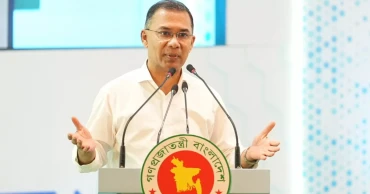
Outlining government's plans to raise the health sector allocation to 5 percent of GDP, Prime Minister Tarique Rahman on Saturday urged physicians working at the grassroots to lead efforts to build an accessible, affordable, effective and humane healthcare system.
“You are the main drivers in turning our dream of a healthy nation into reality. We together with all want to build a healthcare system that is accessible, affordable, effective and humane for everyone,” he said while addressing the Upazila Health and Family Planning Officers (UHFPO) Conference-2026 at the Osmani Memorial Auditorium in Dhaka.
The Prime Minister said he firmly believes that the physicians will be able to establish an accountable, sustainable and people-centric health service.
PM says Fatema Begum now a member of their family
“We expect each of you to turn your respective workplaces into model healthcare service centres in your own areas,” he told the health officers.
The Health Services Division under the Ministry of Health and Family Welfare organised the conference.
Over 500 UHFPOs from across the country participated in the event where the Prime Minister also handed over awards to the best-performing officers in six categories.
The Prime Minister said the ideas he presented reflect the government’s manifesto, plans and overall vision for the health sector.
He stressed that the government alone cannot achieve everything and called for active cooperation from healthcare professionals. “The government cannot do it alone. We need your support. Everyone has to come forward,” said.
Tarique Rahman said even small, collective efforts can bring meaningful change. “I am not saying one person will do everything. But if all of us contribute a bit, change will surely come. If people in other countries can do it, we can do it too,” he added.
Urging doctors to stand beside people, he said, “As a citizen of this country, I request you to support the government and the people so that they can receive at least basic healthcare services without difficulty.”
Reassuring the health professionals, the Prime Minister said the government is committed to addressing their challenges and improving the overall system.
Among immediate concerns, he said, the government will prioritise ensuring security for doctors working in rural areas, and consider providing vehicles and drivers for them.
Highlighting long-term plans, Tarique Rahman said the government aims to gradually increase the health sector allocation to 5 percent of GDP.
He said the government plans to recruit 100,000 new health workers, 80 percent of whom will be women.
The Prime Minister urged all healthcare officials to work together with dedication to strengthen public health services and ensure better care for citizens across the country.
Sharing his personal experience, he referred to the United Kingdom’s National Health Service, widely known as NHS, to highlight the challenges of running a universal healthcare system.
Tarique Rahman noted that the NHS, established in 1948, has been serving people for over 75 years in a country that is economically stronger and has a much smaller population than Bangladesh.
“Even then, the UK government often struggles to manage the system and ensure services for all, with frequent discussions about increasing budgets and support,” he said.
Drawing the comparison, the Prime Minister said it is natural for Bangladesh’s healthcare system to face challenges and acknowledged that doctors working at the grassroots often encounter various difficulties delivering services.
Appreciating the participants for raising their problems during the conference, he called it a constructive and necessary step.
Tarique Rahman, however, reminded the doctors that they are all part of the same country and society, and understand the realities on the ground.
He said the government is working to ensure healthcare as a basic right, guided by the principle-- prevention is better than cure.
The Prime Minister also pledged to improve the dignity, safety and living standards of healthcare workers.
He said steps will be taken to address structural and manpower shortages in the health sector and to modernise upazila health complexes with technology-based services.
Tarique Rahman stressed the need to build a corruption-free and accountable healthcare system and called on officials to play an active role in local-level leadership, vaccination, maternal health and disease prevention.
He said those who are present at the programme are, in one way or another, more privileged than most citizens of the country.
The Prime Minister also stressed the importance of ensuring comprehensive maternal and child healthcare services.
“All upazila health complexes must be turned into centres capable of providing full maternal care, safe childbirth and quality newborn and child healthcare,” he said.
Referring to recent measles outbreaks, Tarique Rahman termed the failure to vaccinate children in the past as a serious lapse.
He said the government has taken emergency steps to inoculate children against measles nationwide, which has helped prevent further deterioration of the situation.
The Prime Minister thanked doctors and health workers for their efforts in protecting children, and expressed deep sympathy to families who lost their children.
He said it is time to bring all hospitals and health centres under accountability to ensure proper services for citizens.
“Healthcare is not a favour or charity by the state. Ensuring proper treatment is the duty of the state, and receiving healthcare is a fundamental right of every citizen,” Tarique Rahman said.
He said the government is planning to introduce an integrated e-health card system, which will digitally store health information of every citizen. “This will allow people to access treatment easily at any hospital in the country when needed.”
The Prime Minister also said the government is considering introducing a national health insurance system in phases to reduce the financial burden of medical expenses on citizens.
“Our goal is to further improve upazila health complexes, ensure necessary manpower and make healthcare more accessible and effective through technology,” he added.
State Minister Dr MA Muhit, Health Services Division Secretary Md Quamruzzaman Chowdhury and Director General of the Directorate General of Health Services Prof Dr Pravath Chandra Biswas, among others, spoke at the conference with Health and Family Welfare Minister Sardar Md Sakhawat Husain in the chair.
6 months ago

Wrong Diagnosis: A silent crisis in Bangladesh’s healthcare system
On the morning of 2 February (2025), AHM Nurul Alam Hasan, a businessman from Chattogram, was having breakfast with his family when he began to speak strangely. He misnamed familiar people, shared incorrect information and asked irrelevant questions.
Initially, his family did not realise the gravity of the situation, dismissing it as momentary confusion. As his odd behaviour persisted and he complained of a headache, they rushed him to a renowned private hospital in Chattogram.
After preliminary tests, doctors at the hospital wrongly diagnosed him with an early-stage brain tumour. He spent one night under medical supervision and was discharged the following morning.
Unconvinced by the diagnosis, his family convened a meeting on 4 February, deciding to take him to Dhaka for further investigations. The decision-making process took two days, and by the time Mr Hasan reached the capital on 5 February, four days elapsed before the correct diagnosis was made—he had suffered a brain stroke.
The delay in identifying and treating the stroke has left the 74-year-old businessman struggling to regain his memory.
A specialist physician, speaking anonymously to UNB, emphasised the dire consequences of such delays. “A four-day delay in stroke treatment can lead to severe complications and drastically reduce the chances of recovery,” the doctor said.
The Perils of Delayed Stroke Treatment
When a stroke occurs, every second counts, he says, adding that the critical importance of swift intervention to prevent irreversible damage. Here are the primary risks associated with delayed stroke treatment as he said:
1. Increased Brain Damage
o Strokes occur due to blocked blood flow (ischemic stroke) or bleeding in the brain (haemorrhagic stroke).
o Within minutes, brain cells start dying due to a lack of oxygen and nutrients.
o A delay of four days allows irreversible damage to spread, affecting a larger portion of the brain.
2. Higher Risk of Permanent Disability
o Delayed treatment can result in long-term impairments, including:
§ Speech and communication difficulties (Aphasia)
§ Paralysis or muscle weakness
§ Cognitive decline, including memory loss and confusion
§ Vision and balance disorders
3. Reduced Effectiveness of Clot-Busting Treatment
o Ischaemic stroke patients require thrombolytic drugs like tPA within 4.5 hours of symptom onset.
o After four days, these drugs become ineffective, making recovery more difficult.
4. Increased Risk of Secondary Stroke
o Without immediate treatment, patients face a higher likelihood of suffering another stroke, compounding health complications.
5. Swelling and Brain Pressure
o Delayed care can cause brain swelling, increasing intracranial pressure and worsening brain function.
o In severe cases, this can lead to brain herniation, which is often fatal.
6. Other Medical Complications
o Pneumonia: Stroke patients often have difficulty swallowing, increasing the risk of aspiration pneumonia.
o Bedsores & Blood Clots: Prolonged immobility can lead to deep vein thrombosis (DVT) and skin ulcers.
o Urinary Tract Infections (UTIs): Common among stroke patients due to bladder dysfunction.
7. Mental Health Consequences
o Patients and families face increased risk of depression, anxiety, and emotional distress due to delayed recovery.
8. Higher Mortality Rates
o The longer the delay in treatment, the lower the patient’s chance of survival.
Medical Negligence in Bangladesh
Medical negligence is a growing concern in Bangladesh, with frequent reports of misdiagnoses, surgical errors, and inadequate treatment. While many countries have robust legal frameworks to address such issues, Bangladesh lacks comprehensive legislation to combat medical malpractice.
Student's death in 'wrong treatment' triggers protests; hospital, colleges vandalised
Consequently, most incidents go unpunished, leading to public frustration and, at times, violent reactions against healthcare professionals.
Medical negligence generally falls into several categories:
1. Misdiagnosis
2. Delayed Diagnosis
3. Surgical Errors
4. Childbirth Trauma and Malpractice
5. Negligent Long-term Treatment
For a case of medical negligence to be established, four elements must be proven:
· Duty: The healthcare provider owed a duty to the patient.
· Negligence: The provider failed to take reasonable care.
· Damage: The patient suffered an injury due to the negligence.
· Causation: The injury was directly caused by the healthcare provider’s actions.
Legal Safeguards and Challenges
Bangladesh’s Constitution protects the right to life (Article 32) and mandates the State to ensure access to healthcare (Articles 15, 18). However, the enforcement of these rights remains weak. Patients can seek redress through Article 102 (Writ Petitions), but the lack of a dedicated medical negligence law leaves many without justice.
Alleged wrong treatment leads to death of female physician during surgery in Feni
While doctors work under challenging conditions in an overburdened healthcare system, the lack of accountability erodes public trust. Misdiagnoses, delays, and inadequate treatment force thousands of Bangladeshis to seek medical care abroad, draining billions from the national economy each year.
Unlicensed Hospitals
The private sector provides 60% of Bangladesh’s healthcare services, with over 100,000 hospital beds. However, regulation remains inadequate. In February 2024, the Directorate General of Health Services (DGHS) found 1,027 unlicensed hospitals operating across the country. Such institutions often lack qualified professionals, contributing to cases of medical negligence.
Exodus of Patients: Trust Deficit in Local Healthcare
Bangladesh’s healthcare shortcomings have led to an exodus of patients seeking treatment abroad. In 2023, over 4.5 lakh Bangladeshis travelled to India, Thailand, Singapore, and Malaysia for medical care. The reasons include:
· Advanced medical facilities
· Specialised expertise
· Higher perceived quality of care
· Limited access to specialised treatment in Bangladesh
This trend has severe economic implications, with billions of dollars flowing out of the country. Strengthening local healthcare could retain patients and boost the economy.
Reforming Bangladesh’s Healthcare System
Experts said that to prevent cases like that of AHM Nurul Alam Hasan, Bangladesh must do the following things:
Murder case filed against LabAid doctors for patient's death 'due to wrong treatment'
1. Invest in Healthcare Infrastructure – Increase funding for public hospitals and ensure they have modern medical technology.
2. Improve Diagnosis and Treatment Protocols – Implement stricter guidelines for stroke and emergency care.
3. Strengthen Medical Regulation – Enforce licensing requirements for hospitals and clinics.
4. Introduce a Medical Negligence Law – Establish a legal framework to hold medical professionals accountable.
5. Build Public Trust – Improve training for doctors and enhance patient-doctor communication.
6. Create a Health Service Commission – Oversee quality standards and investigate malpractice cases.
The case of Mr Hasan is not an isolated incident—it is a symptom of a healthcare system that struggles with misdiagnoses and delays. Unless systemic reforms are undertaken, countless others will continue to suffer due to preventable medical errors.
1 year ago
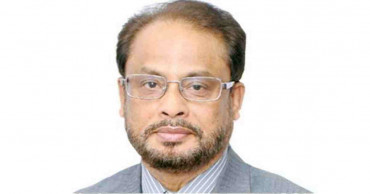
Take mega projects to improve healthcare system: GM Quader
Jatiya Party Chairman GM Quader on Tuesday urged the government to make adequate allocations in the upcoming budget for taking mega projects to improve the country's healthcare system.
“Mega projects need to be implemented to improve Bangladesh’s healthcare system. The implementation of mega projects in the health sector has become imperative considering the humanitarian aspects and people’s basic rights,” he said.
In a statement, GM Quader said, “People want to see an outline and necessary allocations in the upcoming budget for implementing mega projects in the health sector.”
Also read: Procuring vaccine from one source was a wrong move: GM Quader
He said the ICU facilities must be ensured in public hospitals in every district of the country to save people's lives.
The Jatiya Party chief said necessary steps should be taken for ensuring the facilities for all types of medical tests in all the government hospitals, including the upazila health complexes.
“All the hospitals should have adequate beds with the facility of free supply of medicines. The necessary number of doctors, nurses and technologists should be recruited as soon as possible,” he observed.
Also read: Eid-Ul-Fitr: JaPa leader GM Quader greets PM
GM Quader said the coronavirus pandemic has exposed how helpless even the developed world when it comes to healthcare systems.
”So, better treatment facilities must be ensured in the country. If we can do that, no one will have to go abroad for treatment. It’ll save people's time and money in addition to ensuring the basic rights of ordinary people,” he added.
5 years ago