fish production
Govt intensifies nationwide drive to boost fish production, protect biodiversity
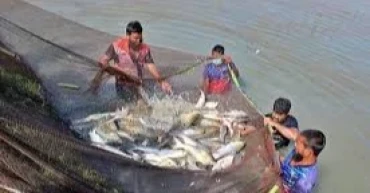
The government has stepped up a wide range of initiatives across the country to increase fish production, expand aquaculture technologies and improve the livelihoods of marginal fish farmers.
The programmes being implemented by the Department of Fisheries focus on modern farming practices, restoration of water bodies, conservation of indigenous species and strengthening supply chains to sustain the sector’s steady growth.
Officials said regular training sessions are being conducted to enhance farmers’ technical knowledge and practical skills.
These include hands-on guidance on carp polyculture, monosex tilapia farming, pangas cultivation and the culture of indigenous small fish species such as shing, magur, gulsha, pabda and tengra, according to an official document.
To accelerate technology adoption, demonstration farms are being set up in different regions, allowing farmers to observe and replicate improved aquaculture techniques.
At the same time, poor and marginal fish farmers are receiving free inputs—including fish fry, feed, lime and fertilisers—to reduce production costs and increase output.
Efforts are also underway to rehabilitate water bodies through pond renovation and re-excavation, aimed at improving water retention and boosting productivity.
Besides, carp and indigenous fish fry are being released into open water bodies and institutional ponds to enhance natural fish stocks and support nutritional needs, particularly among low-income communities.
To reduce post-harvest losses and strengthen the fisheries supply chain, insulated fish boxes, plastic crates, fish cutting and descaling machines are being distributed among traders and stakeholders.
Beel nursery programmes have also been introduced, where hatchlings are reared into fingerlings before being released into open waters to improve survival rates and increase overall fish production.
Conservation remains a key pillar of the initiative. Fish sanctuaries are being established and restored in rivers and wetlands to ensure breeding and protection of native species.
Authorities are also conducting regular drives and mobile courts under the Fish Protection and Conservation Act, 1950, to curb illegal fishing practices and safeguard aquatic resources.
Officials said steps are being taken to ensure the quality of fish feed through licensing, monitoring and testing.
To promote intensive aquaculture, aerators are being distributed to farmers to maintain adequate oxygen levels in ponds under high-density culture systems.
Meanwhile, the government-owned fish seed production farm at Chatmohar is undergoing renovation, including pond re-excavation, hatchery modernisation and infrastructure repairs, to improve access to quality fry and training facilities for farmers.
Alongside technical support, the government continues to provide interest-free microcredit to fish farmers under the “Microcredit Programme Guidelines for Fisheries Sector-2011.” The loans are distributed through a revolving fund system, with beneficiaries required to pay only a five percent service charge.
Fish remains the primary source of animal protein in Bangladesh, and its consumption has grown significantly over the past three decades, driven largely by aquaculture expansion.
According to official data, per capita fish consumption has now reached around 62–63 grams per day, surpassing the national nutrition target of 60 grams.
Bangladesh achieved self-sufficiency in fish production in the 2016–17 fiscal year, and annual output currently exceeds 4.5 million metric tonnes.
Bangladesh earned Tk 4,376 crore by exporting 71,477 metric tons of fish and fish products in the 2023-2024 fiscal year.
Despite this progress, experts caution that challenges persist. Earlier studies by FAO and WorldFish indicated gaps in consumption, particularly in rural areas, where access to fish protein remains lower than in urban centres.
Researchers also warn that while overall fish intake has increased, dietary diversity has declined as farmed fish increasingly replace nutrient-rich indigenous species from natural water bodies—raising concerns over micronutrient deficiencies among poorer households.
Recent estimates put annual per capita fish consumption at around 27 kilograms, a sharp rise from just 7.5 kilograms in 1990.
However, rising fish prices, climate change impacts, shrinking rivers and wetlands, pollution and post-harvest losses continue to affect availability and affordability.
Experts say sustaining production growth while ensuring equitable access and preserving biodiversity will be key to meeting Bangladesh’s future protein demand and addressing nutritional gaps, particularly among low-income and rural populations.
4 months ago

Razzaque predicts possible surplus in fish, meat, and eggs 'in 3-5 years'
Agriculture Minister Dr Abdur Razzaque has said that Bangladesh will have surplus production of fish, egg, meat and milk in the space of the next 3-5 years.
He said, "One of the main challenges of the current government is to ensure nutritious food to all.We recognise that the fisheries and livestock sector can play a vital role in that."
"We are gradually becoming self-reliant in food for the steps taken by the government in the last few years. Not only that, if we keep up the good work, we might have surplus productions of fish, milk, meat and egg in the next 3-5 years," the minister hoped.
Also read: Govt to procure 5-6 lakh metric tonnes of rice to reduce shortage: Razzaque
He came up with the remarks while speaking as the chief guest at a virtual discussion meeting organized by Bangabandhu Veterinary Council on the occasion of World Veterinary Day 2021 on Saturday.
Addressing the veterinarians, the agriculture minister said the sector needs to be taken further through technology expansion and entrepreneurship. He also advised them to work hard in ensuring nutritious and safe food for all.
Dr. Razzaque added that in order to ensure nutritious food, people's incomes must be increased and employment must be created. Otherwise, even if enough food is produced, people will not be able to buy and enjoy it.
Also read: Will take initiative to harness potential of mushrooms: Razzaque
The minister also emphasised on the importance of agriculture in alleviating poverty at the event.
"The government is working tirelessly to bring down the poverty rate to 12% and extremely poor to 5%......The fisheries and livestock sector can play a huge part in that," he concluded.
5 years ago
.jpg)
Target set to produce 6 lakh mts of fish in FY 2020-21
The Fisheries and Livestock Ministry has taken different measures to produce six lakh metric tonnes of fish in the current fiscal year of 2020-21.
5 years ago
Maintain global standard in fish production for export: PM
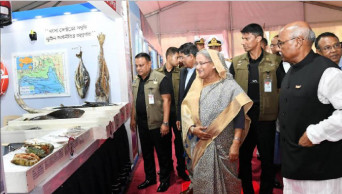
Dhaka, Jul 18 (UNB) – Prime Minister Sheikh Hasina on Thursday stressed the importance of maintaining the international standard of fish and fish products for export as riverine Bangladesh can grab the first position in the world in producing fish from inland water bodies.
7 years ago