tourists

Bangladesh’s tourism sector reels from political and safety issues
Bangladesh’s tourism industry continues to lag behind its South Asian peers, with a decline reported in the business last year, apparently due to deterioration in political stability and law and order.
The situation is feared to deteriorate further, with sites of cultural heritage and events of traditional celebration being constantly targeted in attacks, often by radical Islamists, and their masterminds enjoying impunity.
In stark contrast to other South Asian countries, the contribution of the tourism industry to Bangladesh’s economy is only about three per cent.
“Bangladesh is not considered a safe tourist destination by many nations,” said Kamrul Hassan, who teaches tourism and hospitality at Dhaka University.
“You could say the level of security tourists expect is largely absent. Bangladesh’s portrayal in foreign media also discourages a lot of international travelers,” he said.
Tourism experts preferred to call Bangladesh not tourism-friendly.
Govt seeks to build skilled manpower in tourism sector: NSDA
Fresh areas, such as peaceful political settlements, evaded the Chittagong Hill Tracts, while Rohingya infiltration into Cox’s Bazar, the main tourist destination of the country, gave rise to a sense of insecurity.
The World Economic Forum placed Bangladesh in 109th position in its latest ranking of countries in regard to the size of their tourism industries. The ranking covered the year 2024 and was published in January.
Published every three years, Bangladesh lost 9 places on the ranking, considering its 100th position in 2021. The latest slip came following consecutive improvement in the business since 2017, when the WEF ranked Bangladesh at 125th.
Tourism businesses rebound following political unrest and the Covid-19 pandemic in Sri Lanka, the Maldives and Thailand.
“It did not happen randomly. The countries took strong steps to revitalise their tourism business,” said Kamrul.
According to the Bangladesh Parjatan Corporation’s latest data, while tourism accounts for around 10 percent of global GDP, its contribution to Bangladesh’s GDP remains only 3 percent.
In contrast, all of Bangladesh’s neighbors—India, Nepal, Bhutan, the Maldives and Sri Lanka—boast stronger tourism sectors. The World Travel & Tourism Council (WTTC) reported that India earned INR 3.1 trillion (USD 37 billion) from tourism in 2024.
TOAB to host Bangladesh's largest International Tourism Fair from October 30
According to the Nepal Rastra Bank (NRB), tourism income rose from NPR 62.3 billion in FY 2022-23 to NPR 82.33 billion in FY 2023-24, contributing 6 percent to the country’s GDP. In 2024, Nepal welcomed nearly 1.2 million foreign tourists, compared to just around 650,000 in Bangladesh.
Even Pakistan ranked above Bangladesh at 101st position on the WEF’s latest Travel and Tourism Development Index 2024, scoring 3.41 out of 7 compared to Bangladesh’s score of 3.19.
The Pakistan Business Council estimates tourism contributes over 5 percent to its GDP, generating nearly USD 20 billion in 2024—far higher than Bangladesh’s earnings of under USD 3 billion.
The Maldives remains the most tourism-reliant economy in South Asia, with 68 percent of its GDP dependent on the sector. Over 1.5 million tourists visit the island nation annually, each spending an average of USD 2,500, according to its statistics bureau.
Sri Lanka, despite economic setbacks, managed to increase foreign tourist arrivals and income. An Asian Development Bank (ADB) report noted that India’s tourism receipts grew from USD 32.2 billion in 2023 to USD 35.02 billion in 2024. Sri Lanka’s income also rose by USD 1.01 billion year-on-year to USD 3.17 billion.
Tourism restrictions lifted in parts of Bandarban nearly after a year
In sharp contrast, Bangladesh’s earnings from foreign tourists fell in 2024. The ADB report said the country earned USD 453 million in 2023, which dropped to USD 440 million in 2024.
Industry insiders blame lack of diversity as another major obstacle to expanding Bangladesh’s tourism business. They say that tourists often have little reason to revisit tourist destinations.
“Bangladesh has no plan to attract tourists. The sector looks as it did decades ago,” said Shoeb-Ur-Rahman, associate professor at Dhaka University’s Tourism and Hospitality Management Department.
He stressed the need for detailed data on tourist arrivals—both domestic and foreign—their preferences, repeat visits, and feedback, to redesign the sector.
“We must learn why Bali or Pattaya attract repeat visitors while Cox’s Bazar does not,” he said.
Tourists often complain of syndicates controlling every aspect of travel—from hotels to food to transport, leaving tourists with the feeling of being ripped off.
“In Cox’s Bazar, hotel rates and food are excessively high, with almost every trader exploiting tourists,” said Humayun Rashid, who recently visited the beach town with his family.
Labiba Habib, founder of the tour group Let’s Explore World, noted that unlike Bangladesh, where tourism is limited to hills and beaches, other countries offer diverse attractions.
“In many destinations, tourists enjoy freedom in both urban and natural sites, while here people feel judged for what they do,” she said.
Urban tourism is also overlooked. Cities like Delhi, Bangkok, Jakarta and Tokyo attract millions, while Dhaka lacks any major tourism plan or appeal, experts say.
“Dhaka’s haphazard urban landscape with its infamous traffic tailbacks scares away tourists,” said Adil Muhammed Khan, president of the Bangladesh Institute of Planners.
Political stability is another prerequisite to expand tourism, said Md Rafeuzzaman, president of the Tour Operators Association of Bangladesh (TOAB).
Bangladesh is expecting to hold its national election in February next year with political parties confronting each other or the police in violent clashes. Major city streets often get blocked by protesters without any prior announcement.
Security experts warned that the situation might not improve until well after the national election, prompting fears of the tourism business further declining in the coming days.
1 year ago

From paradise to pollution: Cox’s Bazar tourists shocked by sewage in sea
What was meant to be a rejuvenating seaside escape has turned into a nightmare for many tourists in Cox’s Bazar, as visitors discover that the crystal waters of the world’s longest natural sea beach are being fouled by untreated sewage.
Every day, thousands flock to the iconic shoreline in search of sun, sand and serenity. But this season, instead of wading into refreshing waves, visitors are being greeted by the stench of waste and sights of pollution. And they’re not staying silent.
A number of tourists have expressed shock and disgust after finding human waste mixing into the sea, especially near the popular Sugandha, Laboni and Kolatoli points. Outraged and disappointed, many are now cutting their trips short.
Local residents allege that several hotels and motels are discharging raw sewage directly into the sea. Makeshift drainage systems have reportedly been dug behind these establishments — most notably between the Sugandha and Kolatoli areas, including near the Divine Hotel, connecting straight to residential sewage lines.
These unauthorised channels are allowing human waste to flow freely into the Bay of Bengal, without any form of treatment or environmental consideration.
The result? Polluted seawater, unbearable odours and a growing backlash.
Turtles keep washing up on Cox's Bazar beach
“I came here with my wife and children to enjoy the beach,” said Mohammad Abdu Samad, a tourist from Narayanganj. “But once I saw sewage mixing with the water, we didn’t dare go in.”
Haidar Ali, who travelled from Savar, echoed the frustration. “The stench is horrible. Forget bathing, even walking along the beach has become difficult!” he said.
Environmentalists Raise Alarm
Environmentalists have strongly condemned the unchecked sewage dumping, calling it a crisis for both public health and the country’s tourism image.
“This is extremely unfortunate,” said Dipak Sharma Dipu, President of the Cox’s Bazar Forest and Environment Conservation Council. “Dumping untreated sewage into the sea through artificially created drains cannot be accepted. It’s not just polluting the water but also spreading foul odours and damaging the beach’s ecosystem.”
250 untreated sewage connections polluting Buriganga!
Moazzem Hossain, Chairman of Save the Nature, was equally scathing. “This has been going on for far too long. Those responsible for dumping sewage into the ocean and putting tourists and the environment at risk must be held accountable.”
1 year ago
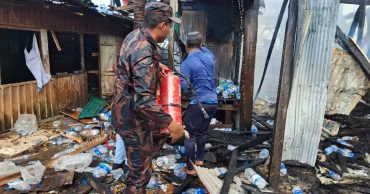
Tourists discouraged from visiting Sajek after devastating fire
The local administration in Rangamati has discouraged tourists from visiting the fire-ravaged Sajek Valley for safety reasons.
Shirin Akter, Upazila Nirbahi Officer (UNO) of Baghaichhari, said the decision was taken temporarily to ensure tourists’ safety following the devastating fire that gutted resorts, cottages and homes in the popular tourist destination on Monday afternoon.
Suporno Deb Borman, President of the Cottage and Resort Owners’ Association of Sajek, said that the fire destroyed 35 resorts, 37 cottages, seven restaurants, 19 shops and 37 local dwellings.
The fire broke out around 1:00 pm at Obokash Resort and quickly spread to nearby resorts and cottages.
With the assistance of the Army, Border Guard Bangladesh and locals, firefighters managed to bring the blaze under control after three hours of relentless efforts.
Over 500 tourists stranded at Sajek amid ‘gunfight’ in Rangamati
Local UNO Shirin mentioned that the full extent of the damages is yet to be determined, but assessments are underway.
Rahul Chakma, Organising Secretary of the Sajek Resort Owners’ Association, lamented the severe losses and demanded the establishment of a fire service station in Sajek to prevent future disasters.
1 year ago

Over 500 tourists stranded at Sajek amid ‘gunfight’ in Rangamati
Tensions have escalated at Sajek in Rangamati amid ‘exchange of gunfire’ between two rival groups, forcing the authorities to impose travel restriction at the tourist location for Wednesday.
Some 500 tourists have been stranded in the area due to the gunfight.
Additional District Magistrate of Rangamati Zobaida Akter issued the restriction through a press release on Tuesday night.
Protest held outside Indian Mission in Khulna over Agartala attack
Local people said the exchange of gunfire started between activists of Jana Sanghati Samity (JSS) and United People's Democratic Front (UPDF) in Sajek and Machalong areas few days back but it intensified on Tuesday.
No vehicles with tourists left for Sajek on Tuesday afternoon.
Motijoy Tripura, joint general secretary of Sajek Resort Owners Association, said gunfight took place at Shippara under no 7 ward in Sajek and Machalong area , 20 kilometers away from the Sajek valley.
1030 mts rice imported from India thru Benapole in one week
Mohammad Mosharraf Hossain Khan, deputy commissioner of Rangamati district, said considering the safety of tourists, the local administration imposed a travel ban for Wednesday.
Further decisions will be taken considering the situation.
1 year ago

Tourists discouraged from visiting Sajek Valley until further notice
The Rangamati District Administration has issued a directive discouraging tourists from visiting Sajek Valley starting October 4 until further notice, due to ongoing concerns regarding law and order in the region.
In a letter signed by Rangamati Additional District Magistrate Md Saiful Islam, the administration emphasized the need to prioritize the safety of tourists, citing the overall security situation in Sajek and its surrounding areas of Baghaichhari upazila.
This decision comes in light of recent unrest in Khagrachhari and Rangamati, which has raised significant safety concerns.
Read: Tourists discouraged from visiting Sajek till Sept 30
Earlier, the administration had already extended the travel discouragement period for tourists from September 28 to September 30, and again from October 1 to October 3.
The situation has become increasingly critical, with reports indicating that around 1,500 tourists and 500 drivers and staff were recently stranded in Sajek Valley due to a blockade prompted by local unrest. This disruption has resulted in significant challenges, including shortages of essential supplies like drinking water, gas, and food.
In response to these difficulties, resort owners have been offering discounts of up to 75% to accommodate stranded tourists. However, considering the prevailing circumstances, the administration has determined that discouraging further travel to Sajek is a necessary precaution.
Read more: 1400 tourists stranded in Sajek return to Khagrachhari with army’s help
Tourists are urged to stay updated on the situation and consider alternate destinations for their travel plans until the administration provides further guidance. The Rangamati district administration said it will ensure the safety and security of all visitors.
2 years ago

Tips to Prevent Food Poisoning while Travelling
Travelling is an exciting adventure that exposes us to new cultures, cuisines, and experiences. However, amidst the excitement, one must be vigilant about food safety to ensure a healthy trip. Food poisoning can quickly turn a dream vacation into a nightmare. In this article, we will delve into useful tips to safeguard the tourists against food borne illnesses while on the move.
Practical Ways to Prevent Food Borne Illness While Travelling
Research Local Cuisine
Before journey, travellers need to delve into the local culinary scene and customary food safety protocols of their destination. This preliminary research equips them to make the right decisions about dining options. Understanding the local food landscape helps to anticipate what is in store and make choices that align with your own preferences and safety. It ensures a more enjoyable and worry-free gastronomic experience.
Choose Reputable Restaurants
It is better to select well-established, reputable restaurants renowned for their commitment to hygiene and patron safety. These dining venues adhere to rigorous cleanliness standards. This certifies a secure and pleasant dining environment. By choosing such establishments, a traveller not only guarantees a delightful culinary experience but also prioritises his or her health and well-being. In this case, the traveller knows that the food served is prepared and handled with the highest regard for safety and quality.
Read more: 7 Comforting Soups for Upset Stomach
Avoid Street Vendors with Poor Hygiene
Indulging in street food is tempting, but be discerning—steer clear of vendors with questionable hygiene. Instead, one may opt for those who maintain visible cleanliness and serve a steady stream of customers. Prioritising hygiene in street food adventures makes sure a safer culinary experience. It allows one to relish local flavours without compromising well-being during travels.
Drink Bottled Water
In certain regions, it is always suggested to opt for bottled water to guarantee safe consumption. It is safe to prioritise bottles with an unbroken seal, verifying their authenticity. This cautious approach ensures traveller’s hydration is clean and secure. It safeguards their health during travels. They should always try to make an informed choice to keep themselves refreshed and well, no matter where they go.
Wash Fruits and Vegetables Thoroughly
Before consuming raw fruits and vegetables, it is essential to wash them meticulously with clean water. This process helps eliminate any potential contaminants, including dirt, pesticides, or bacteria. It guarantees that what one eats is fresh, safe, and free of harmful substances. Taking this simple precaution significantly contributes to a healthy and enjoyable dining experience.
Read more: Upset Stomach Remedies: What to eat, drink and avoid
3 years ago

Hong Kong woos tourists with air tickets and vouchers
Hong Kong will give away air tickets and vouchers to woo tourists back to the international financial hub, racing to catch up with other popular travel destinations in a fierce regional competition.
During the pandemic, the city largely aligned itself with mainland China’s “zero-COVID” strategy and has relaxed its entry rules months slower than rivals such as Singapore, Japan and Taiwan. Even after it reopened its border with mainland China in January, tourism recovery was sluggish.
On Thursday, Chief Executive John Lee launched a tourism campaign “Hello Hong Kong,” saying the city will offer 500,000 free air tickets to welcome tourists from around the world in what he called “probably the world's biggest welcome ever”.
“Hong Kong is now seamlessly connected to the mainland of China and the whole international world and there will be no isolation, no quarantine," he said at a ceremony. “This is the perfect timing for tourists, business travelers, and investors from near and far to come and say, ‘Hello, Hong Kong.’”
Under the campaign, most of the plane tickets — worth 2 billion Hong Kong dollars ($255 million) — will come from three Hong Kong-based airlines through various promotional activities, including lucky draws, “buy one, get one free” promotions and games. The project will begin in March and last about six months, said Fred Lam, CEO of the Airport Authority.
“We hope those who secure the air tickets can bring two or three more relatives and friends to the city. Although we are just giving away 500,000 air tickets, we believe this can help bring Hong Kong over 1.5 million visitors,” Lam said.
The airlines will distribute the tickets in phases, with the Southeast Asian markets set to benefit in the first stage, he said.
An additional 80,000 air tickets will be given away to Hong Kong residents in the summer, Lam said. Those living in the Greater Bay Area will also benefit from the policy that offers over 700,000 tickets in total. The Greater Bay Area is a Chinese government initiative to link Hong Kong with neighboring mainland cities, including the technology and finance hub of Shenzhen and the manufacturing powerhouses of Dongguan and Foshan.
Visitors can also enjoy special offers and vouchers among other incentives in the city, Lee said.
Hong Kong received 56 million visitors in 2019 — over seven times its population — before the pandemic began. But its strict COVID-19 restrictions have been keeping visitors away over the past three years, devastating the tourism sector and its economy. The city’s GDP last year fell 3.5 % from 2021, according to the government’s provisional data.
In the past few months, it finally dropped its mandatory hotel quarantine rule and PCR tests for incoming travelers, resulting in a slight increase in arrival figures. Still, its 2022 visitor numbers were just 1% of the 2019 level.
___
This story has been corrected to reflect that the program was launched on Thursday, not Wednesday.
3 years ago
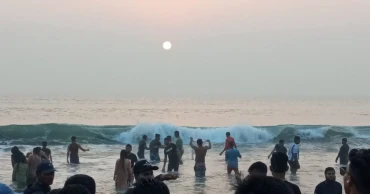
Cox's Bazar tourists witness majestic last sunset of 2022
Cox’s Bazar is now buzzing with tourists who have flocked to the beach town to witness 2022’s final sunset and welcome the New Year.
Tourists and locals enjoyed the last sunset of 2022 on the beach and bid farewell to 2022.
Masud Chowdhury and Samantha Rahman, a tourist couple from Narayanganj, said, “We welcome 2023 with a trip to Cox's Bazar to let go of disappointment, sadness, and pain."
Apart from the beach, tourists flock to the city's Burmese market, Himachari, Inani, Patuatek, and other tourist attractions.
Tourism businessmen, beach workers, and tourist police are busy hosting tourists.
Abul Kashem Sikder, general secretary of the Cox's Bazar Hotel Motel Guest House Owners' Association, said that some 90% of rooms have already been reserved for the '31st Night' (New Year's Eve) celebration this year.
Read more: Revellers gather in Cox's Bazar to usher in New Year
Executive Magistrate Masum Billah, in charge of the tourism cell of the district administration, said that like every year, lakhs of tourists have gathered at Cox's Bazar beach to welcome the year 2023.
Md. Zillur Rahman, Police Superintendent of Tourist Police, said that the tourist police have also taken several security measures to ensure the safety of tourists.
“Additional police will be deployed in Himchari, Inani, and Patuartek zones when the St. Martin cruise starts on January 1,” he said.
Read more: Cox's Bazar: Long weekend over Xmas a fillip for domestic tourism
3 years ago
.jpg)
Sundarbans reopens to tourists, fishermen after 3 months
The authorities have reopened the Sundarbans for tourists, fishermen and wood collectors after a three-month closure.
The closure was enforced to ensure safe breeding of many wild animals.
On the first day of reopening, 75 tourists were allowed to enter the world’s largest mangrove forest by ship ‘The Web’ around 12 am to experience tranquility and beauty of the forest, Majharul Haque, joint general secretary of Sundarbans Tour Operators.
Read:Expectations abound as tourists set to return to Sundarbans from Sept 1
Another ship with 40 artistes entered the Sundarbans Thursday morning.
Six more ships with 250 visitors are set to enter the forest on Friday, said an official of the Forest Department.
Earlier, the Forest Department imposed the three-month ban on tourists from June 1 to August 31 in the Sundarbans, to coincide with what is the peak breeding season for most animals in the forest.
The entrance of visitors from home and abroad, fishermen, wood and honey collectors remained restricted during this ban period. Moreover, no boats and ships were allowed to move in the rivers.
Some wood collectors (Bawal) and honey collectors (Mowal) entered the Sundarbans on Thursday after taking pass from the Forest Department.
Read: Padma Bridge to bring good luck for the Sundarbans tourism
Tour operator, launch and boat owners have taken adequate measures to attract more tourists, said Mazharul Haque.
HM Dulal, a tour operator of the Sundarbans, expected that a large number of tourists will visit Sundarbans due to better communication system as people can easily travel to the forest by crossing the Padma Bridge.
4 years ago

Expectations abound as tourists set to return to Sundarbans from Sept 1
On the verge of completing a somewhat opportunistic three-month ban on tourism in the Sundarbans, there is a growing buzz within the travel and tourism community over the opportunity to return to, or experience anew its unique wonder and tranquillity.
The Bangladesh portion of the world’s largest mangrove forest, also the country’s first World Heritage Site as designated by Unesco, is set to reopen for tourists from home and abroad on September 1 (Thursday).
Read: Jute growers paying for drought that resulted in discoloured fibre
Earlier, the Forest Department had imposed a three-month ban on tourists from June 1 to August 31 in the Sundarbans, to coincide with what is the peak breeding season for most animals in the forest.
It came on top of the various limits and restrictions that piled up over a period of two years during the Covid-19 pandemic. The Forest Dept. was probably able to announce the tourism ban during the breeding season this year due to the already depressed state of the industry.
4 years ago