Strait of Hormuz
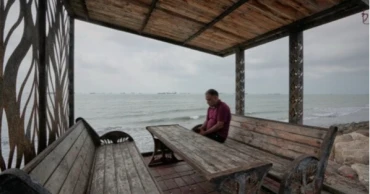
Israel frees 4 Lebanese civilians as shipping remains slow through Strait of Hormuz
Israel released four more Lebanese civilians on Friday under an agreement between the two countries, while shipping traffic through the Strait of Hormuz remained low following renewed exchanges of attacks between the United States and Iran.
The latest releases came a day after Israel freed another Lebanese civilian. All five had been detained by Israeli forces in southern Lebanon, where Israeli troops control a large area following renewed fighting with Hezbollah.
Israel said Thursday that it agreed to release the detainees after Lebanon assisted in efforts to search for the remains of Lebanese Jewish leaders who disappeared during the country's civil war in the 1980s.
Officials said the releases followed US mediation and negotiations between Israel and Lebanon. Another round of talks is expected to take place in Rome later this month.
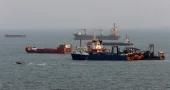
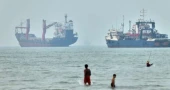
Meanwhile, shipping traffic through the Strait of Hormuz remained limited after renewed US strikes on targets in Iran earlier this week and Iran's retaliatory attacks across the region, including an attack on Kuwait on Thursday.
The disruption has also added fresh pressure to global fuel prices. Diesel prices in the United States reached a record average of $5.85 per gallon on Friday.
Benchmark US crude oil also rose above $91 a barrel as concerns grew over the security of shipping through the strategically important waterway.
The Strait of Hormuz is a major route for oil exports from the Middle East, and uncertainty over shipping through the passage has continued to affect global energy markets as the US-Iran war enters its sixth month.
15 days ago
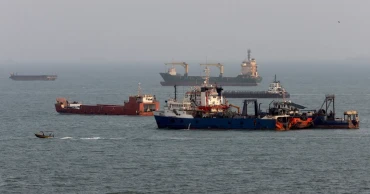
Trump suggests renaming Strait of Hormuz as ‘Trump Strait’ amid Iran war
US President Donald Trump has suggested renaming the Strait of Hormuz after himself, again asserting that the strategic waterway is under US control despite near-daily Iranian attacks on vessels in the area.
Trump made the suggestion Wednesday, less than 24 hours after US forces struck several targets in Iran, killing at least four people, including two children, at a wedding in the southern city of Sirik.
“Now that we have it under USA control, should we change the name Hormuz Strait to TRUMP STRAIT???” Trump wrote in a social media post.
“Like America itself, it would be ‘hotter’ than ever before!”
Iran responded to Tuesday’s US strikes by launching missiles at US bases in the region. The escalation sent oil prices up by around 4 percent.
Despite repeated claims by US officials that the Strait of Hormuz is open and that millions of barrels of oil are passing through the waterway each day, oil prices have not declined in recent weeks.
Iran, meanwhile, continues to maintain that the waterway is closed and remains under its control.
On Wednesday, Saudi Arabia accused Iran of striking an oil tanker, killing two people.
The United Kingdom Maritime Trade Operations (UKMTO), a monitoring agency affiliated with the British Royal Navy, has reported attacks on vessels in the Strait of Hormuz almost every day.
In the US, gasoline prices have also been rising. The average price reached $4.12 per gallon on Wednesday, according to the American Automobile Association (AAA), up from below $3 before the war began on Feb. 28.
When Trump and Israeli Prime Minister Benjamin Netanyahu launched the conflict by attacking Iran and killing its supreme leader earlier this year, Trump had said the war would last six weeks.
However, the promised quick end to what Trump initially described as a “little excursion” failed to materialise. The conflict entered its seventh month last week.
Trump has nevertheless continued to claim victory and control over the Strait of Hormuz, repeatedly saying that Iran has been militarily defeated despite its continued ability to strike US interests in the region.
Following Tuesday’s US strikes, Trump warned Tehran against retaliating, saying Iran would be “hit again at a much harder and higher level” if it responded.
Within hours, however, Iran’s military launched missiles and drones at US bases in Bahrain, Jordan and Iraq.
Trump’s “Trump Strait” proposal on Wednesday was the latest attempt by the US president to assert control over a conflict that critics say was a strategic miscalculation and is turning into a quagmire.
Last month, Trump said he considered the Strait of Hormuz to be “American territory.”
Last week, he also unilaterally renamed Lake Ontario, which borders the US and Canada, as “Lake America” amid ongoing trade tensions between Washington and Ottawa.
#From Al Jazeera
16 days ago
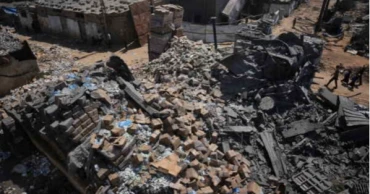
Iran warns military ships could be barred from Strait of Hormuz
Iran has warned that military vessels could be barred from passing through the Strait of Hormuz under a proposed agreement being negotiated with Oman, Iranian Deputy Foreign Minister Kazem Gharibabadi said Tuesday night.
Iranian and Omani officials are discussing a new system for managing commercial shipping through the key waterway, which has remained largely closed nearly six months after the Iran war began.
Meanwhile, Thailand said the USS Abraham Lincoln would make a short stop in the country as the US aircraft carrier prepares to leave the region following a long deployment that included operations related to the Iran war.
In Gaza, Israeli strikes continued despite a fragile ceasefire with Hamas, raising concerns about further escalation.
Here are the latest developments from the Iran war and across the Middle East:
Iran says no military ships would pass HormuzIran and Oman have reached an initial understanding on a framework for managing traffic through the Strait of Hormuz, with military vessels excluded from the route, Gharibabadi told Iranian state television.
“If the understanding becomes binding, no military vessel will be permitted to pass through the Strait of Hormuz,” he said.
He described the proposed arrangement as temporary, saying the two countries would have 30 to 60 days to negotiate a permanent system for managing maritime traffic.
Under the proposal, commercial ships entering the Persian Gulf from the Gulf of Oman would travel entirely through Iranian waters. Ships leaving the Gulf would use both Iranian and Omani territorial waters, Gharibabadi said.
The Trump administration has opposed parts of the proposed agreement, including plans for Iran and Oman to jointly manage the route used by ships leaving the strait, a key passage for global oil and natural gas supplies.
US President Donald Trump last week warned Oman against obstructing the agreement.
Israeli strike kills one in GazaAn Israeli strike hit a tent sheltering displaced Palestinians in southern Gaza on Wednesday, killing one person and injuring at least four others, according to Gaza’s Health Ministry.
The Israeli military said it targeted a “military operative” but did not provide further details.
The latest violence comes as the United States continues efforts to support a fragile ceasefire in the nearly three-year war between Israel and Hamas.
Palestinians in Gaza have reported an increase in deadly Israeli strikes despite the ceasefire.
Israel says it is targeting Hamas and other militants it considers a threat, including those involved in the Oct. 7, 2023, attack on Israel. About 1,200 people, mostly civilians, were killed and 251 others were taken hostage in the attack.
Israel’s subsequent military campaign in Gaza has killed more than 73,400 people, according to the territory’s Health Ministry.
The ministry is run by the Hamas-controlled government but staffed by medical professionals. Its casualty figures are considered generally reliable by UN agencies and independent experts, although the ministry does not separate civilian deaths from those of militants.
Dubai airport sees sharp passenger declineDubai International Airport reported a major drop in passenger numbers during the second quarter of the year as the Iran war disrupted flights and pushed travelers to avoid routes through the Middle East.
The airport handled about 13 million passengers during the second quarter. Passenger traffic for the first half of 2026 fell 31.3% from the same period last year, to 31.5 million passengers.
Air travel across the United Arab Emirates and other Gulf countries was disrupted by airport closures and restrictions following the outbreak of fighting on Feb. 28. Dubai airport also sustained minor damage in Iranian attacks.
Airport CEO Paul Griffiths said passenger numbers increased steadily during the second quarter and expressed confidence that the recovery would continue during the second half of the year.
US aircraft carrier to stop in ThailandThe USS Abraham Lincoln will make a brief stop in Thailand after its long deployment in the Middle East, Thai officials said. They did not disclose the date or location of the visit for security reasons.
The carrier has been involved in operations during the Iran war. Its deployment lasted more than 250 days without interruption at sea, raising concerns about the mental health and well-being of its crew.
The Royal Thai Navy said Tuesday that the visit would allow US Navy personnel to rest and recover. No military exercises are planned during the stop.
Germany ends mission in Iraqi KurdistanGermany has ended the military mission of its advisers in Iraq’s semi-autonomous Kurdish region after years of supporting the US-led campaign against Islamic State militants, the Kurdish Ministry of Peshmerga Affairs said Wednesday.
An official ceremony was held at Camp Stephan near Irbil International Airport to mark the end of the mission.
Germany had already reduced its military presence in Iraq but kept a small team at the base.
The move comes as US forces have also started withdrawing from northern Iraq ahead of a Sept. 30 deadline to end their military presence in the country.
US bases in the Kurdish region have repeatedly come under attack since the United States and Israel launched the Iran war on Feb. 28.
Rights group criticizes Houthi court casesHuman Rights Watch has criticized Yemen’s Houthi rebels for sending at least six people to a specialized criminal court that handles terrorism and espionage cases.
The New York-based rights group said at least five of those facing trial are UN employees or civil society workers.
It also alleged that one defendant, Ali Mudhwahi, a public health expert working with UNICEF, was tortured and forced to confess to claims that vaccines were being used for spying.
Since the Houthis seized control of Sanaa in 2015, dozens of journalists, political activists and members of religious minorities have faced trials at the court.
The cases have involved charges that can carry the death penalty.
23 days ago
Oil Tanker Disabled in Strait of Hormuz Amid Rising Iran Tensions
An oil tanker was hit by a projectile and disabled near Oman's coast in the Strait of Hormuz, highlighting the risks facing ships using the key waterway as tensions remain high between Iran and the United States.
The incident happened Monday night, according to the British military's United Kingdom Maritime Trade Operations (UKMsTO). The projectile struck the ship's engine several miles off Oman's eastern coast, leaving it unable to move.
All crew members were reported safe. There were no immediate reports of an oil spill or other environmental damage.
The attack came as a senior Pakistani delegation was completing talks in Tehran aimed at helping find a negotiated end to the nearly six-month-old conflict between Iran and the United States.
Tanker attack raises shipping concerns
Before the war began, about one-fifth of the world's traded oil passed through the Strait of Hormuz. Since the US and Israel launched attacks on Iran on Feb 28, shipping through the strategic waterway has faced major disruptions.
Iran has tightened control over traffic through the strait and has occasionally fired at vessels trying to pass through, although no group immediately claimed responsibility for Monday's attack.
The United States is also enforcing a blockade of Iranian ports and has attacked vessels.
Pakistan says Iran talks were positive
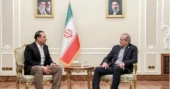
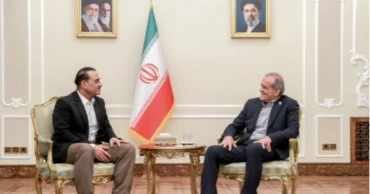
A Pakistani delegation led by army chief Field Marshal Asim Munir left Tehran on Tuesday after meeting Iranian President Masoud Pezeshkian and other senior officials.
The talks focused on reopening the Strait of Hormuz and restarting negotiations aimed at ending the conflict, according to Pakistan's military.
Pakistan has been trying to mediate between Iran and the US and has maintained contacts with both sides.
Pakistan's Interior Minister Mohsin Naqvi, who accompanied Munir, described the meeting with Pezeshkian as “very positive and productive.”
He said the talks made “significant progress” and expressed hope that they could lead to further negotiations and lasting peace in the region.
The discussions also covered the reopening of the Strait of Hormuz.
Iran and Oman are working on a proposal for managing the waterway, but it remains unclear whether the plan would be acceptable to Washington. Oman's foreign minister was scheduled to meet Iranian officials Tuesday.
No accountability a year after Gaza hospital killings
Tuesday also marked one year since Israeli soldiers killed 22 Palestinians, including journalists and rescue workers, in a double strike at a hospital in Gaza.
The attack on Nasser Hospital drew international condemnation, but no one has been held accountable.
Israeli officials said the target was a suspected Hamas camera on the hospital's roof. Among those killed were Reuters cameraman Hussam al-Masri and Mariam Dagga, a visual journalist who worked for The Associated Press and other media organisations.
The Israeli military has not provided details about its investigation or said when it might be completed despite repeated requests from AP.
Human rights groups say Israeli soldiers are rarely prosecuted over the deaths of Palestinians and that investigations often take a long time without leading to charges.
China objects to possible Iran-related sanctions
China said Tuesday that it was closely monitoring plans by the US to expand sanctions against people and organisations linked to Iran, including some in China.
Chinese Foreign Ministry spokesperson Lin Jian said cooperation between China and Iran should not be disrupted and was being carried out in line with international law.
China is one of Iran's biggest trading partners and buys most of Iran's oil exports.
The US Treasury Department said Monday it was imposing sanctions on nearly 60 Iran-linked entities, including several based in China.
However, Treasury Secretary Scott Bessent stopped short of imposing secondary sanctions on countries doing business with Iran. He said countries should first have an opportunity to reduce their ties with Iran.
Bessent did not identify any countries that could face future penalties, saying they “know who they are.”
Lin criticised unilateral sanctions, saying they have no basis in international law and that economic pressure would only increase tensions
25 days ago
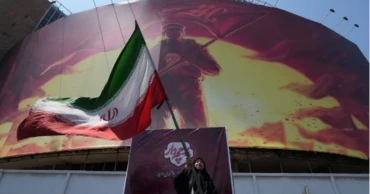
Iran believes time is on its side as it seeks control over Strait of Hormuz
Iran's leaders believe they can eventually force the United States to accept their control over the Strait of Hormuz, a key global energy route, and see time as working in their favour.
Iranian officials are aware of growing pressure on the United States, including limited supplies of some advanced missile interceptors, public opposition to the war and rising fuel and other prices ahead of the November congressional elections.
They also believe reopening the strait by force could be costly for the US and potentially require ground troops. Iran's allies, including the Houthis in Yemen, could further expand the conflict and disrupt another major international trade route.
From Tehran's perspective, these factors could eventually leave US President Donald Trump with little choice but to make concessions.
But the strategy carries significant risks for Iran as well.
Trump has highlighted US strikes that have severely weakened Iran's top leadership, navy and air force. At the same time, he has alternated between threatening further escalation and saying negotiations are progressing.
Iran's economy has also suffered heavily, partly because of a US blockade. The country has faced mass protests in recent months, raising concerns that further economic pressure could fuel renewed unrest.
Possible deal could give Iran major leverageIran says it is close to reaching an agreement with Oman on managing the Strait of Hormuz, which lies between the two countries.
However, the proposed arrangement would depend on the US lifting its blockade. That means Trump would ultimately have to approve it even if, as Iran says, Washington is not directly involved in negotiations.
It remains unclear whether Iran would be allowed to charge fees under the arrangement. But any deal that formally recognises an Iranian role in managing the strait would represent a major shift from its previous status as an open international waterway.
The strait carries about one-fifth of the world's traded oil and gas.
Abdolreza Davari, an analyst and former adviser to President Mahmoud Ahmadinejad, said Iran was seeking more than financial benefits from the waterway.
"More than revenue from the strait, Iran wants to confirm its management and sovereignty over the strait," he said.
Formal Iranian control over even part of the waterway would be seen as a significant victory for Tehran and a setback for Washington, which has yet to achieve some of its changing objectives in the conflict.
It could also raise concerns about international freedom of navigation and create a precedent for countries to disrupt major global trade routes.
China, a major buyer of Iranian oil, said as recently as May that normal and safe passage through the strait should be restored.
Tehran believes it has the advantageIranian officials argue that the country has greater leverage as the conflict continues.
Mahdi Mohammadi, an adviser to Iran's chief negotiator, said on social media that Iran was seeking the defeat of its adversary rather than simply an agreement.
Iran has repeatedly said the Strait of Hormuz will not return to its previous status as an open waterway and has threatened to continue attacking ships that attempt to pass without its permission.
Iran's joint military command has described the issue as an "unbreakable red line."
Tehran-based security analyst Mostafa Najafi said Iran now views control of the strait as a major tool for deterrence, maintaining the regional balance of power and changing security arrangements in the Persian Gulf.
The dispute also complicates efforts to resolve the long-running issue of Iran's nuclear programme.
Analyst Rahman Ghahremanpour said the conflict over the strait had pushed the nuclear issue into the background, which he said could benefit Iran. Control of the waterway could also provide Tehran with additional leverage if nuclear negotiations resume.
Economic pressure poses a major riskThe war has caused widespread economic damage, with Iran among the countries suffering the most.
US and Israeli strikes have damaged Iran's industrial infrastructure, while the US blockade has sharply reduced its oil exports. Food prices have also surged, putting additional pressure on ordinary people.
Trump has repeatedly threatened further strikes on civilian infrastructure, including water and electricity facilities.
A currency crisis in December triggered some of the largest anti-government protests in the Islamic Republic's history. Authorities responded with a crackdown in which thousands were reportedly killed and tens of thousands detained.
Some Iranian officials and supporters of moderate President Masoud Pezeshkian fear the government could face renewed unrest if the economic situation deteriorates further.
Former Foreign Minister Mohammad Javad Zarif, who helped negotiate the 2015 nuclear agreement, recently said the country's wartime gains had created an opportunity for diplomacy.
However, he warned that delaying an agreement could make economic recovery difficult and increase the risk of domestic unrest or renewed conflict, particularly after the US elections.
War has not gone as expectedThe conflict has already produced several unexpected developments.
After US and Israeli airstrikes on Feb 28 killed Iran's supreme leader and other senior officials, Trump suggested the war could end within weeks.
Instead, the conflict has strengthened Iran's leadership and rallied its supporters, analysts say.
Ghahremanpour said Tehran was using the Strait of Hormuz to demonstrate that Iran had not been defeated and to strengthen the government's position at home.
But he also warned that Iran's ability to withstand the pressure has limits.
"Iran cannot continue with this strategy forever, and at a certain point, in reality, it has to reach a deal with America," he said.
Davari, however, said Iran was likely to continue resisting pressure for now, despite its severe economic difficulties.
1 month ago
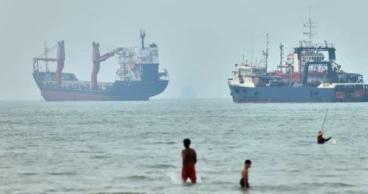
Cargo ship reports being hit in Strait of Hormuz as US, Iran differ over talks
A cargo ship reported being hit by a projectile in the Strait of Hormuz off Oman, while the United States and Iran gave conflicting accounts of whether they were holding talks to end the war.
The United Kingdom Maritime Trade Operations Center (UKMTO) said the ship reported being “hit by an unknown projectile” at around 2am local time while sailing about 37 kilometres northeast of Al Khasab in Oman.
The agency did not provide details about the vessel, including its flag or the cargo it was carrying.
Al Khasab is located at the tip of the Arabian Peninsula, which extends into the Strait of Hormuz. The strategic waterway connects the Persian Gulf with the Gulf of Oman and is a key route for global oil and gas shipments.
Before the war, about one-fifth of the world’s oil and natural gas passed through the strait. The waterway has effectively been closed to commercial shipping since Iran began attacks on vessels after the war started in February. The United States has also imposed a blockade on Iranian ports in the area.
US and Iran give different accounts of talksUS President Donald Trump said Monday that Washington and Tehran had resumed talks aimed at ending the conflict.
However, Iran rejected the claim.
Iranian Foreign Ministry spokesperson Esmail Baghaei said no negotiations were taking place with the United States. He said Tehran was only holding discussions with Oman, mainly about creating a safe route for navigation through the Strait of Hormuz.
Trump had said a day earlier that he called off major strikes he had threatened against Iran after being urged to do so by Gulf allies Qatar, Saudi Arabia and the United Arab Emirates.
“Whether Iran wants to admit it or not, we are, in fact, talking,” Trump said.
He also expressed frustration with Iran, claiming that Tehran had sought talks despite publicly denying that negotiations were taking place.
“Iranian Leadership is unbelievably duplicitous!” Trump wrote on Truth Social.
He said Iran had requested a meeting and that talks had begun, with more meetings expected soon, while Tehran was publicly saying that it was not negotiating with Washington and was dealing only with Oman.
1 month ago
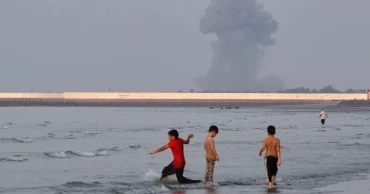
US strikes Iran as tensions flare over Strait of Hormuz; Tehran launches retaliatory attacks
The United States carried out fresh airstrikes on Iran early Tuesday, hours after President Donald Trump announced that Washington was "reinstating" a blockade on Iran in the Strait of Hormuz and suggested that other countries' ships could be charged for safe passage through the strategic waterway.
Iran responded by launching attacks on Bahrain and Jordan and targeting two United Arab Emirates-linked oil tankers passing through the Strait of Hormuz. The attacks killed one sailor and injured eight others, while the UAE warned it could retaliate against Tehran, raising fears of a wider regional conflict.
The latest escalation comes as the US and Iran struggle for control of the Strait of Hormuz, a key global shipping route that has carried about one-fifth of the world's traded crude oil and natural gas during peacetime.
Oil prices reacted quickly, with Brent crude rising above $84 a barrel in early Tuesday trading, its highest level in a month. Although still below the nearly $120 seen during the height of the conflict, the increase could push up energy costs worldwide.
The renewed fighting has also further weakened a temporary ceasefire between Washington and Tehran. The two sides were nearly halfway through a 60-day period meant to produce a permanent agreement addressing Iran's disputed nuclear programme and other issues.
According to the US military's Central Command, the strikes targeted Iranian coastal defence systems, missile and drone sites, and maritime facilities around Abu Musa, Bandar Abbas, Bushehr, Chahbahar, Jask and Konarak.
Iran confirmed that the areas had come under attack but did not immediately report casualties or damage.
The US military said the operation was intended to reduce Iran's ability to attack civilians and commercial vessels in the Strait of Hormuz.
Speaking at the White House shortly after the strikes, Trump described the operation as "another major attack."
"We're hitting them very hard. And it'll continue, and we'll see what happens," he told reporters. He also claimed the US was taking control of the strait and restoring the blockade.
Trump also expanded on his earlier proposal to charge ships for using the Strait of Hormuz, marking a major shift from longstanding US policy supporting free navigation through international waterways without tolls.
Such a move would challenge long-established international maritime practices and could further disrupt global trade and increase tensions in the region.
Meanwhile, the UAE's Defence Ministry said Iran fired two cruise missiles at the oil tankers Mombasa and Al Bahiyah in the Strait of Hormuz. Both vessels caught fire, but the blazes were later brought under control.
The UAE said one Indian sailor was killed while six Indian and two Ukrainian crew members were injured. Abu Dhabi warned that it reserved the right to respond.
Iran's Revolutionary Guard claimed responsibility for the attack, saying the ships had ignored repeated warnings and entered what it described as a minefield.
Bahrain also reported fresh Iranian missile attacks early Tuesday, sounding air raid sirens three times and urging residents to seek shelter.
Jordan's military said it intercepted four Iranian missiles. The country hosts US military forces and has been targeted by Iran several times in recent days.
Earlier Monday, Trump said the interim agreement reached with Iran last month had been designed to test Tehran's intentions, accusing the Iranian government of failing to honour its commitments.
Iran, however, maintains that it has the right to regulate shipping through the Strait of Hormuz and potentially impose fees under the interim agreement, a claim rejected by Washington.
The US military and the International Maritime Organization have tried to establish an alternative shipping route along Oman's coast outside Iranian control, but Iran has also attacked vessels using that route, prompting repeated US military responses and further exchanges of fire.
On social media, Trump said the US was restoring the Iranian blockade while insisting that other countries would continue to have open access to the strait. He also proposed that the US recover security costs by collecting 20% of cargo values from commercial shipping, although no details were provided. Secretary of State Marco Rubio, who is visiting the region, said there would be no fees for ships using the waterway.
The US military said its blockade of Iranian ports would resume from midnight Wednesday local time in Dubai.
Separately, Israeli and Lebanese delegations were scheduled to meet in Rome on Tuesday for US-mediated talks aimed at advancing a framework agreement announced last month. The deal calls for the withdrawal of Israeli forces from southern Lebanon in exchange for the disarmament of the Iran-backed Hezbollah group, although implementation has stalled.
A ceasefire remains in place in Lebanon, but uncertainty persists over whether it can survive if the conflict between the United States and Iran expands into a full-scale war.
2 months ago
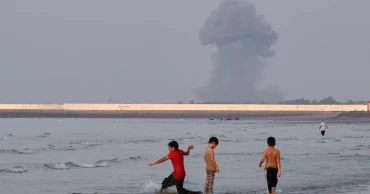
US launches fresh strikes on Iran as Tehran retaliates in Strait of Hormuz, Bahrain
The United States launched a new wave of military strikes on Iran early Tuesday, targeting coastal military infrastructure, while Tehran retaliated by attacking Bahrain and two United Arab Emirates-linked tankers in the Strait of Hormuz, further escalating tensions in the Gulf.
The US Central Command (CENTCOM) said American forces struck military targets in Bushehr, Chabahar, Jask, Konarak, Abu Musa and Bandar Abbas, targeting Iran's coastal defense systems, missile and drone sites, and maritime capabilities.
CENTCOM said the strikes were intended to reduce Iran's ability to threaten commercial shipping and regional security.
US President Donald Trump confirmed the operation, saying the attacks would continue and asserting that Washington had "reinstated" a blockade in the Strait of Hormuz.
Speaking at the White House, Trump said the United States was regaining control of the strategic waterway and indicated that his administration planned to seek compensation from commercial vessels for providing maritime security, marking a major departure from longstanding US policy supporting unrestricted freedom of navigation.
Iran responded by launching attacks on Bahrain and targeting two UAE-associated oil tankers transiting the Strait of Hormuz.
According to the UAE Defense Ministry, two cruise missiles struck the tankers Mombasa and Al Bahiyah, killing one Indian crew member and injuring eight others, including six Indians and two Ukrainians. Fires broke out aboard both vessels but were later extinguished.
Iran's Islamic Revolutionary Guard Corps claimed responsibility for the tanker attack, alleging the ships had ignored repeated warnings and entered a restricted area.
Bahrain also came under renewed missile attack, prompting authorities to activate air raid sirens and advise residents to seek shelter. No casualties or damage were immediately reported.
The UAE condemned the attacks and said it reserved the right to take all necessary measures to protect its territory, citizens and residents.
The latest escalation comes amid an ongoing dispute between Washington and Tehran over control of the Strait of Hormuz, a critical maritime route for global energy supplies. Oil prices rose following the renewed hostilities, with Brent crude climbing above $84 per barrel in early trading.
The US Embassy in Abu Dhabi and the US Consulate in Dubai canceled consular appointments through Wednesday, citing the deteriorating regional security situation.
2 months ago
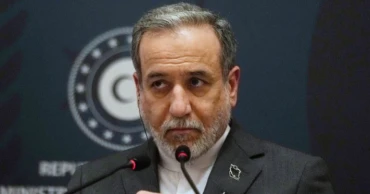
Iran FM visits Oman for Strait of Hormuz transit talks
Iranian Foreign Minister Abbas Araghchi is visiting Oman as part of ongoing consultations between Tehran and Muscat on arrangements for managing passage through the Strait of Hormuz.
The two countries have been holding consultations on the issue for the past two months. Iranian officials have repeatedly maintained that Tehran has the sovereign right to oversee management of the strategic waterway to ensure its safety and security.
Iran slams fresh US strikes targeting southern provinces, bridges
Meanwhile, Iranian Foreign Ministry spokesperson Esmaeil Baghaei said the United States has a history of violating or failing to honor agreements. He said Iran has not sought negotiations at the current stage, but remains open to receiving mediators visiting Tehran.
Baghaei also accused Washington of breaching the memorandum of understanding (MoU) by carrying out air strikes and revoking the exemption that had allowed Iranian oil exports.
With inputs from Al Jazeera
2 months ago
Tanker hit by projectile in Strait of Hormuz as Iran holds funeral for Khamenei
A tanker caught fire early Tuesday after being hit by a projectile while sailing through the Strait of Hormuz off the coast of Oman, according to the British military, in the latest attack on commercial shipping in the strategic waterway.
The incident took place in the narrow entrance to the Persian Gulf, a key global shipping route through which about one-fifth of the world's traded oil and natural gas has traditionally passed during peacetime.
Iranian state television reported that the liquefied natural gas tanker was attacked after it ignored warnings from Iranian authorities, but it stopped short of officially claiming responsibility.
Iran has repeatedly said that only shipping routes approved by Tehran are safe for vessels using the strait. The country has also been suspected of carrying out previous attacks on ships that used an alternative route closer to Oman's coastline.
The latest incident comes as the United States is seeking to continue negotiations with Iran aimed at fully reopening the Strait of Hormuz, curbing Tehran's disputed nuclear programme and securing a lasting end to the war that began on Feb. 28. However, earlier attacks in the waterway have triggered U.S. retaliatory strikes, followed by Iranian attacks on Gulf Arab states, raising fears of wider regional conflict.
The United Kingdom Maritime Trade Operations (UKMTO) said the tanker was struck near Limah, Oman, while heading south through the strait toward the Gulf of Oman. According to the agency, the projectile hit the vessel's port side.
UKMTO said there was no environmental damage from the attack and that authorities were investigating the incident.
Iranian state television, citing unnamed sources, suggested that Iran was behind the strike on what it described as a tanker carrying natural gas from Qatar. However, the Iranian government has not officially claimed responsibility.
Last Thursday, Iran's joint military command warned that all oil tankers passing through the Strait of Hormuz must use routes approved by Tehran. It also cautioned that any interference by U.S. forces in the waterway would face a "rapid and decisive reaction."
Speaking at the White House on Monday, U.S. President Donald Trump warned Iran to reach an agreement with Washington.
"We'd rather make a deal because I don't want to affect 91 million people," Trump said. "We can knock down their bridges in one hour. We can knock out their energy supply."
Under an interim agreement, Iran and the United States had agreed to allow ships to pass through the strait without fees for 60 days. However, Tehran later insisted it should control shipping routes and eventually collect transit fees, challenging long-standing international practice.
The United States and several Gulf Arab countries have rejected Iran's proposal to charge vessels for using the strait. Earlier efforts by Oman and a United Nations agency to establish an alternative route near Oman's coast also triggered attacks across the Middle East, underscoring tensions in the region.
According to shipping data firm Kpler, at least 108 vessels passed through the Strait of Hormuz over the weekend using different routes.
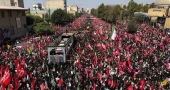
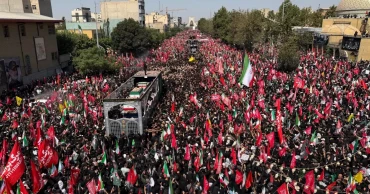
Meanwhile, hundreds of thousands of mourners gathered Tuesday near the Jamkaran Mosque south of Qom for funeral ceremonies for Iran's Supreme Leader Ayatollah Ali Khamenei, according to live footage broadcast by Iranian state television.
The mosque holds special religious significance for Shiite Muslims, who believe it was once visited by Muhammad al-Mahdi, the 12th and last Shiite imam, who disappeared in the ninth century and is expected to return one day to establish justice.
Images of Khamenei and his son, Iran's new Supreme Leader Ayatollah Mojtaba Khamenei, were displayed on banners carried by mourners. Mojtaba Khamenei has not appeared publicly during the multi-day funeral ceremonies and is believed to be in hiding after reportedly being wounded in the airstrike that killed his father.
Before the April ceasefire, Israel targeted several senior Iranian leaders during the conflict, in some cases reportedly using their public appearances to identify their locations. Israel has also threatened to target Mojtaba Khamenei.
Iranian authorities have closed roads, restricted airspace and suspended normal daily activities during the mourning period, which began on Saturday and will continue until Thursday. Ayatollah Ali Khamenei, who died at the age of 86, will be buried at the Imam Reza shrine in his birthplace of Mashhad.
2 months ago