Theater
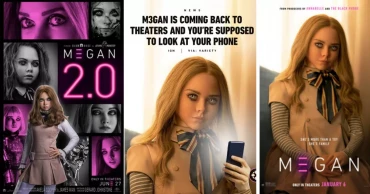
Meta's Movie Mate to Chat with M3GAN in Theater: Interactive Experience or Distraction
Meta has launched an experimental feature, Movie Mate. It allows theatregoers to engage in real-time conversation with the AI character M3GAN during screenings. M3GAN, a horror sci-fi blend, already blurs the line between technology and terror. Now, the viewing experience itself takes a bold new turn. Let’s explore whether this move signals a thrilling innovation or an unwelcome audience distraction.
Introducing Movie Mate
Blumhouse, the production house of ‘M3GAN,’ partnered with Meta to pilot a new kind of theatrical tech experiment: Movie Mate. This interactive chatbot was designed not to scare but to interact with, prompting viewers to tap away on their handheld screens. As the movie progressed, users received timed trivia drops and AI-generated quips, all in sync with the onscreen chaos. Meta, the parent company of Facebook and Instagram, pitched this as a bold strategy to pull distracted audiences back into theatre seats.
The rollout, however, wasn’t grand or heavily publicised. On April 30, 2025, Blumhouse and Universal quietly reintroduced ‘M3GAN,’ the horror-sci-fi tale of AI gone rogue. The horror movie marks the first title to feature Movie Mate integration. The occasion was Blumhouse’s “Halfway to Halloween” event, a nod to fans of the spooky season.
Read more: Karate Kid Legends Unites Two Miyagi-verse Icons- Jackie Chan and Ralph Macchio
Roughly 70 attendees gathered at AMC Universal CityWalk in Los Angeles. As the lights dimmed, a soft glow lit up the auditorium, dozens of phones ready for digital dialogue.
During the opening scenes, the app delivered around ten messages. One, cheeky and in-character, asked, “Do you think they’re inventing other dolls like me?” A simple yes was met with the wry retort, “Don’t be delulu.”
People’s Response
At first glance, the novelty of Movie Mate sparked genuine curiosity among some theatregoers. As the AI chatbot introduced itself in the voice of M3GAN, the initial reactions were light-hearted and intrigued. The tech felt fresh, almost playful, in its attempt to personalise the cinematic experience.
Read more: Sinners Makes Horror History: Blockbuster, Top Ratings, and Oscar Buzz
But that early excitement didn’t hold for long. Many audience members found themselves second-guessing the very act of looking at their phones. The fear of seeming rude or disruptive in a darkened theatre overshadowed the fun. Several admitted to ignoring most of the chatbot’s messages until the film had ended. It was unable to fully balance the screen in their hands with the one in front of them.
Industry observers echoed this ambivalence. Trade publications quietly questioned its staying power, suggesting that it leaned more toward a marketing stunt than meaningful innovation. Mashable noted that the real intent may be to hype ‘M3GAN 2.0,’ set for June 27, 2025, and boost Meta’s push for second-screen engagement.
M3GAN Makers’ Take
Blumhouse isn’t blind to shifting audience behaviour. Data from the National Research Group shows nearly 20% of moviegoers aged 6–17 text during films, despite theatre rules. Rather than resist the habit, the studio sees it as a chance to redirect it in support of the film experience.
Read more: Best 10 Korean Dramas Releasing in May 2025
The M3GAN maker believed the experiment was worthwhile, particularly because younger audiences seemed to embrace it. From their perspective, this indicated a growing appetite for interactive elements that enhance, rather than replace, traditional moviegoing.
The criticism hasn’t gone unnoticed, but the studio seems unbothered. They acknowledge that this approach won’t appeal to everyone and that not all innovations are meant for universal acceptance.
There also seems to be a strategic vision behind the app. Blumhouse executives view it as a way to turn movie releases into events. It would be experiences that generate buzz and compel younger viewers to participate. They see younger audiences as eager to interact with the media they consume.
Read more: Thunderbolts*: The First Non-Sequel Movie Breaking the 13-year Marvel Trend
Even so, there’s recognition of its limitations. For now, Blumhouse and Universal have no plans to extend Movie Mate to upcoming titles, including ‘M3GAN 2.0’.
Where Movie Theaters Stand
Movie Mate fits into a broader vision from Meta’s CEO, Mark Zuckerberg, who aims to integrate AI chatbots across his platforms and beyond. In Zuckerberg’s futuristic world, these chatbots are designed for personalised, fun interactions at any moment. This includes, it seems, even during movie screenings.
The timing for such a move comes amid significant challenges for the movie industry. Comscore reports a 33% drop in the North American box office since 2019, despite hits like ‘A Minecraft Movie’ and ‘Sinners,’ as the pandemic accelerated the shift to streaming. Given this, Hollywood is looking for innovative ways to lure audiences back into theatres.
Read more: South Indian Films Releasing in May 2025: Must-watch Lineup
However, not all movie theatres are eager to embrace this new technology. Alamo Drafthouse Cinema, known for catering to passionate film lovers, opted out of the AI chatbot experiment. Even several smaller theatres across the country followed in their footsteps.
Yet, the major chains, Regal Cineworld and AMC Entertainment, decided to test the waters. Their only condition: ticket buyers would be fully informed about what they were signing up for before entering the theatre.
Influential Backdrop
In many ways, it’s the younger audience that’s reshaping the theatre experience—often on their own terms.
Take A Minecraft Movie from Warner Bros., for instance. It turned into a surprise hit last month, not just for the story on screen but for the chaos unfolding in the aisles. Teen viewers ignored theatre etiquette. They shouted lines like ‘chicken jockey,’ climbed on each other’s shoulders, tossed popcorn in the air, and filmed it all for TikTok.
Read more: China's Ne Zha 2 Stays Atop Hollywood's ‘A Minecraft Movie’ at the Worldwide Box Office
The trend isn’t isolated. Universal’s Wicked soared to USD 754 million last year, helped by fans who turned screenings into sing-alongs and social media events. Similarly, Sony’s ‘Anyone but You’ (2023) pulled in a surprising USD 220 million after viewers began recording their reactions to the finale.
The creators behind ‘M3GAN’ paid close attention to all of this.
Takeaways
Meta's Movie Mate app brought real-time chatbot interaction into theatres, aiming to engage audiences during ‘M3GAN’ screenings. Reactions were mixed—some curious, others hesitant or distracted. Blumhouse viewed it as a chance to enrich the experience for younger fans. Meanwhile, theatres remained divided, with major chains on board and boutique cinemas opting out. In this early phase of AI-led second-screening, whether it’s an interactive experience or a distraction remains unsettled.
Read more: Tom Cruise’s Mission: Impossible 8 - The Final Reckoning Marks the Longest Film of the Franchise
1 year ago
Ned Beatty, titanic character actor of ‘Network,’ dies at 83
Ned Beatty, the Oscar-nominated character actor who in half a century of American movies, including “Deliverance,” “Network” and “Superman,” was a booming, indelible presence in even the smallest parts, has died. He was 83.
Beatty’s manager, Deborah Miller, said Beatty died Sunday of natural causes at his home in Los Angeles surrounded by friends and loved ones.
After years in regional theater, Beatty was cast in 1972′s “Deliverance” as Bobby Trippe, the happy-go-lucky member of a male river-boating party terrorized by backwoods thugs in “Deliverance.” The scene in which Trippe is brutalized and forced to “squeal like a pig” became the most memorable in the movie and established Beatty as an actor whose name moviegoers may not have known but whose face they always recognized.
Read:Plans for movie on New Zealand mosque attacks draw criticism
“For people like me, there’s a lot of ‘I know you! I know you! What have I seen you in?’” Beatty remarked without rancor in 1992.
Beatty received only one Oscar nomination, as supporting actor for his role as corporate executive Arthur Jensen in 1976′s “Network,” but he contributed to some of the most popular movies of his time and worked constantly, his credits including more than 150 movies and TV shows.
Beatty’s appearance in “Network,” scripted by Paddy Chayefsky an directed by Sidney Lumet, was brief but titanic. His three-minute monologue ranks among the greatest in movies. Jensen summons anchorman Howard Beale (Peter Finch) to a long, dimly lit boardroom for a come-to-Jesus about the elemental powers of media.
“You have meddled with the primal forces of nature, Mr. Beale, and I won’t have it!” Beatty shouts from across the boardroom before explaining that there is no America, no democracy. “There is only IBM and ITT and AT&T and DuPont, Dow, Union Carbide, and Exxon. Those are the nations of the world today.”
Read:‘Conjuring 3’ tops ‘A Quiet Place 2’ as moviegoing returns
He was equally memorable as Otis, the idiot henchman of villainous Lex Luthor in the first two Christopher Reeve “Superman” movies and as the racist sheriff in “White Lightning.” Other films included “All The President’s Men,” “The Front Page,” “Nashville,” and “The Big Easy.” In a 1977 interview, he had explained why he preferred being a supporting actor.
“Stars never want to throw the audience a curveball, but my great joy is throwing curveballs,” he told The New York Times. “Being a star cuts down on your effectiveness as an actor because you become an identifiable part of a product and somewhat predictable. You have to mind your P’s and Q’s and nurture your fans. But I like to surprise the audience, to do the unexpected.”
He landed a rare leading role in the Irish film “Hear My Song” in 1991. The true story of legendary Irish tenor Josef Locke, who disappeared at the height of a brilliant career, it was well reviewed but largely unseen in the United States. Between movies, Beatty worked often in TV and theater. He had recurring roles in “Roseanne” as John Goodman’s father and as a detective on “Homicide: Life on the Street.”
On Broadway he won critical praise (and a Drama Desk Award) for his portrayal of Big Daddy in a revival of “Cat on a Hot Tin Roof,” a role he had first played as a 21-year-old in a stock company production. His more recent movies included “Toy Story 3” (as the duplicitous stuffed bear Lotso) in 2010 and the villainous tortoise mayor in “Rango.” He retired in 2013.
Read:COVID-19 spurs shutdown of ‘Mission Impossible’ set
Ned Thomas Beatty was born in 1937 in Louisville, Ky., and raised in Lexington, where he joined the Protestant Disciples of Christ Christian Church. “It was the theater I attended as a kid,” he told The Associated Press in 1992. “It was where people got down to their truest emotions and talked about things they didn’t talk about in everyday life. ... The preaching was very often theatrical.” For a time he thought of becoming a priest, but changed his mind after he was cast in a high school production of “Harvey.”
He spent 10 summers at the Barter Theater in Abingdon, Virginia, and eight years at the Arena Stage Company in Washington, D.C. At the Arena Stage, he appeared in Chekhov’s “Uncle Vanya” and starred in Arthur Miller’s “Death of a Salesman.” Then his life changed forever when he took a train to New York to audition for director John Boorman for the role of Bobby Trippe. Boorman told him the role was cast, but changed his mind after seeing Beatty audition.
Beatty, who married Sandra Johnson in 1999, had eight children from three previous marriages.
5 years ago
