rice prices
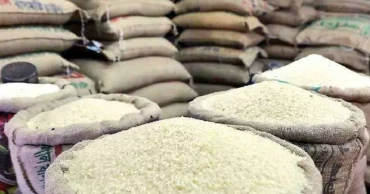
Subsidised rice sale begins under additional OMS
The government has started selling rice at a subsidised rate of Tk 30 per kg under the additional Open Market Sale (OMS) programme in 419 upazilas to stabilise rice prices and provide price support to people.
Under the programme, one metric tonnes of rice will be distributed in each upazila.
Read more: CAB seeks govt action to rein in LPG, sugar, edible oil prices
The additional OMS programme will operate alongside the regular OMS, said a PID handout.
Currently, under the regular OMS programme, 1,417.5 metric tonnes of flour (Tk 24 per kg for loose flour and Tk 55 for a 2-kg packet) and 1,175 metric tonnes of rice per day are sold in 1,081 centers in 12 city corporations, 52 district municipal areas, 15 labour-intensive upazilas, and five labour-intensive municipalities at subsidised rates of Tk 30 per kilogram.
Although there is adequate food stock, some areas of the country have recently seen a sporadic rise in the price of fine rice, it said.
Read more: Rice prices keep food inflation high despite slight easing in Nov: GED
The Ministry of Food has instructed regular market monitoring in these areas and necessary legal actions to prevent price hikes.
7 months ago
Rice prices keep food inflation high despite slight easing in Nov: GED
Bangladesh’s overall inflation rose slightly in November and rice remained the single largest contributor to food inflation, accounting for 40.28 per cent, according to the Monthly Economic Update and Outlook released by the General Economics Division (GED) of the Planning Ministry.
The government report said general inflation increased to 8.29 per cent in November from 8.17 per cent in October.
Food inflation rose to 7.36 per cent from 7.08 per cent, while non-food inflation remained broadly stable at around 9 per cent.
Overall rice inflation fell to 12.26 per cent in November from 13.77 per cent in October, with medium rice declining to 10.96 per cent, fine rice to 15.43 per cent and coarse rice to 11.04 per cent.
Read more: Rice procurement faces disruption due to 0.5% source tax
Despite the downward trend, rice prices remained elevated and continued to exert significant pressure on food inflation.
Fish and dry fish contributed 40.77 percent to food inflation, slightly higher than the previous month.
Contributions from meat, edible oil and fat declined, while milk, cheese and eggs recorded a modest increase and vegetables continued to have a strong disinflationary impact, though the negative contribution eased in November.
At a detailed level, inflationary contributions from all major rice varieties declined. Among protein items, beef, hilsa and pangash fish showed higher inflationary pressure, while soybean oil and liquid milk eased. Potato and onion continued to post negative contributions, with potato remaining strongly disinflationary.
The report noted that the gap between price inflation and wage inflation narrowed in October but widened slightly in November.
Govt approves import of 1 lakh mt rice from India, Pakistan
In November, price inflation stood at 8.29 per cent compared to wage inflation of 8.04 per cent, indicating continued pressure on real incomes despite partial adjustment through wage growth.
On the monetary front, bank deposits reached Tk 19.24 crore in October, registering a year-on-year growth of 9.62 per cent, reflecting sustained depositor confidence.
Credit growth moderated, with public sector credit growth slowing to 21.43 per cent and private sector credit growth easing slightly to 6.23 per cent.
Total domestic credit growth decelerated to 9.62 per cent in October.
Weighted average interest rate (WAIR) spreads varied across banking groups.
Foreign commercial banks recorded the highest spread at 8.88 per cent while specialised and development banks posted the lowest at 3.37 per cent.
State-owned and private commercial banks showed similar spreads of around 5.6 per cent, a level the GED said is desirable for improving banking sector efficiency.
Revenue collection by the National Board of Revenue (NBR) fell short of the monthly target in November 2025 although it posted double-digit year-on-year growth.
Govt to procure 50,000 mt of non-basmati parboiled rice, 80,000 mt fertiliser
Against a monthly target of Tk 36,326 crore, collections stood at Tk 29,658 crore, achieving 83.95 per cent of the target.
However, revenue increased by Tk 3,688 crore or 14.2 per cent compared to November 2024.
The report said Annual Development Programme (ADP) utilisation improved year-on-year during July–November of FY2025-26, but overall implementation remained sluggish.
Despite higher spending, utilisation continued to lag behind targets due to administrative bottlenecks, slow approvals and procurement delays.
Bangladesh’s external sector showed strong performance in November.
Remittance inflows reached a record USD 2.89 billion while export earnings stood at about USD 3.89 billion, driven largely by the ready-made garments (RMG) sector.
Foreign exchange reserves peaked for the year, with gross reserves at approximately USD 32.34 billion and BPM6 reserves at USD 27.58 billion, strengthening external stability.
RMG exports accounted for over 80 per cent of total export earnings underscoring continued dependence on the sector and the need for diversification.
Read more: Rice biggest driver of October’s food inflation in Bangladesh: GED
The GED also highlighted a growing divergence between the real effective exchange rate and the bilateral taka–US dollar rate, indicating potential real appreciation pressures and risks to external competitiveness.
8 months ago
Rising rice prices push food inflation higher in Bangladesh: Report
Rice prices in Bangladesh continue to exert significant pressure on food inflation as well as overall inflation, according to the latest economic update by the General Economics Division (GED) of the Planning Commission of the Planning Ministry.
The contribution of rice to food inflation rose sharply from 40 percent in May to 51.55 percent in July. Medium and coarse rice accounted for the bulk of the increase, contributing 24 percent and 18.39 percent respectively, the GED report shows.
All three categories of rice -- fine, medium and coarse -- recorded inflation of around 15 percent in July.
The report reveals that both medium and coarse rice have maintained double-digit inflation since December 2024, while fine rice has seen double-digit inflation for the last twelve months.
242 companies get permission to import 5 lakh tonnes of rice
Although the recent Boro harvest was expected to ease price pressure, production setbacks in other seasons have offset the gains.
Bangladesh Bureau of Statistics (BBS) estimates show that Aus and Aman paddy output fell by 0.85 percent and 6.04 percent respectively in FY2024-25, largely due to recurrent flooding and unfavorable weather.
Besides, the cultivation area for Aus shrank by 7.32 percent compared to the previous year.
To address the supply situation, the government targeted the procurement of 1.4 million metric tonnes of Boro rice between April 24 and August 31, 2025. But, rice distribution in July was 62,889 metric tonnes, down by 36 percent from the same month a year earlier.
In a bid to stabilise the market, the Ministry of Food on July 23 invited private sector applications for rice imports, with the deadline ending on August 7.
The report says that these imports may take a few more months to impact market prices, but warns of possible erratic weather patterns in the coming months, which could keep rice prices elevated.
It, however, suggests that the government may need to speed up imports, enhance procurement and expand rice distribution under Open Market Sale (OMS) programmes in the short term to contain the inflationary pressure.
The report shows that headline inflation in Bangladesh inched up to 8.55 percent in July from 8.48 percent in June, ending a seven-month streak of slowdown.
Rice procurement faces disruption due to 0.5% source tax
It says the marginal increase should not be a cause for major concern. When the interim government assumed office in August 2024, it mentions, inflation was running in double digits, making it difficult to anticipate that the fiscal year would close at around 8.5 percent.
The GED update mentions multiple macroeconomic challenges in the first half of FY2024-25 have since been addressed in a ‘balanced manner’. It is also the second consecutive month since February 2023 that overall inflation stayed below 9 percent and food inflation under 8 percent.
While the supply-side pressure remains, the GED points to coordinated fiscal and monetary measures.
Bangladesh Bank has already announced a monetary policy targeting inflation below 7 percent by December 2025 while maintaining macroeconomic stability.
The report highlights that non-food inflation stayed stable throughout the last fiscal year.
Among food items, contributions of vegetables and root crops fell sharply—by 6.48 percent and 10.34 percent, respectively—helping ease food inflation.
At a more disaggregated level, items like hilsa, brinjal, tomato, soybean oil and pangas also contributed moderately to easing pressures, while potato and onion saw their contribution to food inflation decline by 15.71 percent and 7.93 percent.
Looking ahead, the GED stressed the importance of close monitoring of domestic market conditions and timely supply of agricultural inputs to contain inflationary pressures further.
The latest economic update released by the General Economics Division (GED) of the Planning Commission mentioned that Bangladesh’s economy is showing signs of renewed resilience, with robust digital transactions, improved external balances, and rising exports.
Digital Momentum
The report noted remarkable growth in mobile financial services (MFS), with year-over-year transaction volumes expanding strongly across categories such as merchant payments and salary disbursements. March 2025 emerged as the peak month, with transaction volumes ranging between Tk 1,537,579.8 million and Tk 1,781,279.2 million, supported by festival-related spending.
Similarly, e-commerce transactions surged in FY25, climbing nearly 64 percent compared to FY24. Monthly transactions rose from Tk 14,487.9 million in July 2024 to Tk 23,654.2 million in May 2025, reflecting sustained growth in digital commerce.
Agriculture and Industry
Agricultural credit disbursements peaked at Tk 3,654.74 crore in May 2025, outpacing FY24 performance, while recovery patterns reflected the harvest cycle. Industrial production showed resilience despite volatility, with year-on-year growth peaking at 11.39 percent in October 2024 after a brief dip in August.
External Sector Turnaround
The GED highlights a significant rebound in the external sector, with the current account balance posting a surplus of $1 billion in FY25—the first positive figure in five years.
The overall balance also recorded a $3.3 billion surplus, reversing persistent deficits since FY22. The turnaround was driven by a narrowed trade deficit, strong remittance inflows and steady service sector earnings.
Exports gathered fresh momentum, with July 2025 shipments reaching $4,770.59 million, up nearly 25 percent from a year earlier.
Strong gains were also recorded in May and December, pointing to improved competitiveness and global demand. Imports, meanwhile, showed healthy recovery, with capital goods inflows remaining stable, indicating resilience in investment appetite.
Remittance Boost
Remittance inflows provided another pillar of support, rising sharply throughout FY25, as monthly receipts hit $2,470 million in July 2025, a 29.5 percent increase from the same month in 2024.
Seasonal peaks in March, May and December further boosted reserves and household incomes, underpinned by policy incentives and improved transfer channels.
The GED said these positive trends, coupled with prudent policy management, reflect growing confidence in Bangladesh’s economic outlook.
1 year ago
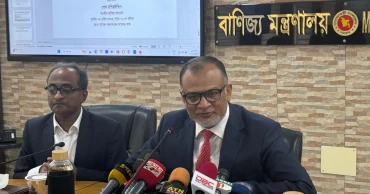
Rice prices to stabilise within two weeks: Commerce Adviser
Commerce Adviser SK Bashir Uddin on Tuesday said that rice prices are expected to become more affordable within the next two weeks as Boro rice arrives in the market.
The adviser was speaking to journalists following a meeting held to review the overall situation regarding the import and supply of edible oil and other issues at the Secretariat.
“Unfortunately, rice prices have remained high for quite some time. However, Boro rice will arrive in the market within two weeks. The finer varieties of rice—particularly Najirshail and Miniket—are primarily produced during the boro season,” he said.
He also mentioned that the weather conditions remained favourable this year, while the electricity supply was stable along with adequate fertiliser availability and all these have contributed positively to agricultural production.
Soybean oil prices go up
".....we expect a good harvest of paddy this year, which will hopefully lead to more affordable rice prices," he said.
Noting that agro-products are inherently dynamic, Bashir said. "We are closely monitoring all essential commodities and taking necessary measures where price stabilisation is needed."
When asked whether a visiting delegation from US President Donald Trump would discuss trade relations with Bangladesh, the adviser said, "That will be the only issue of significance."
1 year ago

Rice prices to come down with new Aman rice in market, hopes Food Adviser
Food Adviser Ali Imam Majumdar has said the rice prices may decline gradually with the new Aman rice coming to the market.
“The harvesting of Aman paddy has already started in the country’s northern region. There has been a bumper yielding of Aman this year…. Our Aman collection campaign will start from next Sunday,” said the adviser on Thursday.
Rice to be imported to tackle Aman crop losses: Food Adviser
He was briefing reporters after a meeting at the Directorate General of Food in the city. Top officials of the food directorate including its regional directors were present in the meeting.
The government will start the Aman collection drive from next Sunday with a target to collect 10 lakh metric tons (MT) of Aman rice and paddy, increasing the prices by Tk 3 per kg this year.
The food adviser said more rice are in the import pipeline as LCs have already been opened to import 1.5 lakh MT rice.
Govt to procure 3.5 lakh MT Aman paddy at Tk 33 per kg
He said the rice prices have remained stable for a week as the prices don’t go high anymore.
The prices of rice and paddy were increased, considering the matter of ensuring fair prices for farmers as the production costs went high, said the adviser.
Food Director General Abdul Khaleque said the target was set to collect a total of 10 lakh metric tons of Aman rice and paddy –-5.5 lakh MT rice, 3.5 lakh MT paddy and one lakh MT atap rice—during this Aman season.
The price of rice per kg was increased to Tk 47 from Tk 44, while that of paddy to Tk 33 from Tk 30 and Atap rice to Tk 46 from Tk 42, he said.
Replying to a question, the food adviser said though Bangladesh is nearer to self-sufficient in rice production and the country doesn’t need to import rice sometimes and heavy tariffs were imposed on rice imports at that time.
This year there are zero tariffs and the Agricultural Ministry now predicted that there would be a deficit of 6-7 lakh MT of rice this year, he said.
Food Secretary Masudul Hasan said 134 businessmen have so far been permitted to import 10.52 lakh MT rice.
1 year ago

Private companies to be allowed to import rice: Minister
To keep the rice market stable, the government has taken a decision to allow private firms to import rice, Food Minister Sadhan Chandra Majumder said on Monday.
“A summary of the meeting with resolution will be sent to the Prime Minister for final decision,” he said while talking to reporters after a meeting of Food Planning and Containment Committee at the Secretariat.
During the meeting, discussion was held on duty-free rice import after ensuring that farmers and others concerned are not affected by the decision, he said.
Also read: Rice price coming down after anti-hoarding drive: Food Minister
However, the final decision will come from Prime Minister Sheikh Hasina.
Talking about the drives against illegal hoarding of rice, Sadhan said already people have started getting the benefits of the drives and the drives against illegal ricer hoarders will continue.
Local Government and Rural Development (LGRD) Minister Md Tajul Islam, Commerce Minister Tipu Munshi, Fisheries and Livestock Minister SM Rezaul Karim and State Minister for Disaster Management and Relief Dr Md Enamur Rahman were present at the virtual meeting.
Also read: Rice cannot be packaged for sale after buying those from open market: Minister
4 years ago

Rice cannot be packaged for sale after buying those from open market: Minister
The government will not allow packaging of rice for sale after buying those from open market, said Food Minister Sadhan Chandra Majumder on Wednesday.
He also blamed six major industrial groups – Square Group, Pran Group, City Group, Akij Group, Bashundhara Group and ACI Group - for the sudden rise in rice prices in the country's market.
“We are planning whether a circular can be issued restricting sale of rice in packets after buy those from the domestic market,” he said in a response to a question from reporters on the rice prices hike at the Secretariat.
Also read: Strict action if anyone tries to destabilise rice market: Food Minister
“They may import rice paying 67 percent tax and sell those in packets. It is under discussion.”
“We have prepared a summary of the circular to send it to the Prime Minister. Besides, the Agriculture Secretary, the Food Secretary, the Commerce Secretary and the Industry Secretary will hold a meeting over the issue,” said the minister.
If these companies have their own mill they can pack rice there. But the government will not allow the rice to be packaged after being collected from the market, he added.
Even if the industries have their own mill, they will not be able to stockpile rice beyond the approved amount as mentioned in license, said the minister.
On Monday, the Food Ministry launched a drive against illegal rice hoarders on instruction of Prime Minister Sheikh Hasina to keep the price within the purchasing capacity of consumers and to keep the supply normal. She was also ordered taking action if anyone stockpiles rice illegally.
The food minister said they received information of illegal rice hoarding by Square Group and Akij Group in two places of the country.
“We have found an extra 5,000 metric tonnes of rice worth Tk 40 crore in a godown of Square Group in Dinajpur,” he said.
And the godown has been sealed and the authorities have been sued, he added.
Also read:Drives against illegal rice hoarders begin
Six companies were found to pack rice for sale at Tk 80-85 per kg after buying those at Tk 60-65 per kg in Naogaon, Dinajpur, Bogura districts.
“We have also found that those who are not rice traders are also stockpiling rice including brick kilns owners and primary school teachers,” he added.
He also urged the consumers not to stockpile rice for 4-5 months making the market unstable.
Sadhan Chandra also said the price will be normalised by importing rice if necessary to punish the rice syndicate. He said, “We harvested Boro, then Aush will be harvested, and by this time Aman season will arrive.”
4 years ago

The food minister irked by rising rice prices
Food Minister Sadhan Chandra Majumder on Monday asked the officials to find out why rice prices are going up despite a bumper yield of Boro paddy in the country.
“The rational prices of paddy and rice were fixed this year. It is not expected at all that the rice mill owners would increase the prices at their whim,” he said, joining a virtual meeting from his official residence in the city.
Read: Boro procurement drive must be successful at any cost: Food Minister
The minister said the government will continue its efforts to keep the rice prices at a tolerable level.
The meeting was held to review the progress of the government’s programme to procure Boro paddy and rice in Khulna and Barishal divisions.
Sadhan Chandra said the rice prices saw no hike in montns of Chaitra and Boishakh.
He directed the food directorate officials to ensure 75 per cent of the Boro collection and make the procurement programme a success by collecting paddy and rice as per the guidelines issued by the food ministry.
The food minister stressed the need for the regular market monitoring with the help of the district administration to keep the rice prices stable.
He asked the field-level food officials to show sincerity to collect the Boro rice from the mill owners as per the agreement. “Otherwise, actions will be taken against the officials alongside the mill owners,” Sadhan warned.
Food Secretary Dr Nazmanara Khanum also spoke at the meeting, presided over by additional director general of food Abdul Aziz Molla.
The field-level officials joined the meeting virtually from Khulna and Barishal divisions, said a handout.
5 years ago