Bangladeshi journalists
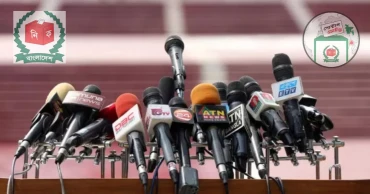
Many Bangladesh’s journalists face voting exclusion despite new postal ballot system
As Bangladesh prepares for the February 12 general election and referendum, the Election Commission’s newly introduced IT-supported hybrid postal balloting system has raised hopes for voters away from their constituencies, but journalists covering polls outside their home areas are once again set to miss the opportunity to vote.
Following three consecutive controversial elections, the Election Commission has, for the first time, introduced postal voting for expatriate Bangladeshis and selected groups within the country.
The system applies to government officials, bankers, officials engaged in election duties and voters in legal custody who cannot stay in their constituencies on polling day.
Journalists, however, have been excluded from the arrangement, despite being professionally deployed across districts to cover the election, a role widely recognised as essential to the democratic process.
As a result, a significant number of media professionals are likely to remain unable to cast their votes in the upcoming polls, continuing a pattern that has persisted for years.
According to a briefing by Chief Adviser’s Press Secretary Shafiqul Alam, the postal voting initiative has received an unprecedented response.
A total of 1,533,682 voters registered through the Postal BD app, including 761,140 domestic voters who will be on duty or away from their constituencies on election day, alongside 772,542 expatriate voters.
Journalists working outside their registered constituencies argue that the facility should not be limited to specific professions.
They say postal voting ought to be extended to all voters compelled by professional obligations to remain away from their home areas, particularly media workers, who play a critical role during elections.
Kaler Kantho Editor Hasan Hafiz, who is also the Jatiya Press Club President, said that the government’s introduction of a new postal ballot system is a commendable initiative, but journalists should have been included.
“Journalists are, in a sense, expatriates within their own country. When others assigned election-day duties are given the opportunity, why are journalists treated in such a discriminatory manner?” he said.
Hasan Hafiz also noted that journalists perform their election duties at considerable risk and therefore should have been given priority. “We strongly demand this. There is still time, and we urge the authorities to consider the matter,” he added.
Dhaka Reporters’ Unity (DRU) President Abu Saleh Akon said, “Journalists have to cover assignments on election day, and those who work outside their own areas would not have the opportunity to vote. With the new postal ballot system, it should be accessible to us. We urge the government to consider this.”
Secretary of the Dhaka Union of Journalists (DUJ) Khurshid Alam expressed concern over the exclusion, stating, “After the July uprising, this is a form of discrimination against journalists. As members of the fourth estate, have journalists committed any wrongdoing? While performing our professional duties for the country and the people, we are being deprived of the opportunity to vote. If others can vote, journalists must be given the same opportunity, and the government should take all necessary efforts to ensure this.”
Similar concerns were echoed outside the capital.
Khulna Press Club Convener and Daily Ittefaq’s Khulna Bureau Chief Enamul Haque said almost all journalists in Khulna remain engaged in professional duties on election day.
“As a result, voters who are registered outside their constituencies will not be able to exercise their voting rights even if they want to. The government should take the matter seriously. The issue has already been raised with the regional election office,” he said.
In Chattogram, Press Club President and regional chief of Daily Amar Desh Zahidul Karim said the Election Commission could have included genuine journalists working outside their constituencies under the postal voting system.
The Election Commission had earlier indicated that arrangements might be made for journalists to vote through postal ballots. However, it later said that the issue would be considered at a later stage.
Election Commissioner Abdur Rahmanel Masud told UNB that if the newly introduced IT-supported postal balloting system proves successful in the February 12 national election and referendum, the Commission would consider extending the facility to journalists and other such communities.
“If it is successful, it will be extended further. Then we’ll consider including journalists and others because many problems may surface with this system,” he said.
Free, fearless media vital to Bangladesh democracy: Journalists
Rahmanel Masud also noted that if public opinion favours the proxy balloting system currently used for expatriates, the Election Commission may consider introducing proxy balloting alongside the postal system in the future.
For now, however, journalists covering the polls across Bangladesh remain on the sidelines of the ballot -- reporting on democracy while being unable to participate in it themselves.
7 months ago

'Deeply regret the incident': Litton apologizes after journos removed from team hotel
Bangladesh's star batsman, Litton Das, has expressed his regret via social media following an incident where he had journalists from Bangladesh removed from the team hotel in Pune, India.
On Sunday (October 15, 2023), when the Bangladesh team had no scheduled practice or media interactions, journalists visited the team hotel. Litton did not welcome the idea. He summoned the hotel's security personnel and instructed them to escort the journalists away.
World Cup 2023: England outplayed as Afghanistan script historic win in Delhi
This incident ignited debate and discussion among Bangladeshi journalists covering the ICC World Cup in India. Some reporters questioned Litton's professionalism in their reports aired on television or shared on social media platforms.
"https://www.facebook.com/plugins/post.php?
Within 24 hours of the incident, Litton extended an apology.
World Cup 2023: England struggling in pursuit of 285 v Afghanistan
"I deeply regret the unforeseen incident that occurred yesterday at the team hotel," Litton posted. "I hold the media in high regard. The indispensable role of journalists in advancing Bangladesh cricket is acknowledged and appreciated."
The Bangladesh team has participated in three matches in the ICC World Cup 2023 so far, securing a victory in one. In the upcoming match, Bangladesh will face India on October 19.
World Cup 2023: Rahmanullah, Ikram Lead Afghanistan to 284 Against England
2 years ago

Facebook to launch mobile upskilling prog for Bangladeshi journalists
Facebook Journalism Project has partnered with the Center for Investigative Reporting (CIR) and Center for Communication Action Bangladesh (C-CAB) to upskill over 1,000 journalists.
The programme, Facebook Fundamentals for News, will be delivered completely digitally via BigSpring, mobile skilling platform partner.
Read:Bangladesh to launch ‘Jogajog’ as alternative to Facebook, says Palak The mobile curriculum, available in both English and Bangla, includes skills on online safety, best practices on Facebook, and how to best leverage video on the platform. The programme can be accessed via mobile and web. "We are committed to supporting quality journalism and providing tools and training to journalists globally," said Anjali Kapoor, Director of News Partnerships, Facebook Asia Pacific.
“This partnership was developed after speaking with the news community and our partners in APAC who had identified the need to support the region’s journalists with foundational skills so they can use Facebook more effectively. We hope that this program can help journalists to adapt digitally, and create more informed and engaged communities across the news ecosystem.” Zain Mahmood, Executive Director at Center for Communication Action Bangladesh explained, “We welcome the support of Facebook to bring a curriculum that can help improve the social media skills of our journalists and strengthen the foundation of reporting across the country. "
"The fact that we can make this available via a mobile platform, through BigSpring’s technology, ensures that the program can reach more journalists across the country more rapidly. The impact of this program starts today.”
Read: Over 11 mn Bangladeshis sign up as blood donors on Facebook Dilrukshi Handunetti, Executive Director of Center for Investigative Reporting said this collaboration provides the opportunity for them to nurture the next generation of journalists, and equip them with best practices of working across platforms and new ways of storytelling.
"It will enable us to support the work of local journalists and newsrooms as they tell in-depth and ground-breaking stories that engage and empower communities.” Bhakti Vithalani, the Founder and CEO of BigSpring said they are delighted to provide the mobile platform that puts digital skills into the hands of journalists in Bangladesh.
"BigSpring’s platform enables users to access bite-sized content and engage in learning communities to gain skills proficiency. Our mobile-first, multilingual platform provides easy access and ensures journalists in Bangladesh can continue their important work. We are proud to be a partner in this endeavour.”
Read: Facebook to end rule exemptions for politicians Journalists can register for this program using iOS and Android phones.
The curriculum follows Facebook Journalism Project’s commitment to Bangladeshi journalists, which also includes other training programs, such as the recent launch of Reuters Digital Journalism Course to enhance reporting skills.
5 years ago