PR
BNP not to take responsibility for unsigned parts of July Charter: Fakhrul
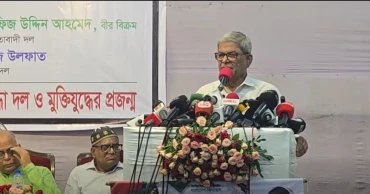
BNP Secretary General Mirza Fakhrul Islam Alamgir on Saturday said their party will not take responsibility for any part of the July Charter that was added after the party had formally signed it.
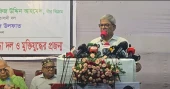
“Our position is very clear. We will take responsibility for the parts of the July Charter that we signed. But we won’t take responsibility for what we didn’t sign,” he said while speaking at a rally of freedom fighters.
Fakhrul, however, said his party still wants these issues to be resolved through discussions.
He recalled that when the Charter was signed in front of Parliament amid rain, it was agreed that the points all political parties supported would be signed, and the points they disagreed on would be recorded as a ‘note of dissent’ in the Charter.
“We signed the Charter with that understanding. But now, in the proposal sent to the Chief Adviser, they have completely ignored those notes of dissent and added some new issues. This is unfair and deceptive to the people,” the BNP leader said.
Even after such deception by the National Consensus Commission, he said BNP acted responsibly. “We held a press conference to express our position. We didn’t take to the streets, lay siege to the Chief Adviser’s residence, or to the Election Commission.”
Read more: BNP to create 1 crore jobs if voted to power: Khosru
Fakhrul criticised Jamaat-e-Islami for what he said is taking to the streets and forming alliances with some parties to put pressure on the government to act as they wish.
The pro-BNP platform Jatiyatabadi Muktijoddha Dal organised the rally titled ‘The Upcoming National Parliament Election is Essential to Protect Freedom, Sovereignty and Democracy’ at the Jatiya Press Club, marking the upcoming National Revolution and Solidarity Day on November 7.
About the upcoming election, Fakhrul said it should be held in February 2026 as announced by Chief Adviser Professor Muhammad Yunus.
“Whether proportional representation (PR) will be introduced or not will be decided by the next parliament,” he said.
The BNP leader also said his party agreed to a referendum although it was not necessary. “We agreed to hold the referendum on the same day as the election to save costs. Holding it separately would cost over Tk 1,000 crore.”
He said their party proposed holding the election and the referendum on the same day with two ballots--one for the referendum and another for the election of parliament members.
“But now they (Jamaat) are saying the referendum should be held first, and the election later. It is they who are talking about delaying the election, not us. We have always said the election should be held as soon as possible,” Fakhrul said.
Read more: Fakhrul slams Jamaat for ‘spreading lies’ to mislead people ahead of election
When Jamaat and other parties talked about reforms after the mass uprising, he said BNP took it positively as the party had already presented a 31-point reform plan in 2022.
“Our leaders have discussed it (310-point) across the country. Most of the points now included in the Charter are already part of our 31-point outline. So how can anyone say that we don’t want reforms?” the BNP leader said.
Fakhrul said it was wrong to claim that BNP does not support reforms. “We are in favour of reforms. But we want real reforms, not the kind of deceptive ones they are trying to push by misleading the public. We must make this clear before the people.”
He said Sheikh Hasina, who is now in India, has been giving interviews to different media outlets there without showing any sign of remorse for her misdeeds and killing of people.
“Not even once has she expressed any regret. When journalists asked her if she would apologise for her actions, she said, ‘No, we will not apologise.’ That same person, that same lady, is now spreading propaganda from India,” he said.
He urged the Indian government to return Hasina to Bangladesh to face trial under Bangladeshi law. “We want to say clearly to the Indian government, please send her back to Bangladesh and ensure she faces trial under Bangladesh’s law. Do not always go against the people of Bangladesh. The people will not accept that.”
Read more: BNP to revoke power sector indemnity provision if voted to power: Rizvi
11 months ago

Jamaat’s ‘PR Movement’ nothing but ‘calculated political deception’: Nahid
Nahid Islam, Convener of National Citizens Party (NCP) has said the so-called ‘PR Movement’ launched by Jamaat-e-Islami was nothing but a ‘calculated political deception’.
“Now, the people of Bangladesh clearly understand this deception. They have awakened to the truth and will no longer be deceived by false reformists or manipulative actors. Neither the Almighty nor the sovereign people of this land will ever again permit dishonest, opportunistic, and morally bankrupt forces to rule over them,” he wrote in a Facebook post on Sunday.
1 year ago

AsiaNet Forum: UNB’s Nahar Khan Calls for Stronger AI Discoverability in News and PR
United News of Bangladesh (UNB) Executive Editor Nahar Khan explained the need for journalism to adapt to the shifting dynamics of AI-driven news consumption.
Speaking at the AsiaNet Forum 2025 panel session in Singapore, Nahar said that audiences are increasingly relying on AI-generated summaries instead of reading full articles.
1 year ago
71’s defeated forces using PR to disrupt election: BNP leader
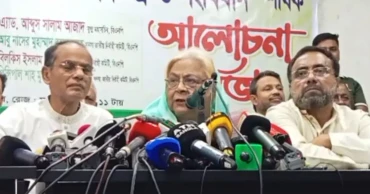
BNP senior leader Selima Rahman on Tuesday alleged that the defeated forces of 1971 are trying to obstruct the upcoming national election through street protests in the name of demanding a Proportional Representation (PR) system.
“We are observing that even after the announcement of the election roadmap, there is still a plot to stop or delay the election. The conspirators are the defeated forces of 1971. They are talking about PR, which ordinary people neither know nor understand,” she said while speaking at a discussion.
Selima, a BNP Standing Committee member, said Jamaat and some Islamist parties have taken to the streets for the PR system to destabilise the country.
She alleged that those who are agitating for the PR system mainly want to bring back fascism and rehabilitate the fascists.
“We have already seen how the voting system was manipulated once through the EVMs—when you pressed one button, the vote would go straight into the Awami League’s account. Now what is this PR system? Even I don’t understand it, and I don’t know whether the people of Bangladesh understand it either,” the BNP leader said.
Under the PR system, she said there would be no particular candidate as people would only be able to vote for a party.
The BNP leader said their party is against the PR system since it will only destroy people’s voting rights.
Gonotantra Rokkha Andolon organised the discussion programme titled ‘Democracy and Constitution of Bangladesh in the Current Context’ at the Dhaka Reporters Unity (DRU).
Selima argued that if citizens could not vote for the candidate of their choice, then there is no point in voting at all, as that would mean their voting right is lost.
She said the people of the country have struggled for all these years and many BNP leaders and workers have suffered immense repression to establish a government truly elected by them through their votes.
BNP yet to approve candidates for national election: Rizvi
“But now, what do we see? Jamaat—those who once killed people of this country, who betrayed the nation by siding with Pakistan, who acted as Razakars and Al-Badr, who raped women and handed them over to the occupation forces—today they may appear holy in their words, but they have not forgotten their past ideology,” the BNP leader said.
She said Jamaat is now trying to destroy the achievement the nation gained through a long struggle for democracy. “Their aim is to stop the election, to delay it, or to create instability in the country. But the people of Bangladesh will not allow this. BNP is a large party, and it will never let that happen.
“The election will be held, people will cast their votes, and an accountable government will be established. That is our promise,” Selima said.
She called upon BNP leaders and activists to remain united and campaign for the party’s electoral symbol, the sheaf of paddy. “No matter who gets the nomination, our focus must be on securing votes for the sheaf of paddy. That is our symbol of people’s politics, of production-based politics, and of our struggle for independence and democracy.”
1 year ago

Student Visa to PR: Top 5 Countries for International Students to Get Permanent Residency
Securing permanent residency (PR) is a significant milestone for international students aiming to build a stable and prosperous future abroad. It offers long-term benefits such as job security, access to social services, and the freedom to live without visa restrictions. As global education becomes a pathway to migration, students are increasingly choosing countries that provide clear PR opportunities. Let’s explore the top five destinations where education opens doors to permanent residency.
Top 5 Countries Offering Smooth Transition from Student Visa to PR
.
New Zealand
The structured migration pathway in New Zealand allows graduates to transition from student status to skilled professionals, eventually leading to PR.
The first critical step after completing studies in New Zealand is the Post Study Work Visa (PSWV). This visa is available to those who have held a student visa and recently completed an eligible qualification. The duration can be extended up to three years, depending on the level and duration of the qualification studied within the country.
Holders of a degree-level 7 or above qualification- studied full-time for at least 30 weeks- are permitted to work for any employer in any job. Conversely, graduates with a non-degree level 7 or below qualification must secure employment that is directly related to their field of study. To qualify, the programme must have been pursued full-time in New Zealand for its full duration and appear on the green list roles.
Read more: Study in New Zealand: Application process, cost for international students
The list link:https://www.immigration.govt.nz/new-zealand-visas/preparing-a-visa-application/working-in-nz/qualifications-for-work/green-list-occupations
This visa can be granted only once, making the application process critical. It must be submitted within three months of the student visa's expiry. There are exceptions: doctoral graduates are allowed six months, and those transitioning from an eligible qualification to a higher-level but ineligible programme may have up to twelve months post-completion of the first qualification to apply. The visa application processing time is efficient, with 80% of applications processed within three weeks.
Additional benefits include provisions for immediate family members. Partners of PSWV holders can apply for a work visa, and dependent children may study as domestic students without paying international fees.
Read more: 10 Cheapest UK Universities for Non-EU, International Students
For those aspiring to transition from temporary to permanent residence, employment in roles listed on New Zealand’s Green List becomes highly advantageous. This list identifies occupations in demand, divided into Tier 1 and Tier 2 categories, offering two residency pathways:
Straight to Residence Visa: Available to individuals working in a Tier 1 Green List role for an accredited employer. This visa grants indefinite stay, with 80% of applications processed within six months.
Work to Residence Visa: Designed for individuals employed in a Tier 2 Green List role for at least 24 months under an accredited employer. This visa also permits an indefinite stay.The journey culminates with a Permanent Resident Visa, which may be obtained after holding a Resident Visa for a minimum of two years. Applicants must meet all conditions attached to their current Resident Visa and demonstrate a commitment to New Zealand. One common pathway to prove this is having spent at least 184 days in the country during each of the two preceding years before applying. This stay does not need to be continuous. Processing for Permanent Resident Visa applications is efficient as well, with 80% completed within two weeks.
Further details on resident visa conditions are outlined here:
https://www.immigration.govt.nz/new-zealand-visas/already-have-a-visa/your-visa-conditions/check-your-visas-conditions/resident-visa-conditions
Ireland
This European country promises a route for international students seeking PR after completing their education. The system begins with the Third Level Graduate Scheme. It is designed to support non-European Economic Area (non-EEA) graduates in transitioning from study to skilled employment. This post-study work visa applies to those who have successfully completed a qualification at Level 8 or Level 9 on the National Framework of Qualifications from a recognised Irish awarding institution.
Read more: Study in Ireland: Application process, cost for international students
Graduates holding a Level 8 qualification are granted a 12-month stay, enabling them to remain in the country legally while seeking graduate-level employment. Meanwhile, those with a Level 9 or higher qualification may also receive an initial 12-month permission, with the total student permission capped at seven years.
Two key employment permit options are available under this framework:
General Employment Permit
Critical Skills Employment Permit, which has replaced the earlier Green Card permit model.The Critical Skills Employment Permit targets sectors facing significant skill shortages. Roles listed under this category are regarded as high-demand and are designed to encourage long-term residency by offering a more direct pathway to permanent status. Applicants must submit their employment permit applications at least 12 weeks before their intended start date. The current list of eligible occupations can be accessed here:
https://enterprise.gov.ie/en/what-we-do/workplace-and-skills/employment-permits/employment-permit-eligibility/highly-skilled-eligible-occupations-list/
Holders of the Critical Skills Employment Permit are entitled to apply for permission to live and work in Ireland without requiring a further employment permit once the initial permit period has been completed. This is typically recorded under Stamp 4, which signifies permission to remain and work without additional conditions.
Long-term residency becomes a viable option after five years (60 months) of legal residence in Ireland. It is designated as an employment permit issued by the Department of Enterprise, Trade and Employment (DETE). To apply, applicants must present documented evidence of continuous legal residence based on employment permit conditions. This status must be confirmed by immigration stamps in the passport or expired Irish Residence Permit (IRP) cards. Importantly, only the periods covered by valid stamps or IRP cards are considered; gaps without such documentation are excluded from the calculation.
Successful applicants receive a confirmation letter from Immigration Service Delivery. This official permission allows the individual to reside and work in Ireland for an additional five years without needing to reapply for a work permit.
Finland
A welcoming post-study pathway awaits graduates in this Nordic nation, where foreign students are given a practical opportunity after completing their academic commitments. Those who have earned a degree or completed research in the country may apply for a two-year residence permit to look for work or to establish a business. This post-graduation permit supports graduates who don’t yet have a job. It also applicable for those who doesn't meet the financial requirements for a work-based residence permit.
Read more: Higher Studies in Finland For Bangladeshi Students: Admission, Visa, Scholarship, and Costs
The flexibility of the system allows graduates or researchers to apply for this residence permit within five years from the expiry of their previous student or research permit. During this period, work-based residence permit applicants must have a job or successful business. It markes a pivotal step towards long-term settlement.
Two types of permits categorize this phase: the A permit (continuous) and the B permit (temporary). Graduates issued with an A permit enjoy a broader set of rights, including the eligibility to apply for a municipality of residence through the Digital and Population Data Services Agency. This classification plays a significant role in enabling access to local services and formal civic integration.
Progressing toward PR is structured yet achievable. To qualify, an applicant must have held a continuous residence permit (A permit) for four uninterrupted years. Temporary permits (B permits) are not counted towards this required duration. Additionally, applicants must have lived in the country for at least two years during this four-year period, ensuring not only legal residence but also meaningful integration into the society.
Read more: Finland ranked again the world’s happiest country in 2025: What’s the secret
A crucial requirement is the continuity of permits. Gaps between A permits, even brief, disrupt eligibility. Therefore, those aiming for PR must remain vigilant about permit renewals and application deadlines. Applying for a permanent residence permit must also occur before the expiration of the current residence status. If the permit has already lapsed, eligibility for permanent residence is lost. Any new application filed from abroad will be treated as a first-time residence permit, incurring the relevant fee and processing time.
Denmark
International graduates emerging from a Danish higher education institution have the opportunity to apply for a residence permit. Students at any level- bachelor’s, master’s, or PhD can apply for this three years permit to seek employment within the country. This transitional phase is specifically tailored for international students who wish to explore career opportunities upon completing their studies. The application process for this permit can take up to eight months. It is essential that applicants maintain their Danish address and refrain from residing abroad for more than six consecutive months.
Read more: Study in Denmark: Costs, opportunities for international students
However, an exception is made for individuals who were enrolled in international programmes such as Erasmus Mundus, Erasmus+, Nordic Master, or who completed a PhD in Denmark. These groups retain their residence rights even if they relocate temporarily or give up their Danish address, granting them greater flexibility during their post-study phase.
In addition to the job-seeking permission, graduates are provided with a limited work permit. This allows them to take on part-time employment of up to 90 hours per month between September and May. During the summer months of June, July, and August, they are permitted to work full-time. This arrangement supports a balanced transition between academic life and professional engagement while searching for a longer-term role.
Aspiring residents may also work toward a permanent residence permit, typically granted after eight years of continuous legal stay under a temporary residence permit. For some applicants who meet certain exceptional conditions, the required period may be reduced to four years. In all cases, the applicant must be employed at the time of the final decision regarding their PR.
Read more: Study in South Korea: Admission, Visa, Costs, Scholarships, and Opportunities for International Students
To fast-track eligibility, candidates must meet at least two out of four supplementary criteria:
Passing the Danish Language Test 3, demonstrating strong language integration. Maintaining four years of employment, reflecting long-term economic contribution. Either passing the active citizen exam or engaging in activities that show civic participation. Earning a minimum average annual income of DKK 331,249.35 over the past two years (based on the 2025 threshold). The figure amounts to BDT 5,894,772.76 as per exchange rate of DKK 1 = BDT 17.80.
All applications- whether for a new permit, extension, or PR- must be submitted before the current permit expires. For extensions, applicants can initiate the process up to three months in advance, ensuring a seamless transition and uninterrupted legal status within the country.
Italy
Foreign students aiming to build a long-term career in Italy often find themselves considering a post-study pathway that leads to PR as well as employment. One such option allows students who complete their higher education in Italy to remain in the country on a Job-Seeking Visa. This permit grants them up to 12 months to explore job opportunities following graduation.
Read more: Higher Studies in Italy: Application Process, Costs, Student Visa, Scholarships, and Benefits
To initiate this process, it's essential to apply for the permit before the student visa expires. The application must be submitted to the Immigration Office, complete with all required documentation. Processing time typically ranges from 60 to 90 days, during which the applicant can legally reside in the country. Once a job is secured, the residence permit may be converted into a work permit. It extends the right to stay for two years, with the option for renewal.
A unique aspect of this system lies in the ‘in quota’ and ‘extra quota’ visa classifications. Visas falling under the ‘in quota’ category are governed by Italy’s annual Decreto Flussi. This is a governmental policy that caps the number of work permits available for non-European Union nationals. Categories affected include seasonal work, non-seasonal employment, and self-employment. Applicants seeking a visa under this category must ensure that quotas are still open at the time of application, or risk rejection due to limits being reached.
By contrast, ‘extra quota’ visas are not subject to numerical restrictions, allowing qualified candidates to proceed unhindered if all criteria are met.
Those who manage to convert their job-seeking visa into a work permit are positioned well to begin fulfilling the prerequisites for PR. After five years of legal residence under a valid permit, individuals may apply for PR.
Read more: Study in Lithuania: Application Process, Visa, Scholarships, Costs, and Benefits
However, this five-year period must be continuous, meaning the applicant must not have left Italy for more than six consecutive months or a total of ten months across the period. Furthermore, the applicant must prove financial stability, employment, integration into Italian society, and proficiency in the Italian language at level A2. All these criteria should be met according to the Common European Framework of Reference for Languages (CEFR).
Registration as a civil and tax resident is also mandatory at the time of applying for PR. As part of the broader integration criteria, applicants may also be assessed on their knowledge of local culture and civic understanding.
To avoid disruptions in legal residency, graduates must apply for a residence permit renewal at least 30 days prior to their current permit’s expiration, especially if they are awaiting employment confirmation or continuing work under a renewed contract.
Bottom Line
These Top 5 Countries stand out as leading destinations for international students seeking post-study work visa and PR pathway. New Zealand, Ireland, Finland, Denmark, and Italy each start with offering of time-bound permits to seek employment. It includes legal stay, stable income, job integration, and language proficiency. Permit durations vary from 12 months to three years, with clear transition routes to work permits. Timely applications, adherence to permit conditions, and fulfilling country-specific criteria are essential.
Read more: How Bangladeshi Students Can Attest Certificates Online Before Going Overseas
1 year ago

ULAB hosts PR Summit
The University of Liberal Arts Bangladesh (ULAB) organised the PR Summit in the capital's Dhanmondi Friday to celebrate the fifth anniversary of PR4U, an apprenticeship programme of its Department of Media Studies and Journalism.
Jaffri Osman, chief executive officer of World Communications Malaysia, joined the event as the chief guest. Helal Hussain, head of portfolio, at Swisscontact Bangladesh, was present as the special guest.
The practice of public relations today is visual, Jaffri said. "A person in public relations must understand empathy and deal with empathy in the current world scenario."
Read: ULAB celebrates 17th Foundation Day
Helal Hussain, the other special guest of the event, discussed the rising need for public relations in international and national organisations.
Faruq Faisal, regional director of Article 19, Moniruzzaman, head of marketing and brand communication at SIBL, and Syed Rayhan Tarique, director of client relations at Forethought PR, also spoke.
Professor Jude William Genilo, head of the Department of Media Studies and Journalism, chaired the event.
Dr Habib M Ali, assistant professor at the department, also spoke at the programme.
4 years ago

Masthead wins best PR award among SAARC countries
Bangladeshi public relations (PR) agency Masthead PR received ‘The Best PR Agency’ award among SAARC countries at the 10th IPRCC Conference-2019 in New Delhi.
6 years ago