water hyacinth
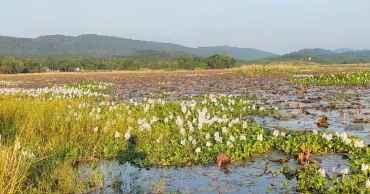
Fiery lilies fade as water hyacinth engulfs Lal Shapla Beel in Jaintapur
Once famed for its vibrant water lilies, Lal Shapla Beel in Sylhet's Jaintapur upazila now struggles under invasive water hyacinth, leaving locals and nature lovers frustrated with the committee entrusted to safeguard it.
Formed by the upazila administration, the Red Lily Protection Committee has come under fire as residents witness the gradual disappearance of the iconic red lilies that once painted the Dibir Haor region in breathtaking shades of ruby.
The region, comprising Yam, Harafkata, Dibi and Kendri beels, together creates the naturally sculpted Lal Shapla Beel, sprawling over approximately 900 acres.
The wetland first captured national attention in 2016, drawing tourists both domestic and foreign, enchanted by the dazzling spectacle of red lilies swaying over its serene waters.
Read more: Commute woes for Rangamati HSC examinees as Kaptai Lake clogged with water hyacinth
Today, however, large swathes of Yam Beel, a prominent section of Lal Shapla Beel, are smothered by the relentless advance of water hyacinth, prompting fears that the ‘Red Lily Beel’ may soon be forgotten, replaced by a sea of invasive greenery.
The committee was supposed to identify problems and work with the administration to preserve the red lilies and control aquatic plants, lamented several local residents and nature lovers, speaking on condition of anonymity.
Instead of red lilies, they said, hyacinth flowers are now blooming, ruining the beauty of the wetland.
Locals have proposed a pragmatic measure to fund the beel’s upkeep: levying a Tk 100 fee on tourist boats, which could be used to finance regular cleaning drives and maintenance efforts to remove the invasive plants.
Read more: How to Visit Saint Martin’s Island in Tourist Season 2025-26
They also urged the authorities to undertake an immediate environmental survey, warning that inaction may transform the beloved Lal Shapla Beel into a cautionary tale of neglect.
When approached for comment, Jaintapur Upazila Nirbahi Officer (UNO) George Mitra Chakma acknowledged the issue, noting that he had not received prior reports.
“We will take initiatives to remove the water hyacinth and protect the red lilies after discussing the matter with the conservation authorities,” he assured.
As the waters of Lal Shapla Beel shimmer under the fading light, the fate of its crimson jewels hangs precariously, locals said.
Read more: Rema–Kalenga Wildlife Sanctuary in Habiganj: A Comprehensive Travel Guide
They said without swift action, one of Sylhet’s natural treasures risks being lost beneath a blanket of green, its fiery blooms reduced to memory.
10 months ago
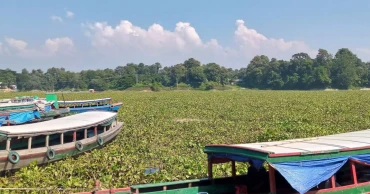
Commute woes for Rangamati HSC examinees as Kaptai Lake clogged with water hyacinth
Overgrowth of water hyacinth in Kaptai Lake has been hampering water transport operation in Rangamati.
Movement of trawlers and boats is being disrupted due to overgrowth of water hyacinth in many parts of the lake in Kaptai upazila, Shahid Shamsuddin Ghat, and Kengrachari of Bilaichari upazila in Rangamati.
Students and HSC candidates living around Kaptai Lake are suffering the most. Especially, HSC examinees are often not reaching exam centre on time as commute through the lake is taking much longer.
Visiting the area this week, this UNB correspondent found a large swathe of the scenic Kaptai Lake covered with water hyacinth. Seen from a distance, one could mistake this as a lush, green field.
Also read: Speedboats collision in Kaptai lake: Bodies of 2 missing students recovered
HSC candidates Anand Tanchangya, Subir Chakma and Minti Chakma said water hyacinth has accumulated in the lake like every year.
It takes three hours to reach a destination that used to take about three minutes before, they complained.
Ujjal Das, another HSC candidate, said it is difficult to reach the exam centres on time. If authorities don’t take measures to remove water hyacinth from the lake immediately, local HSC candidates’ commute woes will continue.
Boatman Shah Alam said, “Overgrowth of water hyacinth spells trouble for us too, causing engine fan to break often.”
Also read: 7 injured, 2 missing after collision between two water vehicles in Kaptai Lake
Over the last week, water hyacinth accumulated at the upstream jetty gate. As a result, it takes two to three hours, by boat, to reach the jetty from the island area, which normally takes two to three minutes.
The unabated growth of the invasive aquatic plant is not only hampering operation of water transport but also threatening fish and marine resources – polluting Kaptai Lake’s water as well.
3 years ago
.jpg)
Kaptai Lake’s beauty and navigability clogged by water hyacinth
A journey by boat on the country’s largest Kaptai Lake is no longer a fun.
Boats carrying tourists on a joy ride get stuck up in the middle of the lake, surrounded by hills. Locals commuting by boats complain of wasting productive hours as the journey gets terribly slow.
For all their sufferings they blame an unusual culprit: water hyacinths.
The ambience of the man-made lake is under threat as it has been covered with the prolific weeds.
Read Landslide warning: People urged to evacuate foothills in Rangamati
The unabated growth of the invasive aquatic plants is not only hampering operation of water transports (such as launches, speed boats and engine boats) but also threatening fish and marine resources and polluting its water.
According to experts and locals the water of Kaptai Lake has been severely polluted with water hyacinths. Local residents are getting infected with various diseases by using the water of the lake, they said.
Visiting the area this week UNB correspondent found a large swathe of the beautiful lake clogged by water hyacinths.
5 years ago