revenue collection

Darshana Railway Station falls silent as cross-border trade grinds to a halt
Darshana Railway Station, once the heartbeat of Chuadanga’s trade, now stands silent and deserted as cross-border imports collapse, affecting revenue collection and leaving countless workers jobless.
The decline has been dramatic as official figures show the station earned Tk 26.94 crore in revenue in the 2023-24 fiscal year. So far this fiscal year, the figure has dropped to only Tk 11.40 crore, a fall of nearly 60 per cent.
Until recently, trains laden with imported goods such as corn, stone, onions, China clay, and gypsum and soybean meal would arrive daily, keeping hundreds of labourers, truckers and clearing agents engaged.
Now, the scene has changed completely as only a handful of freight wagons carrying fly ash arrive occasionally, and even those are often unloaded elsewhere.
Darshana was once the preferred entry point for traders due to its lower costs and strong logistical support. But the combination of complexities in opening letters of credit (LCs), a dollar shortage and uncertainty following the recent change in government has slowed imports to a crawl.
As a result, 9,749 freight wagons brought in 576,559 metric tonnes of goods from India during the last fiscal year. This year, the number has fallen to 4,486 wagons carrying only 252,101 tonnes, less than half the previous volume, officials said.
Operation of Balla Land Port suspended before it begins
They said the slowdown has taken a devastating toll on those who depend on the yard for their livelihoods. Hundreds of transport workers and manual labourers have been rendered jobless. Some have switched professions, while many have migrated to other districts in search of work.
“It feels like the Covid-19 days again. We sit idle all day because no trains come,” said yard labourer Saidul Islam, struggling to feed his family.
Trucker Titu Mia echoed the sentiment. “Before, I could make two or three trips a day. Now, I hardly manage one trip in three days.”
Truck owners say their vehicles remain idle for weeks, causing financial losses and mechanical deterioration. “We’re incurring losses every month. Many trucks are simply parked as there’s no business,” said one owner.
Govt shuts 3 land ports; suspends operations of another
10 months ago
NBR posts record Tk 90,825cr revenue collection in first quarter of '25–26
The National Board of Revenue (NBR) has recorded the highest-ever revenue collection in the first quarter of any fiscal year, collecting Tk 90,825 crore during July–September of FY2025–26.
According to official data, the amount marks a significant 20.21 percent growth compared to the same period of FY2024–25, when the NBR collected Tk 75,554.78 crore.
In the first quarter of FY2023–24, the revenue stood at Tk 76,068.43 crore, while it was Tk 68,635 crore in FY2022–23.
The data shows that the NBR collected Tk 15,270 crore more in the first quarter of FY2025–26 compared to the corresponding period of the previous fiscal year.
Among the three major segments, the value-added tax (VAT) from the domestic sector contributed the highest — Tk 34,819 crore — showing a robust 29.74 percent year-on-year growth.
In comparison, collections from the same period stood at Tk 26,838.49 crore in FY2024–25, Tk 28,445.41 crore in FY2023–24, and Tk 24,546.65 crore in FY2022–23.
NBR launches major customs and VAT overhaul to boost revenue collection
Income tax and travel tax collections reached Tk 28,478 crore during the July–September quarter, up from Tk 24,080.82 crore a year earlier — marking an 18.26 percent growth.
The figure was Tk 23,751.31 crore in FY2023–24 and Tk 21,016.20 crore in FY2022–23.
Revenue from import and export activities totalled Tk 27,528 crore in the first quarter of the current fiscal year, up 11.74 percent from Tk 24,625.47 crore collected during the same period of FY2024–25.
The NBR noted that revenue collections across all three key segments — domestic VAT, income and travel tax, and customs — hit record highs in the first quarter of FY2025–26.
It attributed the strong performance to expanded tax coverage, improved compliance, anti-evasion measures and the recovery of previously evaded revenue.
NBR sets up e-Return Help Desks in all tax zones
The board appreciated its 'dedicated and hard-working officials' for their efforts in driving continued growth in national revenue mobilisation.
11 months ago
NBR launches major customs and VAT overhaul to boost revenue collection
The National Board of Revenue (NBR) has undertaken a major administrative reform and expansion of its Customs and VAT wings in a bid to widen the tax net and strengthen revenue collection.
According to an official order issued on Tuesday by the Internal Resources Division (IRD), a total of 12 new commissionerates, customs houses and specialised units have been established under the NBR.
Under the new structure, 373 cadre posts and 3,224 non-cadre posts — totalling 3,597 new positions — have been created to enhance institutional capacity across the Customs and VAT wings.
The expansion aims to promote self-reliance in the national economy through increased revenue mobilisation, improve service delivery to ensure a business-friendly environment, and make the indirect tax system more dynamic and effective, the IRD said in a statement.
NBR sets up e-Return Help Desks in all tax zones
Following proposals from the NBR, the reform initiative received administrative approval from the Ministry of Public Administration, the Finance Division and the Cabinet Division before the IRD issued the order.
As per the order, the expansion will be implemented in three phases, establishing five new VAT commissionerates, four new customs houses and three specialised offices.
In addition to the creation of new units, the order also provides for the expansion of existing commissionerates and customs houses, as well as the decentralisation of customs and VAT intelligence operations. Customs activities at Dhaka airport’s third terminal will also be expanded under the reform plan.
The NBR expects that the restructuring will enhance the institutional capacity of indirect tax collection, increase the tax-to-GDP ratio through improved revenue mobilisation, stimulate investment by facilitating trade, and accelerate the country’s overall economic growth.
11 months ago
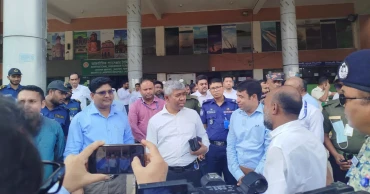
NBR chairman emphasises boosting revenue collection, enhancing efficiency
National Board of Revenue (NBR) Chairman Md Abdur Rahman Khan on Tuesday underscored the need for boosting revenue collection and enhancing operational efficiency across customs activities.
He emphasized faster cargo clearance under risk management, strengthening enforcement, expanding automation, ensuring compliance with import policy orders, reducing legal disputes, and intensifying arrear recovery efforts.
He made the remarks during a view-exchange meeting with officials and employees of Customs House, Mongla; Customs, Excise and VAT Commissionerate, Khulna; Tax Zone, Khulna; and Customs and Income Tax Sub-Division, as well as with C&F agents and journalists.
The NBR chairman highlighted the urgent need to expand the number of registered income tax and VAT payers. He called for stricter monitoring of both compliant and non-compliant taxpayers, urging a shift in focus from mere revenue growth to broadening the tax base.
He suggested adopting long-term (5-6 year) strategic plans to significantly increase the number of registered taxpayers. Identifying zero-return filers who are not actual taxpayers should also be prioritized, he said.
Khan directed all relevant offices to expedite the implementation of ongoing projects related to income tax, VAT, and customs. He also stressed the importance of conducting timely annual audits to avoid prolonged review periods that could harm businesses.
Addressing infrastructure gaps, the NBR chairman assured officials that a permanent office for Customs House, Mongla would be established soon. He also committed to improving housing facilities for customs officials and staff.
NBR, BAERA sign MoU to boost trade through Bangladesh Single Window system
In response to the vehicle shortage raised by officials of the Khulna Customs, Excise, and VAT Commissionerate, he promised to arrange additional vehicles through purchase or lease.
He further pledged that a centralized licensing system would soon replace the existing reference-based licensing for C&F agents, shipping agents, and freight forwarders.
To improve inter-agency coordination, the Chairman instructed full integration of the Automated Risk Management System (ARMS), Bangladesh Single Window (BSW), and Automated System for Customs Data (ASYCUDA) into customs operations.
He also directed the submission of a comprehensive list of products sent to institutions such as BUET and KUET for chemical testing and quality verification to the NBR Member (Customs: Policy).
Highlighting the critical role of the revenue department in national economic stability, Khan warned that any disruption in revenue functions could severely impact the country.
He placed special emphasis on enhancing the operational efficiency of Mongla Customs House and urged all stakeholders—including importers, exporters, C&F agents, port authorities, and customs officials—to prioritize national interest, avoid rumors, and work in unison to ensure smooth revenue collection.
Khan expressed satisfaction with the overall performance of Mongla Customs House and reiterated that improved efficiency is essential to keep pace with global standards.
Earlier, the NBR chairman visited Customs House, Mongla, where he expressed deep condolences over the recent crash of a Bangladesh Air Force training aircraft near Milestone School and College in Dhaka.
He inspected various operational areas, including the container yard, port car storage yard, and the vehicle storage yard prepared for auction, and held discussions with staff on workflow improvements.
1 year ago
NBR chief stresses stronger revenue collection, faster automation
National Board of Revenue (NBR) Chairman Md Abdur Rahman Khan on Tuesday stressed the need for boosting revenue collection and improving activities related to risk-based cargo release, enforcement, compliance with import policy orders, automation, case reduction and recovery of arrears.
He made the directive while visiting the Customs House at the Inland Container Depot (ICD) in Kamalapur.
During the visit, he inspected key customs operations, including physical examinations at the container yard, export procedures, and the automated customs assessment process in the assessment room, according to an NBR press release.
While interacting with officials and staff from various valuation groups, he enquired about any operational challenges and instructed the customs IT wing to promptly resolve ongoing internet and server issues to ensure smooth workflow.
Following the inspection, the NBR chairman held a meeting with Customs House officials and stakeholders.
NBR launches ‘a-Chalan’ for instant online tax payments
He was also briefed on the shortage of cargo trains, which continues to disrupt smooth container transportation, as he mentioned the necessity of modernising and updating the C&F licensing rules to reflect current realities.
Later, the NBR chairman formally inaugurated the online tax payment system through A-Challan at the Customs House ICD.
The initiative follows a successful pilot launched on April 23, 2025, integrating the A-Challan platform with the ASYCUDA World customs system.
This integration allows importers and exporters to pay customs duties and taxes directly from their bank accounts to the government treasury. In June alone, 83 percent of customs revenue at the ICD was collected through A-Challan.
Describing customs houses as vital trade facilitation centers, the NBR chairman instructed officials to ensure faster cargo clearance under modern risk management frameworks to support business activities.
He assured that officials who perform their duties with honesty, competence, and diligence would receive full support and protection.
Expressing satisfaction with the overall operations at the Kamalapur ICD, he urged all stakeholders—including importers, exporters, C&F agents, port authorities, Bangladesh Railway, and customs officials—to work in coordination to ensure uninterrupted and efficient port operations.
1 year ago

NBR chief calls for boosting revenue collection in final month of FY25
NBR Chairman Md. Abdur Rahman Khan has called on the tax officials to expedite revenue collection efforts in the final days of the 2024-25 fiscal year, underscoring the critical importance of meeting the government’s financial needs amid a challenging economic environment.
He made the call on Thursday while addressing a revenue collection progress review meeting held at the NBR’s headquarters at the city’s Revenue Building.
The meeting was convened to assess the performance of the Customs and VAT Divisions up to May and to strategise ways to improve revenue intake during the concluding period of the fiscal year.
During the meeting, attended by members of the Customs and VAT Divisions, commissioners and directors general stationed in Dhaka, as well as officials posted outside the capital who joined virtually through Zoom, the NBR Chairman issued clear directives to enhance collections through target-based efforts and special initiatives to recover arrear revenues.
“I urge all revenue officials to prioritise achieving their respective targets and to take coordinated action to collect outstanding dues. Every additional taka collected reduces our reliance on debt and contributes to economic stability,” said the chief of the National Board of Revenue (NBR).
He further emphasised the need to activate and strengthen intelligence activities to identify and address tax evasion, underreporting, and non-compliance.
“Modern revenue administration must be supported by data-driven intelligence. Strengthening surveillance and analysis mechanisms is crucial to minimizing leakages and boosting collection,” he added.
The meeting revealed that against a revenue collection target of Tk 3,94,460.45 crore for the July–May period of the ongoing fiscal year, the NBR has managed to collect Tk 3,27,782.26 crore so far. This reflects an achievement rate of 83.10 percent, with a modest year-on-year growth rate of 6 percent during the same period.
While appreciating the progress made, the NBR chairman expressed concern over the shortfall and urged field-level officials to intensify efforts in the final weeks of June.
He asked commissioners to hold regular consultations with their teams, assess bottlenecks in their jurisdictions, and take action to resolve issues that are hindering collections.
Tensions at secretariat as employees continue protests
Revenue officials, in turn, briefed the chairman about the measures already undertaken to improve collections in the remaining days of the fiscal year. These include greater on-ground coordination, targeted drives against non-compliant businesses, fast-tracking assessments, and raising public awareness about the importance of tax compliance.
According to officials, field offices have been instructed to increase visits to commercial establishments and ensure that VAT returns and customs declarations are accurate and submitted on time.
The revised revenue collection target for the NBR during FY 2024-25 stands at Tk 4.63 lakh crore, brought down from the original budgetary target of Tk 4.80 lakh crore.
Despite the downward revision, projections indicate that the NBR is likely to fall short of this target as well, largely due to slower-than-expected economic activities and structural inefficiencies within the revenue administration.
1 year ago

NBR scrambling to meet IMF conditions on revenue collection for release of 2 tranches of $4.7bn loan
The National Board of Revenue (NBR) finds itself in a tight spot as it scrambles to appease the International Monetary Fund (IMF) and unlock the 3rd and 4th tranches of the $4.7 billion loan program.
In a recent meeting held on April 7, the IMF asked the NBR to collect some Tk 2 lakh crore in the next months to meet the conditions for release of the last two trenches of the $4.7 billion loan.
The IMF has suspended the disbursement of the third and fourth tranches of its $4.7 billion loan package to Bangladesh, citing non-compliance with key reform conditions.
The decision follows review of the country’s macroeconomic indicators and structural performance benchmarks under the Extended Credit Facility (ECF) and Extended Fund Facility (EFF) arrangements.
NBR to decide response to 37% US counter-tariff in its Sunday’s meeting
The IMF raised concerns over Bangladesh’s revenue mobilisation shortfalls, sluggish progress on energy sector reforms, and limited transparency in financial reporting.
Finance Adviser Dr Salehuddin Ahmed has expressed hope that the situation can be resolved through further negotiations.
The suspension poses a potential setback for Bangladesh’s efforts to stabilize its foreign exchange reserves and control inflation.
A senior NBR official said that the IMF has asked to increase the country’s tax-GDP ratio to 7.9 percent by next June, from the current 7.4 percent.
That would require NBR to collect a massive Tk 4.55 lakh crore in revenue by the end of the current fiscal year (2024-25).
NBR looking for expansion of base of VAT payers
That would require nearly 20 percent growth year-on-year. Revenue growth till February, the first 8 months of the current fiscal, stood at just 1.7 percent.
As a result, about Tk 2 lakh crore revenue will be required in the last 4 months of the running fiscal.
Regarding the revenue target, the concerned NBR officials termed it as very ambitious, unrealistic and challenging.
In addition to the short-term target, the IMF has suggested increasing the tax-GDP ratio to 9 percent in the next fiscal year (2025-26). It has recommended reducing the existing tax exemption (tax expenditure) and introducing a uniform VAT rate.
The government however has maintained that VAT reform will not be implemented all at once, but in stages.
The IMF's ongoing review mission, which began on Sunday, will continue until April 17.
The outcome of this mission will determine whether Bangladesh will get two installments at once as the fourth installment, which was due in January, remains suspended.
As part of the review, the IMF team has already held meetings with the Finance Advisor, Finance Secretary, Bangladesh Bank Governor and officials of the Macroeconomic Wing of the Finance Department.
The IMF has slightly raised Bangladesh's GDP growth forecast for the current fiscal year to 4 percent, from 3.8 percent in December. However, the government has set a growth target of 5.25 percent.
The IMF has forecast growth to be 6.5 percent in the 2025-26 fiscal year, which is slightly lower than its previous forecast of 6.7 percent.
The IMF has indicated some relief over the inflation figure. According to them, average inflation this year will be 9 percent, which is lower than the previous estimate.
The government however, has set an inflation target of 8 percent, which is projected to further decline to 6.5 percent in the 2025-26 fiscal year.
1 year ago

Bangladesh explores avenue to boost revenue collection
Bangladesh has significant potential for mobilising revenue collection, as highlighted by a recent official assessment on revenue buoyancy, a measure reflecting how tax revenues respond to economic growth.
Revenue buoyancy, the responsiveness of revenues to gross domestic product (GDP), is a critical metric for gauging the performance of a revenue system and the forecast for revenue growth.
A buoyancy coefficient greater than one indicates that tax revenues grow faster than GDP, while a coefficient less than one suggests slower growth.
Using real GDP and real revenue growth rates from FY12 to FY23, the analysis found an average revenue buoyancy of 0.90, which falls below one.
NBR accelerates efforts to clear revenue case backlog
This lower score highlights the scope for enhancing revenue mobilisation in Bangladesh, as per the Finance Ministry document.
The official assessment also noted that the effective tax rate can serve as another measure of revenue performance. For example, the effective rate of VAT can be derived by comparing it with consumption data from the real sector.
An analysis shows that the effective VAT rate has risen in recent years, reaching 7.1 percent in FY23. However, this remains well below the standard of 15 percent VAT rate applicable to most products in Bangladesh.
Bangladesh’s revenue collection still lags behind comparable economies.
In 2022, the general government revenue–GDP ratio was 23.1 percent in Nepal, 19.8 percent in India, and 14.8 percent in Lao PDR, while Bangladesh’s ratio stood at only 8.9 percent.
There is broad consensus that a positive correlation exists between economic development levels and revenue collection.
To achieve the country’s development objectives, the Finance Ministry has called for major reforms to enhance the effectiveness, efficiency, transparency, and fairness of the tax administration system.
The document also emphasises revisiting tax exemptions to ensure that these benefits support the broader economy and do not disproportionately favour wealthier individuals at the expense of low-income groups, thus undermining the redistributive aims of fiscal policy.
There is also significant room for improvement in tax return submissions; in FY22, only 33.3 percent of TIN holders filed tax returns, a figure that is markedly higher in similar countries.
The Finance Ministry has outlined several modern reform strategies to strengthen revenue mobilisation.
These include expanding the tax base, adopting a modern property tax system, introducing green and carbon taxes, simplifying tax collection, fully automating tax filing and payment processes, and minimizing direct interactions between tax collectors and taxpayers.
Other strategies include making audits more selective, productive, and criteria-based, as well as separating tax policymaking from tax collection.
The government has made progress in this direction, with an increased share of income tax and VAT in total revenue.
However, there is still a need to reduce dependency on indirect taxes and focus more on direct taxes.
The actual share of direct taxes in total revenue was 32.3 percent in FY21, which increased slightly to 32.7 percent in FY23.
To sustain revenue growth, the government will continue efforts to broaden the tax base, shift reliance from trade taxes to direct taxes, and further accelerate the growth of direct taxes in the coming years.
1 year ago
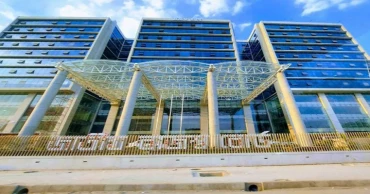
NBR’s three-pronged strategy to boost revenue collection
Aiming to significantly boost revenue collection from domestic sources, the National Board of Revenue (NBR) is adopting a three-pronged approach.
These are: digital transformation, expansion of tax net, and enhancing administrative capacity.
The core idea is to make tax payments easy and transparent to improve taxpayer services which in turn will help NBR to collect more revenue, according to an official document.
According to the Medium Term Macroeconomic Policy Statement (2023-24 to 2025-26) of the Finance Division of Finance Ministry, the government has taken some Major reform measures to materialise the move.
The VAT & Supplementary Duty Act 2012 has been implemented in July 2019. With the implementation of the new act, the collection of VAT and supplementary duty is expected to receive a significant boost in the medium term. After the initial hiccup and the shortfall due to the outbreak of COVID-19, revenue collection accelerated in FY22.
The government has enacted the new Customs Act, which replaced the Customs Act 1969. International best practices in customs, including that of the World Customs Organization (WCO), the revised KYOTO Convention and the WTO Trade Facilitation Agreement have been incorporated here.
NBR will go after house and flat owners for not filing returns; NBR Chairman
The law aims to harmonise and simplify customs processes to facilitate the collection of custom duties.
The new Income Tax Act is also expected to create an enabling environment for taxpayers, streamline income tax assessment and collection, and facilitate domestic and foreign investment.
To implement the new VAT law, the NBR undertook the ‘VAT Online Project (VoP)’ which was in operation since 2013 and concluded in June 2021.
Under the VOP, the official document said that the three important automation measures have been completed. First, the Online VAT Registration began in March 2017. Again, the central registration system has been in force since July 2019. The NBR has introduced online return submission in July 2019. The digital filing system has been introduced in the form of online submission of VAT returns.
The NBR has rolled out the electronic payment (e-payment) of customs duties in 2017, income tax in 2012 and VAT in 2020. Income tax can be paid through MFS (mobile financial services) as well.
To facilitate real-time deposit of government money to the national exchequer, the government has launched the Automated Invoice Portal. This Automated Challan (also known as A-Challan) will act as the receipt window of the government. The payment of income tax has already been brought under the A-Challan system on a pilot basis.
The NBR now plans to expand its use for payment of VAT and customs duties. The A-Challan will ensure the timely deposit of money including the prevention of fake return submission and revenue evasion.Moreover, the discrepancy between the amount of revenue collected by the NBR and the accounts given by the Accounting Offices will be eliminated.
The Medium Term Macroeconomic Policy Statement (2023-24 to 2025-26) said that individual taxpayers can now submit their tax returns online.
NBR extends deadline for filing companies’ tax returns to April 30
The NBR has successfully launched eTDS Environment for easy and hassle-free processing of income tax at the source. With the introduction of this system, taxpayers’ time, cost and visits have been reduced to almost zero. Taxpayers can now submit fourteen reports in the eTDS environment.
To stop evasion in VAT and enhance VAT collection, the government has introduced Electronic Fiscal Devices (EFD) with a sales data controller mechanism.
The government has already installed 9270 EFD/SDC (Sales Data Controller) machines. NBR has selected 24 sectors, including residential hotels, bakeries and fast foods, decorators and caterers, sweet shops etc. for this purpose.
To broaden the coverage, the government has decided to outsource the installation of EFD/ SDC machines with a target of 60,000 EFD/ SDC in the first phase and 3,00,000 in five years, if the first phase brings good results.
Besides, to prevent tax evasion and to bring transparency in VAT record keeping, the government has made the use of NBR-prescribed VAT software mandatory in VAT-registered industries with annual turnovers of Tk 5 crore or above.
The NBR has made provisions to enable internet-based companies, such as Google, Facebook, Microsoft etc. to pay their VAT on online sales.
This allows these companies to pay their VAT through their authorised VAT agents without opening their office in Bangladesh.
The NBR plans to operationalise the risk management system to ensure that no more than 10 percent of the import consignments are subject to physical examination. To that end, the NBR has established a Central Risk Management Unit/Commissionerate for Customs.
To streamline the bonded warehousing system, reduce its misuse and make it transparent, the government has taken a project that aims to automate the bond management system by June 2023. Meanwhile, the licensing module has started operation and other modules will become operational soon.
Bangladesh Customs will soon be conducting a Time Release Study in the major custom houses to take stock of the actual time taken in the release of imported consignments. The objective of the TRS will be to identify bottlenecks in customs clearance and to take measures to reduce clearance time.
The NBR strives to expand the number of taxpayers and has made the return submission mandatory for all TIN-holders with a few exceptions.
Other reform efforts by the NBR included – i) implementation and activation of Online National Single Window, Post Clearance Audit, Advance Ruling, Authorised Economic Operator, and thereby increasing dynamism in international trade; ii) full implementation of online income tax return submission under SGMP project; iii) implementation of “Individual Source Tax Deduction Monitoring Zone” to strengthen income tax deduction monitoring; iv) expansion of the e-Payment system in income tax; v) activation of transfer pricing and anti-money laundering activities; and vi) strengthening ICT infrastructure construction and automation activities.
Administrative expansion of the income tax department is underway, the Medium Term Macroeconomic Policy Statement added.
Introduction of the Document Verification System (DVS) has brought financial discipline and positively contributed to boosting tax collection both in income tax and VAT by increasing transparency.
NBR collects nearly Tk 2 lakh crore in 7 months, growth over 15%
2 years ago

Tipu Munshi to NBR: Touching income tax unpopular, widen VAT net to boost revenue collection
Commerce Minister Tipu Munshi on Sunday emphasized widening the net of VAT and tax collection in general in keeping with the development of the country.
He said this while speaking at a seminar titled 'Role of VAT in National Development: Present and Future' held at Bangabandhu International Conference Center (BICC) on Sunday, the first day of the two-day revenue conference.
Chairman of National Board of Revenue (NBR) Abu Hena Md. Rahmatul Muneem chaired the seminar.
Addressing the officials of NBR, the commerce minister said, “We are talking about coordination in some matters from the Ministry of Commerce. It's the best. We want you to do that with our combined efforts.”
In 2026 there will be pressure on customs duty. It is expected that after graduation from LDC list, the NBR would face several challenges. The commerce minister has advised looking at the scope of VAT and income tax. Its net must be widened, Munshi said.
"Now if you go to collect income tax, you will become disliked by people. No one wants to pay tax; you have to take a positive role there too," he pointed out.
Also read: NBR extends income tax returns submission date to Dec 31
He also said, “We need a Smart Bangladesh. Ending digital and moving towards smart. To reach the goal, your actions must be smart. That's why I heard about different processes, and different types of automation coming. I am very optimistic; your work will take us forward in building Smart Bangladesh.”
The NBR is organising a two-day revenue conference on February 5 and 6 to increase public awareness and develop a revenue-friendly mindset. Simultaneously, the new NBR premises were inaugurated at Agargaon on February 5. Prime Minister Sheikh Hasina inaugurated the revenue conference and the new building.
3 years ago